
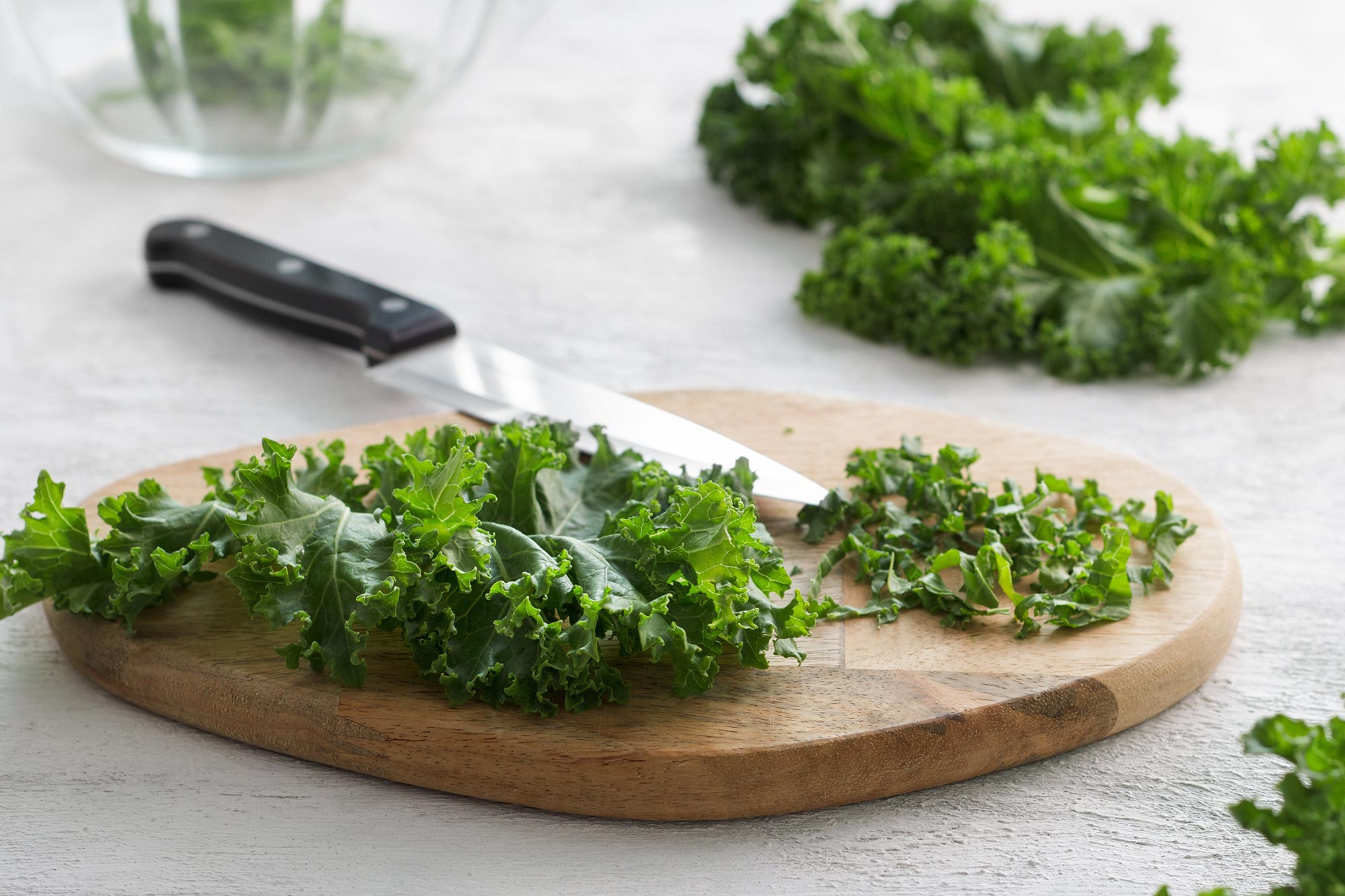
Researchers from the University of Missouri report that pairing kale with oil-based dressings or sauces not only helps the body absorb more of its nutrients but also improves its flavor.
Think that kale salad you’re enjoying is automatically a superfood? Without the right addition, it may not be providing all the benefits you expect.
But there’s good news.
Scientists at the University of Missouri have identified a simple (and delicious) way to help your body take in more of kale’s valuable nutrients: use oil-based dressings or sauces. In short, you can keep eating your kale and get more out of it at the same time.
A recent study from Mizzou’s College of Agriculture, Food and Natural Resources (CAFNR) found that the method of preparation does not change the outcome. Whether kale is cooked or eaten raw, its full nutritional impact is unlocked when it is combined with olive oil, mayonnaise or any oil-based dressing. Researchers are now looking into how specially formulated dressings made with nanotechnology might enhance those effects even more.
“Kale is a nutrient-rich vegetable that contains carotenoids, including lutein, α-carotene and β-carotene, which have beneficial effects on overall health,” Ruojie (Vanessa) Zhang, assistant professor in the Division of Food, Nutrition and Exercise Sciences at CAFNR, said. “The problem is our bodies have a hard time absorbing these nutrients because they are fat-soluble rather than water-soluble.”
What Researchers Wanted To Learn
With those questions in mind, the research team began investigating whether cooking kale or adding specially formulated dressings/sauces could help the body absorb its carotenoids more effectively. These compounds, together with vitamins C and E and other natural plant components found in kale, have been associated with a wide range of health advantages, including improved vision, stronger immune function and a reduced risk of conditions such as diabetes, heart disease and certain forms of cancer.
To explore this, the scientists used a laboratory model designed to mimic human digestion. They evaluated kale in several forms: raw, cooked, raw or cooked with dressing/sauce, and cooked directly in sauce.
The Power of Oil-Based Sauces
They found that raw kale alone yields very low carotenoids absorption, and cooking it actually makes absorption slightly worse. The main finding came when they added the special nanoemulsion-based sauce: The simulated digestion model absorbed far more carotenoids, regardless of whether the kale was raw or cooked. In fact, cooking kale with the dressing/sauce worked just as well as mixing it in afterward.
The results are important because they show there are scientific ways to help the human body absorb more of the beneficial nutrients found in fruits and vegetables. The findings also point to new opportunities to make everyday foods healthier by changing how they’re prepared or flavored. Ultimately, Zhang hopes the research will lead to the development of novel dressings and sauces that can further boost the absorption of nutrients from kale and potentially other vegetables.
“Our team is committed to advancing food science with the goal of improving human health through the development of innovative foods and technologies,” she said. “We believe impactful science can drive meaningful change in global nutrition and well-being, and we’re excited to contribute to that mission.”
Reference: “Culinary strategies for improving carotenoid bioaccessibility in kale: The role of thermal processing and excipient emulsions” by Hangxin Zhu, David Julian McClements, Zipei Zhang and Ruojie Zhang, 14 September 2025, Food Nutrition.
DOI: 10.1016/j.fnutr.2025.100049
Never miss a breakthrough: Join the SciTechDaily newsletter.
Follow us on Google and Google News.
5 Comments
Quelle surprise! Adding flavor to kale gives it flavor.
The conundrum of making a foul shrub taste better. How to do it? Ya just keep banging both fists against your head. Almost like knocking on wood but doesn’t have the same ‘wake up’ feel.
So I’ll chop, and saute it, along with my onions, garlic, etc. in EVOO and/or butter. Like I prep my creamed spinach. I use Kale in my creamy, spicy Italian sausage soup.
Couldn’t you just eat the kale along with other food in the same meal that contains fat, like nuts or seeds?
Article would be ever so much more useful if a wee bit more specific. Cooked kale is slightly less nutritious than raw? Oil is needed? Then would a “massaged” kale salad dressed with EVOO be the winner? No! Researchers developed “specially formulated dressings/sauces”? So, what IS “the special nanoemulsion-based sauce”? Can it be made in home kitchens?