
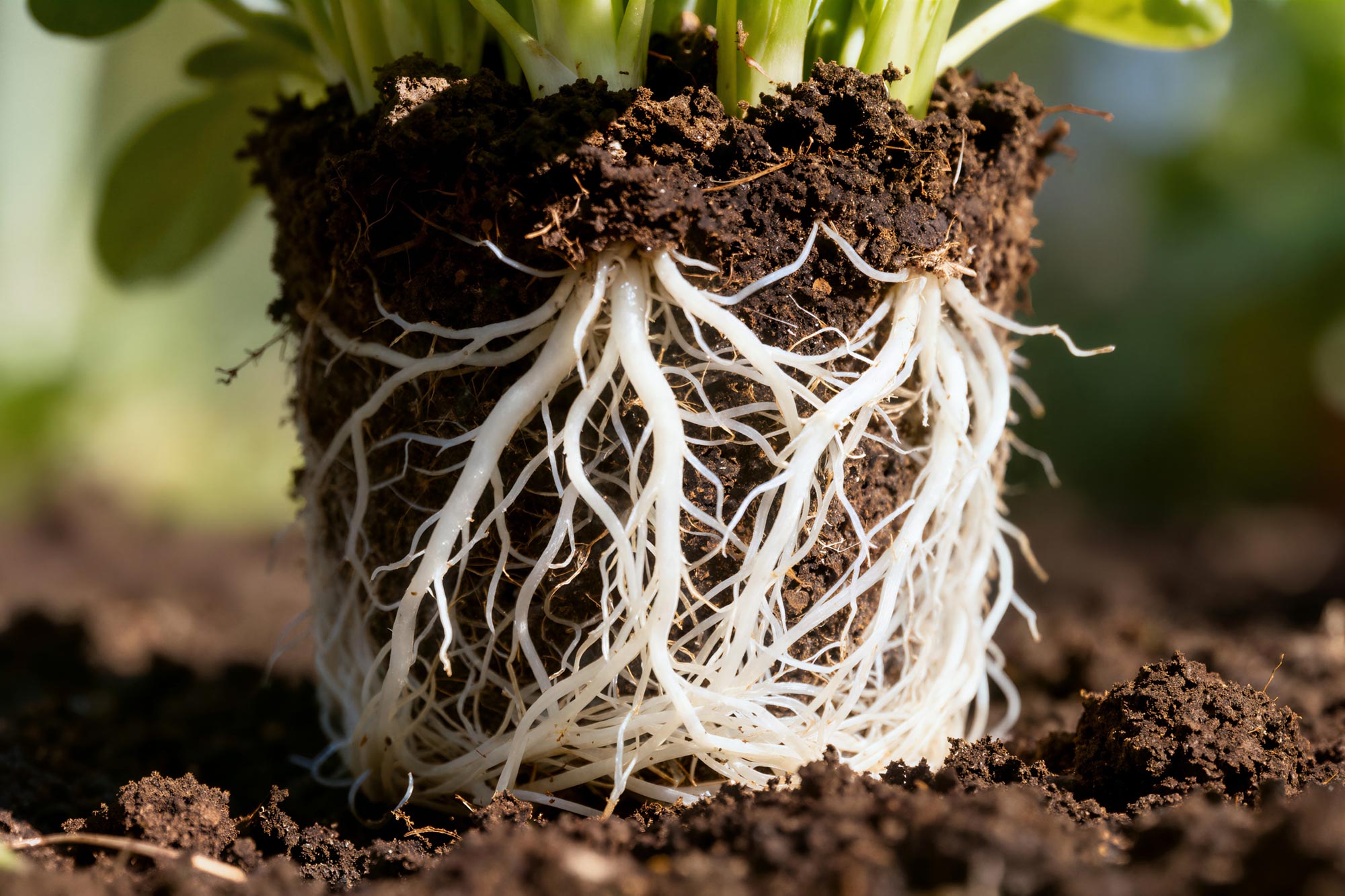
A new pair of molecular tools is allowing scientists to uncover how plants and fungi coordinate their ancient underground partnership.
For about 450 million years, plants and soil fungi have maintained a mutually beneficial partnership. The fungi grow through plant roots and supply phosphorus and other minerals from the soil. In return, the plants provide sugars and fats created through photosynthesis. This long-standing relationship supports around 80% of plant species on Earth, including major food crops such as corn and wheat that help feed billions of people.
Researchers have known for decades that these relationships are vital for agriculture. However, the precise molecular mechanisms that allow plants and fungi to coordinate and maintain this partnership have remained unclear.
A research team at the Boyce Thompson Institute (BTI), led by Professor Maria Harrison, has now combined two advanced techniques that help reveal which proteins interact to make these partnerships work. The methods also allow scientists to confirm those interactions directly inside living plant roots, where the cooperation between plants and fungi actually takes place.
The challenge
Proteins function as the working machinery of cells and carry out most biological processes. In plant fungus partnerships, certain proteins must physically connect and cooperate for the relationship to develop and function properly. Identifying these protein partnerships has been difficult because the specialized root cells where nutrient exchange occurs are extremely rare. These cells represent only a very small portion of root tissue.
“We’ve known for years that certain proteins are essential for establishing these symbioses, but we couldn’t see who they were working with,” said Harrison. “These tools let us ask—and answer—those questions in the cells where the partnership actually happens.”
Two new tools
While working as postdoctoral researchers in Harrison’s laboratory, Sergey Ivanov, Lena Müller, and François Lefèvre integrated and refined two complementary research approaches.
First, they created a large library of plant and fungal proteins. These proteins are analyzed using a screening system in yeast cells that tests whether a protein of interest interacts with thousands of potential partners. Scientists then read the results using DNA sequencing. In simple terms, the system works like a large scale matchmaking service that identifies which proteins connect with each other.
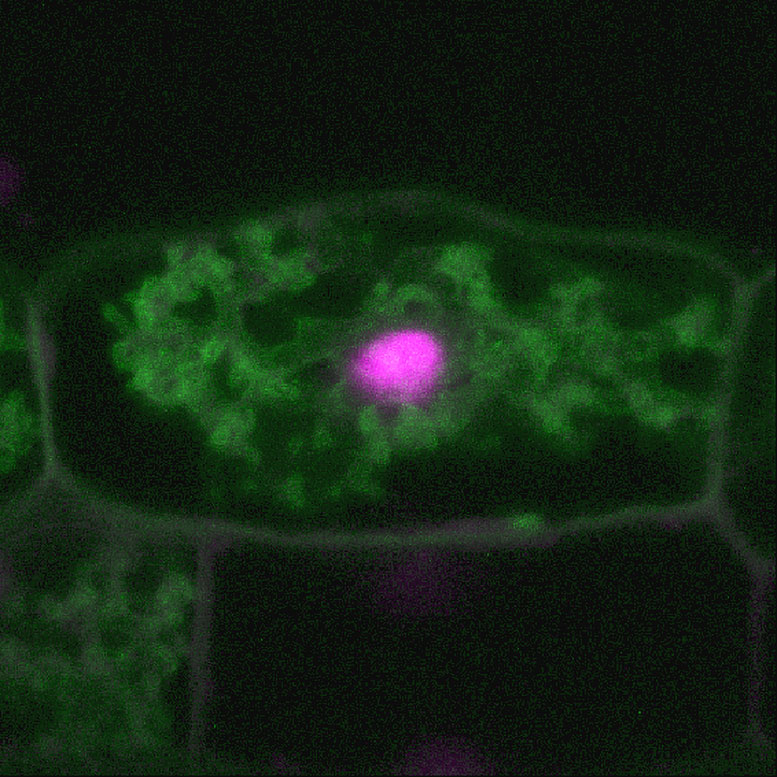
The second technique adapts a widely used biological method that causes proteins to produce a fluorescent signal only when they physically touch inside plant root cells. This fluorescence-based approach confirms that interactions identified in yeast cells also occur in the correct location inside living plants. The interactions take place at the cellular membranous “trading floor” where plants and fungi exchange nutrients.
“The beauty of combining these two methods is that we can cast a wide net to find candidate partners, then test whether those interactions are happening in the right location,” said Ivanov, lead author of the study. “That second step—verification in living roots in the correct cells and the correct space inside the cell—has been a bottleneck in the field.”
Proof of concept
To show that the approach works, the researchers focused on a protein known as CKL2. Earlier studies had already demonstrated that CKL2 is essential for the development of plant fungus partnerships. When this protein is absent, the relationship does not form correctly.
The screening experiment showed that CKL2 interacts most strongly with members of the 14-3-3 protein family. These proteins help connect other proteins and regulate many important cellular activities.
Using the fluorescence test, the researchers confirmed that these interactions occur at the periarbuscular membrane. This specialized boundary is the interface where plants and fungi exchange nutrients.
When the scientists reduced the levels of 14-3-3 proteins in plant cells, fungal colonization decreased by about 31%. This finding indicates that these proteins play a significant role in maintaining the partnership.
Agricultural implications
A clearer understanding of how plants and fungi coordinate their partnership at the molecular level could help scientists and plant breeders develop crop varieties that form stronger symbiotic relationships.
Plants that obtain phosphorus and other nutrients more efficiently through fungal partners would require less synthetic fertilizer. This could lower costs for farmers and also reduce fertilizer runoff into the environment.
The research team is making these experimental resources available to other scientists so additional laboratories can investigate proteins involved in this widespread and agriculturally important biological relationship.
“We can now systematically identify which proteins control nutrient exchange and verify their interactions in living roots,” said Harrison. In addition to improving nutrient uptake, these plant fungus partnerships can also strengthen plant defenses against disease and environmental stress.
Reference: “Yeast two-hybrid-sequencing and bifluorescence complementation resources for assessing protein–protein interactions in arbuscular mycorrhizal roots: CKL2 as a case study” by Sergey Ivanov, Lena M. Müller, François M. Lefèvre and Maria J. Harrison, 23 December 2025, New Phytologist.
DOI: 10.1111/nph.70832
Funding was provided by the US National Science Foundation and the TRIAD Foundation.
Never miss a breakthrough: Join the SciTechDaily newsletter.
Follow us on Google and Google News.