
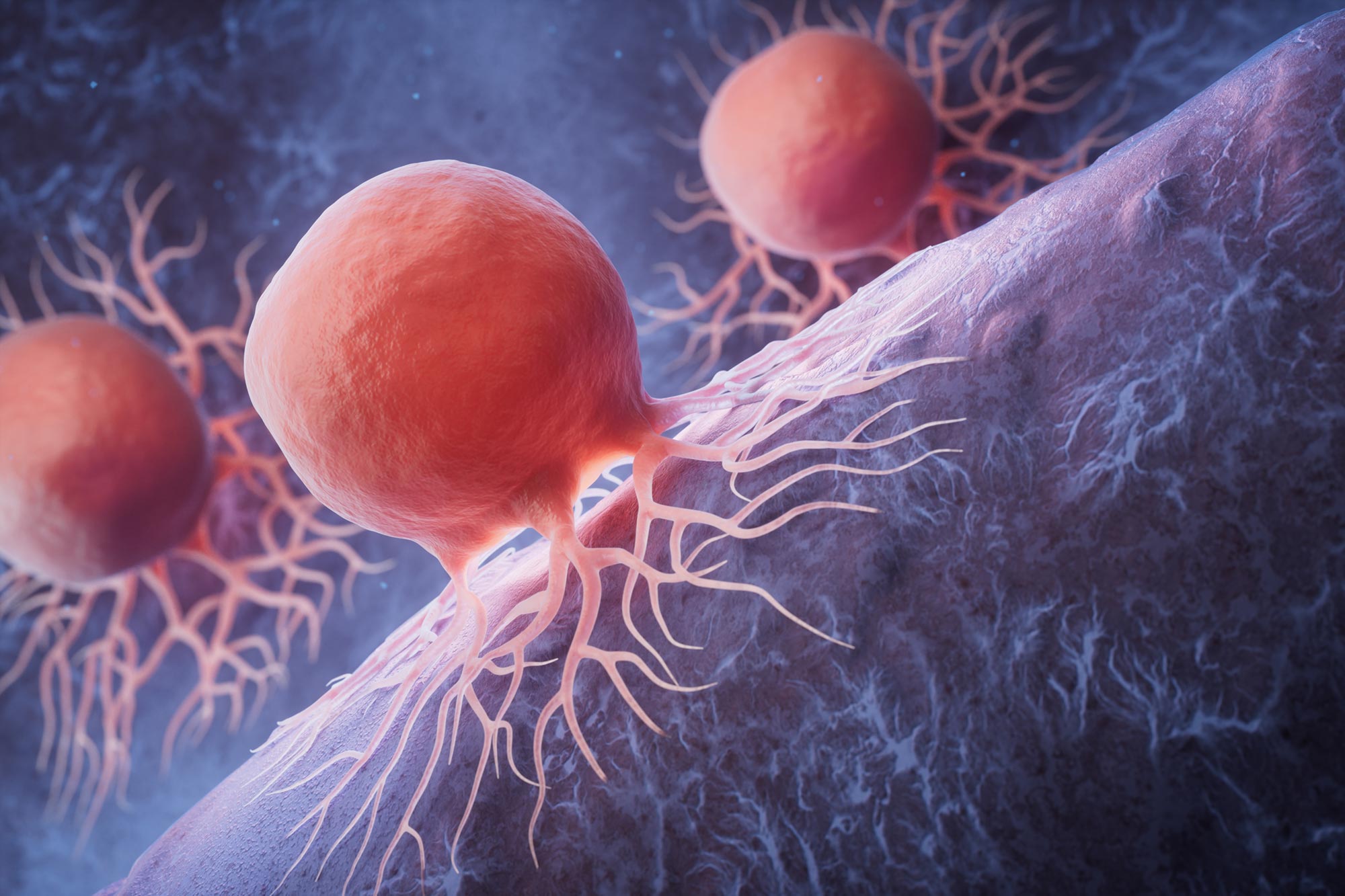
Researchers from UNIGE and Marburg have shown that D-cysteine, the “mirror” form of cysteine, can selectively target specific cancer cells.
Many cancer treatments harm healthy tissue along with tumors, often leading to serious side effects. To reduce this collateral damage, researchers are searching for therapies that act only on cancer cells. An international research team led by the Universities of Geneva (UNIGE) and Marburg has identified an unusual approach involving a “mirror” version of the amino acid cysteine.
This sulfur-containing molecule sharply slows the growth of certain cancers while leaving healthy cells unaffected. Because it is taken up mainly by specific cancer cells, the compound disrupts essential functions such as cellular respiration and DNA production.
In experiments with mice, this strategy significantly reduced the growth of aggressive breast tumors, suggesting a promising and highly targeted treatment avenue. The results are reported in Nature Metabolism.
A mirror molecule reveals selectivity
Amino acids are the basic building blocks of proteins and are essential for life. All organisms rely on the same set of 20 amino acids, which exist in two structural forms known as L (levorotatory) and D (dextrorotatory). These forms are mirror images of each other, comparable to left and right hands.
Although they share the same chemical makeup, their three-dimensional arrangement differs. Human cells almost exclusively use the L forms to build proteins, while D forms play little role in normal biology.
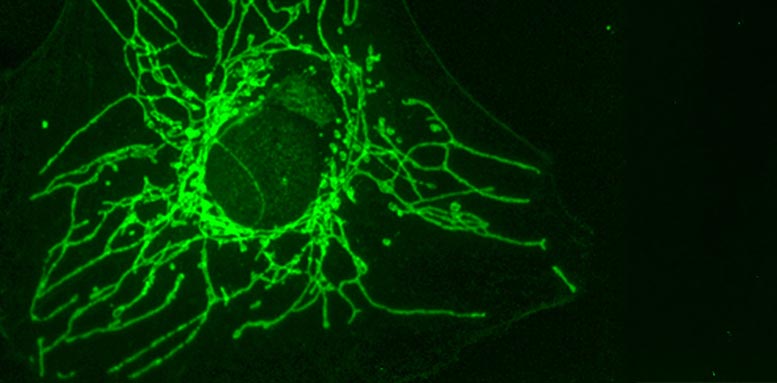
The research team, led by Jean-Claude Martinou, Honorary Professor in the Department of Molecular and Cellular Biology at the UNIGE Faculty of Science, examined how different amino acids influence cancer cell behavior. Their experiments revealed that the D form of cysteine (D-Cys), which contains a sulfur atom, strongly suppresses the growth of certain cancer cells in laboratory conditions. Notably, healthy cells were unaffected, highlighting a striking level of selectivity.
Cancer cells import their own weakness
“This difference between cancer cells and healthy cells is easily explained: D-Cys is imported into cells via a specific transporter that is present only on the surface of certain cancer cells,” explains Joséphine Zangari, a PhD student in Professor Martinou’s laboratory and the study’s first author. “In fact, we observed that if we express this transporter on the surface of healthy cells, those cells stop proliferating in the presence of D-Cys.”
Thanks to a collaboration with the team of Professor Roland Lill at the University of Marburg, the scientists uncovered how D-Cys exerts its toxicity: “It blocks an essential enzyme called NFS1, located in the mitochondria – the cell’s ‘powerhouses’. This enzyme plays a key role in producing iron-sulfur clusters, small structures that are indispensable for many processes such as cellular respiration, DNA and RNA production, and maintaining genetic integrity,” explains Roland Lill.
By inhibiting NFS1, D-Cys therefore shuts down a cascade of vital processes in cancer cells: respiration decreases, DNA is damaged, and the cell cycle halts.
Slowed tumor growth in mice
To evaluate the therapeutic potential of this approach, the researchers administered D-Cys to mice with highly aggressive, hard-to-treat mammary cancer. The results were encouraging: tumor growth slowed markedly, without major side effects in the animals.
“This is a very positive signal – we now know it’s possible to exploit this specificity to target certain cancer cells,” says Jean-Claude Martinou. “However, we still need to determine whether D-Cys could be administered at effective doses in humans without causing harm.”
If this proves to be the case, D-cysteine could offer a simple, innovative, and selective therapy for cancers that overexpress the relevant transporter. It could also play a role in preventing metastasis, a critical step in the progression of the disease.
Reference: “d-cysteine impairs tumour growth by inhibiting cysteine desulfurase NFS1” by Joséphine Zangari, Oliver Stehling, Sven A. Freibert, Kaushik Bhattacharya, Florian Rouaud, Veronique Serre-Beinier, Kinsey Maundrell, Sylvie Montessuit, Sabrina Myriam Ferre, Evangelia Vartholomaiou, Vinzent Schulz, Karim Zuhra, Víctor González-Ruiz, Sahra Hanschke, Takashi Tsukamoto, Michaël Cerezo, Csaba Szabo, Serge Rudaz, Michal T. Boniecki, Miroslaw Cygler, Roland Lill and Jean-Claude Martinou, 12 August 2025, Nature Metabolism.
DOI: 10.1038/s42255-025-01339-1
Never miss a breakthrough: Join the SciTechDaily newsletter.
Follow us on Google and Google News.
3 Comments
Interested in more information.
Sounds great. Let us know when it hits the market
Attract a Cancer cell kill it before it becomes two cells, attract it with a dummy cell . Iron simple sulfur covering a dead cell. The good cell will not be harmed. Slowly ween off when cancer is almost gone , making sure it is gone before stopping