
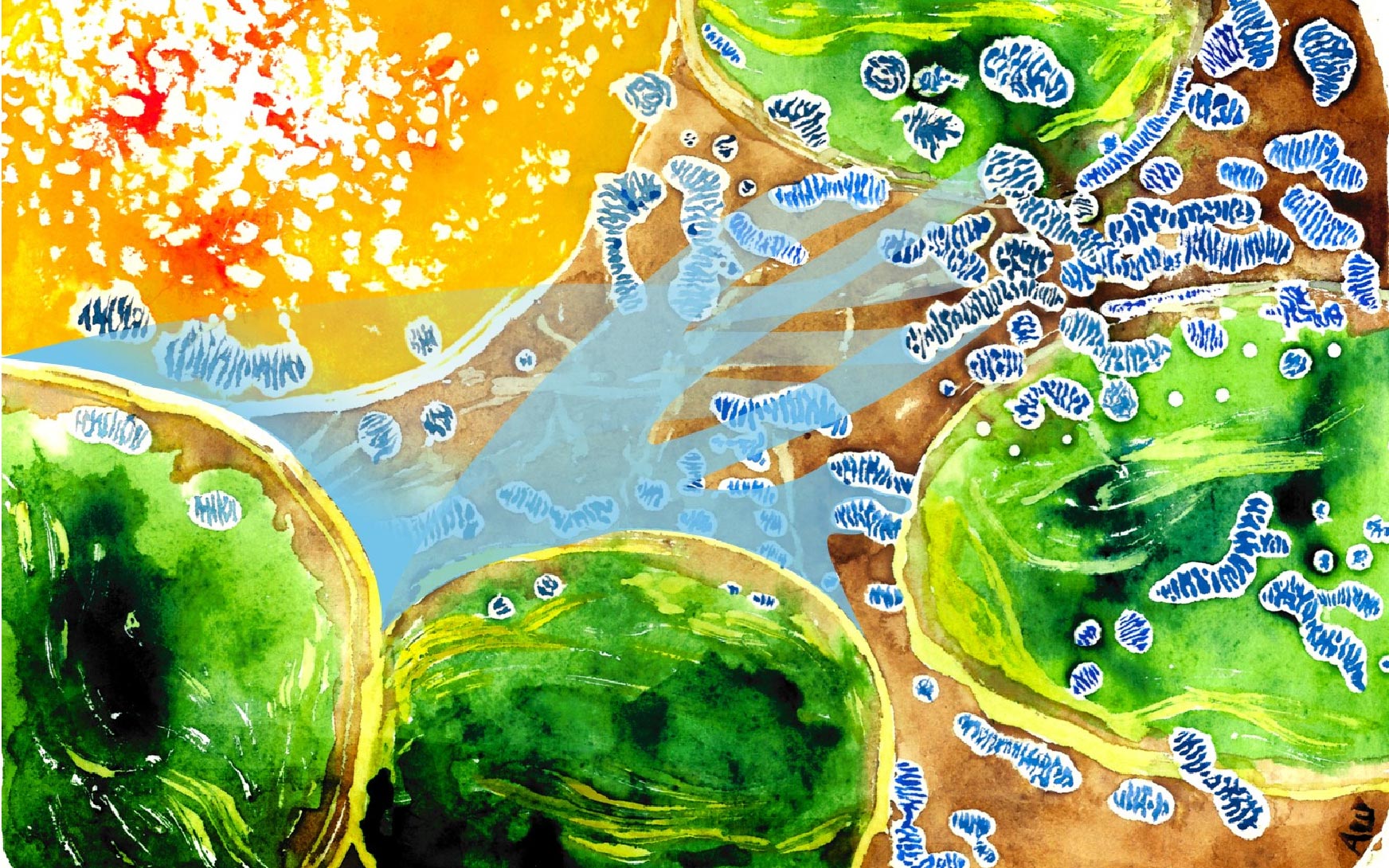
Scientists discovered that mitochondria inside plant cells can pull oxygen away from chloroplasts, revealing a hidden mechanism that may help plants adapt to stress.
A team of scientists at the University of Helsinki has discovered a previously unknown interaction inside plant cells. Their research shows that mitochondria can draw molecular oxygen away from chloroplasts. This finding reveals a new way plants may control oxygen levels within their tissues and provides fresh insight into plant metabolism and how plants adjust to environmental stress.
The study was led by Dr. Alexey Shapiguzov (PhD, Docent) at the University’s Centre of Excellence in Tree Biology on the Viikki campus. The results were published in the journal Plant Physiology.
Oxygen’s Essential Role in Plant Biology
Oxygen is vital for many aspects of plant life, including metabolism, growth, immune responses, and the ability to adapt to stressful conditions. Previous research from the University of Helsinki has shown that oxygen can even trigger wound healing in plants. Despite its importance, scientists still do not fully understand how oxygen levels are controlled inside plant tissues.
Within plant cells, oxygen activity is largely influenced by two organelles: mitochondria and chloroplasts. Mitochondria consume oxygen during cellular respiration to produce energy. Chloroplasts generate oxygen as a byproduct of photosynthesis.
Although both respiration and photosynthesis have been studied extensively, the movement of oxygen between these two organelles has remained poorly understood.
Using Arabidopsis to Study Mitochondrial Function
To explore this question, the research team studied genetically modified versions of the model plant Arabidopsis thaliana. These plants carried defects in their mitochondria that activate alternative respiratory enzymes. As a result, the mitochondria consume oxygen at a higher rate than usual.
The modified plants displayed two important characteristics:
- Increased mitochondrial respiration reduced oxygen levels in plant tissues.
- Chloroplasts in these plants became resistant to methyl viologen, a chemical that diverts electrons from photosystem I to oxygen, producing reactive oxygen species.
When researchers exposed the plants to nitrogen gas to create low oxygen conditions, the transfer of electrons to oxygen dropped sharply. This result indicated that methyl viologen was running out of the substance it needs to operate: oxygen.
Mitochondria Can Reduce Oxygen Inside Chloroplasts
The experiments point to a previously undocumented interaction inside plant cells. When mitochondria increase their oxygen consumption during stress, they can lower the oxygen concentration inside chloroplasts.
This internal “oxygen drain” affects photosynthesis and the metabolism of reactive oxygen species. These changes may help plants adjust to shifts in their environment.
According to Dr. Shapiguzov, “to our knowledge, this is the first evidence that mitochondria influence chloroplasts through intracellular oxygen exchange.” The finding adds a new dimension to scientists’ understanding of how plants regulate energy metabolism and respond to stress.
Implications for Plant Stress and Crop Research
Understanding how respiration and photosynthesis interact through oxygen exchange offers a clearer picture of plant energy management. It may also explain how plants respond to environmental challenges such as day and night cycles or flooding.
The discovery could also lead to improved techniques for measuring and imaging plant physiology. Such tools may assist plant breeders and help researchers detect stress in crops earlier.
Reference: “Mitochondria affect photosynthesis through altered tissue levels of O2” by Matleena Punkkinen, Bikash Baral, Olga Blokhina, Lucas León Peralta Ogorek, Minsoo Kim, Kurt Fagerstedt, Mikael Brosché, Lauri Nikkanen, Elizabeth Vierling, Ole Pedersen and Alexey Shapiguzov, 12 December 2025, Plant Physiology.
DOI: 10.1093/plphys/kiaf648
Never miss a breakthrough: Join the SciTechDaily newsletter.
Follow us on Google and Google News.