
The science of mental strength and resilience: How enduring mild physical discomfort helps the brain build new reference points for tolerance.
If the thought of going to the gym makes you groan, you’re not alone.
Let’s be honest: it’s called working out for a reason. While exercise is undeniably good for your health, it doesn’t always feel great, especially when you’re drenched in sweat, out of breath, making unflattering faces, and trying to think about anything other than your aching muscles.
Everyone has limits. But the biggest barriers to pushing through that “good pain” are often not physical. They’re mental. Personal experiences and past conditioning shape how much discomfort we believe we can tolerate. That belief becomes a roadblock. Many people stop long before their body truly needs to. Some avoid exercise entirely.
The good news is that your personal threshold for discomfort isn’t fixed. The brain is adaptable, thanks to its neuroplasticity, and it can change how it responds under pressure.
New research suggests that even people with low perceived exercise tolerance can build mental toughness by training key brain networks to handle the discomfort that comes with physical activity. According to study author Marcelo Bigliassi, this process enhances self-regulation—the ability to manage self-doubt, discouragement, and other negative emotions while staying focused during exercise—and makes it easier to maintain a consistent workout routine.
“Maybe you think you’re low-tolerant, that’s your personality, and there’s nothing you can do about it,” says Bigliassi, an FIU assistant professor who specializes in AI-driven neuroscience and the brain-body relationship. “Our data is showing the opposite. When we give people who are minimally active and low-tolerant a little physical stress, it gives them a new point of reference or comparison, so it’s easier for them to do something difficult again another time.”
That little bit of stress is the key.
The brain is naturally wired to learn from stressful experiences. Physical stress, such as intense exercise, activates the body’s systems for responding to threats—often called the fight-or-flight response—while also prompting long-term adaptations. These experiences create mental “reference points” that help the brain prepare for future challenges. In simple terms, your capacity for handling discomfort gradually increases over time.
“We have to remember stress has shaped humanity and is one of the only reasons we are here today,” Bigliassi says. “So now the question is: How can we use it to our advantage?”
Measuring brain and body responses to stress
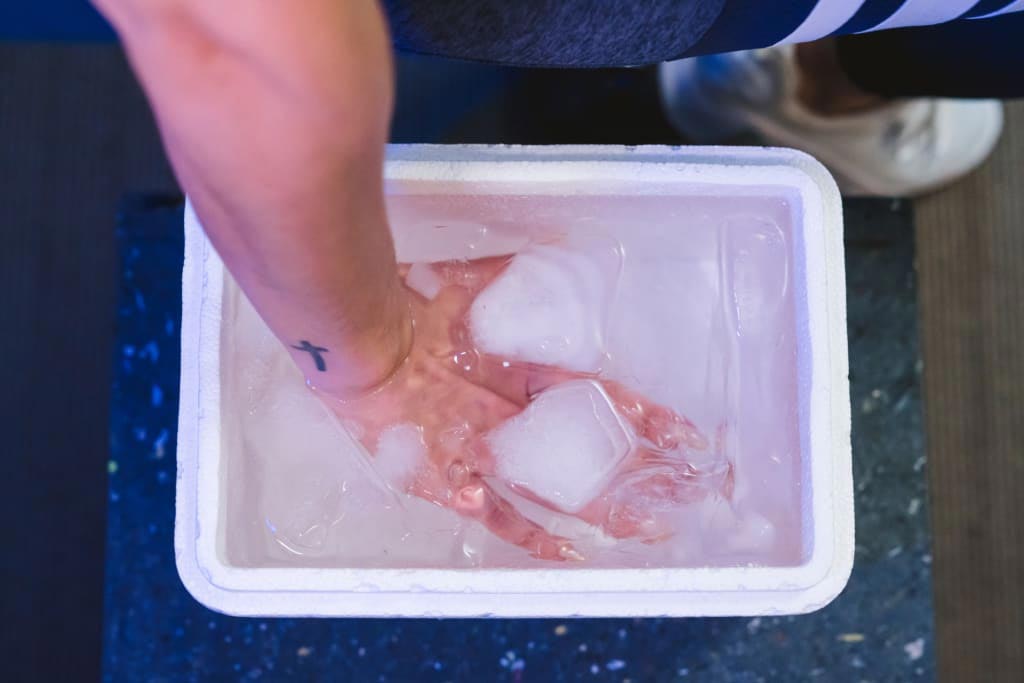
To find out, Bigliassi’s research group gets inside people’s heads when they’re in the grips of some seriously grueling acute stressors: vigorous exercise, as well as the notoriously brutal cold pressor test, which involves dunking a hand up to the wrist in ice water for a maximum of three minutes.
In addition to tracking brain activity with electroencephalography (EEG), then using AI models to interpret the data, the research team also gathers physiological measurements, like heart rate variability, and issues traditional questionnaires to gauge participants’ mood.
Even as a lifelong fitness enthusiast, who has personally experienced the myriad benefits of weightlifting and jiu jitsu, Bigliassi is fascinated by the findings.
Testing tolerance with cold water
The first of the team’s tolerance experiments explored the connection between people’s self-reported exercise tolerance and their ability to endure the cold pressor test without moving their hand or making a fist.
Across the board, high-tolerant people endured the discomfort for almost a minute longer than their lower-tolerant counterparts.
This was to be expected, says Dayanne Antonio, a Ph.D. student and teaching assistant in Bigliassi’s lab who helped lead the research. What was more intriguing: The low-tolerant group reported feeling more confident after the test was over.
“It made us wonder: If they put their hand in cold water before exercise, could it influence their experience at high intensities?” says Antonio.
Cold water priming makes exercise easier
For the follow-up study, recently published in Stress and Health, a group of 34 participants who were minimally active or didn’t exercise at all came to Bigliassi’s lab. They filled out a questionnaire and were told about the two tests, so they knew what to expect.
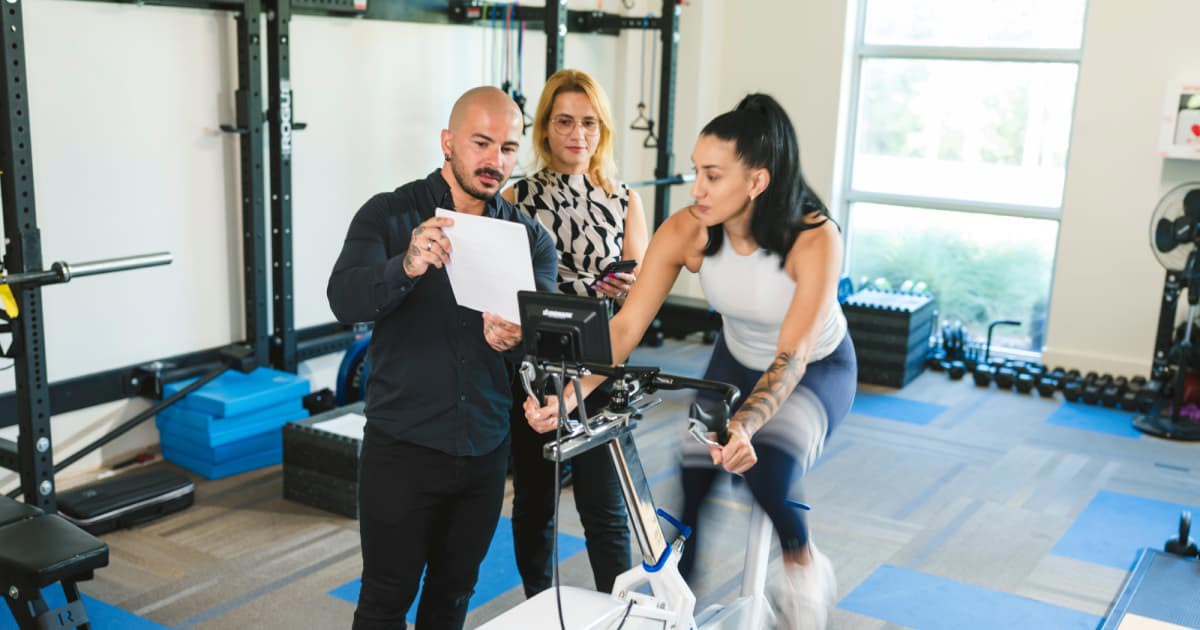
First came the cold pressor test. Immediately after, they hopped on an indoor bike for an explosive burst of cycling.
Was it absolute torture for them? Surprisingly, not quite. Participants reported the peak intensity as being, well, not so bad and yes, even enjoyable and less painful.
The takeaway isn’t necessarily to start experimenting with cold showers or ice baths (unless that’s something you’re interested in!)
“People will ask me that and I have to tell them, no, that’s not really the idea,” Antonio laughs. “It’s that pushing our limits changes how we perceive stress, discomfort, and pain and is the only way to build up the cognitive abilities that make you mentally resilient enough to deal with whatever comes your way.”
Pushing limits with the right strategy
Bigliassi agrees, noting it is necessary to confront challenges, with one caveat.
“You have to match the level of complexity to your current capabilities. The goal isn’t to fail, fail, fail because then you’ll only feel terrible,” he says. “We want you to do hard things that are hard for you. Not anyone else. Only you.”
For example, if you’ve been sedentary for years and walking is difficult for you, don’t start off trying to get 10,000 steps a day. Instead, Bigliassi suggests aiming for shorter distances and gradually working up to longer ones.
To an extent, there may be some truth to that old school motivational exercise motto, ‘no pain, no gain.’ Beyond what’s comfortable, there’s a lot of untapped potential for growth.
“I guess I like to make people stressed,” Bigliassi says. “But it’s because I want them to capitalize on stress, not be afraid of it. If my work helps make someone mentally stronger and more resilient, so they can have a good, long, healthy life, well, that would be amazing.”
Reference: “Pre-Stress Exposure and Psychophysiological Responses During Cycling” by Dayanne S. Antonio and Marcelo Bigliassi, 16 June 2025, Stress and Health.
DOI: 10.1002/smi.70062
Never miss a breakthrough: Join the SciTechDaily newsletter.
Follow us on Google and Google News.