
Feeding mice a compound found in sea squirts appeared to reverse key signs of brain aging. The lipid, known as plasmalogen, boosted neuron growth, reduced inflammation, and improved memory in lab tests.
Early human studies suggest similar benefits for women under 77 with mild cognitive decline. Scientists now wonder if plasmalogens could become powerful geroprotectors, but proving it in humans remains a challenge.
Sea Squirt Extracts Show Promise in Reversing Aging
Mice given extracts from a marine animal known as a sea squirt (so named because it squirts water when disturbed) showed a reversal of certain age-related effects, according to a scientific study from China.
The active substance in these extracts is called plasmalogens – a type of lipid (fat) found in the membranes of cells in many human organs, including the brain, kidneys, muscles, and lungs. Plasmalogens help cells communicate, guard against DNA damage, and reduce inflammation.
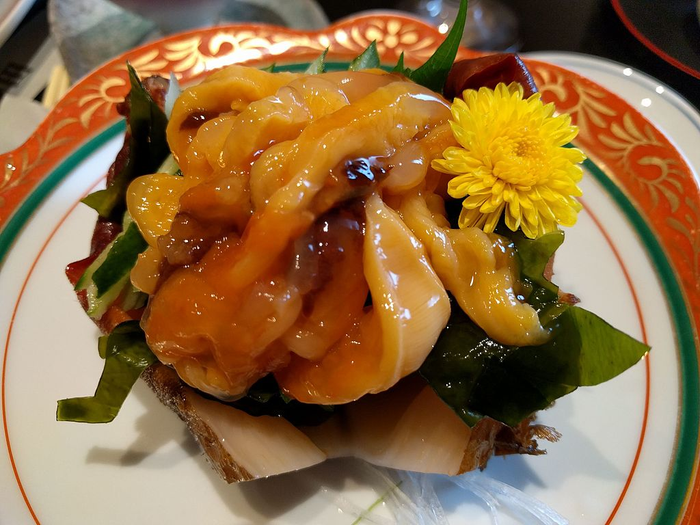
Previous studies have shown that levels of plasmalogens drop with age and are particularly low in people with Alzheimer’s disease, the most common form of dementia. These lipids are naturally present in foods such as chicken, pork, beef, mussels, scallops, and sea squirts, which are a common dish in Korea and Japan.

Testing High-Dose Plasmalogens in Mice
In this new experiment, researchers gave middle-aged female mice concentrated doses of plasmalogens – roughly 300 to 500 times more than what would be found in a typical serving of chicken or scallops. After treatment, the scientists tested the animals’ memory and several brain functions known to change with age.
They examined the number of neural stem cells (which create new brain cells) and the number of synaptic connections between neurons. Both are essential for learning, reasoning, and memory.
Improved Brain Health and Less Inflammation
After two months, the mice receiving plasmalogens showed higher numbers of stem cells and neural connections compared with mice on a normal diet. They also exhibited a sharp drop in inflammation. Because inflammation increases with age and is linked to Alzheimer’s progression, this reduction may be significant.
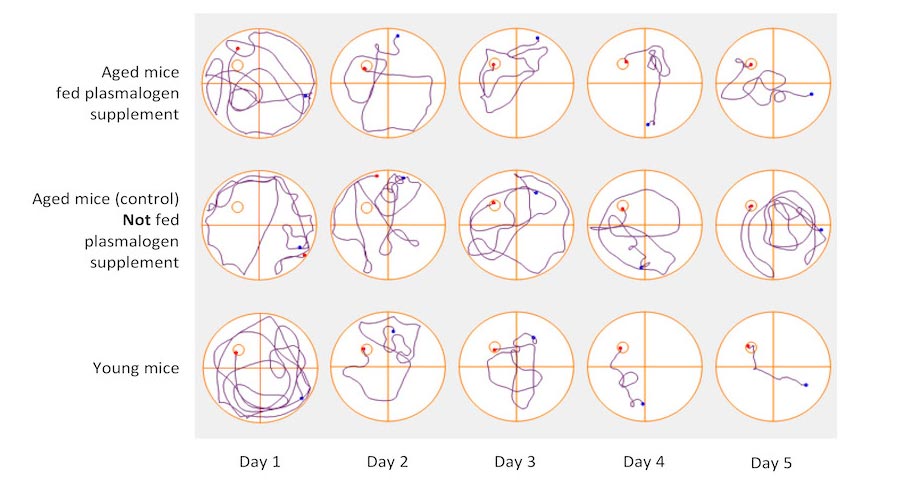
The team also assessed memory using the Morris water maze, a test that relies on the animals’ sensory abilities, including sight. The treated mice performed better on this test, suggesting enhanced cognitive function.
How a Morris water maze task works.
Interpreting the Findings
However, since older mice often lose sensory abilities such as vision and hearing, researchers caution that the apparent improvement in memory could be partly due to restored sensory function rather than better memory itself.
Earlier human studies back up some of these findings. In one trial, people with mild cognitive impairment took plasmalogens derived from scallops twice daily for 24 weeks. Participants showed better memory performance, but the improvement was limited to women under 77 years old. Scientists have not yet determined why only this subgroup benefited, and further large-scale studies are needed.

Could Plasmalogens Be Anti-Aging Drugs?
Researchers are investigating whether plasmalogens could belong to a class of compounds called “geroprotectors” – drugs designed to slow cellular aging and reduce the risk of age-related diseases. Scientists also want to learn if their benefits extend beyond the brain to other organs, including the heart, muscles, and immune system.
More than 200 potential geroprotectors have already been tested in animals. Many have improved organ function, and some have delayed or reduced chronic conditions such as osteoarthritis, heart disease, osteoporosis, and Alzheimer’s disease in lab studies.
Challenges in Testing Anti-Aging Treatments
Testing such drugs in humans is difficult because clinical trials usually focus on people who already have a specific disease. Geroprotectors may be more effective when used before diseases develop, which requires identifying who is at risk and tracking them over long, costly studies.
Scientists are now developing ways to predict who is most likely to develop age-related illnesses, thereby shortening testing times. Still, questions remain about whether geroprotectors are cost-effective and safe for long-term use. It’s also possible that lifestyle measures, such as a healthier diet and regular exercise, could offer similar, or even greater, benefits for healthy aging.
Reference: “Plasmalogens Eliminate Aging-Associated Synaptic Defects and Microglia-Mediated Neuroinflammation in Mice” by Jinxin Gu, Lixue Chen, Ran Sun, Jie-Li Wang, Juntao Wang, Yingjun Lin, Shuwen Lei, Yang Zhang, Dan Lv, Faqin Jiang, Yuru Deng, James P. Collman and Lei Fu, 2 February 2022, Frontiers in Molecular Biosciences.
DOI: 10.3389/fmolb.2022.815320
Written by Ilaria Bellantuono, Professor of Musculoskeletal Ageing, University of Sheffield.
Adapted from an article originally published in The Conversation.
Never miss a breakthrough: Join the SciTechDaily newsletter.
Follow us on Google and Google News.
1 Comment
I knew is was going to be something squishy.
Can you fry it?