
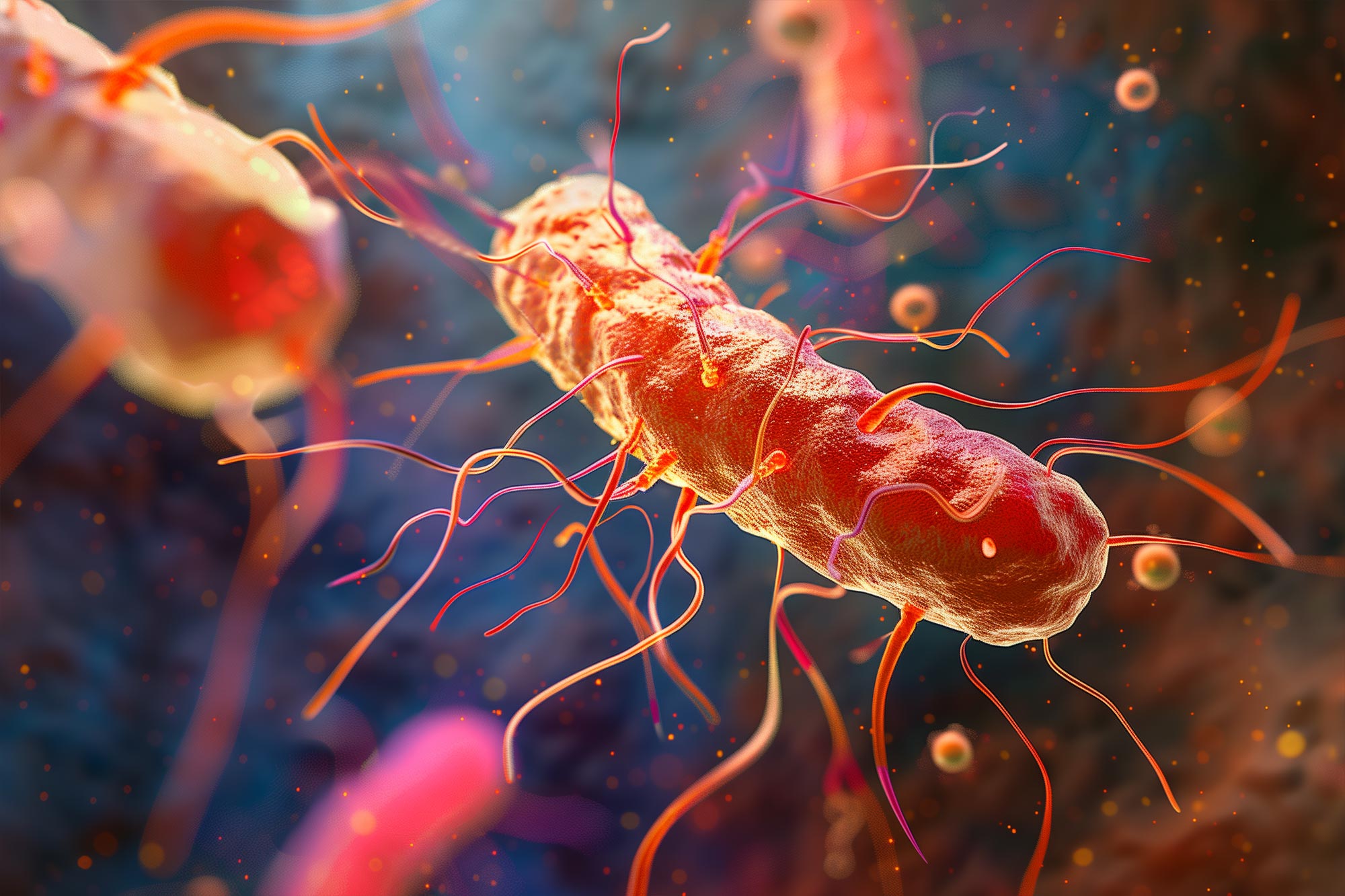
Scientists were shocked to discover that microplastics don’t just pollute the environment, they may also be fueling the rise of drug-resistant bacteria.
Boston University researchers found that bacteria exposed to plastic particles became stronger against antibiotics, raising serious public health concerns. The impact could be especially severe in refugee communities, where plastic waste accumulates and infections spread easily. As microplastics continue to infiltrate our water, food, and air, they may be silently empowering superbugs in ways we never expected.
Microplastics: A Hidden Global Threat
Microplastics—tiny fragments of plastic waste—are everywhere. They have entered food chains, accumulated in oceans, drifted through clouds, settled on mountaintops, and even made their way into human bodies at alarming rates. Scientists are working urgently to understand the hidden consequences of this widespread pollution.
One surprising and troubling discovery: microplastics may be contributing to antibiotic resistance.
Boston University’s Startling Discovery
Researchers at Boston University found that bacteria exposed to microplastics became resistant to multiple antibiotics commonly used to treat infections. This raises particular concerns for people living in overcrowded, underserved areas, such as refugee settlements, where plastic waste accumulates and bacterial infections spread more easily. The study, published on March 11 in Applied and Environmental Microbiology, highlights a growing public health risk.
“The fact that there are microplastics all around us, and even more so in impoverished places where sanitation may be limited, is a striking part of this observation,” says Muhammad Zaman, a Boston University College of Engineering professor of biomedical engineering who studies antimicrobial resistance and refugee and migrant health. “There is certainly a concern that this could present a higher risk in communities that are disadvantaged, and only underscores the need for more vigilance and a deeper insight into [microplastic and bacterial] interactions.”
Why Microplastics Are a Breeding Ground for Superbugs
It’s estimated that there are 4.95 million deaths associated with antimicrobial-resistant infections each year. Bacteria become resistant to antibiotics for many different reasons, including the misuse and overprescribing of medications, but a huge factor that fuels resistance is the microenvironment—the immediate surroundings of a microbe—where bacteria and viruses replicate. In the Zaman Laboratory at BU, researchers rigorously tested how a common bacteria, Escherichia coli (E. coli), reacted to being in a closed environment with microplastics.
“The plastics provide a surface that the bacteria attach to and colonize,” says Neila Gross (ENG’27), a BU PhD candidate in materials science and engineering and lead author of the study. Once attached to any surface, bacteria create a biofilm—a sticky substance that acts like a shield, protecting the bacteria from invaders and keeping them affixed securely. Even though bacteria can grow biofilms on any surface, Gross observed that the microplastic supercharged the bacterial biofilms so much that when antibiotics were added to the mix, the medicine was unable to penetrate the shield.
Why Are Microplastic Biofilms So Dangerous?
“We found that the biofilms on microplastics, compared to other surfaces like glass, are much stronger and thicker, like a house with a ton of insulation,” Gross says. “It was staggering to see.” The rate of antibiotic resistance on the microplastic was so high compared to other materials, that she performed the experiments multiple times, testing different combinations of antibiotics and types of plastic material. Each time, the results remained consistent.
“We’re demonstrating that the presence of plastics is doing a whole lot more than just providing a surface for the bacteria to stick—they are actually leading to the development of resistant organisms,” Zaman says. He directs BU’s Center on Forced Displacement, which has a mission to improve the lives of displaced people around the world. Past research has found that refugees, asylum seekers, and forcibly displaced populations are at an increased risk of contracting drug-resistant infections, due to living in overcrowded camps and having heightened barriers to receiving healthcare.
The Human Cost: Refugees and Drug Resistance
“Historically, people have associated antibiotic resistance with patient behavior, like not taking antibiotics as prescribed. But there is nothing a person has done to be forced to live in a particular environment, and the fact is they are at a higher exposure to resistant infections,” Zaman says. That’s why the environmental and social causes of drug-resistant superbugs cannot be ignored, he says. As of 2024, there were an estimated 122 million displaced people worldwide. According to Zaman, the prevalence of microplastics could be adding another element of risk to already underfunded, and understudied, health systems that serve refugees.
Next Steps: Unraveling the Mystery of Plastic and Bacteria
Gross and Zaman say that the next step in their research is to figure out if their findings in the lab translate to the outside world. They hope to begin studies with research partners overseas to watch refugee camps for microplastic-related antibiotic-resistant bacteria and viruses. They also aim to figure out the exact mechanisms that allow bacteria to hold such a strong grip on plastic.
“Plastics are highly adaptable,” Gross says, and their molecular composition could help bacteria flourish—but it’s unclear how that happens. One theory, she says, is that plastics repel water and other liquids, which allow bacteria to easily attach themselves. But over time, the plastics start to take in moisture. That means it’s possible for microplastics to absorb antibiotics before they reach the target bacteria. They also found that even when the microplastics were removed from the equation, the bacteria they once housed kept the ability to form stronger biofilms.
A Call to Action for Scientists and Engineers
“Too often, these issues are viewed from a lens of politics or international relations or immigration, and all of those are important, but the story that is often missing is the basic science,” Zaman says. “We hope that this paper can get more scientists, engineers, and more researchers to think about these questions.”
Explore Further: Microplastics Are Fueling the Rise of Deadly Superbugs
Reference: “Effects of microplastic concentration, composition, and size on Escherichia coli biofilm-associated antimicrobial resistance” by Neila Gross, Johnathan Muhvich, Carly Ching, Bridget Gomez, Evan Horvath, Yanina Nahum and Muhammad H. Zaman, 11 March 2025, Applied and Environmental Microbiology.
DOI: 10.1128/aem.02282-24
This work was supported by the National Science Foundation.
Never miss a breakthrough: Join the SciTechDaily newsletter.
Follow us on Google and Google News.