

New study reveals metabolic pathway linked to weight gain in mice.
Soybean oil is the most commonly used cooking oil in the United States and a frequent ingredient in processed foods, and research suggests it plays a role in promoting obesity in mice. Scientists are beginning to uncover the biological reasons behind this effect.
In a UC Riverside study, most mice fed a high-fat diet containing large amounts of soybean oil experienced notable weight gain. A separate group of genetically engineered mice did not. These modified mice produced a slightly different version of a liver protein that regulates hundreds of genes involved in fat metabolism. This altered protein also seems to affect how the body handles linoleic acid, the primary fatty acid found in soybean oil.
“This may be the first step toward understanding why some people gain weight more easily than others on a diet high in soybean oil,” said Sonia Deol, a UCR biomedical scientist and corresponding author of the study published in the Journal of Lipid Research.
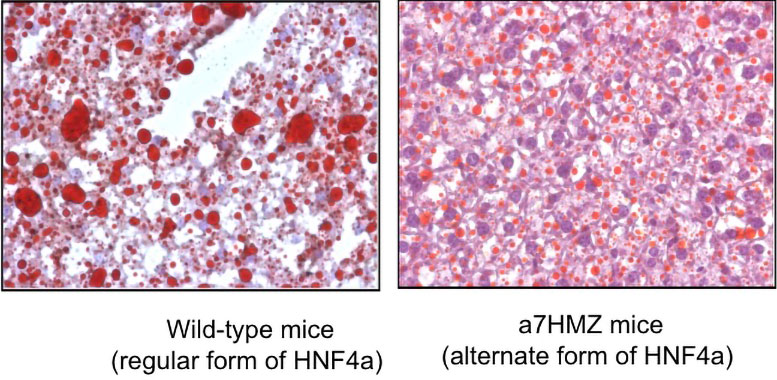
A Human Parallel: Two Forms of HNF4α
Humans also produce two forms of the liver protein HNF4α, although the less common version usually appears only in specific situations, including chronic disease or metabolic stress caused by fasting or alcoholic fatty liver. This difference, combined with factors such as age, sex, medication use, and genetic background, may clarify why some individuals respond more strongly than others to the metabolic influence of soybean oil.
The study builds on earlier work by UCR researchers linking soybean oil to weight gain. “We’ve known since our 2015 study that soybean oil is more obesogenic than coconut oil,” said Frances Sladek, a UCR professor of cell biology. “But now we have the clearest evidence yet that it’s not the oil itself, or even linoleic acid. It’s what the fat turns into inside the body.”
Linoleic acid is transformed in the body into compounds known as oxylipins. When linoleic acid is consumed in large amounts, these oxylipins can rise to higher levels, and they have been linked to inflammation and the buildup of body fat.
In the study, the genetically engineered (transgenic) mice produced far fewer oxylipins and had healthier liver tissue even though they consumed the same high-fat soybean oil diet as the regular mice. They also showed improved mitochondrial activity, which may help account for why they did not gain as much weight.
Which Oxylipins Matter Most?
The researchers narrowed the obesity-linked compounds down to specific types of oxylipins derived from linoleic acid and alpha-linolenic acid, another fatty acid found in soybean oil. These oxylipins were necessary for weight gain in regular mice.
However, transgenic mice on a low-fat diet also had elevated oxylipins without becoming obese, suggesting that the presence of these molecules alone isn’t enough, and other metabolic factors likely contribute to obesity.
Additional analysis revealed that the altered mice had much lower levels of two key enzyme families responsible for converting linoleic acid into oxylipins. Notably, the function of these enzymes is highly conserved across all mammals, including humans. Levels of these enzymes are known to be highly variable based on genetics, diet, and other factors.
The team also noted that only oxylipin levels in the liver, and not the in the blood, correlated with body weight. This means common blood tests may not reliably capture early metabolic changes linked to diet.
Rising Consumption and Health Concerns
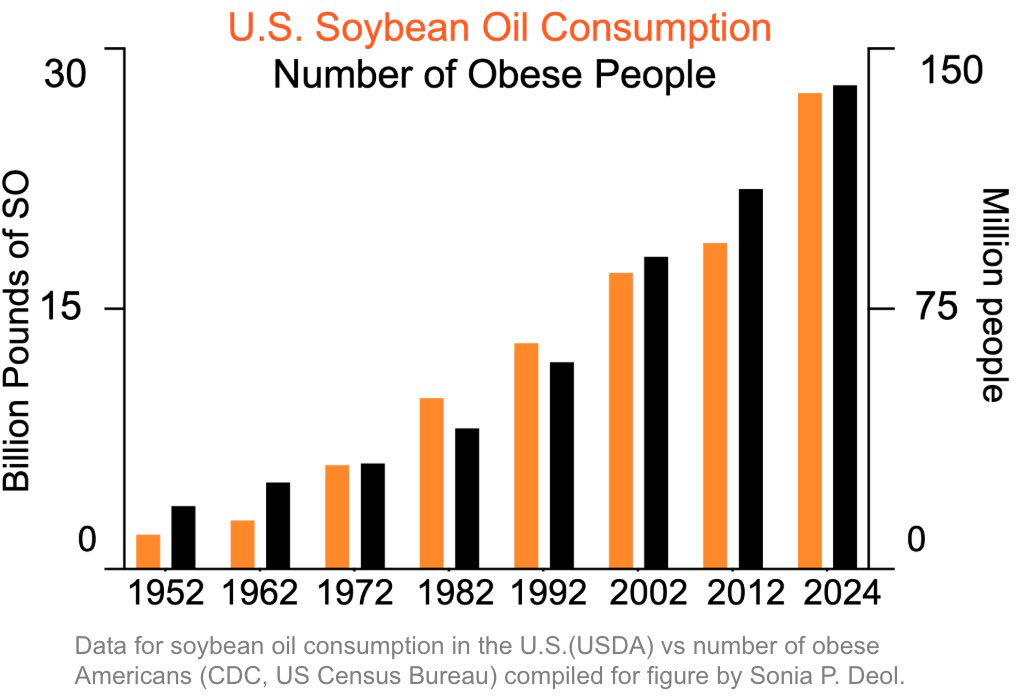
Soybean oil consumption in the U.S. has increased five-fold in the past century, from about 2% of total calories to nearly 10% today. Although soybeans are a rich source of plant-based protein and their oil contains no cholesterol, the overconsumption of linoleic acid, including from ultra-processed foods, may be fueling chronic metabolic conditions.
Additionally, despite the lack of cholesterol in the oil, the UCR study found that consumption of soybean oil is associated with higher cholesterol levels in mice.
The researchers are now exploring how oxylipin formation causes weight gain, and whether similar effects occur with other oils high in linoleic acid, such as corn, sunflower, and safflower.
“Soybean oil isn’t inherently evil,” Sladek said. “But the quantities in which we consume it are triggering pathways our bodies didn’t evolve to handle.”
Though no human trials are planned, the team hopes these findings will help guide future research and inform nutrition policy.
“It took 100 years from the first observed link between chewing tobacco and cancer to get warning labels on cigarettes,” Sladek said. “We hope it won’t take that long for society to recognize the link between excessive soybean oil consumption and negative health effects.”
Reference: “P2-HNF4α Alters Linoleic Acid Metabolism and Mitigates Soybean Oil-Induced Obesity: Role for Oxylipins” by Poonamjot Deol, Johannes Fahrmann, Dmitry Grapov, Jun Yang, Jane R. Evans, Oliver Fiehn, Brett Phinney, Bruce D. Hammock and Frances M. Sladek, 28 October 2025, Journal of Lipid Research.
DOI: 10.1016/j.jlr.2025.100932
Never miss a breakthrough: Join the SciTechDaily newsletter.
Follow us on Google and Google News.
4 Comments
I am a medical anthropologist researcher and author. This mouse research, of unknown applicability to humans, ignores many important variables. There is a big problem with nutrition research. See my article, Why Nutrition Research is Unreliable. https://www.academia.edu/126067247/Why_Nutrition_Research_is_Unreliable
While I agree that mouse studies aren’t very applicable to humans, there IS a growing body of evidence showing linoleic acid’s harmful effects of the body, as well as an understanding of the biochemistry in which it interacts with the body as well (as a very unstable, multiple double bond fat, when compared to a more stable fat such as stearic acid), understanding that heating the oil to high temperatures produces aldehydes, more than, I believe it was 28 cigarettes? i honestly couldn’t give you a measurement of the amount of oil they measured to show how many aldehydes were found in the given source, but I could reply to you with my sources if you’d like. One could argue for just eating “raw” linoleic acid, with vitamin E in the raw form from the nut or seed, to halt the oxidative stress the oils put on the body, however the unstable fats would still be going into the cells walls and fat cells, causing increased permeability, lower tolerance to possible stressors, plus others I’m honestly forgetting right now because I just woke up haha. Anyways, let me know if you see any problems with my comment. I’d also like to add a little n=1 anecdote: I’ve removed all possible linoleic acid, apart from the 2% found in dairy fat and beef fat, and the amount within higher quality eggs (CICO farmed eggs, and chicken, have very high LA from their diets of corn and soy), from my diet, and I have only seen weight loss, better mental preformance, energy production, honestly, you name it my body seems better at it now. Plus, I can eat more calories than I did before so that’s pretty nice 😀 lil metabolism boosting effect when the mitochondria aren’t dealing with linoleic acid yk. Anyways, let me know about any holes in my arguments, and I’ll be sure to check it out!
others I’m honestly forgetting right now because I just woke up haha. Anyways, let me know if you see any problems with my comment. I’d also like to add a little n=1 anecdote: I’ve removed all possible linoleic acid, apart from the 2% found in dairy fat and beef fat, and the amount within higher quality eggs (conventionally farmed eggs, and chicken, have very high LA from their diets of corn and soy), from my diet, and I have only seen weight loss, better mental preformance, energy production, honestly, you name it my body seems better at it now. Plus, I can eat more calories than I did before so that’s pretty nice 😀 lil metabolism boosting effect when the mitochondria aren’t dealing with linoleic acid yk. Anyways, let me know about any holes in my arguments, and I’ll be sure to check it out
Sorry for the duplicate comment, the website wasn’t showing it so I tried to send it again. I will say though, I don’t mean CICO eggs that’s not a thing, CAFO is what I meant. Dietary terms getting stuck in my head haha.