
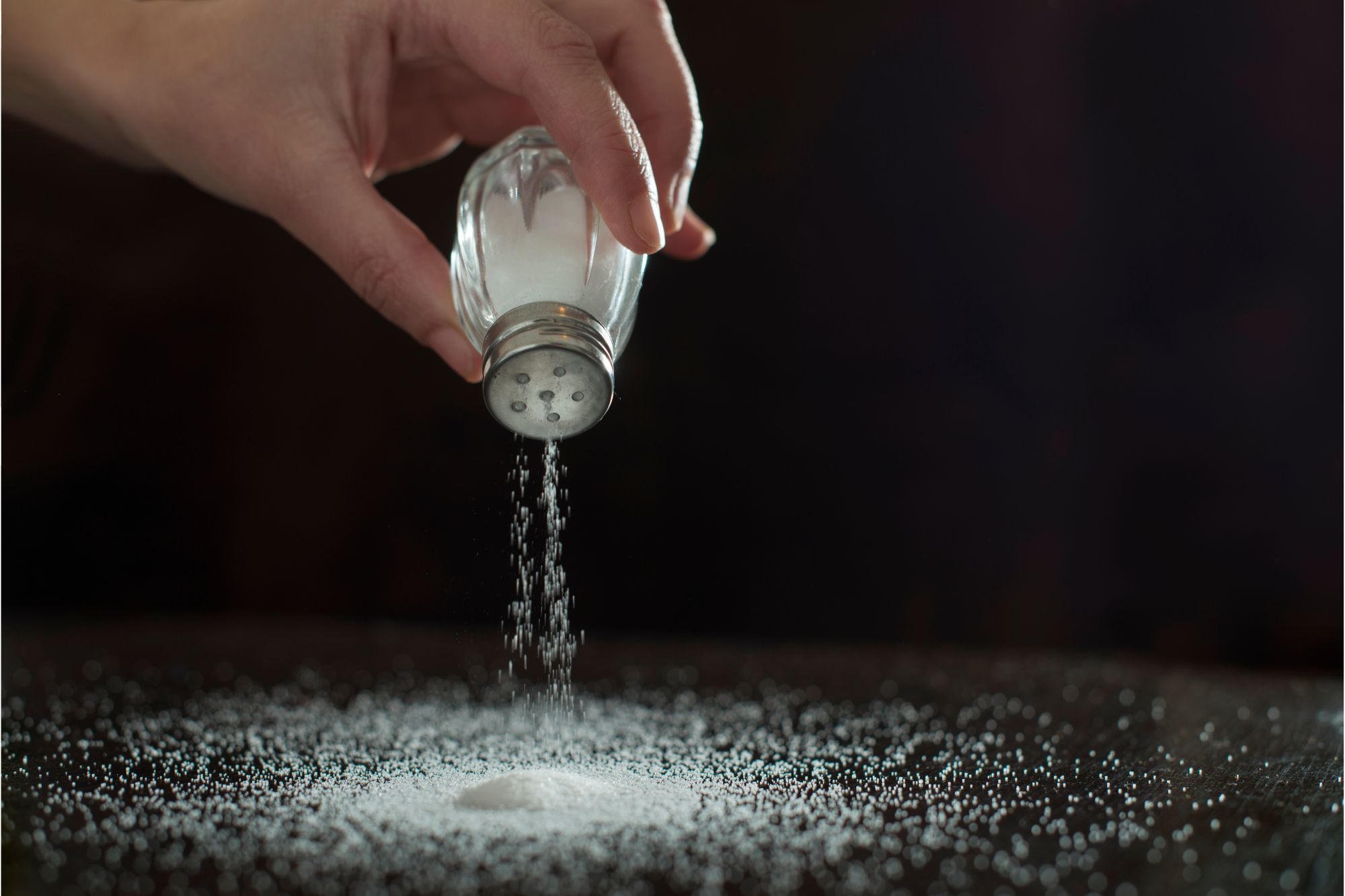
High sodium intake is linked to greater obesity risk, particularly in women, even when it comes from everyday foods.
New research to be presented at the European Congress on Obesity (ECO 2025), taking place in Malaga, Spain (11–14 May), highlights a link between dietary sodium intake and the risk of both general and abdominal obesity. The study was led by Annika Santalahti of the Finnish Institute for Health and Welfare in Helsinki, Finland, along with colleagues.
General obesity is typically assessed using body mass index (BMI), with the World Health Organization (WHO) defining obesity as a BMI of 30 kg/m² or higher. Abdominal obesity refers to excess fat accumulation around the abdomen and internal organs, resulting in an increased waist circumference. This type of obesity is particularly concerning, as it has been linked to a heightened risk of cardiovascular disease.
There is growing evidence supporting a positive association between sodium consumption and the risk of obesity. In Finland, sodium intake—which had declined after peaking in the 1970s when the country experienced some of the highest rates of heart disease in the world—has remained relatively stable since 2007.
The authors explain: “Contrary to popular belief, high sodium intake is not mainly caused by unhealthy foods, but by ordinary everyday food. In Finland, most sodium is obtained from processed meat products, bread and dairy products, especially cheese. High sodium intake cannot only be addressed at an individual level – changes at the population level are also needed and can only be achieved through cooperation with the food industry.”
Study Methodology and Data Collection
In this new study, the authors examined the association between sodium intake, urine sodium concentration, and both general and abdominal obesity in Finnish adults. They used population-based data taken from the National FinHealth 2017 Study (men=2222, women=2792, aged 18 years or older). Sodium intake was estimated using a validated food frequency questionnaire. Spot urine samples were collected from a subsample of participants (men= 558; women= 702). Body mass index and waist circumference were used to measure general and abdominal obesity.
Sodium intake and urine sodium concentrations were stratified into sex-specific quartiles (equal-sized groups of 25% from highest to lowest), and statistical modelling analyses were conducted, adjusting for common sociodemographic and lifestyle confounders. In validity analyses, spot urine samples were compared against 24-hour urine collections.
The results showed that the median sodium intake (converted to salt intake) was higher than recommended (WHO’s recommendation of 5 grams or less per day) across all quartiles except the lowest quartile of women who remained below the recommendation limit. For men and women combined, the sodium intake level in the highest quartile was 2.3 times higher than in the lowest quartile.
The differences in sodium consumption between men and women (always higher in men) was found to be approximately the same across quartiles. Based on the questionnaire self-reported values, mean sodium intake in the highest quartile was approximately 4900 mg/day in men and 3750 mg/day in women. These values convert to more than 12 grams (men) or 9 grams (women) of daily salt (sodium chloride) – more than double what is recommended by WHO for men, and almost double for women.
Link Between Sodium and Obesity
The authors found that participants with high dietary sodium intake or high urine sodium concentration were more likely to have general or abdominal obesity. In the fully adjusted model, women in the highest quartile (25%) of sodium intake were 4.3 times more likely to have general obesity and 3.4 times more likely to have abdominal obesity compared with women in the lowest quartile. Women in the second highest quartile were also 2.4 times more likely to have general obesity than women in the lowest quartile.
Similar associations were observed when urine sodium concentration was used as an independent variable, suggesting the estimated sodium intake from food questionnaires and the amount in tested urine were in line with each other. For example, using urinary sodium, women in the highest quartile were 4.8 times more likely to be living with obesity to those in the lowest quartile (similar to the 4.3 times increase found for sodium intake assessed by questionnaire).
For men, while the pattern of increased obesity risk was similar to women for sodium consumption assessed by questionnaire, the results did not reach statistical significance across all quartiles. However, for urine sodium concentration, the results were statistically significant for men: those in the highest quartile (25%) of urine sodium concentration were 6 times more likely to have general obesity and 4.7 times more likely to have abdominal obesity compared to men in the lowest quartile in the fully adjusted model.
The validity analyses suggested a moderately good agreement between sodium found in spot urine and 24-hour urine collections, suggesting that subjects were well categorized into low and high sodium intake categories based on spot urine sodium concentration.
On the stronger association shown for men, the authors say: “In general, men consume more food, and also more of foods that are the main food sources of sodium in the diet, such as meat products, bread and bakery products, and cheese. Our analyses were adjusted for total energy intake, and therefore the stronger associations in men might be due to the higher salt intake relative to total energy intake. However, regardless of the magnitude of the relationship, the associations were in similar direction in both men and women.”
The Role of the Food Industry and Future Directions
The authors conclude: “These results strengthen the evidence of an association between sodium intake and obesity, with similar findings observed for both dietary sodium and urine sodium concentration. It is important to gain more understanding about the biological mechanism of the relationship.”
On the association between sodium intake and obesity, the authors say: “The association between salt intake and obesity is still very unclear, and there are no waterproof explanations for the differences between sexes nor for the phenomenon in general. Research data is still very limited, but possible biological explanations have included changes in the secretion of satiety hormones as a result of long-term exposure to high salt intake. High salt intake may also act as a proxy for nutrition quality as a whole – overconsumption of food giving high levels of sodium and increasing the risk of obesity, possibly reflecting overconsumption of ultra-processed, high-sodium foods. However, further research is needed on the overall nutrition and nutrition quality of those with high sodium diets, but also research on the biological mechanisms of high sodium intake, for example on satiety, the gut microbiome and body composition.”
They add that all aspects of the diet need to be carefully examined to tackle excess sodium intake, saying: “In our view, the food industry plays a significant role in reducing the population’s sodium intake, as the majority of food consumption comes from sources other than unprocessed primary production. It is important to pay attention to how salty commonly consumed daily foods are, as these account for a large proportion of the daily sodium intake. Of course, general changes in the food environment also play a role, such as whether food is prepared at home or consumed in restaurants or as takeaway food.”
Reference: “Association between sodium intake, spot urine sodium concentration and obesity: a population-based study” by Annika Santalahti, Tarja Inkeri Kinnunen, Satu Männistö, Heli Tapanainen and Niina Eerika Kaartinen, 26 March 2025, European Congress on Obesity (ECO2025).
Never miss a breakthrough: Join the SciTechDaily newsletter.
Follow us on Google and Google News.