
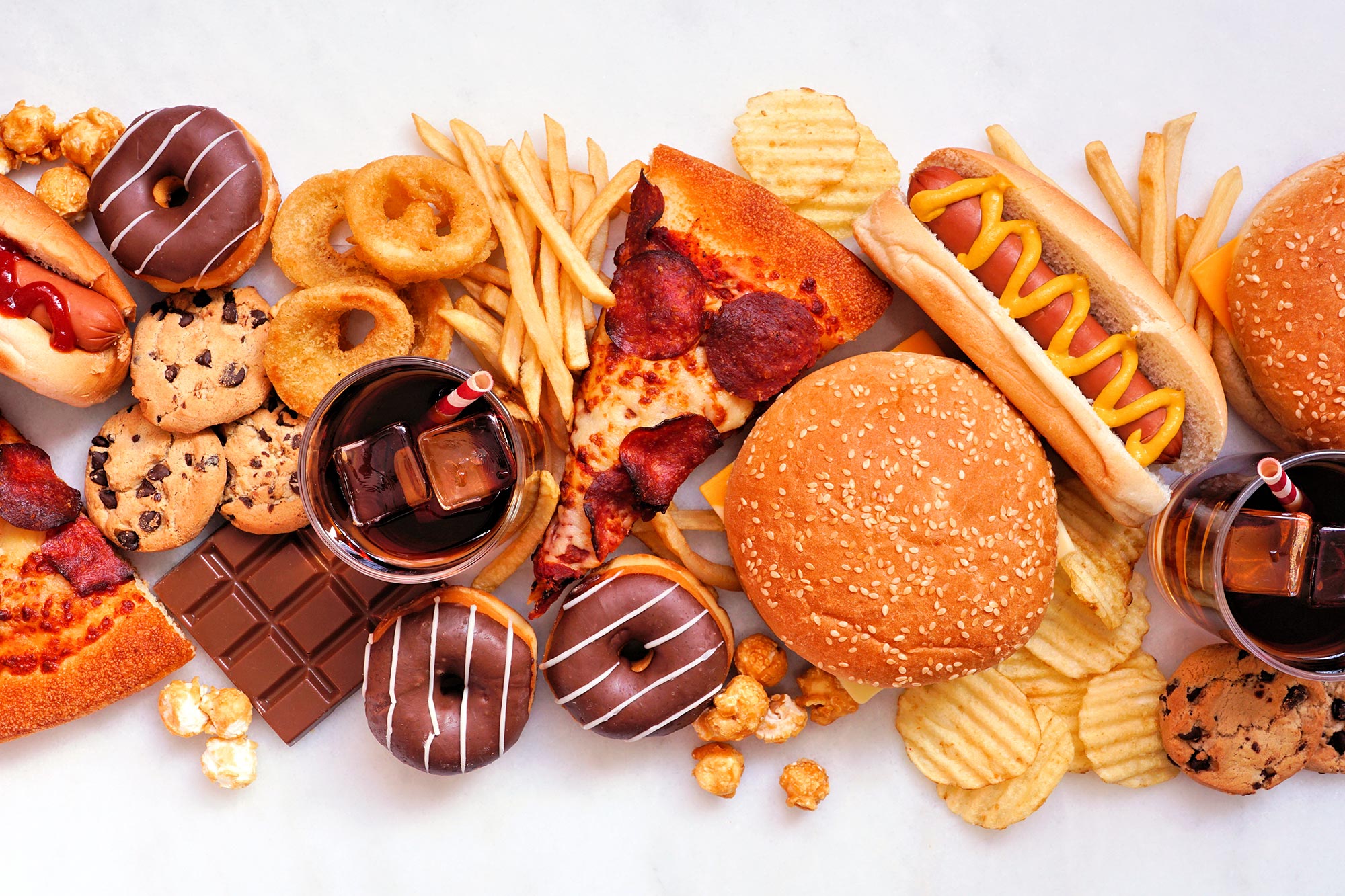
Perceptions of foods drive overeating more than labels like “ultra-processed.” Researchers call for personalized approaches that address psychology and motivation in eating.
Ultra-processed foods (UPFs) are increasingly portrayed as the chief culprit in modern nutrition debates. They are linked to conditions ranging from dementia to obesity and what some describe as an epidemic of “food addiction.”
These industrially produced items—such as chips, ready meals, fizzy drinks, and packaged snacks—are frequently blamed for today’s widespread health challenges. Critics argue that they are “specifically formulated and aggressively marketed to maximize consumption and corporate profits,” exploiting the brain’s reward systems to push us to eat more than we need.
Policymakers have suggested strong measures, including warning labels, marketing restrictions, taxes, and even outright bans near schools. But to what extent is this urgency supported by reliable evidence?
My colleagues and I wanted to step back and ask: what actually makes people like a food? And what drives them to overeat – not just enjoy it, but keep eating after hunger has passed? We studied more than 3,000 UK adults and their responses to over 400 everyday foods. What we found challenges the simplistic UPF narrative and offers a more nuanced way forward.
Liking food versus overeating
In nutrition research, two concepts are often confused: enjoying the taste of a food and engaging in hedonic overeating (eating for pleasure rather than out of hunger). Liking refers to flavor preference, while hedonic overeating describes the tendency to keep eating because the experience is enjoyable. The two are connected but not the same. For instance, many people enjoy porridge but rarely consume it excessively, whereas chocolate, biscuits, and ice cream are common triggers for both liking and overeating.
We conducted three large online studies where participants rated photos of unbranded food portions for how much they liked them and how likely they were to overeat them. The foods were recognisable items from a typical UK shopping basket: jacket potatoes, apples, noodles, cottage pie, custard creams – more than 400 in total.
We then compared these responses with three things: the foods’ nutritional content (fat, sugar, fiber, energy density), their classification as ultra-processed by the widely used Nova system – a food classification method that groups foods by the extent and purpose of their processing – and how people perceived them (sweet, fatty, processed, healthy and so on).
The power of perception
Some findings were expected: people liked foods they ate often, and calorie-dense foods were more likely to lead to overeating.
But the more surprising insight came from the role of beliefs and perceptions. Nutrient content mattered – people rated high-fat, high-carb foods as more enjoyable, and low-fiber, high-calorie foods as more “bingeable”. But what people believed about the food also mattered, a lot.
Perceiving a food as sweet, fatty, or highly processed increased the likelihood of overeating, regardless of its actual nutritional content. Foods believed to be bitter or high in fiber had the opposite effect.
In one survey, we could predict 78% of the variation in people’s likelihood of overeating by combining nutrient data (41%) with beliefs about the food and its sensory qualities (another 38%).
Ultra-processed label limitations
In short: how we think about food affects how we eat it, just as much as what’s actually in it.
This brings us to ultra-processed foods. Despite the intense scrutiny, classifying a food as “ultra-processed” added very little to our predictive models.
Once we accounted for nutrient content and food perceptions, the Nova classification explained less than 2% of the variation in liking and just 4% in overeating.
That’s not to say all UPFs are harmless. Many are high in calories, low in fibre, and easy to overconsume. But the UPF label is a blunt instrument. It lumps together sugary soft drinks with fortified cereals, protein bars with vegan meat alternatives.
Some of these products may be less healthy, but others can be helpful – especially for older adults with low appetites, people on restricted diets, or those seeking convenient nutrition.
The message that all UPFs are bad oversimplifies the issue. People don’t eat based on food labels alone. They eat based on how a food tastes, how it makes them feel, and how it fits with their health, social, or emotional goals.
Relying on UPF labels to shape policy could backfire. Warning labels might steer people away from foods that are actually beneficial, like wholegrain cereals, or create confusion about what’s genuinely unhealthy.
Rethinking strategies for healthier eating
Instead, we recommend a more informed, personalized approach:
- Strengthen food literacy: teach people what contributes to satisfaction in eating, what triggers cravings, and how to identify their own signals that lead to overeating.
- Reformulate with purpose: create foods that are both enjoyable and satisfying, instead of defaulting to plain “diet” items or overly engineered snacks designed for indulgence.
- Understand eating motives: recognize that people eat for reasons beyond physical hunger, including comfort, social connection, and enjoyment. Encouraging healthier alternatives while still preserving pleasure could help reduce reliance on low-quality foods.
It’s not just about processing
Some UPFs do deserve concern. They’re calorie-dense, aggressively marketed, and often sold in oversized portions. But they’re not a smoking gun.
Labelling entire categories of food as bad based purely on their processing misses the complexity of eating behavior. What drives us to eat and overeat is complicated but not beyond understanding. We now have the data and models to unpack those motivations and support people in building healthier, more satisfying diets.
Ultimately, the nutritional and sensory characteristics of food – and how we perceive them – matter more than whether something came out of a packet. If we want to encourage better eating habits, it’s time to stop demonizing food groups and start focusing on the psychology behind our choices.
Reference: “Food-level predictors of self-reported liking and hedonic overeating: Putting ultra-processed foods in context” by Graham Finlayson, Rebecca Allen, Angelika Baaij, Kristine Beaulieu, Nicola J. Buckland, Clarissa Dakin, Michelle Dalton, Ruairi O’Driscoll, Cristiana Duarte, Catherine Gibbons, Mark Hopkins, Graham Horgan and R. James Stubbs, 26 April 2025, Appetite.
DOI: 10.1016/j.appet.2025.108029
Adapted from an article originally published in The Conversation.
Graham Finlayson has received funding from Horizon Europe, UKRI and Slimming World, UK.
James Stubbs consults to Slimming World UK. He receives funding from UKRI.
Never miss a breakthrough: Join the SciTechDaily newsletter.
Follow us on Google and Google News.
12 Comments
If you believe this then you are dumber than they hoped you are.
The issue with highly processed foods isn’t overeating.
I’ll just assume AI wrote this article so I don’t have to feel sorry for someone pretending to be a journalist…
This is one of the stupidest things I’ve ever read, and I wanted to blame it on bad science but it’s actually 100% trash journalism at fault here. The scientific study you base this on does not claim half the things you say here, and you’re just adding fuel to people’s addiction to unhealthy foods. Get out of here.
This article is correct in pointing out that it’s more nuanced than processing level alone, but there are two important details neither discussed nor accounted for in the study:
1. Refined sugar is produced the same way heroin is produced: taking the plant and boiling it in a vat and distilling out its chemical essence to a density many times what our bodies are evolved to handle.
2. Many populations throughout the world have not developed as much of a resistance to these refined chemicals in processed foods, making them especially prone to their addictive qualities. The British empire exploited this power dynamic to great effect all over the world. From the Opium wars to sugar factories built on the ruins of demolished temples to traditional Egyptian gods, drugs are a big part of the imperial-colonial war machine. So naturally, they’re in the food.
There IS nuance. Drugs are also powerful medicines, and they’re not going anywhere. But if you don’t want to be harvested by the for-profit healthcare system from middle-age or even younger, you might wanna mostly skip a great deal of what counts for “food” at the corner store, especially in the USA.
This is a misleading article meant to confuse the reader into inaction and keep the status quo. This is the same thing the tobacco companies did back in the 70’s and 80’s. Big food knows that there products are bad and will try to confuse people to keep the bottom line.
Folks have to awaken to the fact that as consumers of food they are seen by food producers as a commodity. So the dangers to health derive from the methods of processing itself, which formulated substances not ordinarily found in fresh healthful food. And the carefully tested – on people – reactions to additives that promote acceptance of flavor and texture cause the additions which spur over-consumption. Park at any supermarket location and view the people population the resource. Maybe you’ll think it not a pretty picture. Add this to the deluge of video and print pictorials of food – a photo industry that makes everything loo so good – which encourage constant eating. We all have to do some readjustment.
They’re not telling the truth. Eat mostly whole foods. Don’t make it complicated.
Brought to you by Big food … 🙄
Absolutely flawed article. Probably someone from big farma or one of the big food companies is on the payroll or sponsoring this.
Very disappointed to see a supposedly scientific news outlet get it so badly wrong.
Yes overeating is a major issue but that’s the point UPF enables you to over eat so much more easily. You also seem to miss out the intrinsic link between the gut brain barrier and how UPF has a negative impact on that.
Do better. This is awful reporting.
Have you had your 30 pieces of silver for this article
Have you had your 30 pieces of silver for this article
I think it would have been better if there were examples of what was talked about yes processed food is processed foods but there are foods that are processed that aren’t all bad for example I’m not going to pass up a can of green beans because it’s in a can a can of green beans is better than no green beans at all I think that’s what he was getting at