
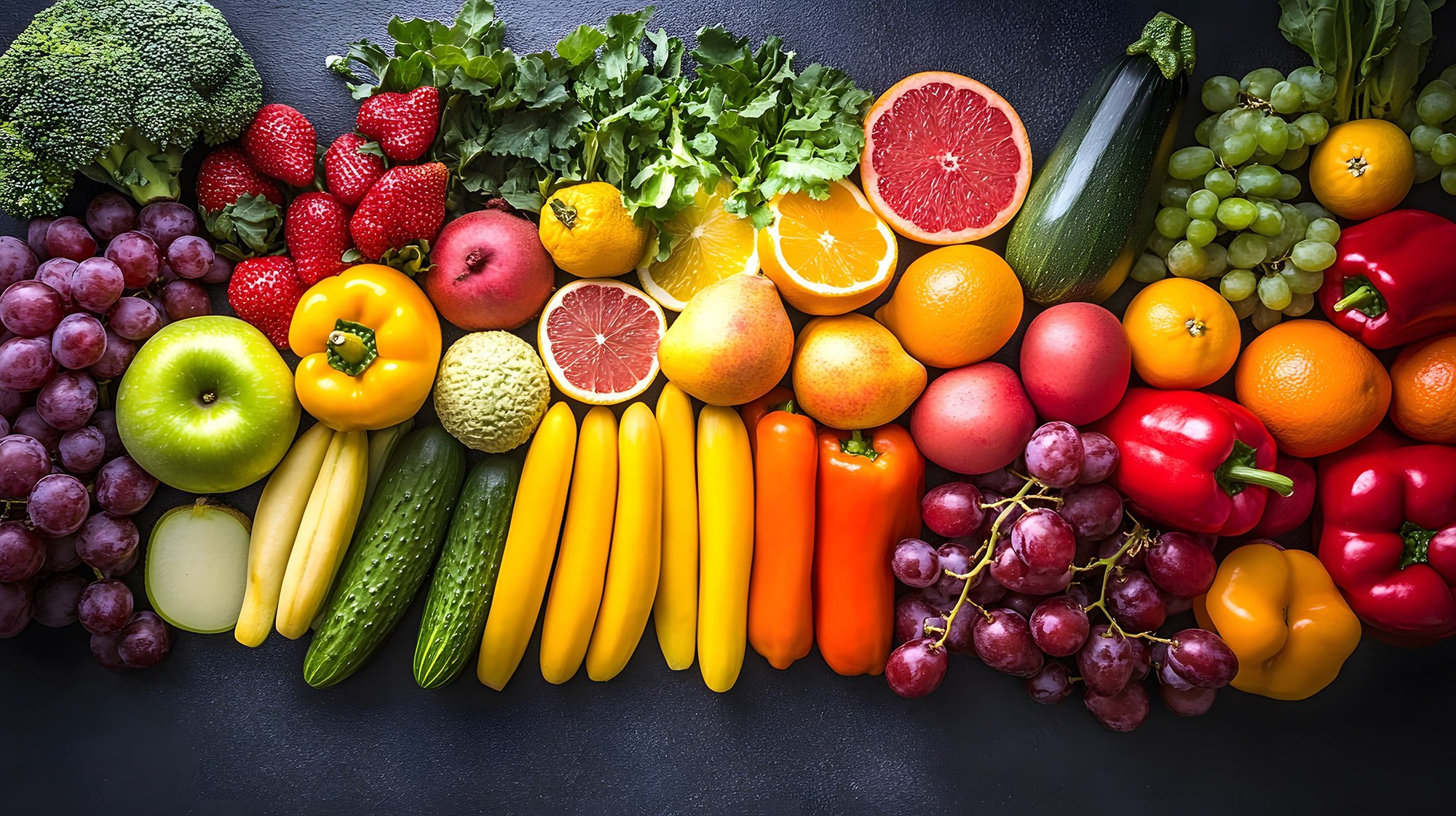
Five-a-day was never meant as an ideal, and research now shows ten portions of fruit and vegetables daily give the best health outcomes. Practical adjustments can help make higher intakes achievable.
Celebrity chef Jamie Oliver has sparked debate by labeling the well-known five-a-day guideline “a lie.” In an interview with the Times, he argued that the real health advantages of fruits and vegetables only become significant at seven, eight, or even 11 portions daily.
He is correct that higher intake leads to greater benefits. Studies consistently show that the more servings of fruit and vegetables people consume each day, the more their overall health improves. However, the choice of five portions as the standard recommendation was never about representing the optimal amount but rather a balance between scientific evidence and what public health experts believed was practical for most people.
Widespread message, limited impact
When the five-a-day initiative was introduced in the UK and Ireland more than two decades ago, it was never intended as the “ideal” goal. Rather, it was a compromise, chosen to balance scientific evidence with what public health experts believed people could reasonably achieve. Researchers and campaigners agreed that five portions offered a simple, memorable, and approachable target that would not discourage the public.
The five-a-day guideline has become one of the most familiar public health campaigns, yet the majority of UK adults still fail to meet it.
Increasingly, however, researchers argue that this message may need to be revised, as mounting evidence links greater fruit and vegetable consumption with a reduced risk of chronic illness.
A meta-analysis of over 2 million people found that while five portions lowered risk of chronic diseases such as cardiovascular disease and cancer, the greatest benefits were seen at around ten portions of fruit and veg daily. Another UK study found that people eating seven or more portions of fruit and veg each day had a 42% lower risk of death compared to those eating less than one portion.
Excellence rarely comes from doing the bare minimum – and the evidence suggests we should be aiming higher.
Japan has long recommended ten (and more) portions of fruit and vegetables a day. Mediterranean countries, too, traditionally eat diets rich in fresh produce, beans, and legumes. Research suggests that populations that follow these dietary patterns tend to have lower rates of heart disease and longer life expectancy. Similar associations between higher intakes of fruit and vegetables and lower risk of death from any cause are reported in Japan, too.
Understanding portion size
The research is clear: higher intake of fruits and vegetables every day brings tangible health benefits. So while five portions is a good starting point, aiming to include more fruits and vegetables into your daily diet will bring even greater health benefits.
But some confusion lies in what a “portion” really means. The World Health Organization defines one portion as about 80g – roughly a handful. That could be an apple, two broccoli spears, three heaped tablespoons of peas, or half a tin of beans. When you break it down like this, eight to 11 portions across three meals and snacks becomes less intimidating.
There are also many easy ways to add more fruit and veg every day. For breakfast, try adding berries to your cereal, a banana to your porridge, or spinach in your omelette. For lunch, add salad to sandwiches, beans to your soup, or extra veg into wraps.
Double up portions at dinner by eating two or three sides of veg, or bulk up sauces and curries with lentils, peppers or mushrooms. Snack smart by reaching for fruit, veggie sticks with hummu,s or roasted chickpeas instead of crisps.
You should also aim to eat a rainbow of different fruits and vegetables across the week, as variety is associated with even greater health benefits.
Beyond five-a-day
There’s a common myth that only fresh fruit and vegetables count. In reality, frozen, tinned (in water or natural juice) and dried all have a place. They can be cheaper, last longer, and often retain just as many nutrients as fresh produce.
Juices and smoothies count too – but only as one portion a day because of their sugar content.
The five-a-day message is a starting point, but not the finish line. Anything is better than nothing – and if you’re eating just one or two portions now, getting to three or four is progress.
But the science is clear: more really is better. Jamie Oliver may be ambitious in suggesting 11 portions, but he’s right that aiming higher could bring big health gains.
Adapted from an article originally published in The Conversation.
Never miss a breakthrough: Join the SciTechDaily newsletter.
Follow us on Google and Google News.
6 Comments
Vegetables are not real it’s only fruits look it up
Nice troll.
Using a study comparing those eating 7 portions a day with those eating 1 or fewer portions a day doesn’t really tell us anything about the health benefits of 5 portions a day, now does it? Also, it’s a real shame that no matter what you put into a smoothie, it only counts as “one portion a day, due to the sugar content”… Really?
Are all the fruits and vegetables equally “healthy”? What does consuming those make each of those healthy particularly? Are humans herbivores? Why humans need this much food?
Why this BS is called SciTech?
Too much fruit may play out negatively in as much as it predisposes one to too much triglycerides made in the liver from too much fructose. Fructose as such cannot be directly used for energy bt the mitochondria.
Very well stated and readable.