
Close Menu
    Facebook X (Twitter) Instagram
    SciTechDaily
    • Biology
    • Chemistry
    • Earth
    • Health
    • Physics
    • Science
    • Space
    • Technology
    Facebook X (Twitter) Pinterest YouTube RSS
    SciTechDaily
    Home»Health»Scrolling in the Dark: How Screens Steal Sleep and Trigger Teen Depression
    Health

    Scrolling in the Dark: How Screens Steal Sleep and Trigger Teen Depression

    By PLOSApril 8, 2025No Comments3 Mins Read
    Facebook Twitter Pinterest Telegram LinkedIn WhatsApp Email Reddit
    Share
    Facebook Twitter LinkedIn Pinterest Telegram Email Reddit
    Teen Depression Bed Cell Phone Art Concept
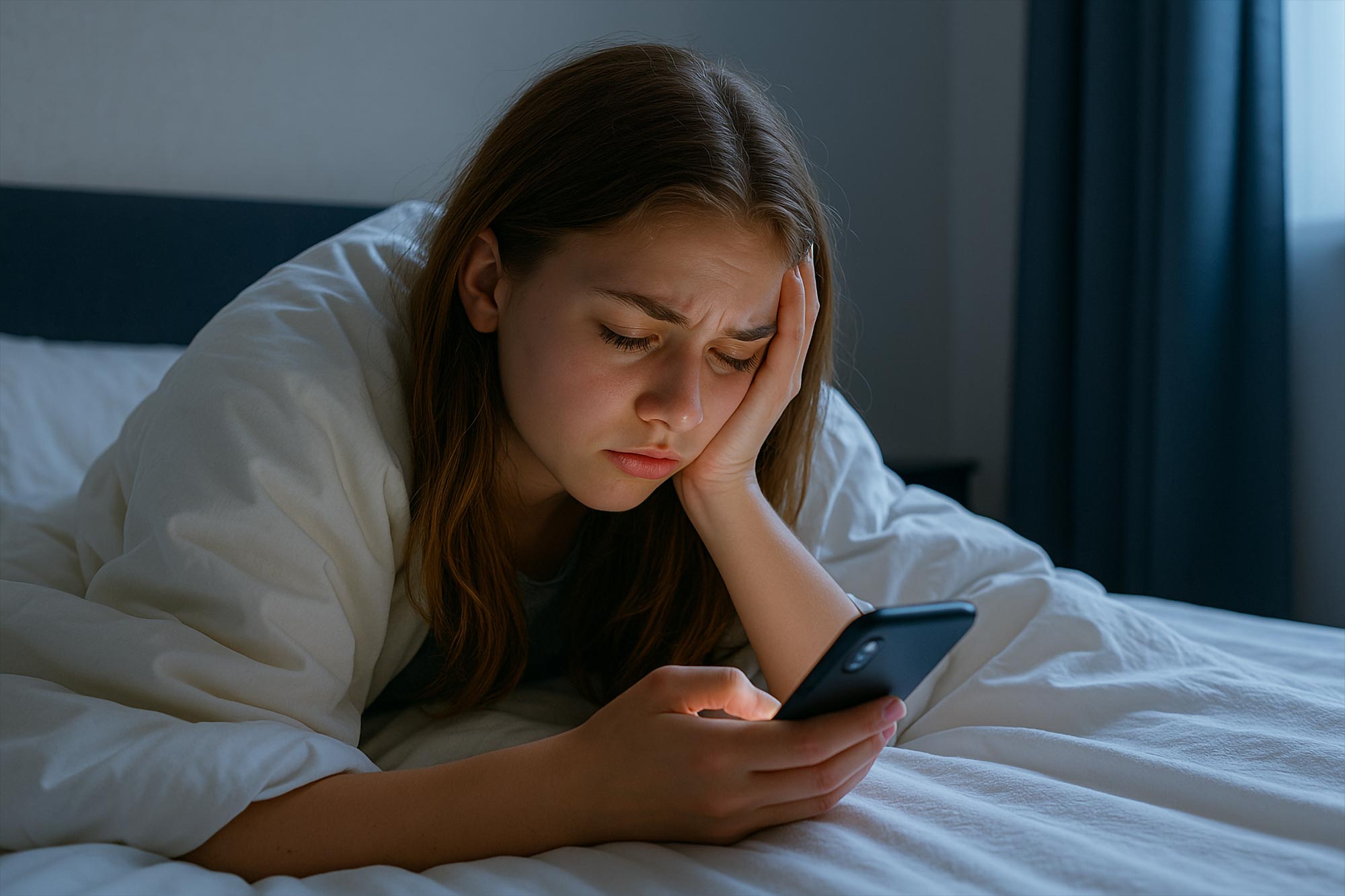
    A study of Swedish teens found that screen time harms sleep, which can lead to depression, especially in girls. Credit: SciTechDaily.com

     Too much screen time can mess with teens’ sleep, and that might be a major reason why depression is on the rise, especially among girls.

    A study tracking over 4,800 adolescents found that screen use disrupted both the quality and timing of sleep, which in turn predicted depressive symptoms. For girls, poor sleep was the main link between screens and mood struggles, while boys were affected more directly. The researchers say reducing screen time could ease the mental health burden for young people.

    Screen Time, Sleep, and Teen Depression

    Too much screen time can disrupt teenagers’ sleep, and that loss of sleep may increase the risk of depression, especially in girls. That’s the finding of a new study published in PLOS Global Public Health by Sebastian Hökby and colleagues at Karolinska Institutet in Sweden.

    The Swedish Public Health Agency recently recommended that adolescents limit their recreational screen time to two or three hours per day, in part to support healthier sleep. Previous research has linked high screen use to poor sleep and mental health issues in teens, but the exact relationships between these factors have been unclear, especially since sleep problems and depression often occur together.

    Tracking Teens Over Time

    In this new study, researchers followed 4,810 Swedish students between the ages of 12 and 16. They collected data on screen habits, sleep patterns, and symptoms of depression at three points over a one-year period.

    The researchers found that increased screen time led to deteriorated sleep within three months, impacting both the duration and quality of sleep. Screen time was also found to postpone sleep times towards later hours – disrupting multiple aspects of the human sleep-wake cycle at once.

    Among boys, screen time had a direct adverse effect on depression after twelve months, while among girls the depressive effect was mediated through sleep disturbances. Sleep could explain about half (38%-57%) of the association between screen time and depression in girls. Boys who spent more time on screens also experienced sleep disruptions, but these were not strongly associated with later depression.

    Sleep as a Key Link

    The authors summarize: “In this study, we found that adolescents who reported longer screen times also developed poorer sleep habits over time. In turn, this led to increased depression levels, especially among girls.”

    They add: “Our results do suggest that less[…] screen time seems healthier, in line with previous World Health Organization statements…if screen times were somehow reduced, for example through public health policies, our results imply that the high burden of depressive states among young Swedish women, and maybe young men, would likely decrease.”

    Reference: “Adolescents’ screen time displaces multiple sleep pathways and elevates depressive symptoms over twelve months” by Sebastian Hökby, Jesper Alvarsson, Joakim Westerlund, Vladimir Carli and Gergö Hadlaczky, 2 April 2025, PLOS Global Public Health.
    DOI: 10.1371/journal.pgph.0004262

    Never miss a breakthrough: Join the SciTechDaily newsletter.
    Follow us on Google and Google News.

    Depression Mental Health PLOS Sleep Science Smartphone
    Share. Facebook Twitter Pinterest LinkedIn Email Reddit

    Related Articles

    Melatonin Sleep Aid May Reduce Self-Harm in Young People With Anxiety and Depression

    Excessive Screen Time in Preteens Linked to Suicidal Behavior

    Do Antidepressants Help? Study Finds They’re Not Associated With Improved Long Term Physical or Mental Health

    Digital Interventions: Smartphone-Based Treatments Effective at Reducing Symptoms of Depression

    Researchers Link Sleep Quality to Mental Illness Using Wrist Activity Trackers

    Defying Your Natural Body Clock Linked to Depression and Lower Wellbeing

    Irregular Sleep Schedules Can Worsen Mood and Increase Risk of Depression

    Dream Reports During the COVID-19 Pandemic Reflect Mental Suffering and Fear of Contagion

    Psychological Distress: Acute Depression, Stress & Anxiety Higher During Peak of COVID-19 Pandemic

    Leave A Reply Cancel Reply

    • Facebook
    • Twitter
    • Pinterest
    • YouTube

    Don't Miss a Discovery

    Subscribe for the Latest in Science & Tech!

    Trending News

    Largest-Ever Study Finds Medicinal Cannabis Ineffective for Anxiety, Depression, PTSD

    250-Million-Year-Old Egg Solves One of Evolution’s Biggest Mysteries

    Living With Roommates Might Be Changing Your Gut Microbiome Without You Knowing

    Century-Old Cleaning Chemical Linked to 500% Increased Risk of Parkinson’s Disease

    What if Your Memories Never Happened? Physicists Take a New Look at the Boltzmann Brain Paradox

    One of the Universe’s Largest Stars May Be Getting Ready To Explode

    Scientists Discover Enzyme That Could Supercharge Ozempic-Like Weight Loss Drugs

    Popular Sweetener Linked to DNA Damage – “It’s Something You Should Not Be Eating”

    Follow SciTechDaily
    • Facebook
    • Twitter
    • YouTube
    • Pinterest
    • Newsletter
    • RSS
    SciTech News
    • Biology News
    • Chemistry News
    • Earth News
    • Health News
    • Physics News
    • Science News
    • Space News
    • Technology News
    Recent Posts
    • A Simpler Path to Super-Resolution: Scientists Reinvent Microscopy
    • Scientists Uncover Hidden Genetic Cause of Diabetes in Babies
    • Amazonian Chocolate Could Become the Next Superfood, Scientists Say
    • Challenging the Narrative: New Study Shows U.S. Life Expectancy Is Rising Across All States
    • Mystery Illness Kills 5 in Burundi As Doctors Scramble for Answers
    Copyright © 1998 - 2026 SciTechDaily. All Rights Reserved.
    • Science News
    • About
    • Contact
    • Editorial Board
    • Privacy Policy
    • Terms of Use

    Type above and press Enter to search. Press Esc to cancel.