
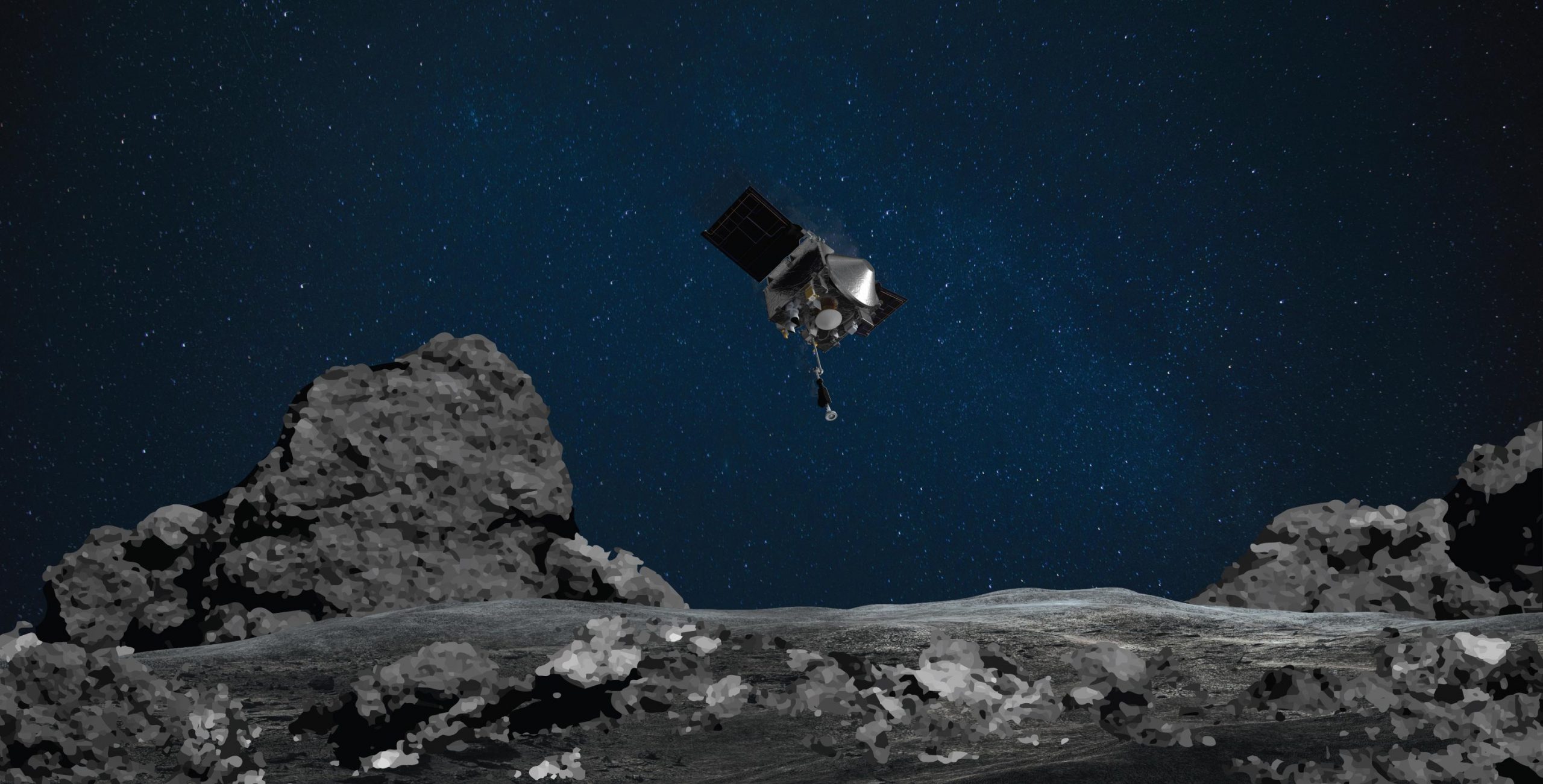
Captured on October 20, 2020, during the OSIRIS-REx mission’s Touch-And-Go (TAG) sample collection event, this series of images shows the SamCam imager’s field of view as the NASA spacecraft approaches and touches down on asteroid Bennu’s surface, over 200 million miles (321 million km) away from Earth. The sampling event brought the spacecraft all the way down to sample site Nightingale, touching down within three feet (one meter) of the targeted location. The team on Earth received confirmation at 6:08 p.m. EDT that successful touchdown occurred. Preliminary data show the one-foot-wide (0.3-meter-wide) sampling head touched Bennu’s surface for approximately 6 seconds, after which the spacecraft performed a back-away burn.
Captured on October 20, during the OSIRIS-REx mission’s Touch-And-Go (TAG) sample collection event, this series of 82 images shows the SamCam imager’s field of view as the NASA spacecraft approaches and touches down on asteroid Bennu’s surface. The sampling event brought the spacecraft all the way down to sample site Nightingale, and the team on Earth received confirmation of successful touchdown at 6:08 p.m. EDT. Preliminary data show the sampling head touched Bennu’s surface for approximately 6 seconds, after which the spacecraft performed a back-away burn. Credit: NASA/Goddard/University of Arizona
The spacecraft’s sampling arm – called the Touch-And-Go Sample Acquisition Mechanism (TAGSAM) – is visible in the lower part of the frame. The round head at the end of TAGSAM is the only part of OSIRIS-REx that contacted the surface during the sample collection event. In the middle of the image sequence, the sampling head positions itself to contact the asteroid’s surface head-on. Shortly after, the sampling head impacts site Nightingale and penetrates Bennu’s regolith. Upon initial contact, the TAGSAM head appears to crush some of the porous rocks underneath it. One second later, the spacecraft fires a nitrogen gas bottle, which mobilizes a substantial amount of the sample site’s material. Preliminary data show the spacecraft spent approximately 5 of the 6 seconds of contact collecting surface material, and the majority of sample collection occurred within the first 3 seconds.
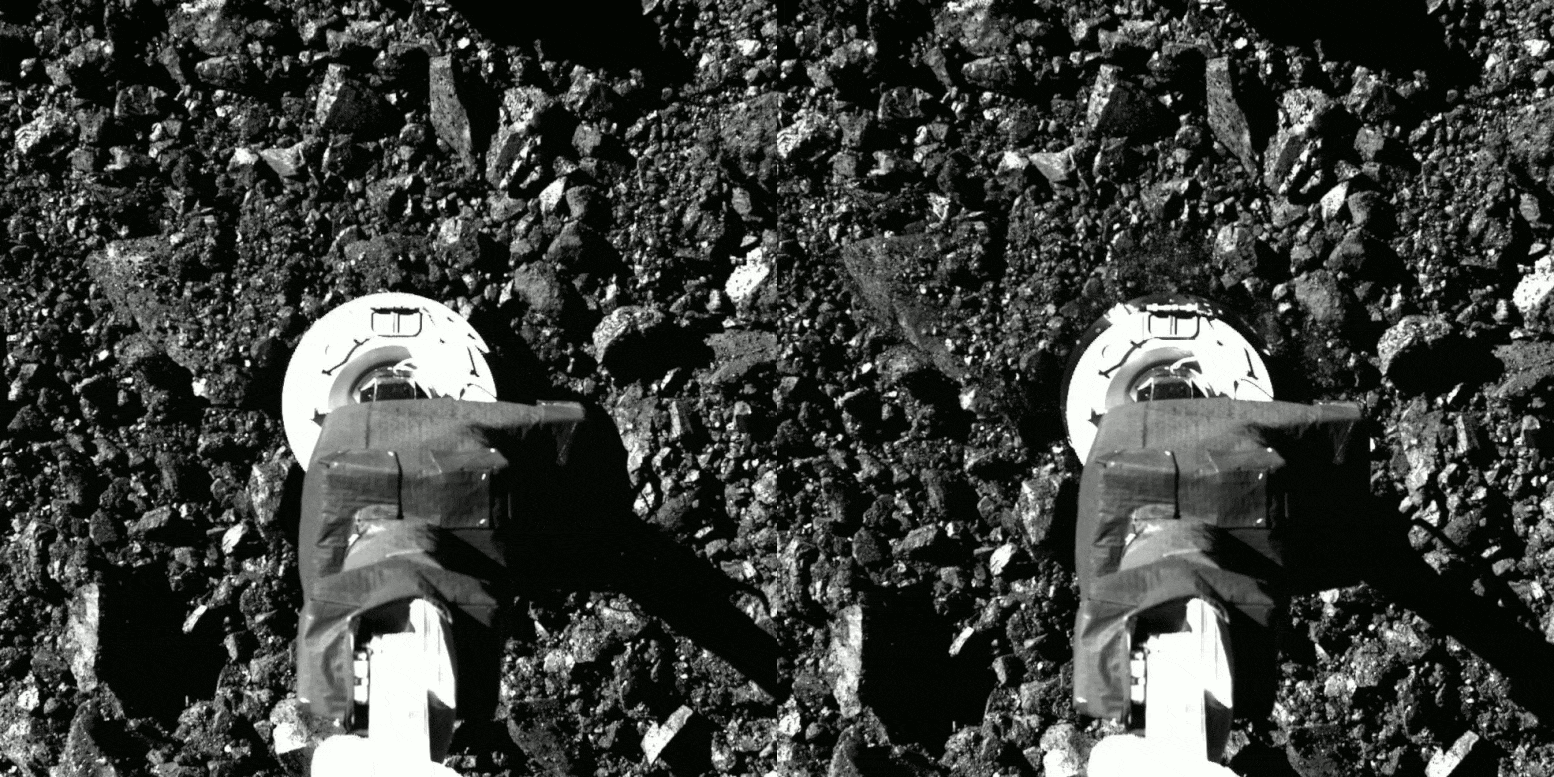
The TAGSAM is designed to catch the agitated surface material, and the mission team will assess the amount of material collected through various spacecraft activities. After touchdown, the spacecraft fired its thrusters to back away from Bennu. As expected, this maneuver also disturbed the Nightingale site, and loose debris is visible near the end of the image sequence. Preliminary telemetry shows the spacecraft remains in good health. The spacecraft was traveling at 0.2 mph (10 cm/sec) when it contacted sample site Nightingale and then backed away at 0.9 mph (40 cm/sec).
Captured on October 20 during the OSIRIS-REx mission’s Touch-And-Go (TAG) sample collection event, this series of 16 images shows the SamCam imager’s field of view as the NASA spacecraft backs away from asteroid Bennu’s surface after touching down. The sampling event brought the spacecraft all the way down to sample site Nightingale, and the team on Earth received confirmation of successful touchdown at 6:08 p.m. EDT. Preliminary data show the sampling head touched Bennu’s surface for approximately 6 seconds, after which the spacecraft performed a back-away burn. Credit: NASA/Goddard/University of Arizona
These images were captured over approximately a five-minute period. The imaging sequence begins at about 82 feet (25 meters) above the surface, and runs through the back-away maneuver, with the last image in the sequence taken at approximately 43 feet (13 meters) in altitude – about 35 seconds after backing away. The sequence was created using 82 SamCam images, with 1.25 seconds between frames. For context, the images are oriented with Bennu’s west at the top.
Never miss a breakthrough: Join the SciTechDaily newsletter.
Follow us on Google and Google News.
2 Comments
When are going to be able to visit, go mining,?
James: I’ve forgotten how long it took for this spacecraft to reach that asteroid, 200 million miles ain’t no long stride walk across the stars. I can remember back, what, 20 years when I first heard about NASA wanting to visit one of these things. The rumor was to strip all the valuables, minerals, from the thing. This of course was to put the Soviet Union’s (?)…Russia’s first to land money grab. Oh, & the Asteroid was supposed to be a skip down the hallway distance from Earth not,let’s thread the needle trip of 200 million miles. If they don’t bring back in one piece my candy bar opened to space there & back so I can be the next David Bannon see if I ever go Trick or Treating with the head of NASA again. I go with Wonder Boy, Elon Musk,from now on. He’s always running out of pens & pincels.