

Close Menu
    Facebook X (Twitter) Instagram
    SciTechDaily
    • Biology
    • Chemistry
    • Earth
    • Health
    • Physics
    • Science
    • Space
    • Technology
    Facebook X (Twitter) Pinterest YouTube RSS
    SciTechDaily
    Home»Health»Shampoo, Soap, and… Brain Changes? Study Links Everyday Products to Infant Development Harm
    Health

    Shampoo, Soap, and… Brain Changes? Study Links Everyday Products to Infant Development Harm

    By Emory UniversityApril 21, 2025No Comments4 Mins Read
    Facebook Twitter Pinterest Telegram LinkedIn WhatsApp Email Reddit
    Share
    Facebook Twitter LinkedIn Pinterest Telegram Email Reddit
    Human Fetus in Womb
    Researchers found that phthalate exposure in pregnant women is linked to changes in newborn metabolism and brain development. The study suggests that these chemicals cross the placenta, potentially causing lasting effects on infant neurodevelopment.

    Phthalates during pregnancy may alter a baby’s metabolism and brain development by crossing the placenta and disrupting key biological processes.

    A newly published study conducted by researchers from Emory University, the University of North Carolina at Chapel Hill, and Columbia University reveals that exposure to phthalates during pregnancy may impact a newborn’s metabolism and brain development.

    Phthalates are a group of chemical compounds commonly used as plasticizers. They are found in a wide range of everyday products, including shampoos, soaps, detergents, and plastic containers used for food and beverages. Previous studies have shown that phthalates can disrupt hormone activity and have been linked to various health concerns in both mothers and their children.

    This latest research, led by scientists at Emory’s Rollins School of Public Health and published in Nature Communications, is the first to provide direct evidence that prenatal exposure to phthalates can alter an infant’s metabolic profile at birth.
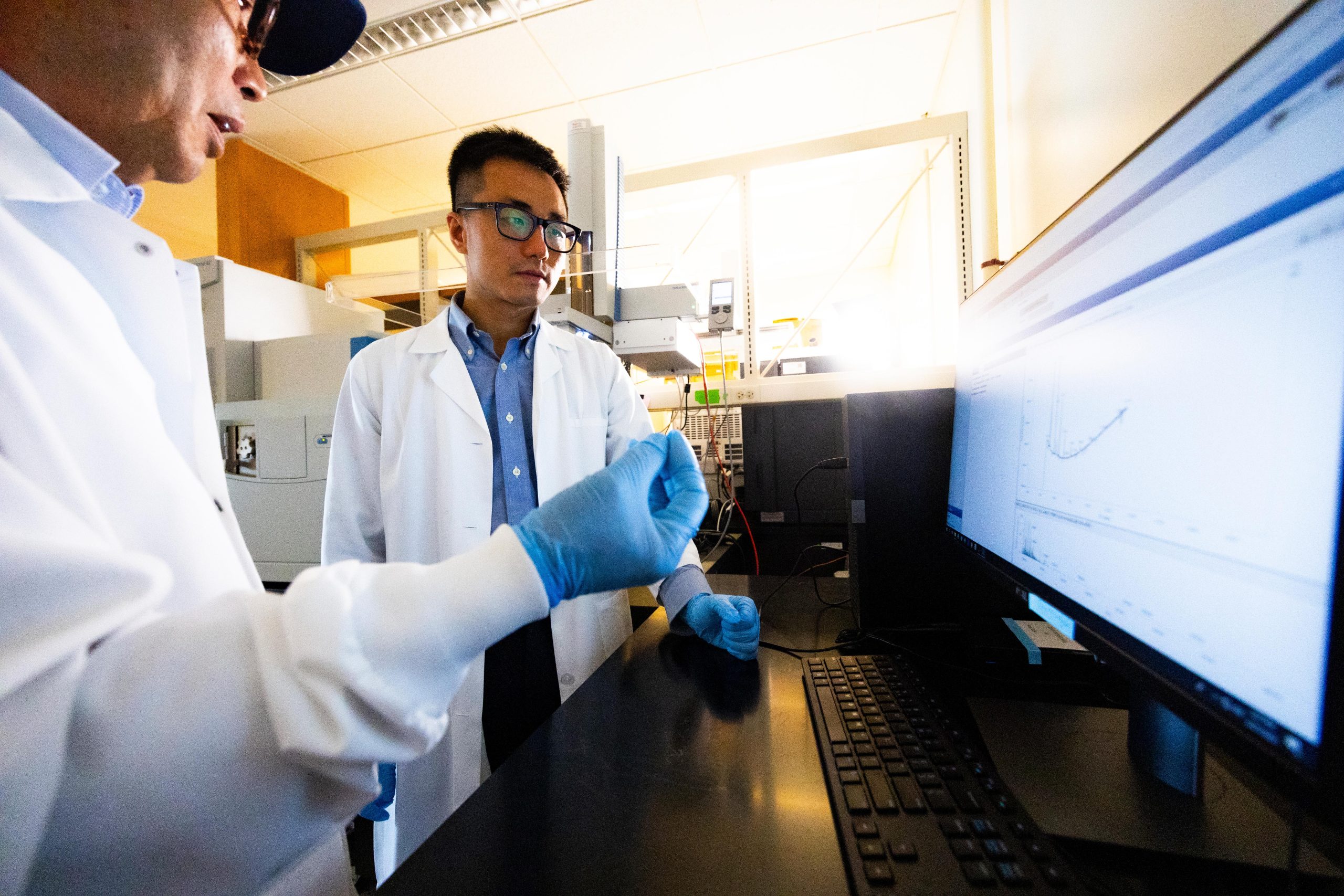
    Donghai Liang
    A study led by researchers from Emory University’s Rollins School of Public Health, including Donghai Liang, PhD (right), found a mother’s exposure to certain everyday products can negatively impact a newborn’s development. Credit: Emory University

    Main Takeaways

    • Prenatal phthalate levels in the mother’s blood during pregnancy were associated with lower levels of key neurotransmitter precursors (related to tyrosine and tryptophan metabolism) important for brain development in the newborn’s blood soon after birth.
    • Higher prenatal phthalate levels were also associated with biological changes linked to lower information processing (or attention) and excitability (or arousal) scores in newborns. 
    • These findings suggest that a mother’s exposure to phthalates during pregnancy may influence her newborn’s metabolism soon after birth. Furthermore, exposure to phthalates while babies are still in the uterus may also have lasting effects on infant brain development. 

    What The Experts Say

    “This was the first study to demonstrate that a mother’s exposure to phthalates can impact their baby’s metabolome and also the first to show that these biological changes can impact newborn development. This is important because there is a common belief that the placenta protects the baby from a lot of harmful substances, but this study supports that phthalates are able to cross through the placenta and actually impact the baby’s biology before they are even born and negatively affect their development over time,” said Susan Hoffman, PhD, study first author and recent graduate of the Epidemiology PhD program at the Rollins School of Public Health.

    “We are seeing that once pregnant women are exposed to phthalates, these chemicals not only enter their body and disrupt maternal metabolism, but these exposures also impact the metabolism and neurobehavioral functioning of newborns. And we found these substances are staying with them in the body after they are born, as we did see some indication of a biological disruption occurring among the newborn babies that has a further impact on the neurodevelopment system,” says Donghai Liang, PhD, study lead author and associate professor of environmental health at the Rollins School of Public Health. 

    Reference: “Impact of prenatal phthalate exposure on newborn metabolome and infant neurodevelopment” by Susan S. Hoffman, Ziyin Tang, Anne Dunlop, Patricia A. Brennan, Thompson Huynh, Stephanie M. Eick, Dana B. Barr, Blake Rushing, Susan L. McRitchie, Susan Sumner, Kaitlin R. Taibl, Youran Tan, Parinya Panuwet, Grace E. Lee, Jasmin Eatman, Elizabeth J. Corwin, P. Barry Ryan, Dean P. Jones and Donghai Liang, 2 April 2025, Nature Communications.
    DOI: 10.1038/s41467-025-57273-z

    Never miss a breakthrough: Join the SciTechDaily newsletter.
    Follow us on Google and Google News.

    Development Emory University Metabolism Popular Pregnancy Public Health
    Share. Facebook Twitter Pinterest LinkedIn Email Reddit

    Related Articles

    Working Out but Not Losing Weight? Here’s Why

    Stopping GLP-1 Weight Loss Drugs Leads to Fast Rebound in Weight and Heart Risks, Study Warns

    Scientists Warn This Popular Cooking Oil May Be Quietly Fueling Weight Gain

    Popular Brain Supplement May Have a Deadly Downside for Men

    Is Beef Really the Villain? New Research Challenges Common Heart Health Myths

    New Study Uncovers Hidden Dangers of the Keto Diet

    Popular Diabetes Drug Metformin May Cancel Out Exercise Benefits, Study Warns

    Scientists Discover Naturally Produced Molecule That Switches Off Hunger in the Brain

    The Tropical Fruit That May Improve Blood Sugar and Cut Body Fat

    Leave A Reply Cancel Reply

    • Facebook
    • Twitter
    • Pinterest
    • YouTube

    Don't Miss a Discovery

    Subscribe for the Latest in Science & Tech!

    Trending News

    5 Simple Ways To Remember More and Forget Less

    The Atomic Gap That Could Cost the Semiconductor Industry Billions

    Researchers Finally Solve 50-Year-Old Blood Group Mystery

    Scientists Discover “Molecular Switch” That Fuels Alzheimer’s Brain Inflammation

    Trees Emit Tiny Lightning Flashes During Storms and Scientists Finally Prove It

    Pomegranate Compound Could Help Protect Against Heart Disease

    Your Blood Test Might Already Show Alzheimer’s Risk

    Scientists Were Wrong About This Strange “Rule-Breaking” Particle

    Follow SciTechDaily
    • Facebook
    • Twitter
    • YouTube
    • Pinterest
    • Newsletter
    • RSS
    SciTech News
    • Biology News
    • Chemistry News
    • Earth News
    • Health News
    • Physics News
    • Science News
    • Space News
    • Technology News
    Recent Posts
    • Scientists Complete Largest 3D Map of the Universe to Probe Dark Energy
    • Hidden Parasite Found in Popular Portuguese Lake Raises Health Concerns
    • This Simple Trick Can Boost Your Workout Endurance by 20%
    • This Popular Supplement May Interfere With Cancer Treatment, Scientists Warn
    • Scientists Propose Radical New Way To Detect Alien Life – Without Traditional Biosignatures
    Copyright © 1998 - 2026 SciTechDaily. All Rights Reserved.
    • Science News
    • About
    • Contact
    • Editorial Board
    • Privacy Policy
    • Terms of Use

    Type above and press Enter to search. Press Esc to cancel.