
Close Menu
    Facebook X (Twitter) Instagram
    SciTechDaily
    • Biology
    • Chemistry
    • Earth
    • Health
    • Physics
    • Science
    • Space
    • Technology
    Facebook X (Twitter) Pinterest YouTube RSS
    SciTechDaily
    Home»Biology»Shark Diversity Unaffected When the Dinosaurs Were Wiped Out in Global Catastrophe
    Biology

    Shark Diversity Unaffected When the Dinosaurs Were Wiped Out in Global Catastrophe

    By PLOSAugust 10, 2021No Comments3 Mins Read
    Facebook Twitter Pinterest Telegram LinkedIn WhatsApp Email Reddit
    Share
    Facebook Twitter LinkedIn Pinterest Telegram Email Reddit
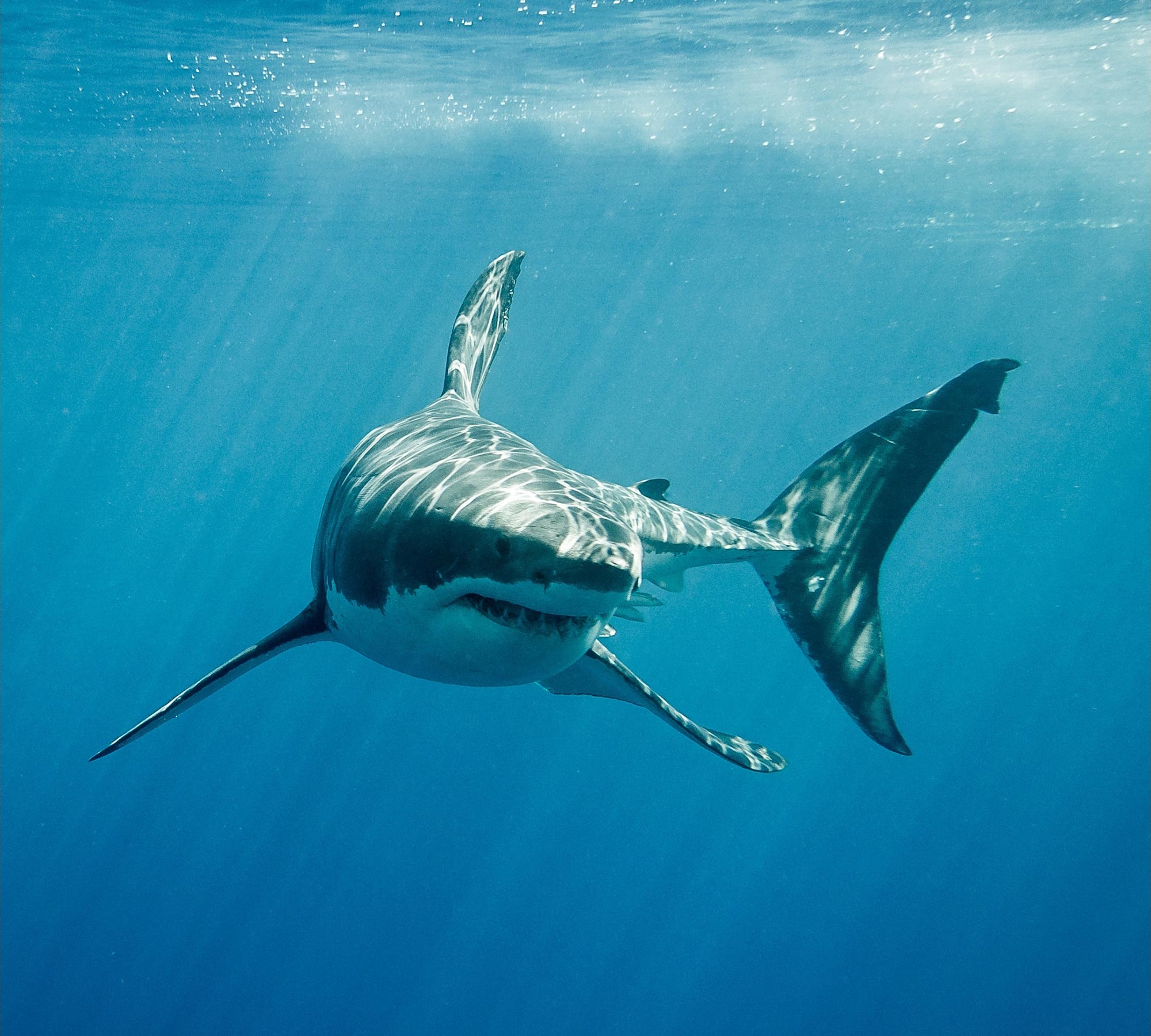
    Great White Shark
    Great White Shark

    Selective extinction of apex predators suggests a shift to more generalist diets.

    A global catastrophe 66 million years ago led to the extinction of all non-avian dinosaurs, and large marine reptiles like mosasaurs and plesiosaurs. But what happened to the sharks? According to a study of sharks’ teeth publishing August 10th in the open-access journal PLOS Biology by Mohamad Bazzi of Uppsala University and colleagues, shark-tooth diversity remained relatively constant across the mass extinction event at the end of the Cretaceous.

    The researchers analyzed the morphology of 1239 fossil shark teeth, including species in eight existing orders and one now-extinct order. The teeth span a 27-million-year period from the late Cretaceous 83.6 million years ago to the early Paleogene 56 million years ago, across the so-called K-Pg boundary that brought the age of the dinosaurs to an end.
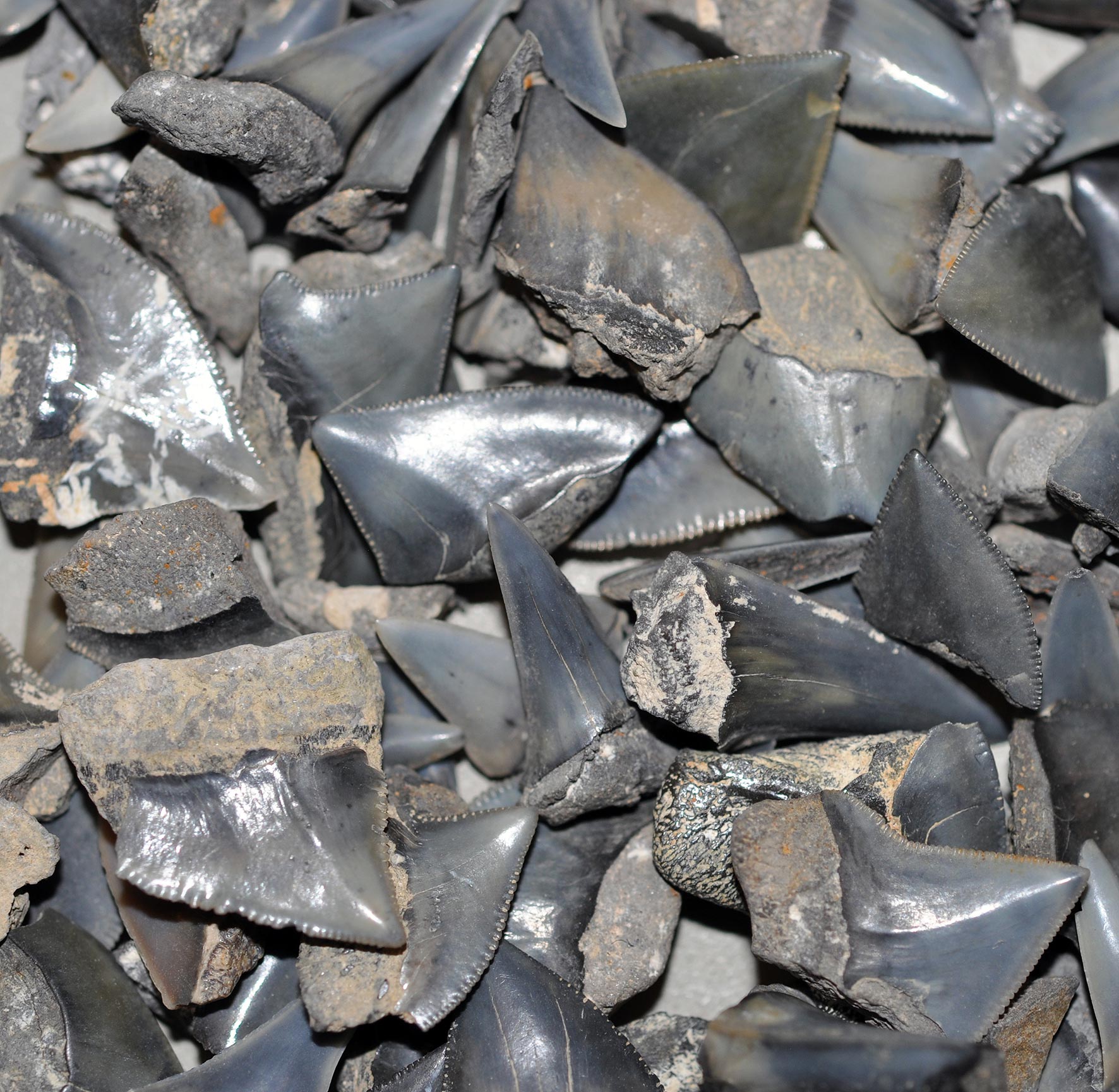
    Late Cretaceous (Campanian) Shark Teeth
    Late Cretaceous (Campanian) shark teeth from the Kristianstad Basin, southern Sweden. Credit: Benjamin Kear, Bazzi M et. al, PLOS Biology, 2021

    Stability Through a Mass Extinction

    The scientists found that shark dental diversity was already declining prior to the K-Pg boundary, but remained relatively constant during the mass-extinction event itself. Some groups of apex predators, particularly those with triangular blade-like teeth, did suffer selective extinctions during the period studied, which may have been linked to the extinction of their prey species.

    However, other shark lineages increased in dental diversity after the K-Pg boundary. For example, sharks in the Odontaspididae family, which have narrow, cusped teeth adapted for feeding on fish, showed increases in diversity that coincided with the rapid diversification of finned fish in the early Paleogene. The authors suggest this pattern of selective extinctions may reflect an ecological shift from specialist tetrapod predators to more general bony fish diets.

    This study is the first global investigation of dental morphology in multiple shark groups across the end Cretaceous mass extinction event, and indicates that the K-Pg boundary was not as dramatic for sharks, as it was for most other vertebrate lineages.

    Reference: “Tooth morphology elucidates shark evolution across the end-Cretaceous mass extinction” by Mohamad Bazzi, Nicolás E. Campione, Per E. Ahlberg, Henning Blom and Benjamin P. Kear, 10 August 2021, PLoS Biology.
    DOI: 10.1371/journal.pbio.3001108

    Funding: This work was supported by the Royal Swedish Academy of Sciences (GS2017-0018) to M.B., and a Wallenberg Scholarship from the Knut and Alice Wallenberg Foundation to P.E.A. B.P.K. also acknowledges funding from a Swedish Research Council Project Grant (2020-3423), and N.E.C. is funded by an Australian Research Council Discovery Early Career Research Grant (DE190101423). The funders had no role in study design, data collection and analysis, decision to publish, or preparation of the manuscript.

    Never miss a breakthrough: Join the SciTechDaily newsletter.
    Follow us on Google and Google News.

    Dinosaurs Extinction Physiology PLOS Popular Sharks
    Share. Facebook Twitter Pinterest LinkedIn Email Reddit

    Related Articles

    Revisiting Earth’s Past: Scientists Uncover Startling New Insights Into the Devastating End-Triassic Mass Extinction

    Cold-Blooded Secret: Hammerhead Sharks Hold Their Breath To Stay Warm As They Hunt

    Great Whites May Have Contributed to Extinction of Megalodon Sharks

    Whale Sharks Extraordinary Ability to Quickly Recover From Serious Injuries

    New Type of Multi-Tasking Taste Cells Discovered in Taste Buds

    PAPupuncture Offers Long-Lasting Pain Relief

    Relationships of Male Dolphins from Shark Bay Determined by Slow Swimming

    Poisonous Dendrobatidae Frogs are Aposematic Organisms and Critically Endangered

    Female Sumatran Rhino May Be The Key to Saving The Species

    Leave A Reply Cancel Reply

    • Facebook
    • Twitter
    • Pinterest
    • YouTube

    Don't Miss a Discovery

    Subscribe for the Latest in Science & Tech!

    Trending News

    New Study Reveals Why Ozempic Works Better for Some People Than Others

    Climate Change Is Altering a Key Greenhouse Gas in a Way Scientists Didn’t Expect

    New Study Suggests Gravitational Waves May Have Created Dark Matter

    Scientists Discover Why the Brain Gets Stuck in Schizophrenia

    Scientists Engineer “Tumor-Eating” Bacteria That Devour Cancer From Within

    Even “Failed” Diets May Deliver Long-Term Health Gains, Study Finds

    NIH Scientists Discover Powerful New Opioid That Relieves Pain Without Dangerous Side Effects

    Collapsing Plasma May Hold the Key to Cosmic Magnetism

    Follow SciTechDaily
    • Facebook
    • Twitter
    • YouTube
    • Pinterest
    • Newsletter
    • RSS
    SciTech News
    • Biology News
    • Chemistry News
    • Earth News
    • Health News
    • Physics News
    • Science News
    • Space News
    • Technology News
    Recent Posts
    • Scientists Say This Natural Hormone Reverses Obesity by Targeting the Brain
    • This 15,000-Year-Old Discovery Changes What We Know About Early Human Creativity
    • 35-Million-Year-Old Mystery: Strange Arachnid Discovered Preserved in Amber
    • Revolutionary Gas Turbine Generates Power Without Air Compression
    • Is AI Really Just a Tool? It Could Be Altering How You See Reality
    Copyright © 1998 - 2026 SciTechDaily. All Rights Reserved.
    • Science News
    • About
    • Contact
    • Editorial Board
    • Privacy Policy
    • Terms of Use

    Type above and press Enter to search. Press Esc to cancel.