
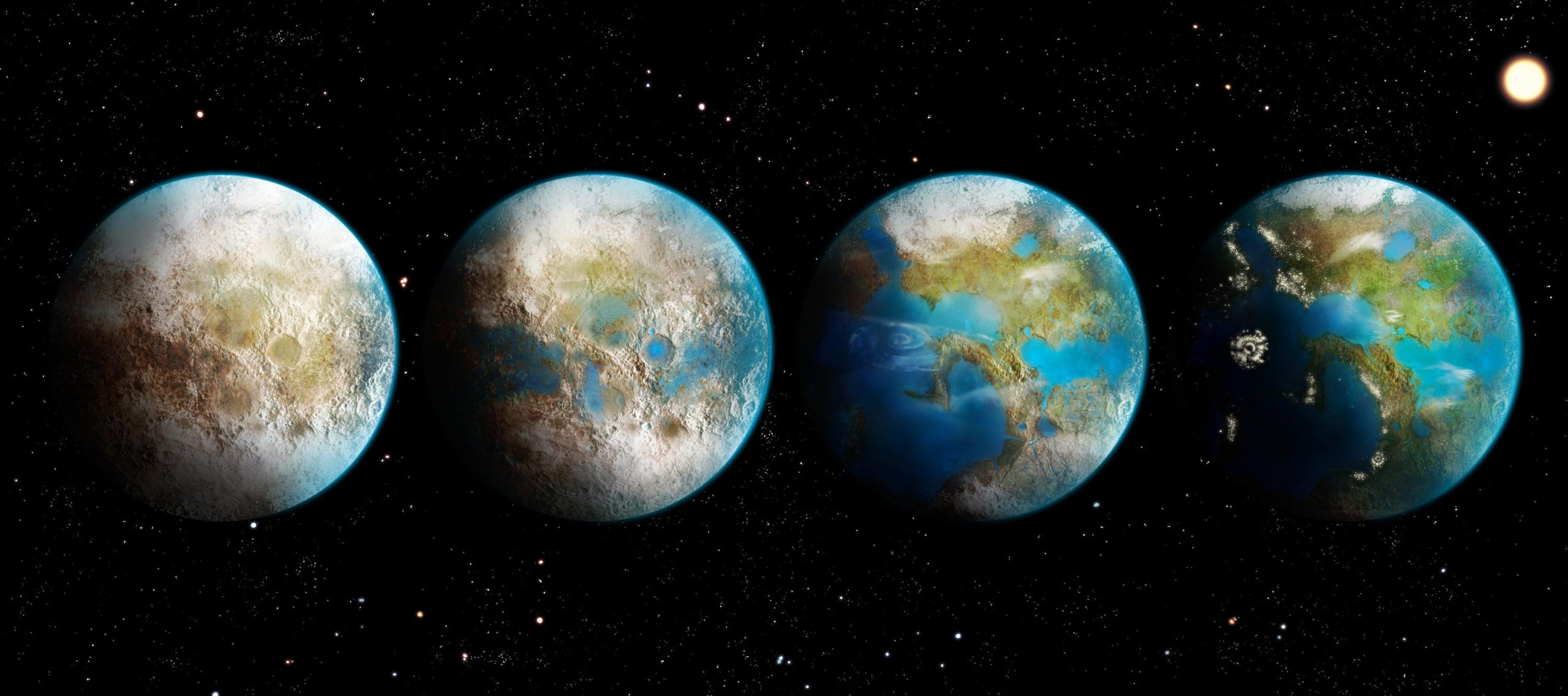
In the quest to uncover extraterrestrial life, researchers have identified telltale greenhouse gases that could indicate advanced alien civilizations are actively terraforming distant planets.
The study focuses on unusual, potent gases like fluorinated methane and ethane, which, if detected, could serve as technosignatures of sophisticated interstellar engineering. Working as detectives on the hunt for intelligent life, astronomers using space telescopes such as the James Webb can trace these gases on distant exoplanets to find evidence of alien civilizations.
Detecting Intelligent Life That’s Light Years Away
If aliens modified a planet in their solar system to make it warmer, we’d be able to tell. A new University of California, Riverside study identifies the artificial greenhouse gases that would be giveaways of a terraformed planet.
A terraformed planet has been artificially made hospitable for life. The gases described in the study would be detectable even at relatively low concentrations in the atmospheres of planets outside our solar system using existing technology. This could include the James Webb Space Telescope, or a future European-led space telescope concept.
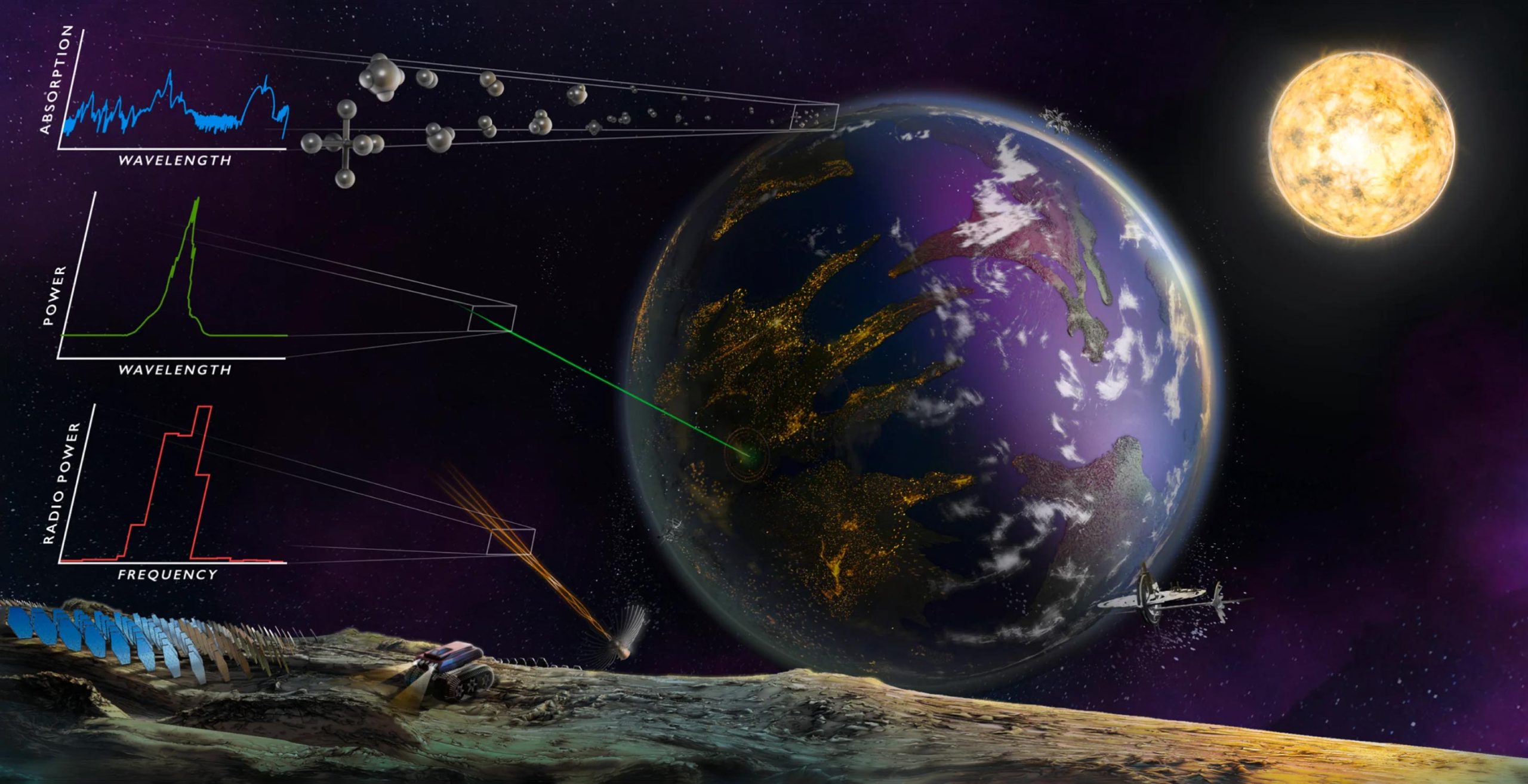
And while such pollutant gases must be controlled on Earth to prevent harmful climate effects, there are reasons they might be used intentionally on an exoplanet.
“For us, these gases are bad because we don’t want to increase warming. But they’d be good for a civilization that perhaps wanted to forestall an impending ice age or terraform an otherwise uninhabitable planet in their system, as humans have proposed for Mars,” said UCR astrobiologist and lead study author Edward Schwieterman.
Identifying Technosignatures in Alien Atmospheres
Since these gases are not known to occur in significant quantities in nature, they must be manufactured. Finding them, therefore, would be a sign of intelligent, technology-using life forms. Such signs are called technosignatures.
The five gases proposed by the researchers are used on Earth in industrial applications such as making computer chips. They include fluorinated versions of methane, ethane, and propane, along with gases made of nitrogen and fluorine or sulfur and fluorine. A newly published Astrophysical Journal paper details their merits as terraforming gases.
Longevity and Effectiveness of Terraforming Gases
One advantage is that they are incredibly effective greenhouse gases. Sulfur hexafluoride, for example, has 23,500 times the warming power of carbon dioxide. A relatively small amount could heat a freezing planet to the point where liquid water could persist on its surface.
Another advantage of the proposed gases — at least from an alien point of view — is that they are exceptionally long-lived and would persist in an Earth-like atmosphere for up to 50,000 years. “They wouldn’t need to be replenished too often for a hospitable climate to be maintained,” Schwieterman said.
Technosignatures are indicators of advanced technology potentially created by extraterrestrial civilizations. These signs might include radio waves, industrial pollution in atmospheres, or structures such as Dyson spheres that harness energy from stars. Scientists search for technosignatures to identify signs of alien life beyond Earth.
Alternatives to CFCs and Their Limitations
Others have proposed refrigerant chemicals, like CFCs, as technosignature gases because they are almost exclusively artificial and visible in Earth’s atmosphere. However, CFCs may not be advantageous because they destroy the ozone layer, unlike the fully fluorinated gases discussed in the new paper, which are chemically inert.
“If another civilization had an oxygen-rich atmosphere, they’d also have an ozone layer they’d want to protect,” Schwieterman said. “CFCs would be broken apart in the ozone layer even as they catalyzed its destruction.”
As they’re more easily broken apart, CFCs are also short-lived, making them harder to detect.
Detectability of Alien Technosignatures
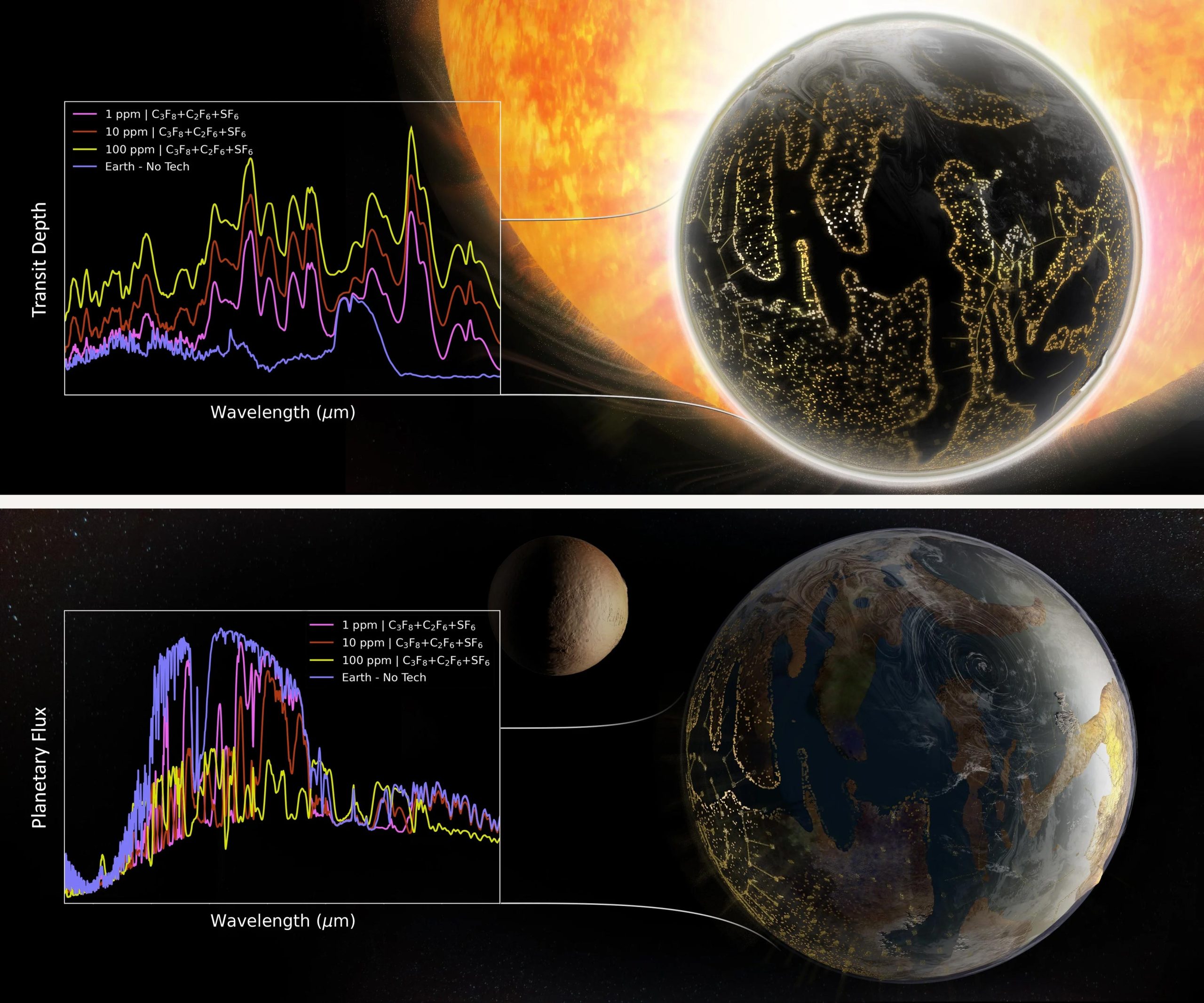
Finally, the fluorinated gases have to absorb infrared radiation to have an impact on the climate. That absorption produces a corresponding infrared signature that could be detectable with space-based telescopes. With current or planned technology, scientists could detect these chemicals in certain nearby exoplanetary systems.
“With an atmosphere like Earth’s, only one out of every million molecules could be one of these gases, and it would be potentially detectable,” Schwieterman said. “That gas concentration would also be sufficient to modify the climate.”
Simulation Studies on the TRAPPIST-1 System
To arrive at this calculation, the researchers simulated a planet in the TRAPPIST-1 system, which is located about 40 light-years away from Earth. They chose this system, which contains seven known rocky planets because it is one of the most studied planetary systems aside from our own. It is also a realistic target for existing space-based telescopes to examine.
The group also considered the European LIFE mission’s ability to detect the fluorinated gases. The LIFE mission would be able to directly image planets using infrared light, allowing it to target more exoplanets than the Webb telescope, which looks at planets as they pass in front of their stars.
This work was done in collaboration with Daniel Angerhausen at Swiss Federal Institute of Technology/PlanetS, and with researchers at NASA’s Goddard Space Flight Center, the Blue Marble Space Institute of Science, and Paris University.
Prospects of Discovering Alien Life
While the researchers cannot quantify the likelihood of finding these gases in the near future, they are confident that — if they are present — it is entirely possible to detect them during currently planned missions to characterize planetary atmospheres.
“You wouldn’t need extra effort to look for these technosignatures, if your telescope is already characterizing the planet for other reasons,” said Schwieterman. “And it would be jaw-droppingly amazing to find them.”
The Power of Next-Generation Telescopes
Other members of the research team echo not only enthusiasm for the potential of finding signs of intelligent life, but also for how much closer current technology has brought us to that goal.
“Our thought experiment shows how powerful our next-generation telescopes will be. We are the first generation in history that has the technology to systematically look for life and intelligence in our galactic neighborhood,” added Angerhausen.
Reference: “Artificial Greenhouse Gases as Exoplanet Technosignatures” by Edward W. Schwieterman, Thomas J. Fauchez, Jacob Haqq-Misra, Ravi K. Kopparapu, Daniel Angerhausen, Daria Pidhorodetska, Michaela Leung, Evan L. Sneed and Elsa Ducrot, 25 June 2024, The Astrophysical Journal.
DOI: 10.3847/1538-4357/ad4ce8
Never miss a breakthrough: Join the SciTechDaily newsletter.
Follow us on Google and Google News.
2 Comments
Depending on nature of their star system, these gases maybe a natural condition instead of terraforming. If they were so advanced, they must have detected life on Earth and communicated us from mere 40 light year close. We need new generation telescopes to be more precise. Good work though.
While artists can produce useless art, scientists can produce useless science, the human species is plagued with violent psychologically deranged individuals that are allowed free range on the planet’s surface, atmosphere and beyond; dream on about other worlds, but as long as humans behave as though they were nothing more than pathogens, such thoughts belong only in comic book format.