

Researchers have developed a groundbreaking measurement technique using proton radiography to observe plasma interactions with magnetic fields.
This insight could help decode the formation of intergalactic plasma jets emanating from black holes, offering a new understanding of cosmic phenomena.
Unveiling the Mysteries of Plasma Dynamics
Whether between galaxies or within doughnut-shaped fusion devices known as tokamaks, the electrically charged fourth state of matter known as plasma regularly encounters powerful magnetic fields, changing shape and sloshing in space. Now, a new measurement technique using protons, subatomic particles that form the nuclei of atoms, has captured details of this sloshing for the first time, potentially providing insight into the formation of enormous plasma jets that stretch between the stars.
Scientists at the U.S. Department of Energy’s (DOE) Princeton Plasma Physics Laboratory (PPPL) created detailed pictures of a magnetic field bending outward because of the pressure created by expanding plasma. As the plasma pushed on the magnetic field, bubbling and frothing known as magneto-Rayleigh Taylor instabilities arose at the boundaries, creating structures resembling columns and mushrooms.
Breakthrough in Magnetic Field Research
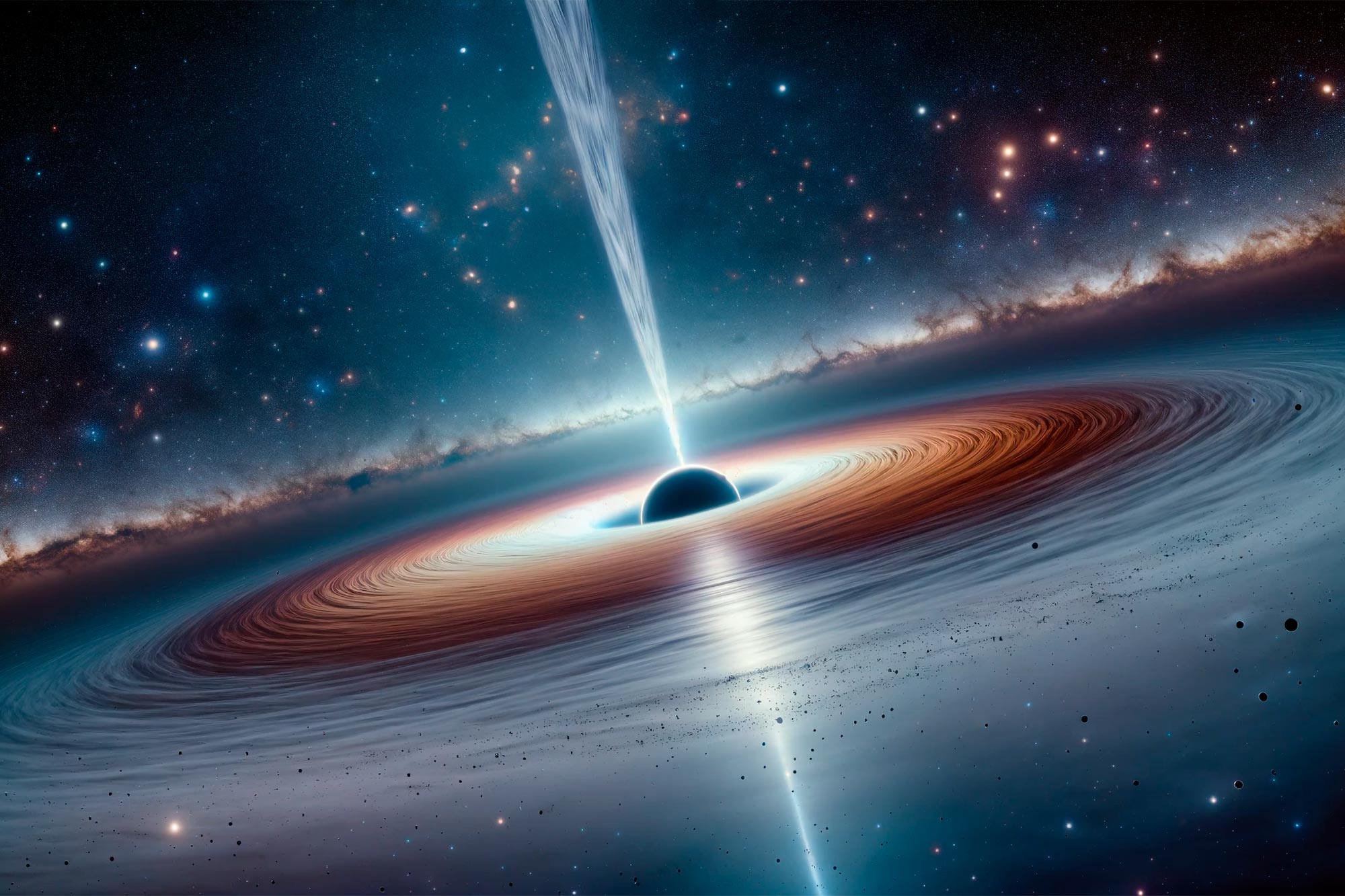
Then, as the plasma’s energy diminished, the magnetic field lines snapped back into their original positions. As a result, the plasma was compressed into a straight structure resembling the jets of plasma that can stream from ultra-dense dead stars known as black holes and extend for distances many times the size of a galaxy. The results suggest that those jets, whose causes remain a mystery, could be formed by the same compressing magnetic fields observed in this research.
“When we did the experiment and analyzed the data, we discovered we had something big,” said Sophia Malko, a PPPL staff research physicist and lead scientist on the paper. “Observing magneto-Rayleigh Taylor instabilities arising from the interaction of plasma and magnetic fields had long been thought to occur but had never been directly observed until now. This observation helps confirm that this instability occurs when expanding plasma meets magnetic fields. We didn’t know that our diagnostics would have that kind of precision. Our whole team is thrilled!”
“These experiments show that magnetic fields are very important for the formation of plasma jets,” said Will Fox, a PPPL research physicist and principal investigator of the research reported in Physical Review Research. “Now that we might have insight into what generates these jets, we could, in theory, study giant astrophysical jets and learn something about black holes.”
Innovations in Plasma Measurement Techniques
PPPL has world-renowned expertise in developing and building , sensors that measure properties like density and temperature in plasma in a range of conditions. This achievement is one of several in recent years that illustrates how the Lab is advancing measurement innovation in plasma physics.
The team improved a measurement technique known as proton radiography by creating a new variation for this experiment that would allow for extremely precise measurements. To create the plasma, the team shone a powerful laser at a small disk of plastic. To produce protons, they shone 20 lasers at a capsule containing fuel made of varieties of hydrogen and helium atoms. As the fuel heated up, fusion reactions occurred and produced a burst of both protons and intense light known as X-rays.
The team also installed a sheet of mesh with tiny holes near the capsule. As the protons flowed through the mesh, the outpouring was separated into small, separate beams that were bent because of the surrounding magnetic fields. By comparing the distorted mesh image to an undistorted image produced by X-rays, the team could understand how the magnetic fields were pushed around by the expanding plasma, leading to whirl-like instabilities at the edges.
VIDEO: Coffee Creamer
“What we observed was like when you pour milk into coffee,” Malko said. “During the interaction, lots of structures form where the fields meet the plasma because there are drastic differences in temperature, density and the strength of the magnetic field. It’s a perfect place for them to grow.”
“Our experiment was unique because we could directly see the magnetic field changing over time,” Fox said. “We could directly observe how the field gets pushed out and responds to the plasma in a type of tug of war.”
Exploring High Energy Density Plasmas
The findings exemplify how PPPL is expanding its focus to include research focused on high energy density (HED) plasma. Such plasmas, like the one created in this experiment’s fuel capsule, are hotter and denser than those used in fusion experiments. “HED plasma is an exciting area of growth for plasma physics,” Fox said. “This work is part of PPPL’s efforts to advance this field. The results show how the Laboratory can create advanced diagnostics to give us new insights into this type of plasma, which can be used in laser fusion devices, as well as in techniques that use HED plasma to create radiation for microelectronics manufacturing.”
“PPPL has an enormous amount of knowledge and experience in magnetized plasmas that can contribute to the field of laser-produced HED plasmas and help make significant contributions,” Fox said.
“HED science is complex, fascinating, and key to understanding a wide range of phenomena,” said Laura Berzak Hopkins, PPPL’s associate laboratory director for strategy and partnerships and deputy chief research officer. “It’s incredibly challenging to both generate these conditions in a controlled manner and develop advanced diagnostics for precision measurements. These exciting results demonstrate the impact of integrating PPPL’s breadth of technical expertise with innovative approaches.”
More Experiments and Better Simulations
The researchers plan to work on future experiments that will help improve models of expanding plasma. “Scientists have assumed that in these situations, density and magnetism vary directly, but it turns out that that’s not true,” Malko said.
“Now that we have measured these instabilities very accurately, we have the information we need to improve our models and potentially simulate and understand astrophysical jets to a higher degree than before,” Malko said. “It’s interesting that humans can make something in a laboratory that usually exists in space.”
Reference: “Observation of a magneto-Rayleigh-Taylor instability in magnetically collimated plasma jets” by S. Malko, D. B. Schaeffer, W. Yao, V. Valenzuela-Villaseca, C. Johnson, G. Fiksel, A. Ciardi and W. Fox, 27 June 2024, Physical Review Research.
DOI: 10.1103/PhysRevResearch.6.023330
Collaborators included researchers from the University of California-Los Angeles, the Sorbonne University, Princeton University and the University of Michigan. The research was funded by the DOE’s Laboratory-Directed Research and Development program under contract number DE-AC02-09CH11466. The experiment was conducted using the University of Rochester’s Omega Laser Facility under DOE/National Nuclear Security Administration contract number DE-NA0003856.
Never miss a breakthrough: Join the SciTechDaily newsletter.
Follow us on Google and Google News.
1 Comment
Whether between galaxies or within doughnut-shaped fusion devices known as tokamaks, the electrically charged fourth state of matter known as plasma regularly encounters powerful magnetic fields, changing shape and sloshing in space. The physical phenomena observed in scientific research can never be the entirety of things. Scientific research guided by correct theories can help humanity avoid detours, failures, and pomposity.
Please ask researchers to think deeply:
1. What is the natural essence of matter known as plasma?
2. Should the natural essence of matter be high-dimensional spacetime things or low dimensional spacetime things?
Please witness the exemplary collaboration between theoretical physicists and experimentalists (https://scitechdaily.com/microscope-spacecrafts-most-precise-test-of-key-component-of-the-theory-of-general-relativity/#comment-854286). Some people in contemporary physics has always lived in a self righteous children’s story world. Whose values have been overturned by such a comical and ridiculous reality?