
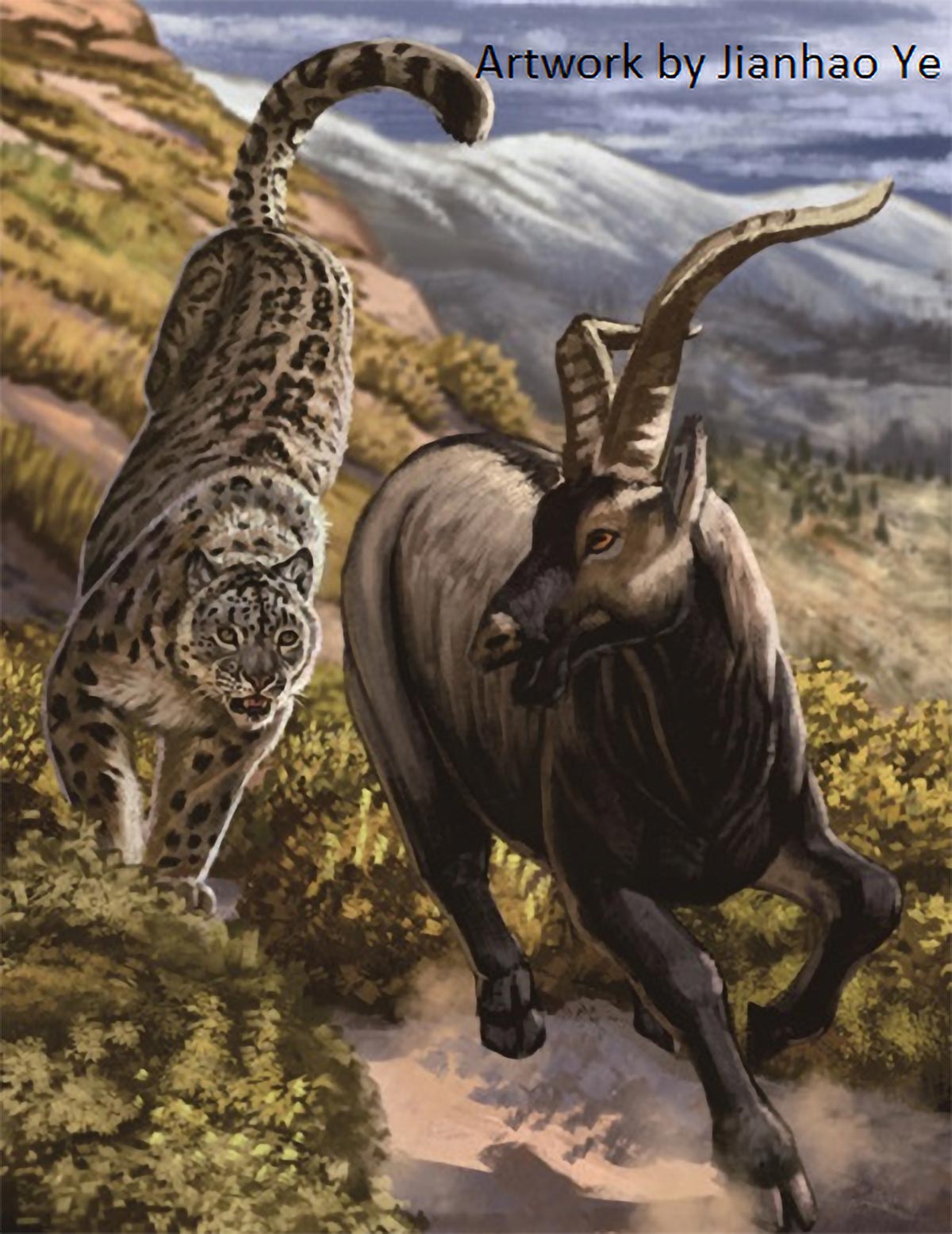
A new study uncovers an unexpected member of the species’ evolutionary lineage in Portugal, challenging conventional assumptions about its habitat preferences.
An international team of scientists has identified snow leopard fossils for the first time, offering new insights into the species’ evolutionary history during the Quaternary period. This discovery sheds light on how snow leopards dispersed from their origin on the Tibetan Plateau to regions as distant as the Iberian Peninsula, far beyond the icy peaks of the Himalayas.
The study, published in Science Advances, was led by Qigao Jiangzuo from Peking University and Joan Madurell Malapeira from the Universitat Autònoma de Barcelona (UAB).

Snow leopards (Panthera uncia) are in serious danger of extinction, with only about 4,000 specimens remaining. They are medium to large felids that live at high altitudes, over 2,000 meters above sea level, mainly in the Himalayas.
Although their distinctive traits have long been recognized, the correlation between these traits and their adaptation to the Tibetan plateau environment, as well as their evolutionary history, remained largely unexplored due to the total absence of fossil records in Tibet and surrounding regions. Until now, possible unverified remains had been located in northern China and in Europe, but their validation and phylogenetic position remained uncertain.
Discovering Snow Leopard Fossils
In the study now published, researchers reviewed a large amount of samples assigned to the common leopard (Panthera pardus) from Europe and Asia and for the first time identified five snow leopard fossils. The records, from China, France, and Portugal, date from one million years ago.
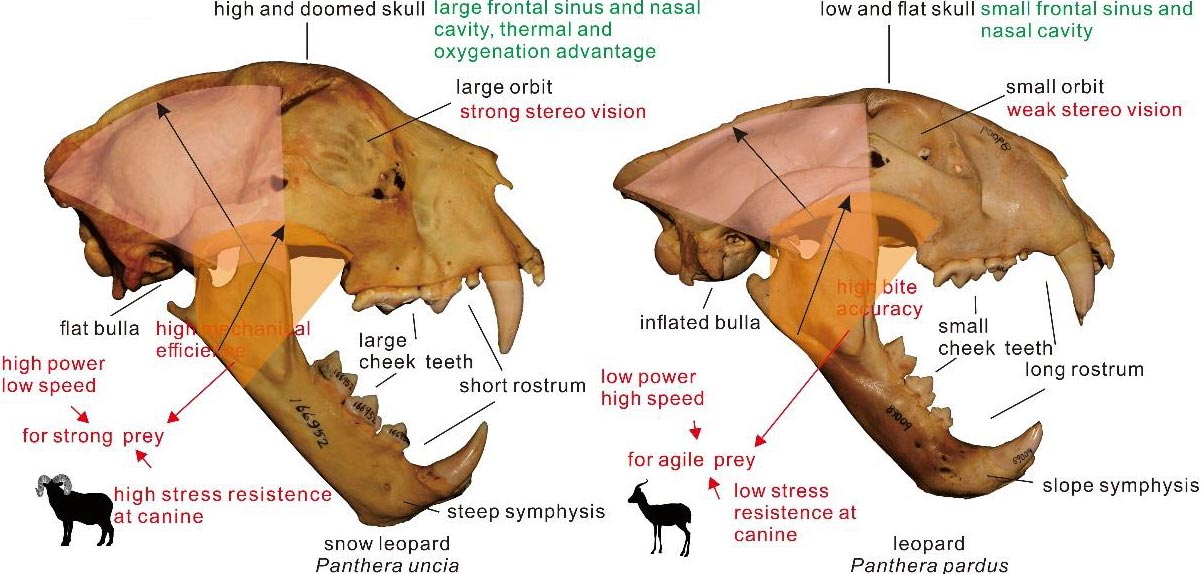
This allowed them to trace the evolution and ecological adaptation of the species during the Quaternary, as well as to model its possible geographic and temporal dispersion. The research integrated morphometric and phylogenetic analyses, as well as mathematical models of species distribution.
The study highlights the unique traits that set snow leopards apart from their more common cousins. While common leopards are built to hunt swift and agile prey in partially forested habitats, snow leopards have evolved distinct features to dominate the rugged mountain landscapes. These include larger teeth, domed skulls, and stronger jaws and paws—perfect for taking down robust, muscular prey like mountain goats.
Images of the computed tomography of the skull of the snow leopard from Algar da Manga Larga (Portugal). Credit: Jiangzuo et al., 2025.
But their survival in rocky, barren terrains also relied on other key adaptations. Enhanced binocular vision, a large cranial ectotympanic structure for better hearing, powerful limbs to withstand the impact of steep jumps, and a long tail for balance developed rapidly during the Quaternary, particularly from the Middle Pleistocene onward, about half a million years ago.
Expansion Beyond the Himalayas
These key adaptations coincided with the colder phases of the last Ice Ages, in which snow leopards expanded beyond the Himalayas into central China and, in a surprising twist, researchers remark, dispersed westward to the Iberian Peninsula. In the early 2000s, amateur speleologists uncovered in Porto de Mós, Portugal, a remarkable fossil: a partial leopard skeleton, including an almost perfectly preserved skull, known as the “leopard of Algar da Manga Larga”. This fossil has been now revealed to be an unexpected member of the snow leopard lineage in Western Europe.
“We propose that about 900,000 years ago the gradual intensification of glaciations in Eurasia led to the gradual appearance of more open spaces, and this made possible the arrival of the species in Portugal, where it lived until relatively recently, about 40,000 years ago,” says Joan Madurell Malapeira, a researcher at the UAB’s Department of Geology.
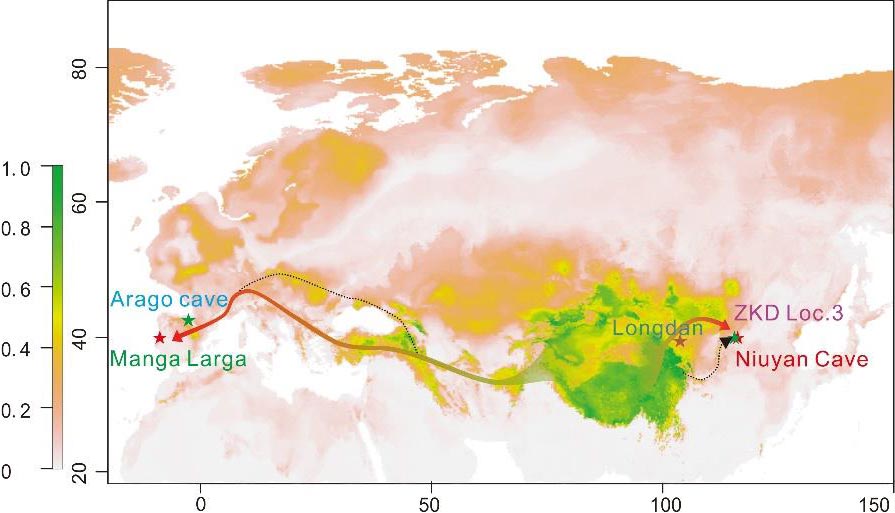
The discovery of the Portugal fossil has significant implications for the conservation of snow leopards. The study suggests that snow leopards prioritize steep, rocky terrain and cold climates over high altitudes, challenging long-held assumptions about their habitat preferences.
“The analyses we have carried out lead us to conclude that surely the high altitude and snow would not have been the limiting factor for the distribution of the species, but rather the presence of open and steep spaces. In other words, the snow leopard has always been adapted to live in the mountains, but not necessarily at high altitudes and with snow. And this, in a context of climate change like the current one, is encouraging to ensure their survival,” says Joan Madurell Malapeira.
Future research will explore the neuroanatomy and ecology of Algar da Manga Larga leopard, shedding more light on the fascinating history of this iconic mountain predator.
Reference: “Insights on the evolution and adaptation toward high-altitude and cold environments in the snow leopard lineage” by Qigao Jiangzuo, Joan Madurell-Malapeira, Xinhai Li, Darío Estraviz-López, Octávio Mateus, Agnès Testu, Shijie Li, Shiqi Wang and Tao Deng, 15 January 2025, Science Advances.
DOI: 10.1126/sciadv.adp5243
Never miss a breakthrough: Join the SciTechDaily newsletter.
Follow us on Google and Google News.