
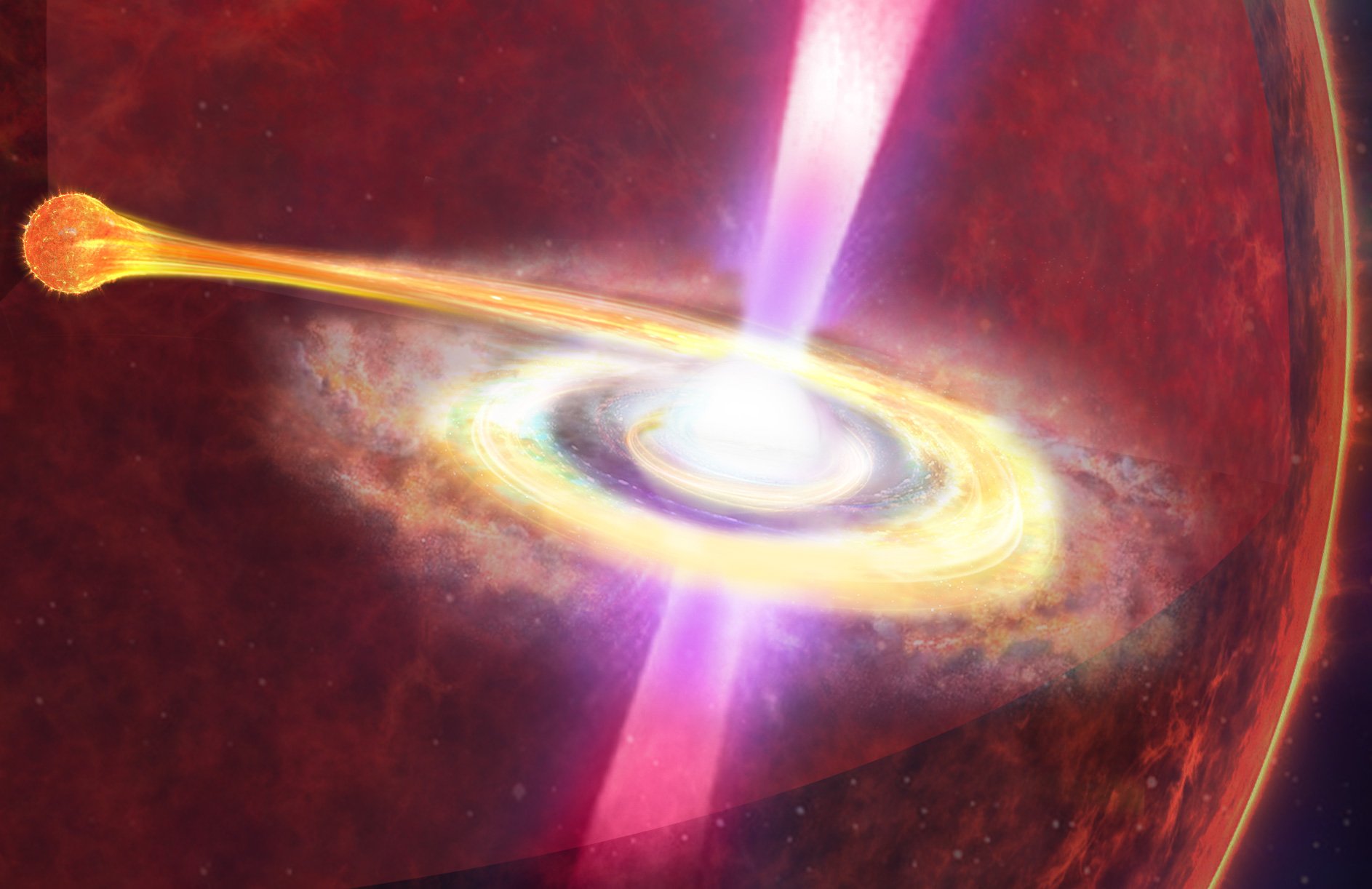
Recent research highlights common envelope jet supernovae as pivotal in generating elements heavier than lanthanides, revising earlier beliefs that neutron star mergers were the primary sites. This discovery opens new avenues for understanding the cosmos and guides future astrophysical studies.
In a study published in The Astrophysical Journal, scientists have proposed the features of rapid neutron capture process (r-process) nucleosynthesis in a novel scenario, common envelope jet supernovae (CEJSNe). This study sheds new light on the origin of elements, especially beyond the lanthanides.
New Insights Into Heavy Element Synthesis
The origin of elements heavier than iron is one of the key questions in the physics community. Fusion burning in stars produces elements up to iron while heavier ones cannot be produced in that environment due to Coulomb repulsion. However, the explosive environment could provide enough temperature and density to generate heavy elements. The r-process occurring in such an environment is believed to produce about half of the elements heavier than iron.
Challenging the Neutron Star Merger Theory
In 2017, the discovery of the gravitational wave and its afterglow from the neutron star merger event GW081708 uniquely confirmed the occurrence of the r-process for the first time. However, subsequent studies cast doubt on the idea that the neutron star merger is the only site of r-process, as the abundance of lanthanides produced by the neutron star merger is significantly less than what has been observed in metal-poor stars. Therefore, the roles of other sites, such as collapsars and magnetohydrodynamic supernovae, should be key to the r-process.
Dr. Shilun Jin, from the Institute of Modern Physics (IMP) of the Chinese Academy of Sciences (CAS), and his collaborator from Technion (Israel) presented the features of the r-process in the novel CEJSNe site for the first time.
Introducing Common Envelope Jet Supernovae (CEJSNe)
CEJSNe refers to a neutron star remnant of a supernova and a red supergiant from the late phase of a massive binary system. The red supergiant expands, engulfing the neutron star, which spirals inward within the red supergiant’s envelope and then inside its core. Once it enters the core, the neutron star accretes mass via an accretion disk at a very high rate, and the energetic, dense jets that are produced can provide proper conditions for r-process nucleosynthesis.
The researchers showed that CEJSNe can produce the greatest abundance of elements heavier than lanthanides among all current r-process scenarios. By comparing log(XLa) with log(Ir/Eu), which is a new quantity showing the relative strength of lanthanides and elements in the third peak, they found an anti-correlation between CEJSNe and other r-process models.
“This finding means that abundant lanthanide and heavier elements can’t be generated in a single event, which would be a critical feature for further research on r-process. CEJSNe is also critical for explaining the characteristics of the r-enhanced metal-poor stars,” said Dr. Jin.
Future Prospects for Element Synthesis Research
This work not only paves the way for a better understanding of the secrets of the r-process, but will also guide researchers in undertaking various measurements. Since exotic isotopes from the High Intensity Accelerator Facility (HIAF) will be available soon in China, the key nuclear properties relevant to the r-process in CEJSNe are expected to be unveiled.
Reference: “Robust r-process Nucleosynthesis beyond Lanthanides in the Common Envelop Jet Supernovae” by Shilun Jin and Noam Soker, 20 August 2024, The Astrophysical Journal.
DOI: 10.3847/1538-4357/ad5f8e
Never miss a breakthrough: Join the SciTechDaily newsletter.
Follow us on Google and Google News.
1 Comment
Recent research highlights common envelope jet supernovae as pivotal in generating elements heavier than lanthanides, revising earlier beliefs that neutron star mergers were the primary sites. This discovery opens new avenues for understanding the cosmos and guides future astrophysical studies.
Very good!
Space has physical properties of zero viscosity and absolute incompressibility. Zero viscosity and absolute incompressibility are physical characteristics of ideal fluids. The space with ideal fluid physical characteristics forms vortices via topological phase transitions, which is not difficult to understand mathematically. Once the topological vortex is formed, it occupies space and maintains its presence in time. This is the transition from chaos to order via two bidirectional coupled continuous chaotic systems.
From cosmic accretion disks to particle spins, topological vortex fractal structures are ubiquitous. Symmetry of topological vortex can be used to explore particle behavior under spatial, temporal, and quantum reversals, involving gravitation, discrete and continuous changes. It underpins the consistency of natural laws and experiment reproducibility.
The physical phenomena observed in scientific experiments are always just appearances, not the natural essence of things. The natural essence of things needs to be extracted and sublimated based on natural phenomena via mathematical theories. Mathematics is the main environment for modeling problems in other areas. Observations and experiments, theory, and modeling reinforce each other and together lead to our understanding of physical phenomena. After understanding and mastering the natural essence of things, humans can predict more possible natural phenomena, and even manipulate and implement them.