
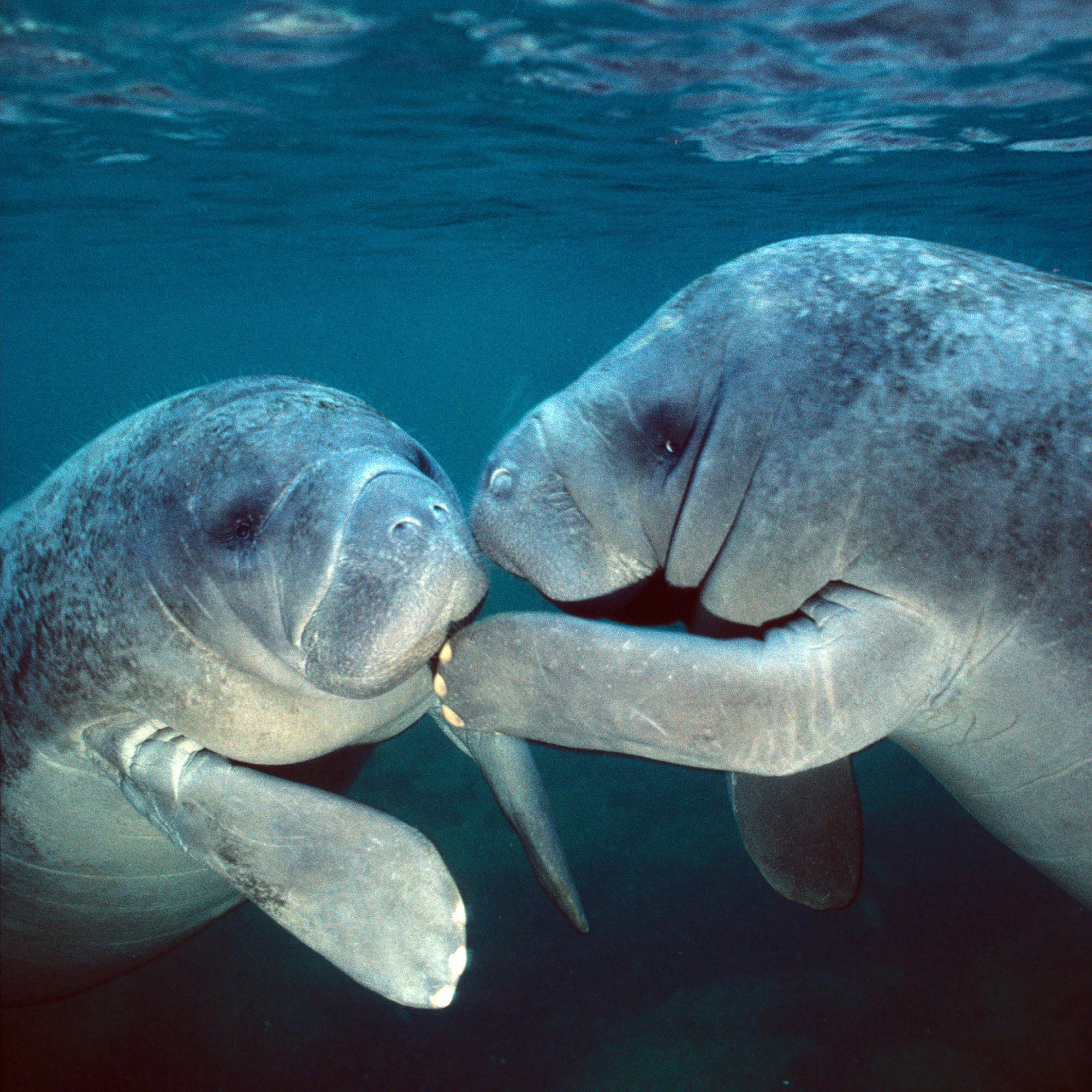
Historic accounts reveal manatee populations increased in the 1800s and 1900s alongside human populations.
A new study highlights that Florida manatees are more numerous now than ever before, likely due to improved conservation efforts and environmental changes. While historically considered rare, manatees have benefited from the same human activities that threaten their existence, indicating a need for updated conservation strategies.
Manatee Conservation Issues
Florida manatees face significant threats from human activity, yet their populations are currently thriving more than ever before. This finding comes from a study published today (November 20, 2024) in the open-access journal PLOS ONE by Thomas J. Pluckhahn from the University of South Florida and David K. Thulman from George Washington University.
Known as an iconic species and a focus of conservation efforts, Florida manatees are vulnerable to environmental changes and collisions with watercraft. However, little is understood about their historical populations, particularly before modern human impact. This knowledge gap makes it challenging for conservationists to set informed goals for sustaining healthy manatee populations.

Study Findings on Manatee Population Trends
In this study, the authors investigate manatee populations between 12,000 BC and the mid-20th century by compiling records of manatee remains from archaeological sites as well as historical accounts of manatee sightings from newspapers, journals, and other sources.
The data indicates that manatees were quite rare during most of this time period before increasing in population size and distribution during the 1800s and 1900s, coincident with increasing human populations. This population growth is likely related to expanded conservation laws, improved public perception of manatees, and warming water temperatures due to climate change and power plant construction.
Implications for Future Conservation Efforts
Despite their modern reputation as a rare species, these results suggest that Florida manatees are more abundant today than any previous time in North American human history. Many of the anthropogenic changes that endanger the species today are also likely responsible for their population growth over the past two centuries. The authors note that manatee conservation goals cannot simply aim for a return to pre-modern population conditions, and that a detailed understanding of their history and ecological relationship with humans will be necessary to establish healthy conservation goals.
The authors add: “Manatees are among Florida’s most iconic species, so the possibility that they were not common here until the modern era is surprising. There is a lot of uncertainty regarding changes the Anthropocene will bring in the future, as human-caused climate change accelerates. But our study serves as a reminder that we don’t even fully understand the changes that have already occurred across the modern era. We think there are lessons from that history which might be helpful for managing a better future for both people and manatees in Florida.”
Reference: “Historical ecology reveals the “surprising” direction and extent of shifting baselines for the Florida manatee (Trichechus manatus latirostis)” by Thomas J. Pluckhahn and David K. Thulman, 20 November 2024, PLOS ONE.
DOI: 10.1371/journal.pone.0313070
Never miss a breakthrough: Join the SciTechDaily newsletter.
Follow us on Google and Google News.
2 Comments
Sorry,
But it is ridiculous to try to estimate population trends based on the methodologies listed here. Let’s review:
“records of manatee remains from archaeological sites”, in Florida? Remember, at the bigging of this era, there was an ice age, the second wave of human migration had just arrived (there is some evidence of a first wave 30,000 years ago) so much of the evidence would quite possibly be underwater. Wet environments would be a poor candidate for preserving animal remains, and possibly the humans of those times just didn’t have a use for or like the taste of manatee.
Next:
“as well as historical accounts of manatee sightings from newspapers, journals, and other sources” from the era when they thought manatees were mermaids? How many people went to the beach on vacation in those days? Accounts from a biography of Daniel Boone says he traveled to the area that is now Pensacola and found the area uninhabitable. Remember this is before AC. So maybe they just didn’t write about them. And maybe they weren’t as found of humans moving in as the authors believe.
Better studies of population trends of threatened populations have relied on genetic studies to measure diversity and estimate possible population densities. They have also used more reliable records for whale from whaling records. I have read (but don’t remember where or what the methodology was) that the population of manatees could have been as high as 300,000. This would put the current population at about 1-2 percent of the historical maximum.
I would like to see who funded this study, because it sounds as if it is biased towards ending protections for the manatees.
Dang! As I read this, it all started to sound off. Huh? What??? And by the end of the article, I was thinking, “they’re trying to do away with Manatee protection for pretty bogus reasons”.
@Richard says it much more clearly then the thoughts that went through my mind