
Close Menu
    Facebook X (Twitter) Instagram
    SciTechDaily
    • Biology
    • Chemistry
    • Earth
    • Health
    • Physics
    • Science
    • Space
    • Technology
    Facebook X (Twitter) Pinterest YouTube RSS
    SciTechDaily
    Home»Biology»The COVID-19 Trojan Horse: How the Virus Breaks Into the Placental Fortress
    Biology

    The COVID-19 Trojan Horse: How the Virus Breaks Into the Placental Fortress

    By Monash UniversityJuly 13, 2023No Comments4 Mins Read
    Facebook Twitter Pinterest Telegram LinkedIn WhatsApp Email Reddit
    Share
    Facebook Twitter LinkedIn Pinterest Telegram Email Reddit
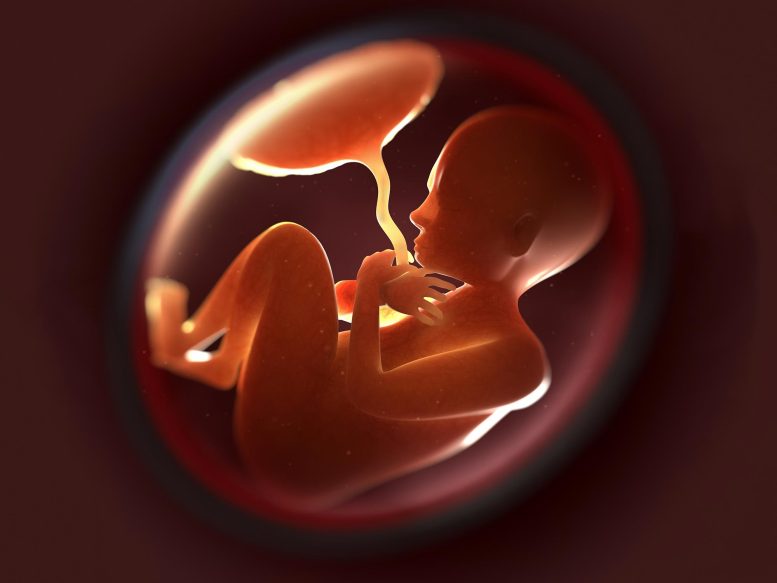
    Fetus in Womb
    Australian researchers have discovered how COVID-19 can infect human placenta, revealing that the virus affects the syncytiotrophoblast cells, which are crucial for maintaining pregnancy. The study also found that anti-ACE2 antibodies and antiviral drugs can effectively prevent this infection, providing a significant advancement in understanding and potentially mitigating the effects of viral infections on pregnancy.

    Human skin cells reprogrammed into placental stem cells shows how COVID infects placenta — and how it can be stopped.

    In a landmark study published today (July 13) in the journal Nature Cell Biology, Australian researchers, led by Professor Jose Polo from Monash University and the University of Adelaide and University of Melbourne’s Professor Kanta Subbarao from the Peter Doherty Institute for Infection and Immunity (Doherty Institute), have revealed how COVID-19 can infect the human placenta.

    Research has shown that COVID-19 infections during pregnancy may lead to adverse outcomes, but little is known about the mechanisms behind the effects of SARS-CoV-2 infection in pregnancy.
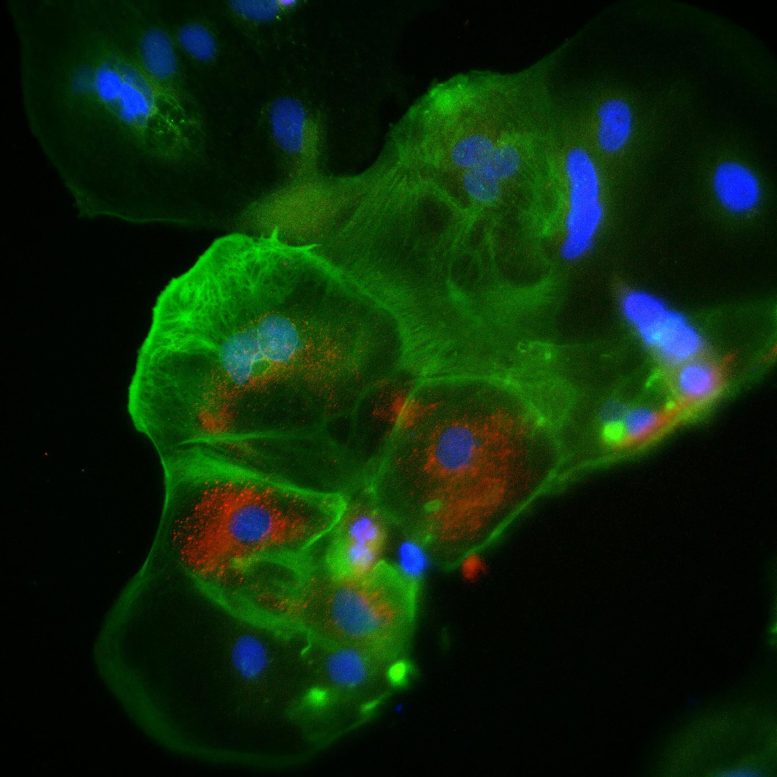
    Placenta Cells Infected With the SARS-CoV-2 Virus
    Placenta cells (syncytiotrophoblast, in green) infected with the SARS-CoV-2 virus (COVID-19, in red); blue areas are cell nuclei labeling the multinucleated syncytiotrophoblasts. Credit: Monash University

    The Australian research team grew placenta tissue in the lab, using a state-of-the-art method developed by Professor Polo and colleagues where human skin cells are “reprogrammed” into trophoblast stem cells (the cells that help a developing embryo attach to the wall of the uterus, forming part of the placenta). They found that ACE2, a protein that acts as the doorway for SARS-CoV-2 to enter organs such as the lung, is present in specific placental cells, like syncytiotrophoblasts (ST cells).

    Importantly, ST cells were susceptible to the virus – a major finding as these placental cells produce the key hormone for maintaining pregnancy (hCG).

    Dr. Joseph Chen, a stem cell biologist at Monash University and co-first author of the report, said this discovery explains several clinical reports indicating inflammation of the placenta due to COVID-19.

    “We observed that SARS-CoV-2 infection led to a significant reduction in the survival and differentiation of ST cells, which in turn resulted in lower production of hCG,” he said. “It suggests that this is how COVID-19 could impact pregnancy, though further investigations are needed.”
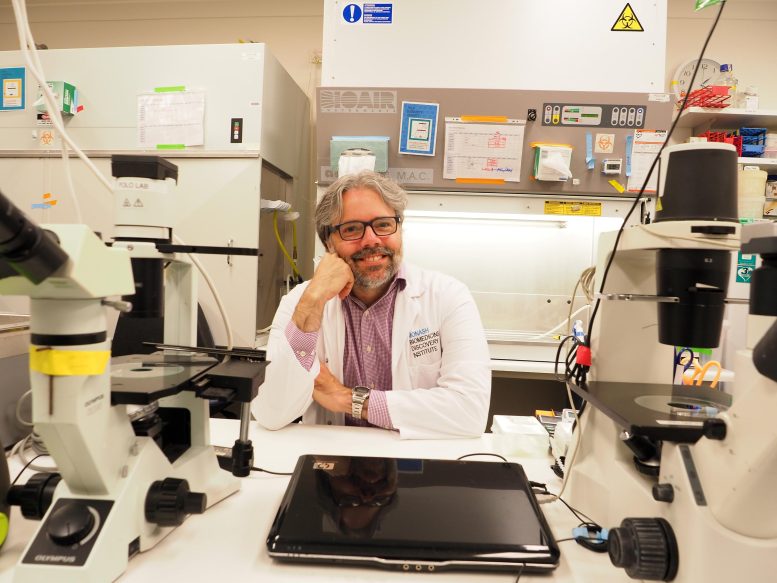
    Jose Polo
    Professor Jose Polo. Credit: Mike Rutherford

    Virologist at Doherty Institute and co-first author of the study Dr Jessica Neil said, “our team also discovered that anti-ACE2 antibodies and antiviral drugs were effective in preventing SARS-CoV-2 infection and restoring normal ST differentiation and function”.

    Professor Subbarao said that this study is a significant advance for the broader understanding of viral infections in pregnancy.

    “Our study provides valuable insights into the link between SARS-CoV-2 infection and placenta pathology. This is a game changer as we are now equipped to explore how the early placenta may be affected by other viruses as well,” she said.

    Professor Polo emphasized the importance of the research in establishing a platform to study early placental cell types.

    “This study not only helps us to understand what happens when the placenta is infected with the COVID-19 virus during pregnancy, it also means we have established a broader, scalable and tractable platform to study early placental cell types,” he said.

    Reference: “A placental model of SARS-CoV-2 infection reveals ACE2-dependent susceptibility and differentiation impairment in syncytiotrophoblasts” by J. Chen, J. A. Neil, J. P. Tan, R. Rudraraju, M. Mohenska, Y. B. Y. Sun, E. Walters, N. G. Bediaga, G. Sun, Y. Zhou, Y. Li, D. Drew, P. Pymm, W. H. Tham, F. J. Rossello, G. Nie, X. Liu, K. Subbarao and J. M. Polo, 13 July 2023, Nature Cell Biology.
    DOI: 10.1038/s41556-023-01182-0

    Never miss a breakthrough: Join the SciTechDaily newsletter.
    Follow us on Google and Google News.

    COVID-19 Infectious Diseases Monash University Placenta Pregnancy Virology
    Share. Facebook Twitter Pinterest LinkedIn Email Reddit

    Related Articles

    SARS vs. COVID-19: Why Some Coronavirus Strains Are More Infectious Than Others

    A Genetic Variant You May Have Inherited From Neanderthals Reduces the Risk of Severe COVID-19

    Some Coronaviruses Can Steal Their Host’s Genes to Elude Their Immune System

    Humanity’s Best Friend: How Dogs Could Be Our Next Allies in the Fight Against COVID-19

    First Global Atlas of How the COVID Coronavirus Interacts With Human Cells

    New Insights Into Why COVID-19 Infects Some Animals, but Not Others

    SARS-CoV-2 Infection Revealed in “Mini-Lungs” Shows How COVID-19 Damages the Lungs

    COVID-19 Impacts Some Organs, But Not Others – Here’s Why

    Genetic Comparison of 24 Coronaviruses – Including SARS-CoV-2 Viruses From the U.S. and China – Yields Clues to COVID-19 Treatments

    Leave A Reply Cancel Reply

    • Facebook
    • Twitter
    • Pinterest
    • YouTube

    Don't Miss a Discovery

    Subscribe for the Latest in Science & Tech!

    Trending News

    Breakthrough Bowel Cancer Trial Leaves Patients Cancer-Free for Nearly 3 Years

    Natural Compound Shows Powerful Potential Against Rheumatoid Arthritis

    100,000-Year-Old Neanderthal Fossils in Poland Reveal Unexpected Genetic Connections

    Simple “Gut Reset” May Prevent Weight Gain After Ozempic or Wegovy

    2.8 Days to Disaster: Scientists Warn Low Earth Orbit Could Suddenly Collapse

    Common Food Compound Shows Surprising Power Against Superbugs

    5 Simple Ways To Remember More and Forget Less

    The Atomic Gap That Could Cost the Semiconductor Industry Billions

    Follow SciTechDaily
    • Facebook
    • Twitter
    • YouTube
    • Pinterest
    • Newsletter
    • RSS
    SciTech News
    • Biology News
    • Chemistry News
    • Earth News
    • Health News
    • Physics News
    • Science News
    • Space News
    • Technology News
    Recent Posts
    • After 37 Years, the World’s Longest-Running Soil Warming Experiment Uncovers a Startling Climate Secret
    • NASA Satellite Captures First-Ever High-Res View of Massive Pacific Tsunami
    • ADHD Isn’t Just a Deficit: Study Reveals Powerful Hidden Strengths
    • Scientists Uncover “Astonishing” Hidden Property of Light
    • Scientists Discover Stem Cells That Could Regrow Teeth and Bone
    Copyright © 1998 - 2026 SciTechDaily. All Rights Reserved.
    • Science News
    • About
    • Contact
    • Editorial Board
    • Privacy Policy
    • Terms of Use

    Type above and press Enter to search. Press Esc to cancel.