
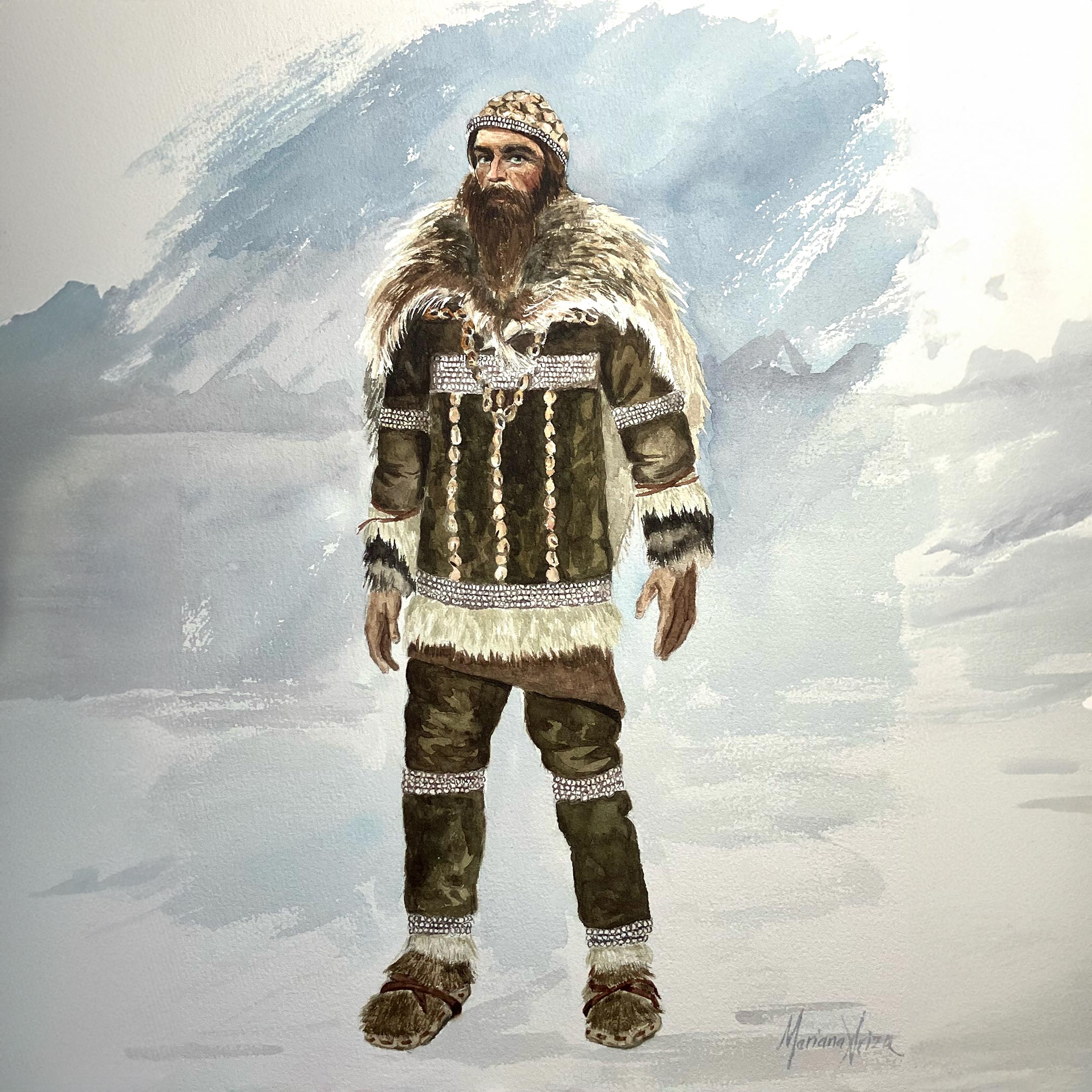
From stone tools that prepared animal skins for humans to use as thermal insulation, to the advent of bone awls and eyed needles to create fitted and adorned garments, why did we start to dress to express ourselves and to impress others?
Researchers explore the transformation of clothing from mere protection to a symbol of social and cultural identity, highlighting the advent of eyed needles around 40,000 years ago as a pivotal innovation. This technology enabled the adornment of garments, marking a shift from utilitarian use to expressing personal and group identities, significantly influencing how societies evolved and interacted.
<h4″>Archaeological Insights Into Clothing’s Social Role
Clothing is understood as a significant component in shaping what makes us human. The emergence of clothing enabled our ancestors to inhabit more corners of the world, access different resources and environments, and connect with a broader community. Today, clothing is associated with identity and status. Yet archaeological evidence indicates that apart from thermal reasons, clothing was not intrinsic for society or cultures to function.
Technological Innovations in Prehistoric Clothing
A team of researchers led by Dr. Ian Gilligan, Honorary Associate in the discipline of Archaeology at the University of Sydney, are the first to suggest that eyed needles were a new technological innovation used to adorn clothing for social and cultural purposes, marking the major shift from clothes as protection to clothes as an expression of identity.
“Eyed needle tools are an important development in prehistory because they document a transition in the function of clothing from utilitarian to social purposes,” says Dr. Ian Gilligan.
Cultural Shifts in Clothing Through Eyed Needles
Dr. Gilligan and his co-authors reinterpret the evidence of recent discoveries in the development of clothing in their paper, “Paleolithic eyed needles and the evolution of dress.”
“Why do we wear clothes? We assume that it’s part of being human, but once you look at different cultures, you realize that people existed and functioned perfectly adequately in society without clothes,” Dr. Gilligan says. “What intrigues me is the transition of clothing from being a physical necessity in certain environments, to a social necessity in all environments.”

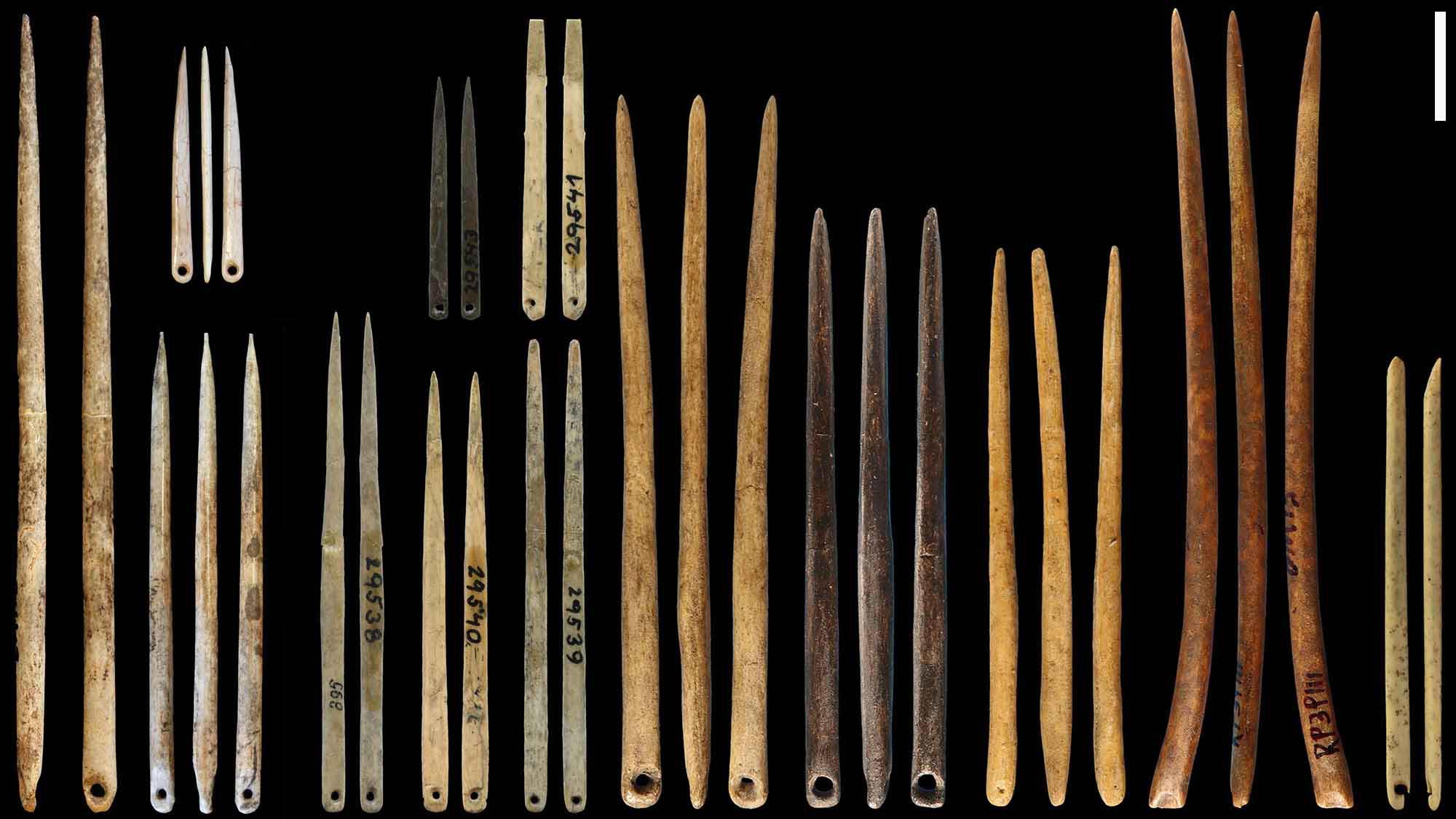
The earliest known eyed needles appeared approximately 40,000 years ago in Siberia. One of the most iconic of Paleolithic artifacts from the Stone Age, eyed needles are more difficult to make when compared to bone awls, which sufficed for creating fitted clothing. Bone awls are tools made of animal bones that are sharpened to a point. Eyed needles are modified bone awls, with a perforated hole (eye) to facilitate the sewing of sinew or thread.
As evidence suggests bone awls were already being used to create tailored clothes, the innovation of eyed needles may reflect the production of more complex, layered clothing, as well as the adornment of clothes by attaching beads and other small decorative items onto garments.
Decorative Use of Clothing in Harsh Climates
“We know that clothing up until the last glacial cycle was only used on an ad hoc basis. The classic tools that we associate with that are hide scrapers or stone scrapers, and we find them appearing and going away during the different phases of the last ice ages,” Dr. Gilligan explains
Dr. Gilligan and his co-authors argue that clothing became an item of decoration because traditional body decoration methods, like body painting with ochre or deliberate scarification, weren’t possible during the latter part of the last ice age in colder parts of Eurasia, as people were needing to wear clothes all the time to survive.
“That’s why the appearance of eyed needles is particularly important because it signals the use of clothing as decoration,” Dr. Gilligan says. “Eyed needles would have been especially useful for the very fine sewing that was required to decorate clothing.”
The Social and Aesthetic Functions of Clothing
Clothing therefore evolved to serve not only a practical necessity for protection and comfort against external elements, but also a social, aesthetic function for individual and cultural identity.
The regular wearing of clothing allowed larger and more complex societies to form, as people could relocate to colder climates while also cooperating with their tribe or community based on shared clothing styles and symbols. The skills associated with the production of clothing contributed to a more sustainable lifestyle and enhanced the long-term survival and prosperity of human communities.
Psychological Implications of Clothing in Modern Society
Covering the human body regardless of climate is a social practice that has endured. Dr. Gilligan’s future work moves beyond the advent of clothing as dress and looks at the psychological functions and effects of wearing clothes.
“We take it for granted we feel comfortable wearing clothes and uncomfortable if we’re not wearing clothes in public. But how does wearing clothes impact the way we look at ourselves, the way we see ourselves as humans, and perhaps how we look at the environment around us?”
This paper was published in the journal Science Advances.
Reference: “Paleolithic eyed needles and the evolution of dress” by Ian Gilligan, Francesco d’Errico, Luc Doyon, Wei Wang and Yaroslav V. Kuzmin, 28 June 2024, Science Advances.
DOI: 10.1126/sciadv.adp2887
Never miss a breakthrough: Join the SciTechDaily newsletter.
Follow us on Google and Google News.