
Close Menu
    Facebook X (Twitter) Instagram
    SciTechDaily
    • Biology
    • Chemistry
    • Earth
    • Health
    • Physics
    • Science
    • Space
    • Technology
    Facebook X (Twitter) Pinterest YouTube RSS
    SciTechDaily
    Home»Health»The Surprising Diet Rule That Makes “Good” Parasites Work
    Health

    The Surprising Diet Rule That Makes “Good” Parasites Work

    By Biology Centre of the Czech Academy of SciencesApril 19, 2026No Comments4 Mins Read
    Facebook Twitter Pinterest Telegram LinkedIn WhatsApp Email Reddit
    Share
    Facebook Twitter LinkedIn Pinterest Telegram Email Reddit
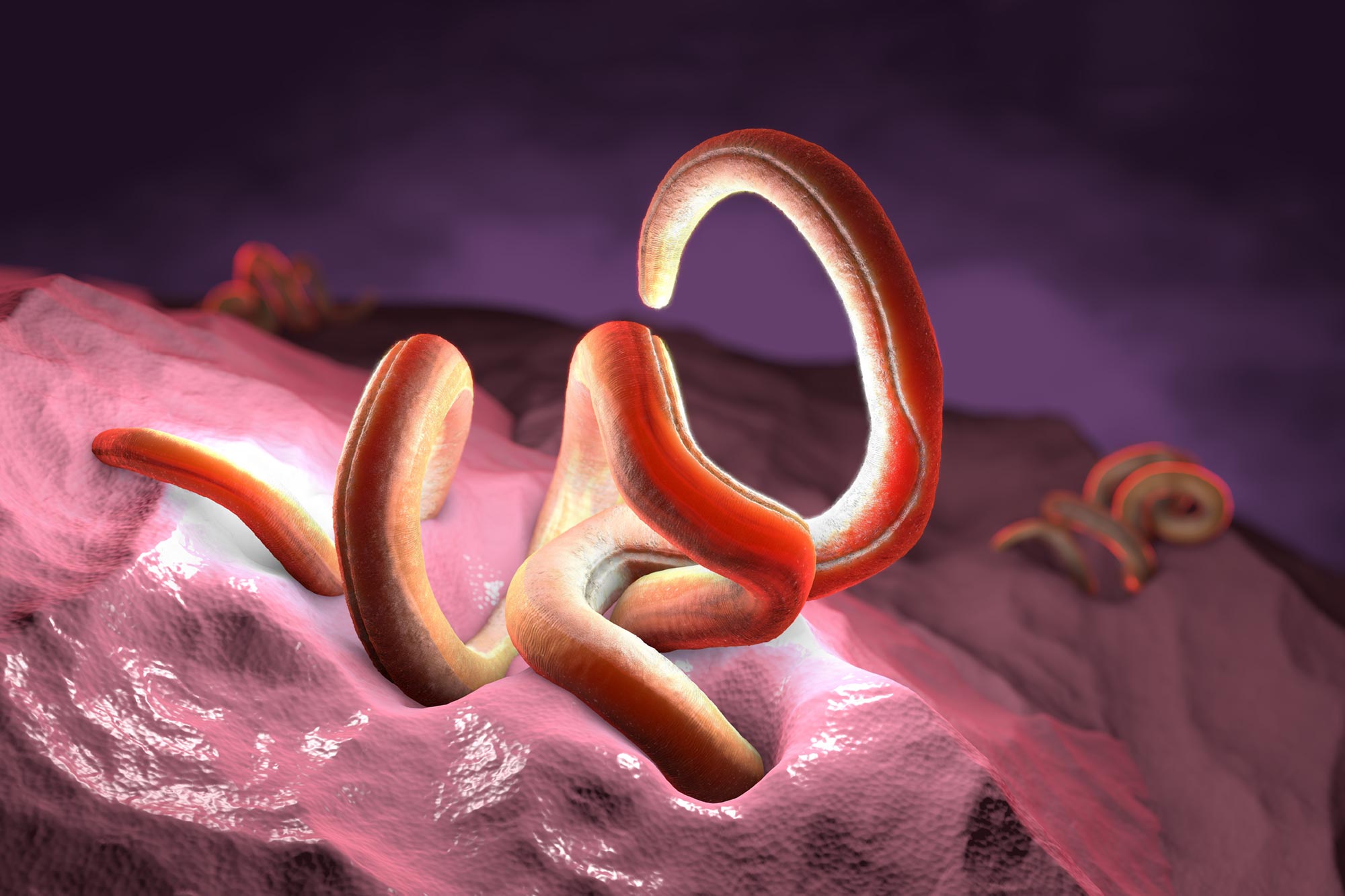
    Twisted Nematode Parasitic Worm Inside Intestines
    A new study suggests that intestinal worms may only suppress inflammation when supported by a fiber-rich diet. Researchers found that without sufficient dietary fiber, the parasites enter a dormant-like state and lose their beneficial effects, hinting that diet may be a critical but overlooked factor in helminth-based therapies. Credit: Shutterstock

    Worms reduce inflammation only on high-fiber diets; low fiber disables their benefits and disrupts gut health.

    Intestinal worms may help calm inflammation in the human body, but only when they receive enough dietary fiber. Without sufficient fiber, they shift into a hibernation-like state and lose their protective benefits. This finding comes from a new study by parasitologists at the Biology Centre of the Czech Academy of Sciences, published in Nature Communications.

    For most of human evolution, intestinal parasites were a normal part of the digestive system. In industrialized nations, they have largely disappeared in recent decades, mainly due to improved hygiene and modern medical care.

    During the same period, cases of autoimmune and inflammatory bowel diseases have increased. About 20 years ago, researchers began exploring whether certain worms could be used to treat these conditions, an approach known as helminth therapy.
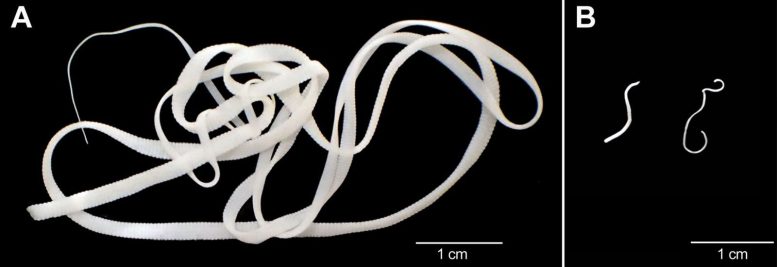
    Fiber Rich vs. Low Fiber Hymenolepis diminuta
    The rat tapeworm Hymenolepis diminuta remains in good condition when the diet is rich in fiber (A). Under a low-fiber diet, it becomes significantly smaller and enters a hibernation-like state (B). Credit: Biology Centre CAS

    “However, the results of helminth therapy have been inconsistent—sometimes the worms suppress inflammation, sometimes they do not. That’s why we focused on factors that may influence their effects in the gut,” says Kateřina Jirků from the Institute of Parasitology, Biology Centre CAS. The researchers identified diet, especially fiber intake, as a key factor.

    Experimental Model and Dietary Conditions

    The scientists studied how an intestinal parasite responds to different levels of dietary fiber in its host. They used the rat tapeworm Hymenolepis diminuta, a species widely used to study interactions among parasites, gut microbes, and the immune system. This tapeworm does not cause disease and has previously shown anti-inflammatory properties.

    “We found that when the diet contains a high proportion of structural fiber, the tapeworm is not only in excellent condition but is also able to induce an anti-inflammatory response in the host. When fiber is lacking, the worm enters an energy-saving state resembling hibernation in mammals, and its anti-inflammatory effect disappears,” explains Jirků.

    When fiber was low, the worms stayed much smaller, did not reach sexual maturity, and failed to produce eggs. Genetic analysis showed major shifts in gene activity related to growth, metabolism, and reproduction.
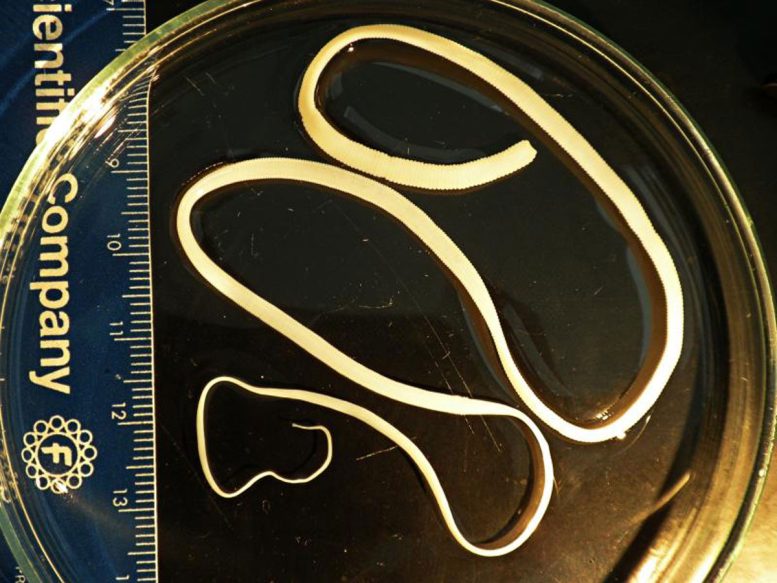
    Tapeworm on Equipment
    Credit: Biology Centre CAS

    Gut Microbiome and Immune Response

    Diet also strongly influenced the host’s gut microbiome. A fiber-rich diet supported beneficial bacteria linked to a healthy gut, while a Western-style diet reduced microbial diversity and increased bacteria associated with imbalance. These changes were reflected in the immune system.

    The researchers emphasize that diet plays a central role in shaping the gut ecosystem. Health guidelines recommend that adults consume about 25 to 30 grams of fiber per day, but intake in Western countries often falls short. In contrast, traditional populations may consume between 80 and 120 grams daily.

    Low-fiber intake can weaken the gut microbiome, which affects not only digestion but also immunity, brain function, and mental health. Imbalances in gut bacteria have been associated with a higher risk of allergies, depression, anxiety, and neurodegenerative conditions such as Alzheimer’s disease.

    Reference: “Developmental plasticity enables an intestinal tapeworm to adapt to dietary stress” by Milan Jirků, William Parker, Oldřiška Kadlecová, Martin Moos, Monika M. Wiśniewska, Roman Kuchta, Petra Tláskalová, Vladislav Ilík, Aleš Tomčala, Zuzana Pavlíčková, Kristýna Brožová, Julius Lukeš, Miroslav Oborník, Martin Kolísko, Barbora Pafčo and Kateřina Jirků, 20 February 2026, Nature Communications.
    DOI: 10.1038/s41467-026-69475-0

    Never miss a breakthrough: Join the SciTechDaily newsletter.
    Follow us on Google and Google News.

    Diet Fiber Gut Inflammation Microbiome
    Share. Facebook Twitter Pinterest LinkedIn Email Reddit

    Related Articles

    This Simple Dietary Change Could Reverse a Common Liver Condition

    Eating Pistachios at Night Could Transform Your Gut Health, Study Reveals

    According to Scientists, This Is the Most Important Thing To Restore Your Gut Health

    New Study Links Controversial Gut Organism to Reduced Body Fat

    Eating Beans Could Aid in Cancer Prevention and Treatment

    Special Vegan Diet Found To Decrease Hot Flashes by 95%

    New Study: Supplement Reduces Liver Triglycerides in People With Fatty Liver Disease

    A Diet Lacking in Tryptophan Alters Gut Microbiota, Increases Inflammation

    Yale Study Reveals Anti-Inflammatory Mechanism of Dieting and Fasting

    Leave A Reply Cancel Reply

    • Facebook
    • Twitter
    • Pinterest
    • YouTube

    Don't Miss a Discovery

    Subscribe for the Latest in Science & Tech!

    Trending News

    Largest-Ever Study Finds Medicinal Cannabis Ineffective for Anxiety, Depression, PTSD

    250-Million-Year-Old Egg Solves One of Evolution’s Biggest Mysteries

    Living With Roommates Might Be Changing Your Gut Microbiome Without You Knowing

    Century-Old Cleaning Chemical Linked to 500% Increased Risk of Parkinson’s Disease

    What if Your Memories Never Happened? Physicists Take a New Look at the Boltzmann Brain Paradox

    One of the Universe’s Largest Stars May Be Getting Ready To Explode

    Scientists Discover Enzyme That Could Supercharge Ozempic-Like Weight Loss Drugs

    Popular Sweetener Linked to DNA Damage – “It’s Something You Should Not Be Eating”

    Follow SciTechDaily
    • Facebook
    • Twitter
    • YouTube
    • Pinterest
    • Newsletter
    • RSS
    SciTech News
    • Biology News
    • Chemistry News
    • Earth News
    • Health News
    • Physics News
    • Science News
    • Space News
    • Technology News
    Recent Posts
    • The Surprising Diet Rule That Makes “Good” Parasites Work
    • This Simple Blood Test Could Outperform “Bad Cholesterol” in Preventing Heart Disease
    • Scientists Uncover Potential Brain Risks of Popular Fish Oil Supplements
    • Scientists Prove There Are Just Six Degrees of Separation in a Social Network
    • Bee Bacteria Could Fix a Major Flaw in Plant-Based Milk
    Copyright © 1998 - 2026 SciTechDaily. All Rights Reserved.
    • Science News
    • About
    • Contact
    • Editorial Board
    • Privacy Policy
    • Terms of Use

    Type above and press Enter to search. Press Esc to cancel.