
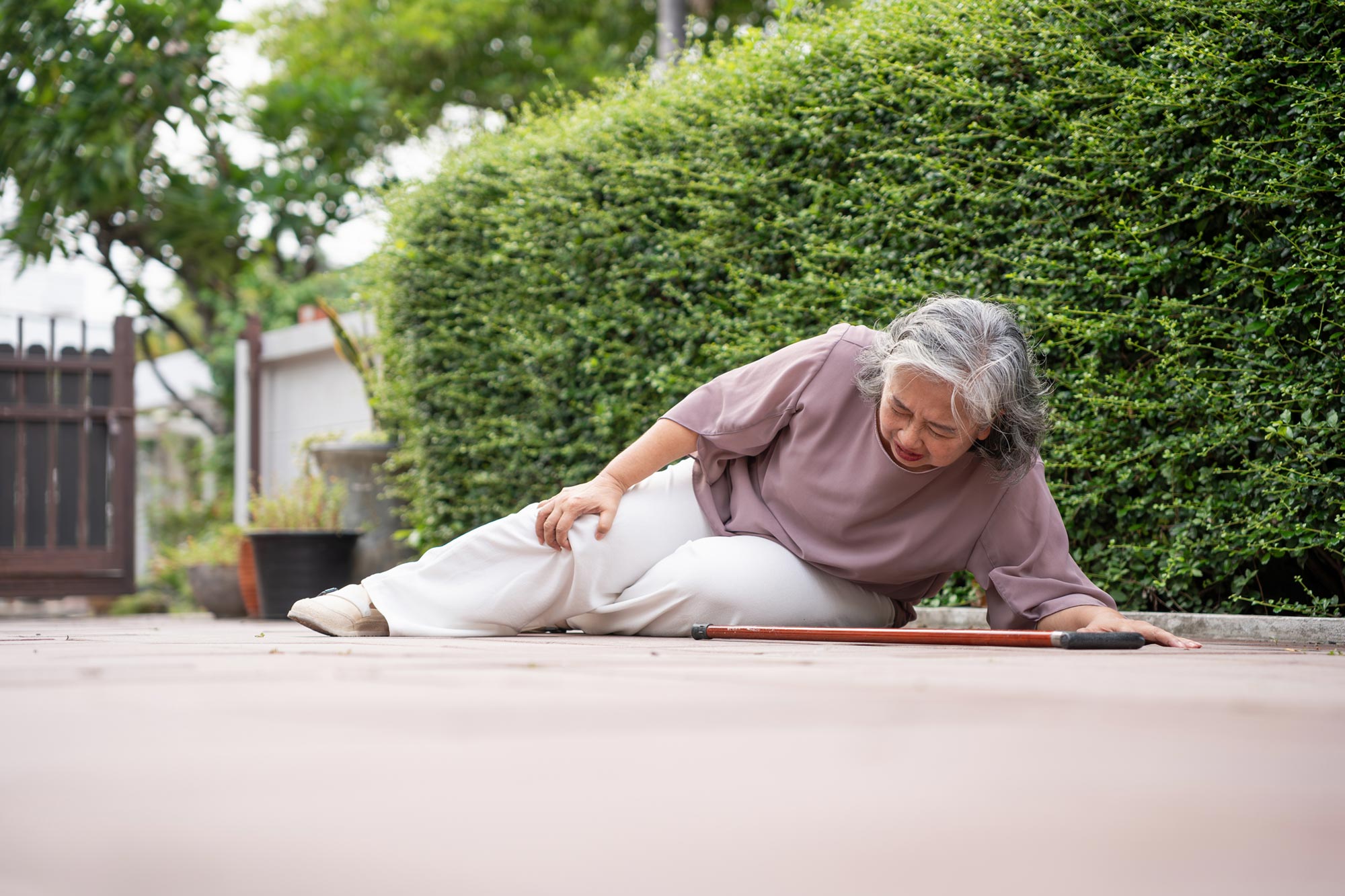
When it comes to balance, more effort from the brain and muscles may actually mean less control—and a higher risk of falling.
Lena Ting of Emory University and her team investigated how aging and Parkinson’s disease affect the way the brain and muscles respond when a person tries to regain balance.
In earlier work, Ting’s group showed that when young adults were suddenly destabilized by having a rug pulled out from under them, their bodies reacted in two stages. First came a rapid, automatic response from the brainstem and muscles. This was followed by a second wave of activity in both the brain and muscles when the balance challenge was more difficult.
In the new study, published today (March 23) in eNeuro, the researchers focused on older adults, both with and without Parkinson’s. They found that these groups produced stronger brain signals and greater muscle activity even during minor balance disturbances. According to Ting, “Balance recovery takes more energy and engagement from the brain in these populations. We found that, when people require more brain activity to balance, they have less robust ability to recover their balance.”
The team also observed that when older individuals activated a muscle to steady themselves, the opposing muscles tightened at the same time. This added stiffness reduced smooth movement and was linked to poorer balance performance.
A Potential Way to Predict Fall Risk
The researchers suggest that their method could eventually be used in clinical settings to better identify people at risk of falling. While the technique still needs further refinement, Ting explained, “We may be able to determine whether someone has increased brain activity simply by assessing muscle activity after pulling a rug out from under you.”
If validated, this approach could help detect balance problems early, allowing at risk individuals to benefit from targeted training and exercise before a fall occurs.
Reference: “Cortically-mediated muscle responses to balance perturbations increase with perturbation magnitude in older adults with and without Parkinson’s disease” by Scott E. Boebinger, Aiden M. Payne, Jifei Xiao, Giovanni Martino, Michael R. Borich, J. Lucas McKay and Lena H. Ting, 23 March 2026, eNeuro.
DOI: 10.1523/ENEURO.0423-25.2026
Never miss a breakthrough: Join the SciTechDaily newsletter.
Follow us on Google and Google News.
1 Comment
Interesting that this article doesn’t mention anything about the balance mechanism in the ears… I would be interested to know how different the conclusions would be if this was included in this research.