
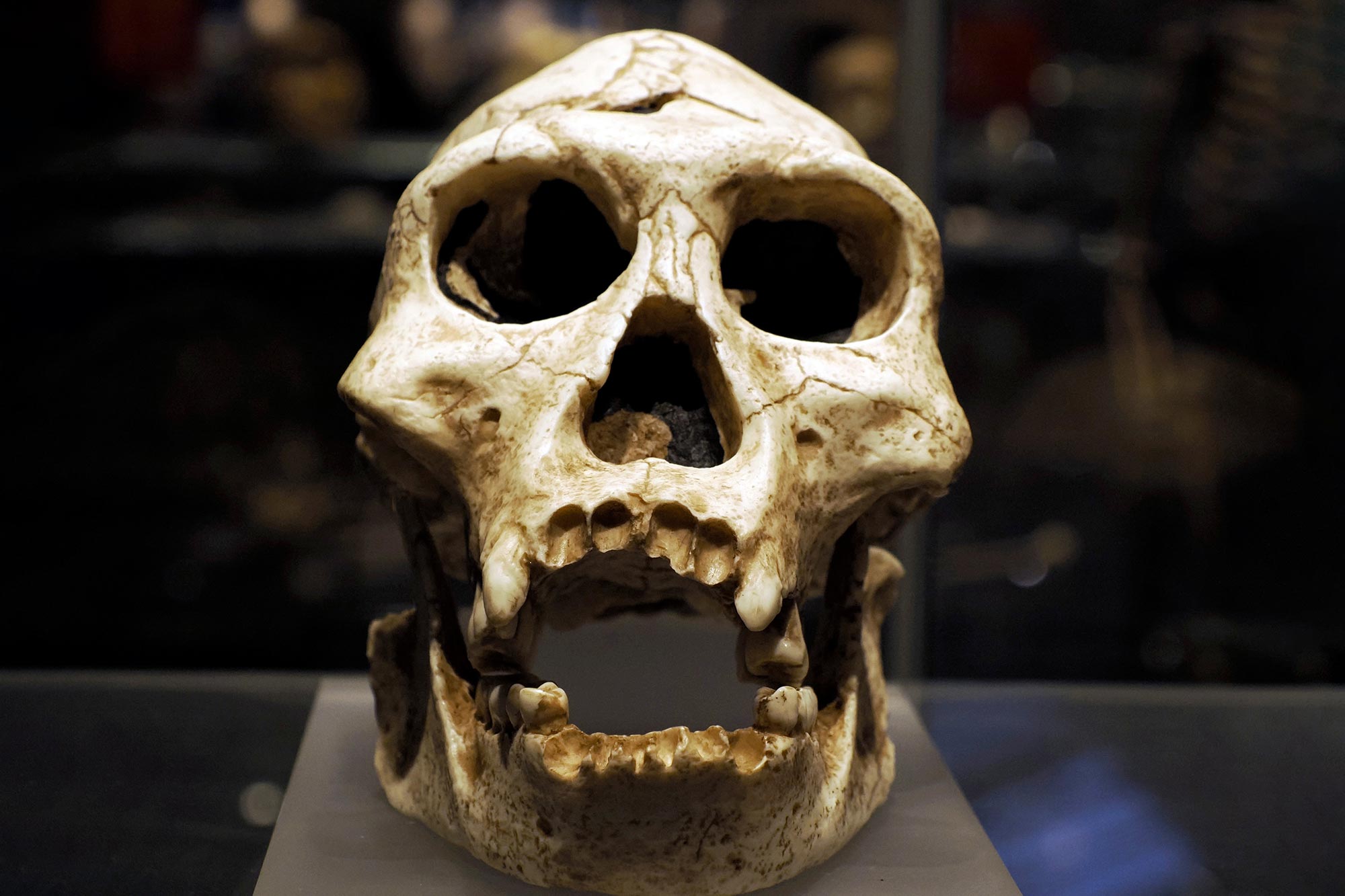
New fossils link a strange 3.4-million-year-old foot to Australopithecus deyiremeda, a species that mixed climbing skills with its own style of bipedal walking.
The evidence shows that multiple early human ancestors inhabited the same region while relying on different diets and behaviors.
Ancient Foot Fossil Reassigned to a Different Early Human Species
Newly uncovered fossils have helped researchers determine that an unusual 3.4-million-year-old hominin foot discovered in 2009 does not belong to Lucy’s species. Instead, the evidence now indicates that it belonged to another early human relative, strengthening the case that two hominin species lived alongside each other in the same region at the same time.
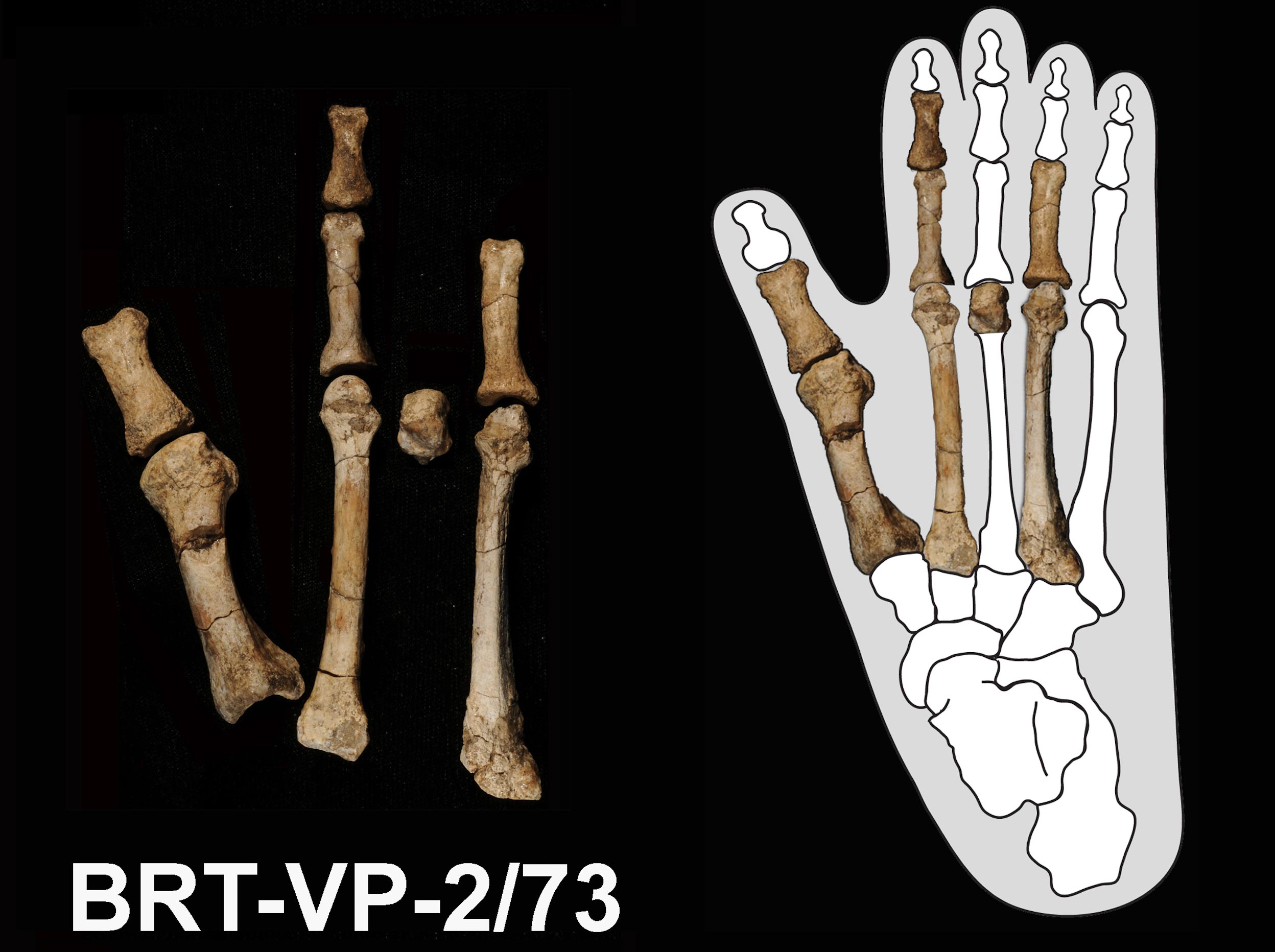
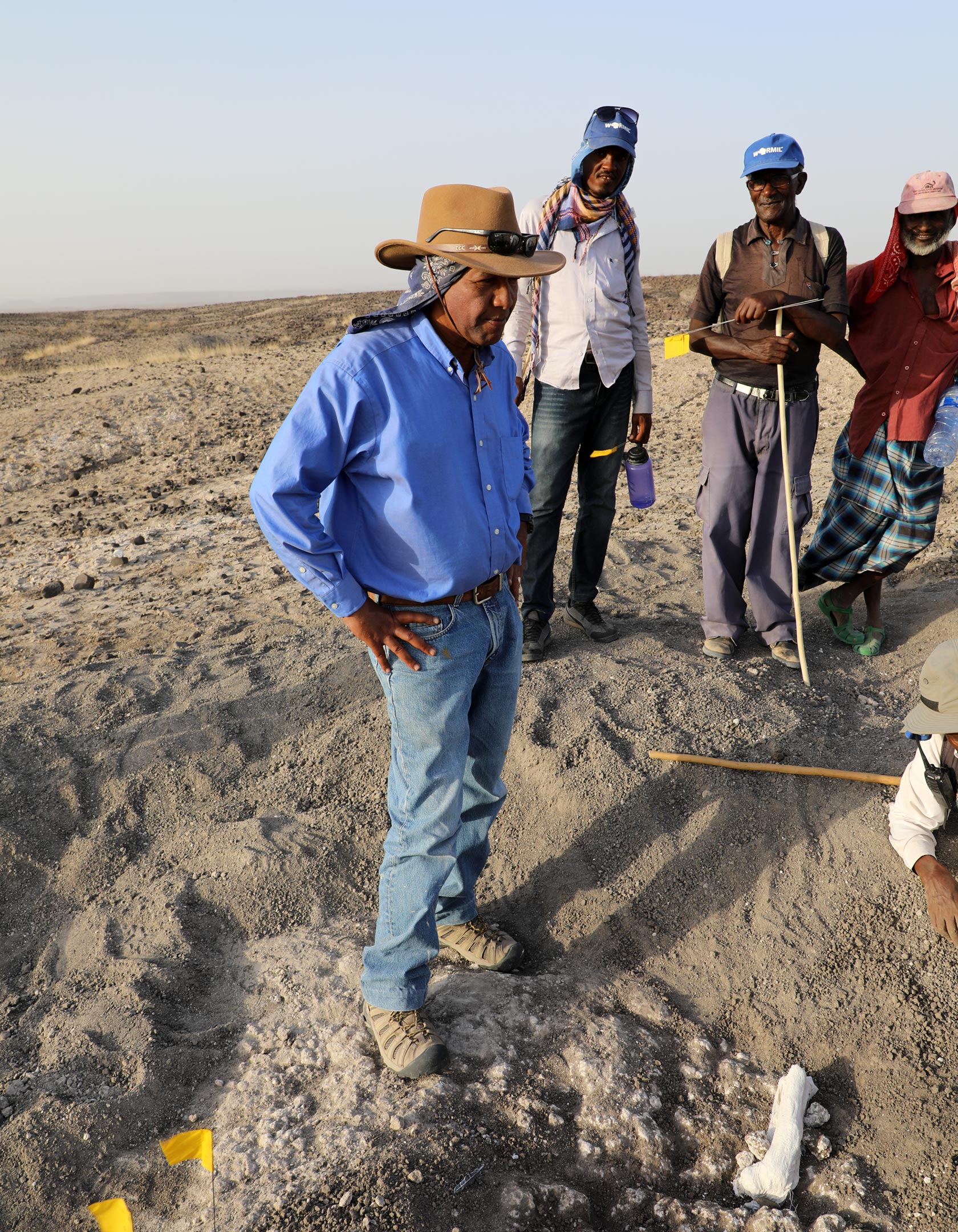
In 2009, a team led by Arizona State University paleoanthropologist Yohannes Haile-Selassie uncovered eight foot bones from an ancient human ancestor in sediments of the same age in Ethiopia’s Afar Rift. The fossil, known as the Burtele Nature Foot, was excavated at the Woranso-Mille site and was formally described in a 2012 publication.
“When we found the foot in 2009 and announced it in 2012, we knew that it was different from Lucy’s species, Australopithecus afarensis, which is widely known from that time,” said Haile-Selassie, director of the Institute of Human Origins (IHO) and a professor in the ASU School of Human Evolution and Social Change.
“However, it is not common practice in our field to name a species based on postcranial elements –elements below the neck – so we were hoping that we would find something above the neck in clear association with the foot. Crania, jaws, and teeth are usually the elements used in species recognition.”
Linking the Burtele Foot to A. deyiremeda
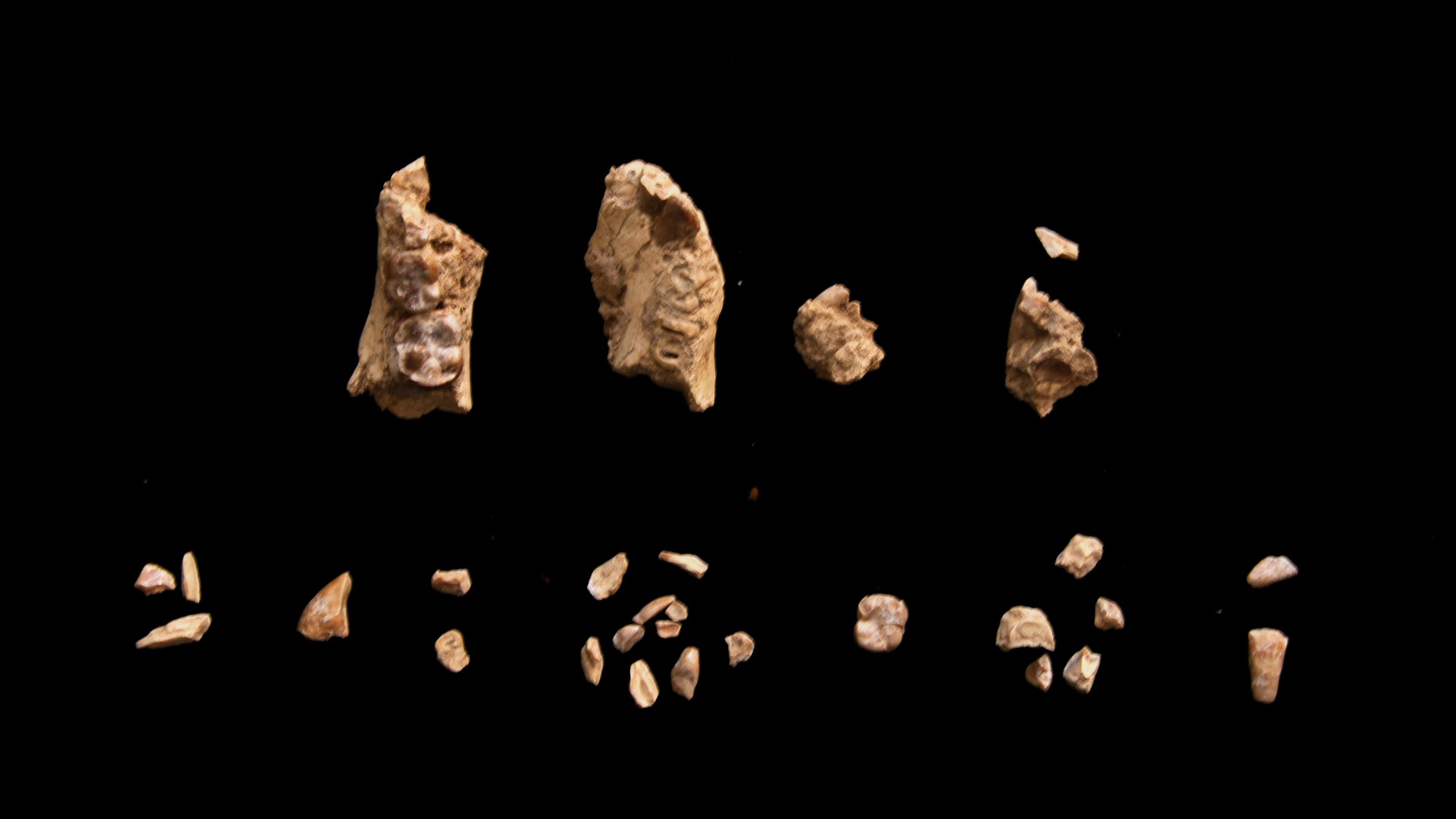
When the Burtele foot was first reported, some teeth had already been recovered from the same general area. Scientists were hesitant to connect them to the foot because they were not certain the teeth came from the same sediment layer. In 2015, the team identified a new species from the region, Australopithecus deyiremeda, but they did not assign the foot to this species despite its close proximity, explained Haile-Selassie.
Over the next decade, repeated fieldwork led to more discoveries. According to Haile-Selassie, the team can now confidently link the Burtele foot with A. deyiremeda.
Why the Foot Matters for Human Evolution
Determining the species of the Burtele foot is only part of its significance. Woranso-Mille remains the only site that provides direct evidence of two closely related hominin species occupying the same landscape during the same period.
The Burtele foot shows traits considered more primitive than those of Lucy’s species. It retained an opposable big toe suited for climbing, yet A. deyiremeda still walked upright and appears to have pushed off mainly from the second toe rather than the big toe, which is how modern humans walk.
“The presence of an abducted big toe in Ardipithecus ramidus was a big surprise because at 4.4 million years ago, there was still an early hominin ancestor that retained an opposable big toe, which was totally unexpected,” said Haile-Selassie.
“Then 1-million-years later, at 3.4-million-years ago, we find the Burtele foot, which is even more surprising. This is a time when we see species like A. afarensis whose members were fully bipedal with an adducted big toe. What that means is that bipedality – walking on two legs – in these early human ancestors came in various forms. The whole idea of finding specimens like the Burtele foot tells you that there were many ways of walking on two legs when on the ground, there was not just one way until later.”
Isotope Clues Reveal Distinct Dietary Habits
To learn more about what A. deyiremeda ate, University of Michigan professor Naomi Levin analyzed eight of the 25 teeth collected from the Burtele area using isotope testing. The process begins with cleaning the tooth surface and carefully sampling only the enamel layer.
“I sample the tooth with a dental drill and a very tiny (< 1mm) bit — this equipment is the same kind that dentists use to work on your teeth,” said Levin. “With this drill I carefully remove small amounts of powder. I store that powder in a plastic vial and transport it back to our lab at the University of Michigan for isotopic analysis.”
The results revealed clear differences in diet.
Lucy’s species consumed a mixture of C3 resources (from trees and shrubs) and C4 resources (tropical grasses and sedges). A. deyiremeda, however, relied more heavily on C3 vegetation.
“I was surprised that the carbon isotope signal was so clear and so similar to the carbon isotope data from the older hominins A. ramidus and Au. anamensis,” said Levin. “I thought the distinctions between the diet of A. deyiremeda and A. afarensis would be harder to identify but the isotope data show clearly that A. deyiremeda wasn’t accessing the same range of resources as A. afarensis, which is the earliest hominin shown to make use of C4 grass-based food resources.”
Establishing the Age and Environment of the Fossils
A major part of the research involved determining the age of the fossils and reconstructing the environmental setting in which these early hominins lived. This required extensive geological work to understand how the fossil layers relate to each other across the site.
“We have done a tremendous amount of careful field work at Woranso-Mille to establish how different fossil layers relate, which is crucial to understanding when and in what settings the different species lived,” said Beverly Saylor, professor of earth, environmental and planetary sciences at Case Western Reserve University. Saylor led the geological analysis that clarified the stratigraphic connection between the Burtele foot and Au. deyiremeda.
Juvenile Jaw Sheds Light on Early Growth
Along with the 25 teeth recovered at Burtele, Haile-Selassie’s team also identified the jaw of a young individual that clearly belonged to A. deyiremeda based on its dental anatomy. According to Gary Schwartz, IHO research scientist and professor at the School of Human Evolution and Social Change, this jaw contained a complete set of baby teeth as well as developing adult teeth deep within the lower jawbone.
The researchers used CT scanning to examine the developing teeth. Since tooth formation is closely tied to overall growth patterns, the scans helped them estimate that the juvenile died at about 4.5 years old.
“For a juvenile hominin of this age, we were able to see clear traces of a disconnect in growth between the front teeth (incisors) and the back chewing teeth (molars), much like is seen in living apes and in other early australopiths, like Lucy’s species,” said Schwartz.
“I think the biggest surprise was, despite our growing awareness of how diverse these early australopith (i.e., early hominin) species were – in their size, in their diet, in their locomotor repertoires and in their anatomy – these early australopiths seem to be remarkably similar in the manner in which they grew up.”
How Multiple Ancient Hominins Shared the Same Region
Understanding how these early human relatives moved, ate, and grew provides insight into how several hominin species could coexist without one eliminating the other.
“All of our research to understand past ecosystems from millions of years ago is not just about curiosity or figuring out where we came from, said Haile-Selassie. “It is our eagerness to learn about our present and the future as well.”
“If we don’t understand our past, we can’t fully understand the present or our future. What happened in the past, we see it happening today,” he said. “In a lot of ways, the climate change that we see today has happened so many times during the times of Lucy and A. deyiremeda. What we learn from that time could actually help us mitigate some of the worst outcomes of climate change today.”
Reference: “New finds shed light on diet and locomotion in Australopithecus deyiremeda” by Yohannes Haile-Selassie, Gary T. Schwartz, Thomas C. Prang, Beverly Z. Saylor, Alan Deino, Luis Gibert, Anna Ragni and Naomi E. Levin, 26 November 2025, Nature.
DOI: 10.1038/s41586-025-09714-4
The paper, “New finds shed light on diet and locomotion in Australopithecus deyiremeda,” is published in the journal Nature. The international research team included scientists from Arizona State University, Washington University, St. Louis, Case Western Reserve University, Berkeley Geochronology Center, Universitat de Barcelona, University of Tampa and University of Michigan. The full list of authors is: Yohannes Haile-Selassie, Gary T. Schwartz, Thomas C. Prang, Beverly Z. Saylor, Alan Deino, Luis Gibert, Anna Ragni, and Naomi E. Levin.
Funding for this project was provided by the National Science Foundation and the W.M. Keck Foundation. Field and Laboratory research in Ethiopia was facilitated by the Ethiopian Heritage Authority.
Never miss a breakthrough: Join the SciTechDaily newsletter.
Follow us on Google and Google News.
8 Comments
I have several feet and some dont have toes. I will post a video on Mudfossil University on youtube about this thank you.
I’ve recently noticed some people in shorts walking in front of me seem to have very pronounced shorter spans between knee and ankle. Shorter then others, like myself. And additionally they all seem to walk knockkneed, ( knee wobbles in with each step and it looks painful) My span and all my relatives spans are longer and we are all good natural walkers without hip or knee problems . I bet this group of shorter knee to ankle humans are also the ones with constant knee & hip problems. I wonder if this is a throwback resurgent gene that originates from early humans seeing as images of chimps suggest they also have shorter knee to ankle lengths then us humans.
I’ve recently noticed some people in shorts walking in front of me seem to have very pronounced shorter spans between knee and ankle. Shorter then others, like myself. And additionally they all seem to walk knockkneed, ( knee wobbles in with each step and it looks painful) My span and all my relatives spans are longer and we are all good natural walkers without hip or knee problems . I bet this group of shorter knee to ankle humans are also the ones with constant knee & hip problems. I wonder if this is a throwback resurgent gene that originates from early humans seeing as images of chimps suggest they also have shorter knee to ankle lengths then us humans.
WE KNOW WHAT YOU ARE TRYING TO DO. IT IS NOT GOING TO WORK.
EXACTLY WHAT IS THE RELEVANCE OF THE [3] HOMO “SPECIES” SAY AS OPPOSED TO [2] OR [4] or [5] or [6] EVENTUALLY EVOLVING AND MIGRATING OUT OF ((AFRICA))????
HOW DOES YOUR FINDINGS COMPARE TO THE MODERN SCHOLARSHIP EMENATING FROM (7) IVY LEAGUE COLLEGES//UNIVERSITIES.
FINALLY, WILL WE SEE YOUR “O.M.G.” FINDINGS ON THE ANCIENT ASTRONAUTS THEORY PROGRAM????
😃 WHAT DOES THE ‘ANUNAKI’ HAVE TO SAY ABOUT ALL THIS ARCHEOLOGICAL “STUFF” ~ ????
Nice little obligatory, no-matter-how-obscure, climate change platitude at the end, there, to boost the algorithm 😅
“What we learn from that time could actually help us mitigate some of the worst outcomes of climate change today.”
FFS, I mean, really? How? Give me strength 🙈
Dear William Western,
“Give me strength,” you say, and probably in jest, irony or sarcasm, but I think I might just risk it, anyway.
By responding to your comment, I believe I am offering you attention, my psychic “energy,” if you will, which you maybe won’t.
As long as that “energy” remains not only unmeasured but unmeasurable while science/technology refuse to even entertain that it is or could be a thing, at all, dismissing even the possibility of it, you, too, may deny that it can or does have any effect.
You might like to at least tune in around Min 4:50 to this,
https://mail.google.com/mail/u/0/#search/schubiner+sin/CwCPbpKPlwmVCgnCBHWJzmkhdLswhVG?projector=1
to have one bit of speculation about what discoveries such as referred to in the above essay might be able to do to encourage us to seek and find novel solutions to seemingly intractable human problems TOGETHER in loving cooperation?
If it is confirmed that different hominids coexisted peacefully or otherwise, but only one line of them gave rise to us, we may find that the reason we outbred and survived any other hominids may be because we learned to cooperate better than they did.
Once we learn all the benefits to all of us of cooperating more and more intelligently and lovingly with one another we may learn to optimize our efficiency and effectiveness so well that we find ourselves operating from abundance and win-win-win-win-win-win-win etc. mindsets more and more and less and less from scarcity, dog-eat-dog, the pie-is-only-so-big, survival-of-the-most-ruthless mindsets?
At our more enlightened levels of consciousness, we MAY perceive that whatever else our cosmos is, it is neither random, chaotic, wasteful or gratuitous, nor hostile nor indifferent to our fate.
We may also come to the conclusion or suspicion that the reason laws of our universe are elegant and beautiful is because they are all about determining that which we perceive as elegant and beautiful – faithfully and intelligently recurring patterns, fractal in nature.
We MAY than perceive in the development of a human embryo clues to our own evolutionary past, and in cell structure clues to how to better understand the intelligent-cell-like nature of the very planet on which we live, and our primitive telegram and telegraph and phone networks as analogous to a primitive notochord and our cell phone networks and Internet as analogous to a neural tube and neuroendocrine system?
WE MAY then wonder if, much as mammalian cells mitochondria not only have their own individual, usually maternally-derived DNA, in contrast to nuclear DNA, but unselfishly (as unselfish, motherly genes!?) generate and give away free energy (just cos) by converting ATP to ADP, so we humanoids may be all about generating consciousness for Gaia (at least?) by converting phenomena into data/information ignorance/forgetfulness into knowledge, stupidity into intelligence and, ultimately, unconsciousness into consciousness, or Consciousness?
https://courses.seas.harvard.edu/climate/eli/Courses/EPS281r/Sources/Gaia/Gaia-hypothesis-wikipedia.pdf
If this is what it’s about, William, and your namesake was right in having his Hamlet remind us that
There is nothing either good or bad,
But thinking makes it so,”
and Descartes wrong in misleading us into thinking that we are merely our thinking minds rather than psyche/s which can observe and control those minds, then the answer to your “FFS, I mean, really? How?” may be that, by reminding us how we humans, each of whom seems so different, can repeatedly achieve the seemingly impossible and magical once we decide to lovingly try to together, there may be challenges far greater than climate change which, together, we can learn to have incredible fun in addressing not just successfully but with and through ever-increasing humor, joy, creativity, cooperation, love and did I say fun…so that, whatever it may mean now, FFS may come to mean For Fun’s Sake?
Comfort and joy, and may “God” rest you merry!
And thank you, FFS!
Tom.
I wonder if palaeoanthropologists will ever get get round to considering that assorted former species of “us” could have been genetically very plastic, sort of like dogs, and could actually interbreed gradually narrowing their genetic options into what we have become, that being the most brutal of a bad lot.
But I suppose that discovering a new species is, in the publication stakes, extremely important for one’s palaeoanthopological career.
WE KNOW WHAT YOU ARE TRYING TO CONVEY ~ IT IS NOT GOING TO WORK!!!!