
Digital modeling of legendary fossil’s soft tissue suggests Australopithecus afarensis had powerful leg and pelvic muscles suited to tree-dwelling, but knee muscles that allowed fully erect walking.
A Cambridge University researcher has digitally reconstructed the missing soft tissue of an early human ancestor – or hominin – for the first time, revealing a capability to stand as erect as we do today.
“Lucy’s muscles suggest that she was as proficient at bipedalism as we are.” Dr. Ashleigh Wiseman
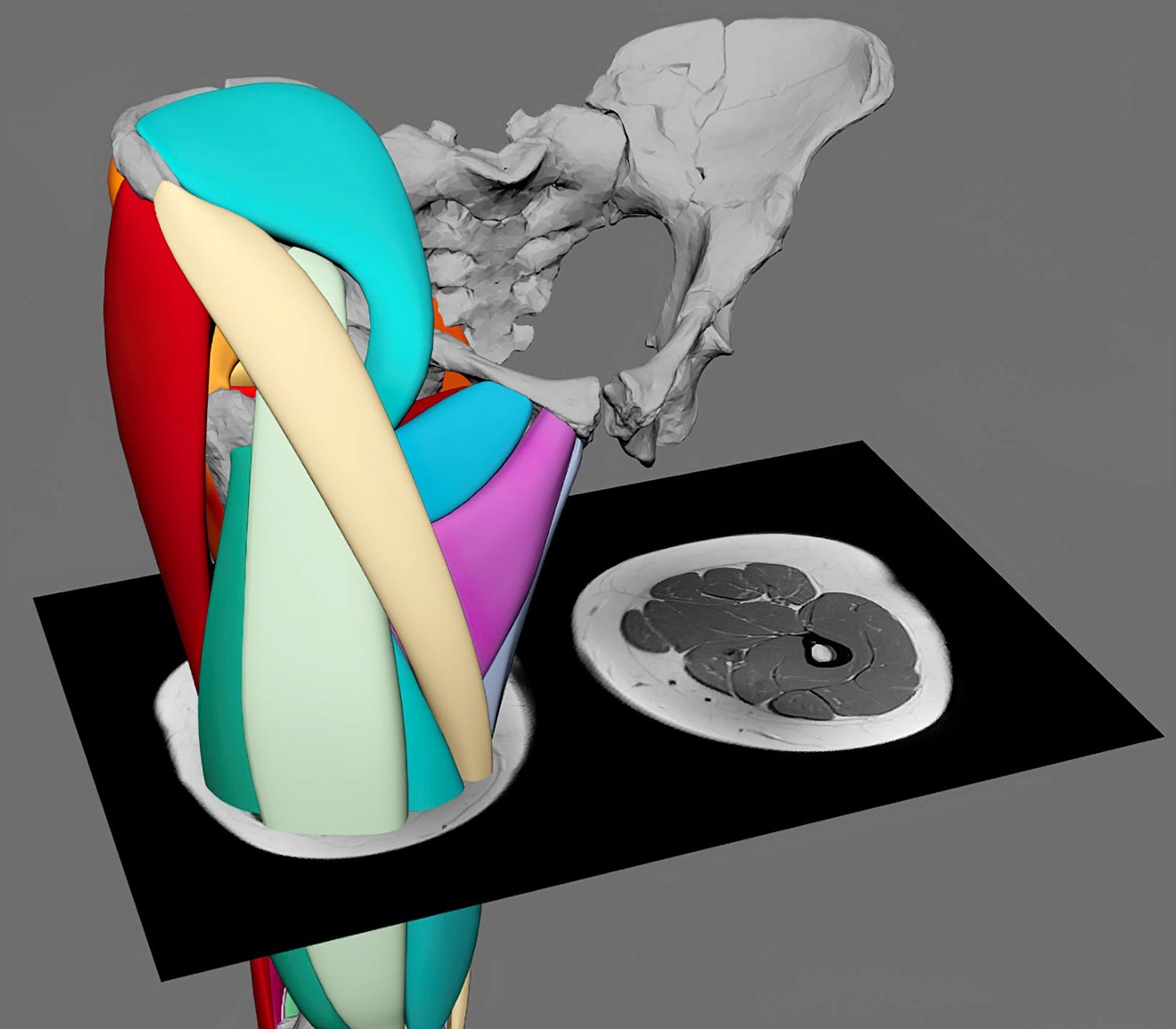
Dr. Ashleigh Wiseman has 3D-modeled the leg and pelvis muscles of the hominin Australopithecus afarensis using scans of ‘Lucy’: the famous fossil specimen discovered in Ethiopia in the mid-1970s.
Australopithecus afarensis was an early human species that lived in East Africa over three million years ago. Shorter than us, with an ape-like face and smaller brain, but able to walk on two legs, it adapted to both tree and savannah dwelling – helping the species survive for almost a million years.
Named for the Beatles classic ‘Lucy in the Sky with Diamonds’, Lucy is one of the most complete examples to be unearthed of any type of Australopithecus – with 40% of her skeleton recovered.
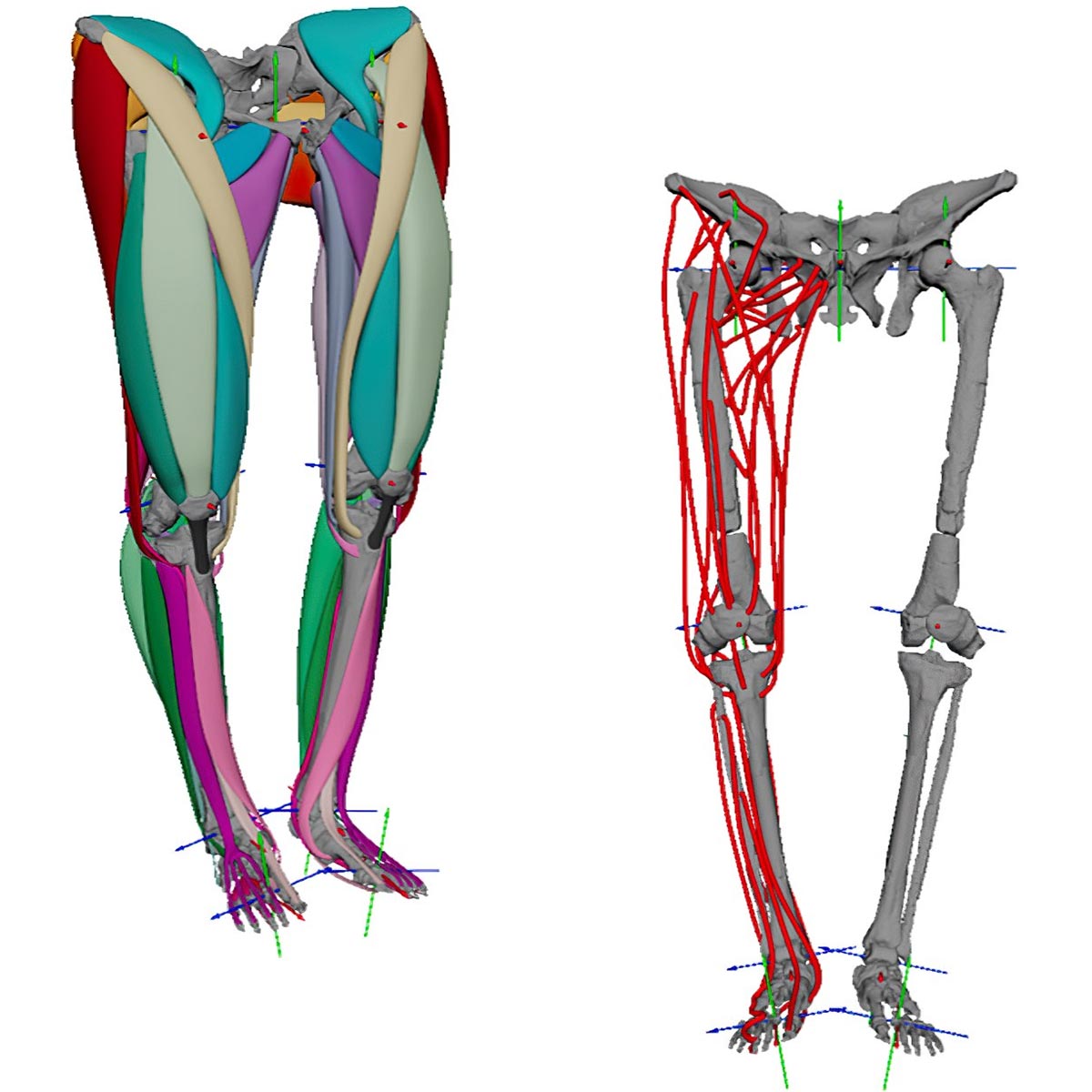
Wiseman was able to use recently published open-source data on the Lucy fossil to create a digital model of the 3.2 million-year-old hominin’s lower body muscle structure. The study is published in the journal Royal Society Open Science.
Larger Muscles, Different Proportions: Insights from Lucy’s Anatomy
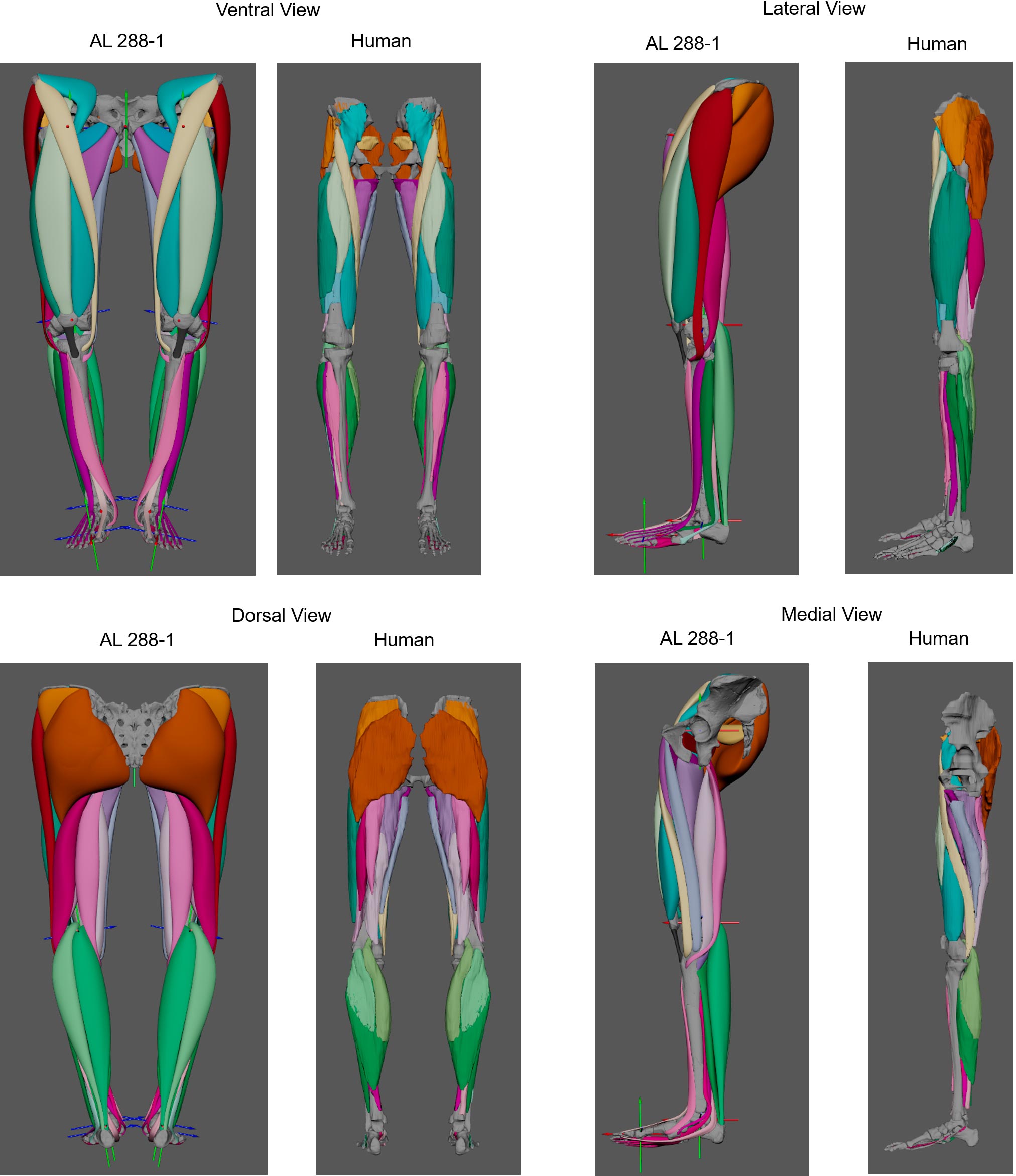
The research recreated 36 muscles in each leg, most of which were much larger in Lucy and occupied greater space in the legs compared to modern humans.
For example, major muscles in Lucy’s calves and thighs were over twice the size of those in modern humans, as we have a much higher fat-to-muscle ratio. Muscles made up 74% of the total mass in Lucy’s thigh, compared to just 50% in humans.
A 3D polygonal model, guided by imaging scan data and muscle scarring, reconstructing the lower limb muscles of the Australopithecus afarensis fossil AL 288-1, known as ‘Lucy’. In this model, the muscles have been color coded. Credit: Dr. Ashleigh Wiseman
Was Lucy a Straight-Knee Walker? Adding Weight to the Debate
Paleoanthropologists agree that Lucy was bipedal, but disagree on how she walked. Some have argued that she moved in a crouching waddle, similar to chimpanzees – our common ancestor – when they walk on two legs. Others believe that her movement was closer to our own upright bipedalism.
Research in the last 20 years has seen a consensus begin to emerge for fully erect walking, and Wiseman’s work adds further weight to this. Lucy’s knee extensor muscles, and the leverage they would allow, confirm an ability to straighten the knee joints as much as a healthy person can today.
Walking Erect and Tree Climbing: Unique Locomotion Abilities
“Lucy’s ability to walk upright can only be known by reconstructing the path and space that a muscle occupies within the body,” said Wiseman, from Cambridge University’s McDonald Institute for Archaeological Research.
“We are now the only animal that can stand upright with straight knees. Lucy’s muscles suggest that she was as proficient at bipedalism as we are, while possibly also being at home in the trees. Lucy likely walked and moved in a way that we do not see in any living species today,” Wiseman said.
“Australopithecus afarensis would have roamed areas of open wooded grassland as well as more dense forests in East Africa around 3 to 4 million years ago. These reconstructions of Lucy’s muscles suggest that she would have been able to exploit both habitats effectively.”
Lucy was a young adult, who stood at just over one metre tall and probably weighed around 28kg (62lb). Lucy’s brain would have been roughly a third of the size of ours.
Mapping Ancient Movement: From Modern MRI to Fossil Skeletons
To recreate the muscles of this hominin, Wiseman started with some living humans. Using MRI and CT scans of the muscle and bone structures of a modern woman and man, she was able to map the “muscle paths” and build a digital musculoskeletal model.
A 3D polygonal model, guided by imaging scan data and muscle scarring, reconstructing the lower limb muscles of the Australopithecus afarensis fossil AL 288-1, known as ‘Lucy’. Credit: Dr. Ashleigh Wiseman
Wiseman then used existing virtual models of Lucy’s skeleton to “rearticulate” the joints – that is, put the skeleton back together. This work defined the axis from which each joint was able to move and rotate, replicating how they moved during life.
Finally, muscles were layered on top, based on pathways from modern human muscle maps, as well as what little “muscle scarring” was discernible (the traces of muscle connection detectable on the fossilized bones). “Without open access science, this research would not have been possible,” said Wiseman.
These reconstructions can now help scientists understand how this human ancestor walked. “Muscle reconstructions have already been used to gauge running speeds of a T-Rex, for example,” said Wiseman. “By applying similar techniques to ancestral humans, we want to reveal the spectrum of physical movement that propelled our evolution – including those capabilities we have lost.”
Reference: “Three-dimensional volumetric muscle reconstruction of the Australopithecus afarensis pelvis and limb, with estimations of limb leverage” by Ashleigh L. A. Wiseman, 14 June 2023, Royal Society Open Science.
DOI: 10.1098/rsos.230356
Never miss a breakthrough: Join the SciTechDaily newsletter.
Follow us on Google and Google News.
4 Comments
Kind of like Piltdown Man and Nebraska Man, all recreated to be a Simian-Human Link and all dead wrong. Pillows turned out to be a hoax and Nebraska Man, when completely excavated, turned out to be an ancient pig.
Kind of like Piltdown Man and Nebraska Man, all recreated to be a Simian-Human Link and all dead wrong. Piltdown Man turned out to be a hoax and Nebraska Man, when completely excavated, turned out to be an ancient pig.
This article incorrectly states that chimpanzees are the common ancestor of Australopithecus and Homo.
What if she was just a really ugly woman?