

New research from NC State reveals that different protein sources in animal diets can dramatically alter the gut microbiome, both in composition and function.
A new study from researchers at North Carolina State University has found that the type of protein in an animal’s diet significantly influences both the composition and activity of the gut microbiome, the community of microorganisms living in the digestive tract.
These gut microbes play a crucial role in various aspects of health, and the study’s findings could contribute to improved strategies for preventing and treating gastrointestinal diseases that affect millions of people worldwide.
“There’s something wrong with what we’re eating today, and we are not close to knowing what that is,” said Alfredo Blakeley-Ruiz, an NC State postdoctoral researcher and co-corresponding author of a paper describing the study. “Our lab wanted to know how different diets impact what lives in the gut, and to learn something about what those microbes are doing, functionally, in response to that diet.”
In their experiment, the researchers examined the effects of specific dietary protein sources, such as those from milk, eggs, and plants like peas and soy, on the gut microbiomes of mice. The mice were each fed a diet consisting of a single protein source for one week. These sources included egg whites, brown rice, soy, and yeast, allowing the researchers to isolate the impact of each protein on the gut microbial ecosystem.
Shifts in Microbial Populations and Activity
Using an integrated metagenomics-metaproteomics approach requiring high resolution mass spectrometry, the researchers found that the mice gut microbiome changed a lot over the course of the study, with some protein sources showing extreme effects.
“The composition of the gut microbiome significantly changed every time we changed the protein source,” Blakeley-Ruiz said. “The protein sources with the biggest functional effects were brown rice, yeast, and egg whites.”
In examining the functional changes in the gut microbiome, the study showed that the two largest effects of dietary protein were on amino acid metabolism, which was expected by the researchers, and complex sugar degradation, which was not.
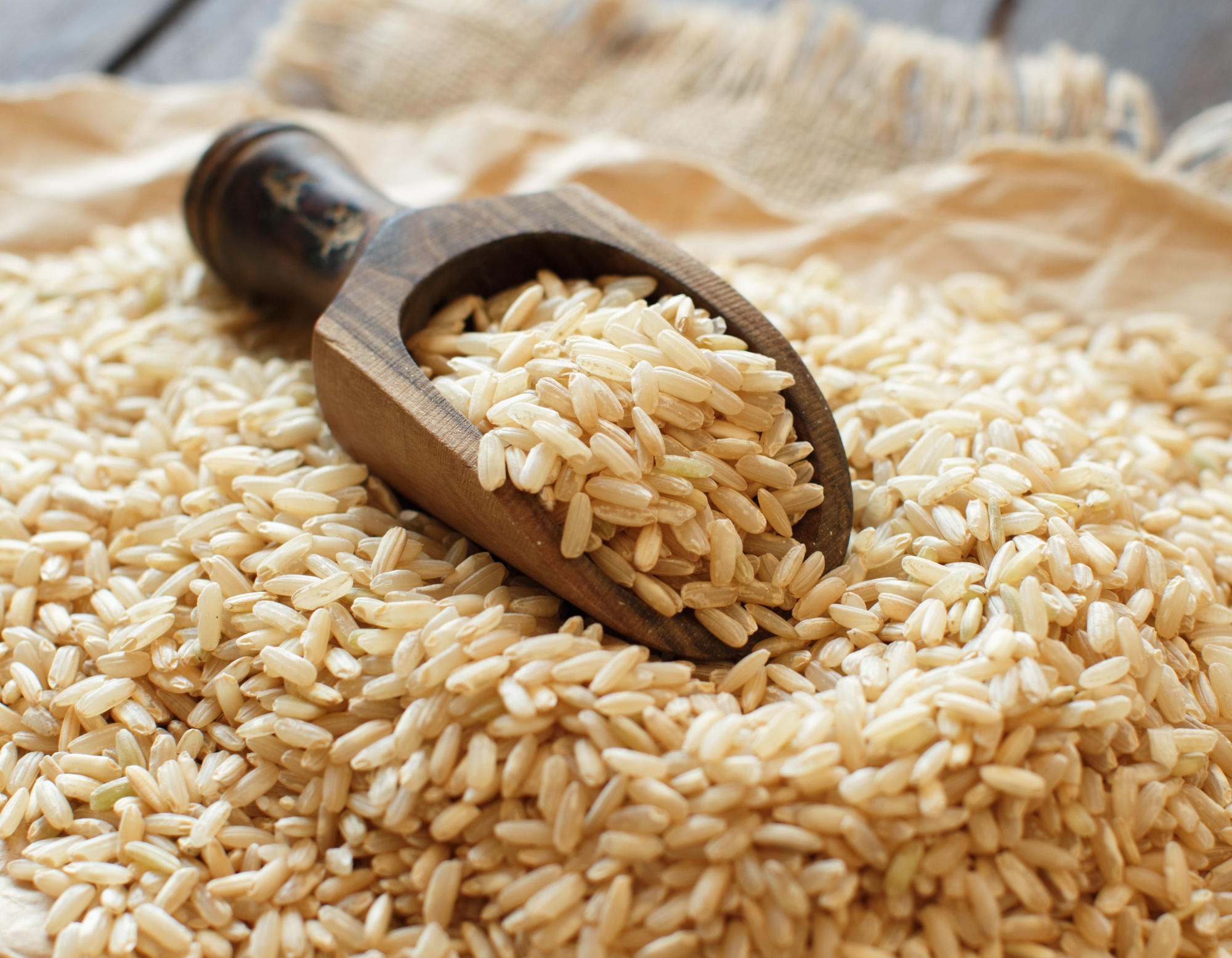
“Brown rice and egg white diets increased amino acid degradation in the mouse gut microbiome, meaning that the microbes were breaking down those proteins instead of making their own amino acids from scratch,” Blakeley-Ruiz said. “This makes intuitive sense because proteins are made of amino acids, but this is something we want to dig into more. Some amino acids can degrade into toxins, and others can impact the gut-brain axis, so there are potential health implications from these diets.”
The study also showed that long chains of sugars attached to the dietary proteins, called glycans, also play a role in changing gut microbiome function. Multiple dietary protein sources, including soy, rice, yeast, and egg white, caused microbes in the gut to change the production of enzymes that break down glycans, sometimes substantially.
“This could be really meaningful, health wise,” Blakeley-Ruiz said. “In the egg white diet, in particular, one bacterium took over and activated a bunch of glycan-degrading enzymes. We then grew this bacterium in the lab and found that the glycan-degrading enzymes it produced in media containing egg white protein were similar to those produced in media containing mucin.”
Potential Implications for Gut Health
Mucin is the substance that lines the inside of the gut, protecting the digestive system from things like acid and pathogens. So if bacteria are producing enzymes that, purposely or not, break down mucin, they could be damaging the intestinal lining and causing negative impacts on gut health.
“I’m excited to explore this potential connection between the expression of glycan degrading enzymes in the egg white diet and the breakdown of mucin by the gut microbiome in future studies,” says Blakeley-Ruiz.
Manuel Kleiner, an NC State associate professor of plant and microbial biology and co-corresponding author of the paper, said the study lays the groundwork for future investigation of the effects of protein sources on the gut microbiome.
“One of the limitations of our study is that, of course, the diets are very artificial and could lead to amplified results,” Kleiner said. “But we now show that egg white has extreme effects on the microbiome. For the future, we’re very interested in understanding what the mechanism of this effect is in a mixed protein diet in mice.
“Our study shows not only which bacterial species are in the gut microbiome and their abundance, but also what they are actually doing. Here, they are specifically digesting the glycans. The result is a very comprehensive picture of what really matters in the gut in terms of diet and function.”
Reference: “Dietary protein source alters gut microbiota composition and function” by J Alfredo Blakeley-Ruiz, Alexandria Bartlett, Arthur S McMillan, Ayesha Awan, Molly Vanhoy Walsh, Alissa K Meyerhoffer, Simina Vintila, Jessie L Maier, Tanner G Richie, Casey M Theriot and Manuel Kleiner, 21 March 2025, The ISME Journal.
DOI: 10.1093/ismejo/wraf048
The study was supported by the National Institutes of Health through awards R35GM138362, T32DK007737 and P30 DK034987, and by the USDA National Institute of Food and Agriculture, Hatch project 7002782.
Never miss a breakthrough: Join the SciTechDaily newsletter.
Follow us on Google and Google News.
26 Comments
Absolutely ridiculous! Who is paying you to write this garbage! I’ve been eating eggs and egg whites forever and never had a problem! I guess it applies to certain people but it doesn’t apply to me!
I have found the book “Eating Right for Your Blood Type” to correlate well when determining my food sensitivities (not allergies). While not in that book, I found the “Poor Man’s” food sensitivity (not allergy) test to work extremely well in confirming what foods I am sensitive to. This test is done by measuring your rest heart beat before eating. Then, measure your rest heartbeat 15 to 30 minutes after eating. If it is more than 10 beats a minute higher, then something you eat you are sensitive to. With my O type blood, pork suppose to be problem. Eating pork raised my heart beat from 60 beats per minute to 90 beats per minute.
Suggestion: Take blood type into account when looking at how the gut biome is affected.
David, I learned to call my multiple food sensitivities “allergies” before I learned of pulse testing. More on the “About” page of my Odysee dot com video channel: https://odysee.com/@charlesgshaver:d?view=about
David, I disagree with you about “eating by your blood type.” According to my blood type, I cannot eat meat, so I basically followed a vegetarian lifestyle. Yeah, I did that for 10 years. In those 10 years, I gained 150 lbs! On vegetables! I ate a salad a day, with no meat and salad dressing, which was salsa. When I could no longer stop feeling anger from eating a vegetarian diet, I went full carnivore. I have dropped 80 of the 150 lbs. My gut biome has improved through eating meat only. I take zero supplements, and I feel wonderful. Eating a carnivore diet (no fruits, veggies, grains, carbs), I no longer have food sensitivities or allergies.
Exactly
You’re not dead yet. Give it a while…
I think we’ve been eating eggs since humans existed. They’re fine. Genetically modifying chickens….is not fine.
Exactly
This article mentions and egg white diet. If you eat the entire egg including yolk how does that change things? My guess is that it changes things. We are meant to eat the entire egg to balance the nutrients received.
The animals weren’t even eating cooked egg whites, let alone whole cooked eggs. It was raw spray-dried egg-white powder. It is notorious that raw egg-whites block certain nutrients’ digestion/absorption. And humans aren’t rodents. What’s the matter with these people?
It’s important to remember that these are in vitro and rodent studies. The studies are not conclusive (and are not intended to be) nor are they indicative of how the potential effects will proceed in human subjects. In vitro and animal studies are a preliminary step towards developing a model for further experimentation, or hypothesis testing. Frequently the results/effects found from non-human studies are not observed in randomized controlled studies using human subjects. This is true for a variety of reasons, e.g. individual biology, life style and experimental design. As such, people should temper their outrage at the idea that eating eggs can be potentially bad for the health of your gut.
Thanks for this nice and comprehensive comment, really
You post a great point, EBL. After all, how natural would it be for rodents to go around and eat cooked egg whites? Perhaps that one in the cartoon movie, but I don’t think he’s a typical mouse.
It wasn’t cooked egg whites. It was raw spray-dried powder. I don’t know any “Common Breakfast Food”-eaters who eat raw egg-white powder.
This is why they should not use animal models. This study could easily have been done on humans.
If it’s produced in the USA, then it’s unhealthy, whatever it is.
You’re a tool
The nonsense that the media write about. I’ve been a Carnivore for over 6 years. I’ve never been healthier. I’m 76 years old and the best shape of my life.
Amen Renato! It’s the healthiest food lifestyle there is. I’m right behind you in years of carnivore (4) and age (68).
Useless drivel!
I’m more worried about everything else in that Egg McMuffin….
If the sausage wasn’t so tainted with sugar, it would probably be good.
Maybe if you buy your eggs because they put so much crap in chickens these days. Back yard chicken lay awesome eggs. So I don’t believe this.
There are many studies which show that the animal feed used in rodent research affects the results due to the effect of bacterial digestion of the food. This is ignored in most animal studies, whose results can change if you change the food used. This is another reason why animal studies, and even human studies which ignore details of diet, are bad research, and produce unreliable results. For example, see the study, Choice of Laboratory Rodent Diet May Confound Data Interpretation and Reproducibility. https://pubmed.ncbi.nlm.nih.gov/32258990/
Keep in mind that in humans, over 50% of the metabolites circulating in the blood are from bacterial products absorbed from the intestines. Diet alters this metabolic profile of the blood, and this is why there is a gut-brain connection. Actually, our entire bodies are impacted by the food degradation products made by our intestinal bacteria.
Without considering the details of the diet and bacterial community of research subjects, human or non-human, the results of studies will be unreliable and can change with different diet and bacteria. This makes research difficult, which is why this issue is ignored. So long as research funds keep coming, this oversight will continue.
The mice weren’t eating normal whole cooked eggs which is what 90% of what normal people eat for breakfast.
They weren’t even eating cooked egg whites. They were eating spray-dried raw egg white (Teklad CA160230, Envigo / Inotiv*) . Raw eggs have less bioavailable protein, and there is a factor, destroyed by cooking, that blocks biotin absorption. (The paper doesn’t mention biotin at all, something peer-review should have checked: it is a notoriously well-known defect in raw egg whites.) What all this has to do with a h u m a n biome is anyone’s guess.
_____
*The company has a disturbing history of documented animal abuse, btw, which may or may not be pertinent to the issue at hand; someone with severe ethical violations may have undisclosed issues with foodstuffs’ quality-control.
The study was supported by the National Institutes of Health through awards R35GM138362, T32DK007737 and P30 DK034987, and by the USDA National Institute of Food and Agriculture, Hatch project 7002782.
This is the key! They must make their support providers think they are a worthy investment!
Few are!