
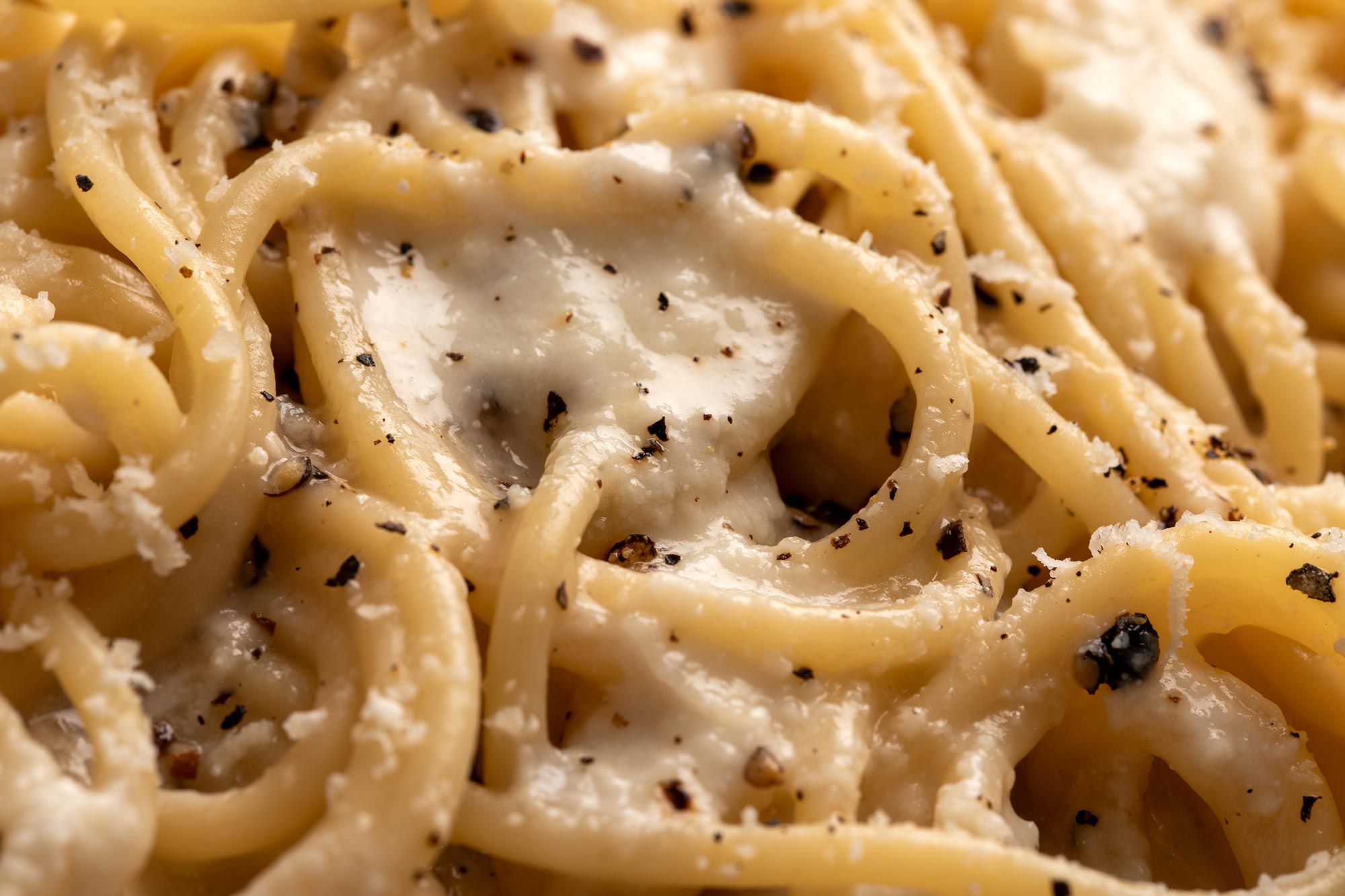
A team of physicists won the Ig Nobel Prize for cracking the code to perfect cacio e pepe.
Their clever study revealed how starch and temperature control can transform a lumpy sauce into creamy perfection, proving that great science sometimes starts with dinner.
The Struggle for the Perfect Cacio e Pepe
Cacio e pepe ranks among Italy’s most beloved pasta dishes, yet even (Italian) scientists struggle to achieve the smooth, creamy sauce it’s famous for. Fabrizio Olmeda, a physicist at the Institute of Science and Technology Austria (ISTA), faced the same problem until he decided to stop relying on chance and start relying on science. Partnering with colleagues (all Italian) from the Max Planck Institute in Dresden, the University of Padua, and the University of Barcelona, he set out to uncover the precise formula for a sauce that would come out perfectly every time.
Their work paid off. Recently in Boston, the team was honored with the Ig Physics Nobel Prize in Physics for their flavorful and creative findings. This lighthearted award recognizes scientific discoveries that first amuse and then inspire reflection, encouraging curiosity about science, medicine, and technology by celebrating the unexpected and imaginative.
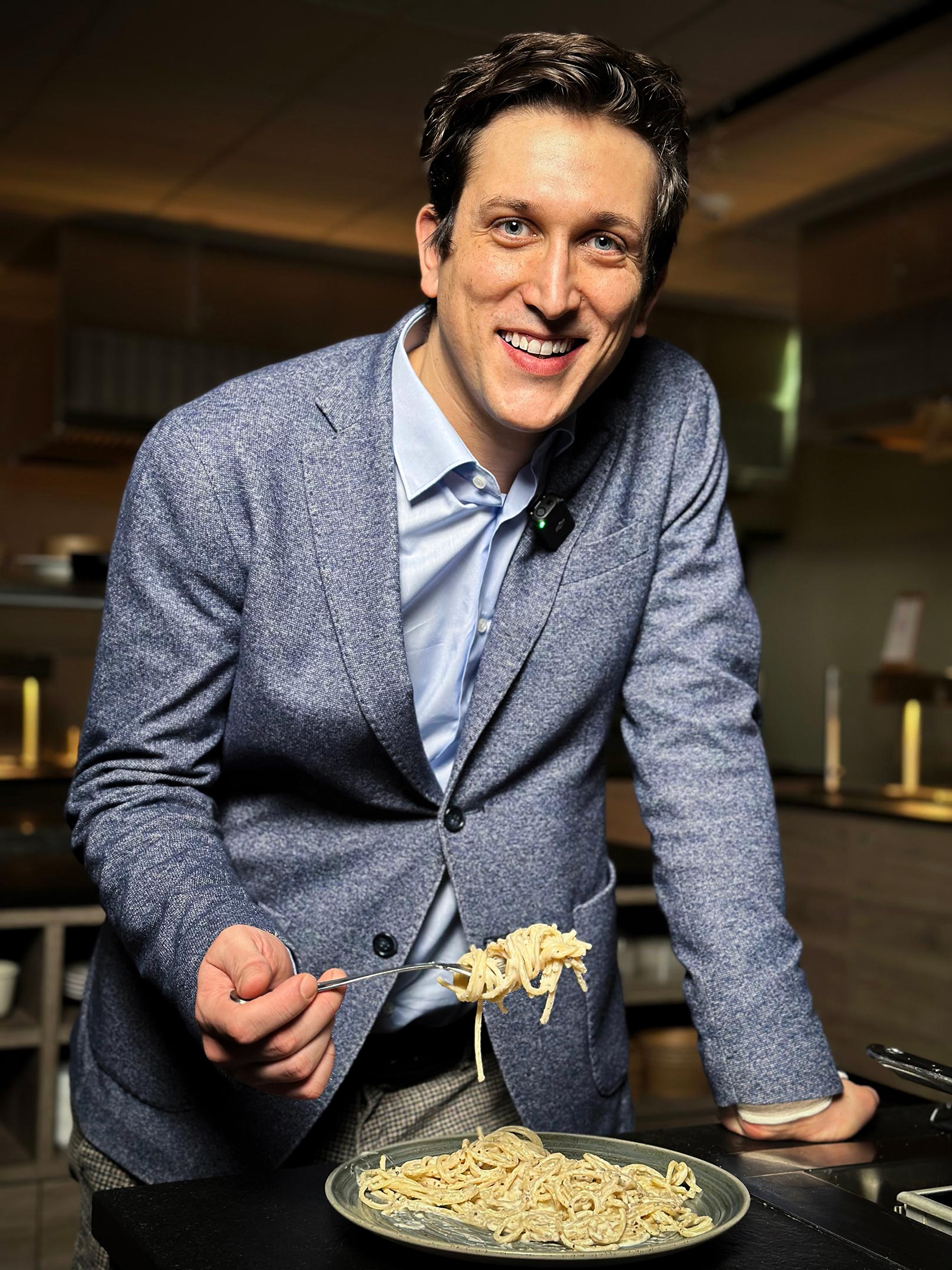
Fabrizio Olmeda, Postdoc at the Institute of Science and Technology Austria (ISTA), explaining the research and how to make the perfect cacio e pepe. Subtitled video. Credit: Institute of Science and Technology Austria (ISTA)
Curiosity Beyond the Lab: Fabrizio Olmeda’s Philosophy
As a postdoctoral researcher at ISTA, Fabrizio Olmeda focuses on statistical physics and complex systems, using theoretical tools that can be applied across many disciplines, from biology to sociology.
“My motivation will always be to investigate phenomena that fascinate me, even if they lie outside my field of expertise, which is the physics of single-cell genomics,” says the newly awarded Ig Nobel Prize winner. “Despite increasing specialization, I believe that even in my usual field of research, it can be beneficial to take some time to explore something unusual. I think this award reflects this idea, because its motto, ‘First laugh, then think,’ can inspire people to take an interest in science.”
Martin Hetzer, president of ISTA, emphasizes this: “A mentor once told me: As long as you’re having fun, you’re doing it right. The Ig Nobel Prize is a wonderful tribute to this credo. At first, the question of how to prepare the perfect Caio e Pepe pasta may sound funny. But real curiosity-driven research brings together creativity, perseverance, precision, and fun. And it always leads to discoveries that have the potential to improve our world a little bit—on a large scale with innovations or on a small scale on our plates.”
What’s Simmering in the Lab? The Recipe for Delicious Research
And that is the essence of the peer-reviewed study published in the scientific journal Physics of Fluids and now honored with the award: Simply mixing the usual ingredients – Pecorino cheese, pasta water, pepper, and pasta – often results in a lumpy, mozzarella-like sauce. Why? The starch in the pasta water is supposed to help emulsify and stabilize the sauce, but it is rarely enough on its own. When the temperature rises above 65 degrees Celsius, the cheese proteins denature and clump together, causing the mixture to break down.
The researchers found that the key to the perfect sauce is the right amount of starch. Simply stir starch powder (2–3% of the cheese mass) into the water until the water becomes clear and thickens. Now mix this gel with the cheese at a low temperature so that the starch binds with the proteins and prevents lumps. Then season with pepper as usual. Mix the pasta with the sauce in the pan and add a little pasta water if necessary to achieve the right consistency.
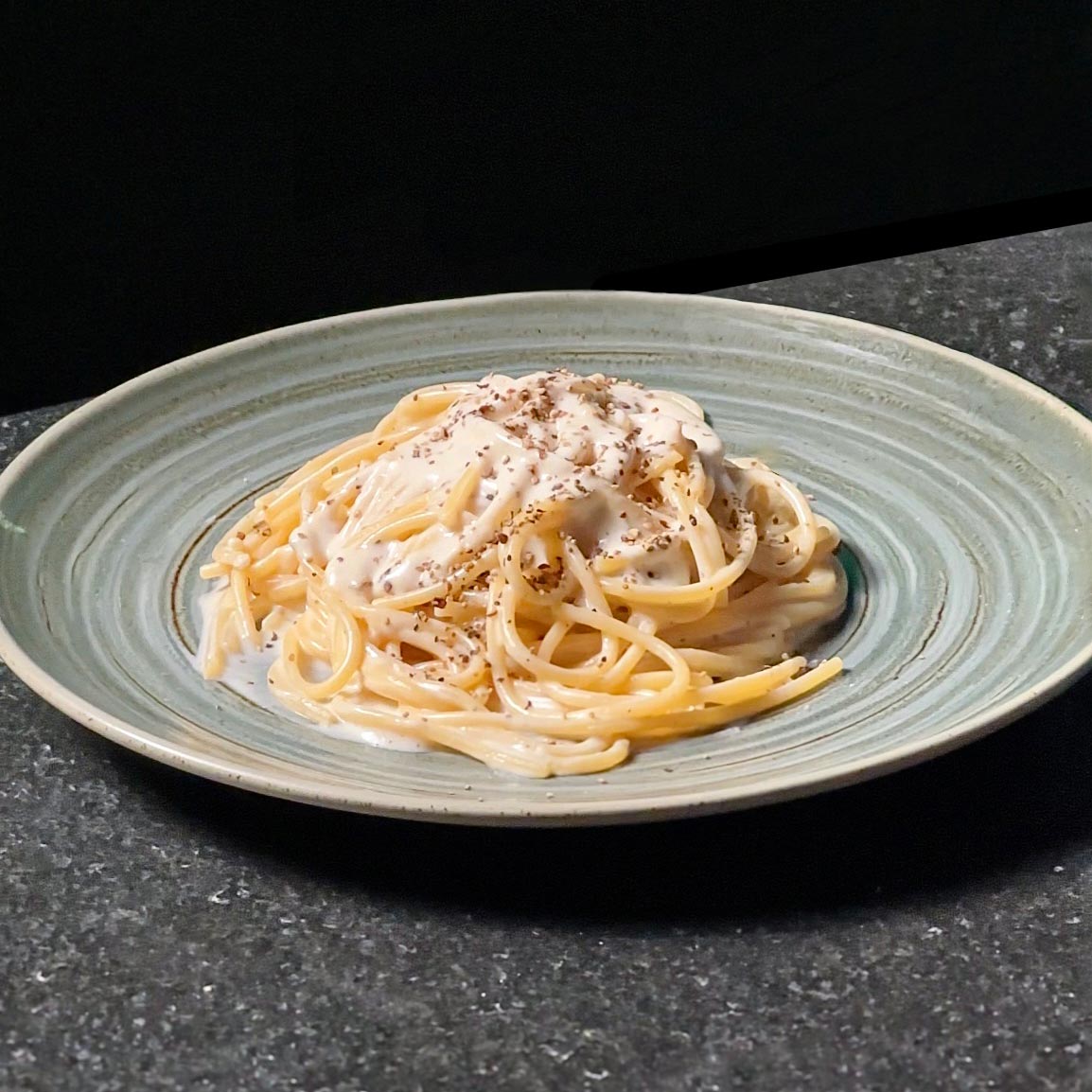
Ingredients:
- 4 g starch (potato or corn starch)
- 40 ml water (to mix the starch)
- 160 g Pecorino Romano
- 240 g pasta (ideally tonnarelli)
- Pasta cooking water
- Black pepper and salt (to taste)
Also at the VISTA Science Experience Center
The research question about the perfect pasta is just one of countless questions and topics that have been and continue to be pursued at ISTA in Klosterneuburg by outstanding scientists from around 80 countries. Visitors will soon be able to learn about a selection of these topics—including the now award-winning pasta research—at the VISTA Science Experience Center.
Reference: “Phase behavior of Cacio e Pepe sauce” by G. Bartolucci, D. M. Busiello, M. Ciarchi, A. Corticelli, I. Di Terlizzi, F. Olmeda, D. Revignas and V. M. Schimmenti, 29 April 2025, Physics of Fluids.
DOI: 10.1063/5.0255841
Never miss a breakthrough: Join the SciTechDaily newsletter.
Follow us on Google and Google News.
7 Comments
Ok. So, Doe of Fore Olympics, Right?
Was this publicly funded research?
Probably not. Probably done on their own time. And I wouldn’t knock it too much even if it was. It might be cacio e pepe today that leads to a breakthrough in protein research tomorrow.
Who is doing the research for the perfect pesto? I’ve been waiting nearly a life time!
Did.. did they just invent a bechamel based cheese sauce?.…
Does that mean Corn starch?
Or something different?
TIL you can get an Ig Nobel Prize for doing something asians have been doing for a long ass time…using corn starch to thicken up a sauce.