
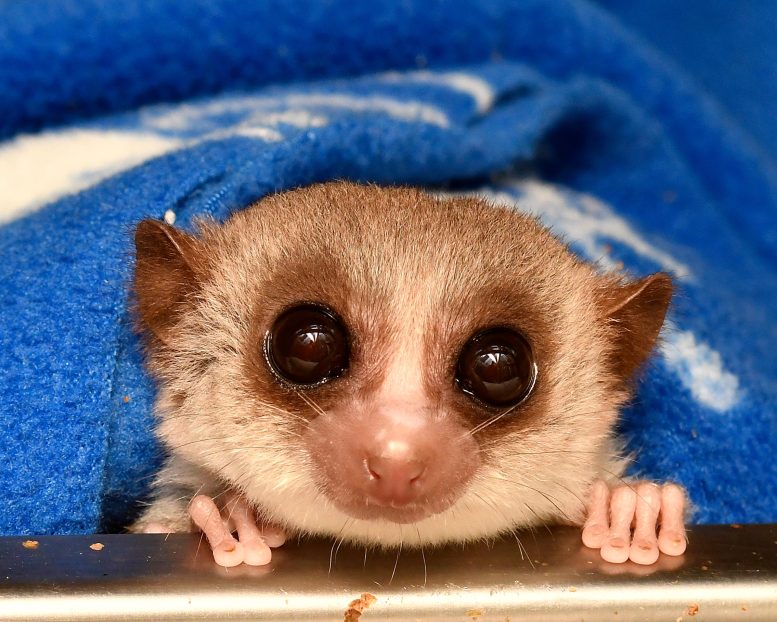
Studying how these distant primate relatives slow aging during hibernation may reveal new strategies for supporting healthy aging in humans.
We’re all familiar with the visible signs of aging: sagging skin, thinning hair, and the gradual changes we see in the mirror each day. But many effects of aging begin deep within, at the cellular level, where even our DNA can accumulate damage over time.
Remarkably, some animals have found ways to temporarily reverse this process. One such example is the fat-tailed dwarf lemur of Madagascar. This small, hamster-sized primate can actually slow or even reverse cellular aging during its annual hibernation, according to new research by scientists at Duke University and the University of California, San Francisco.
The Role of Telomeres
This ability is linked to tiny protective caps on the ends of their chromosomes called telomeres. Much like the plastic tips on shoelaces that prevent them from unraveling, telomeres help protect DNA from damage during cell division.
Every time a cell divides, little chunks of its telomeres are lost in the process, such that telomeres get shorter with age.
Things like chronic stress, a sedentary lifestyle, and skimping on sleep can make them dwindle even faster. Eventually, telomeres become so stubby that they no longer provide protection, and cells lose the ability to function.
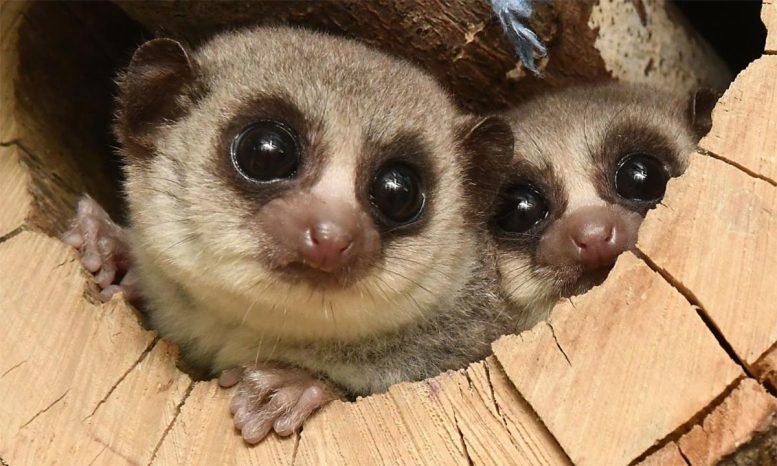
But dwarf lemurs have a way of keeping their telomeres from shortening and even making them longer, effectively rejuvenating their cells, at least for a while, according to a study published in the journal Biology Letters.
It all happens during hibernation, said lead author Marina Blanco of Duke. When winter sets in in the wild, dwarf lemurs disappear into tree holes or underground burrows, where they spend up to seven months each year in a state of suspended animation.
It’s a survival tactic for making it through times when food is in short supply.
Metabolic Slowdown for Survival
During this period of metabolic slow-motion, their heart rate slows from around 200 beats per minute to fewer than eight, they become cool to the touch, and they only take a breath every 10 minutes or so.
Hibernating dwarf lemurs can stay in this cold, standby state for about a week before they have to briefly warm up, and ironically, this is when they catch up on sleep. Then, they settle back into torpor while waiting for the season of plenty to return.
For the study, the researchers followed 15 dwarf lemurs at the Duke Lemur Center before, during, and after hibernation, testing cheek swabs to track how their telomeres changed over time.
To help them hibernate, the researchers gradually lowered the thermostat from 77 degrees Fahrenheit to the mid-50s to simulate winter conditions in the lemurs’ native habitat and gave them artificial burrows where they could curl up and wait out the cold.
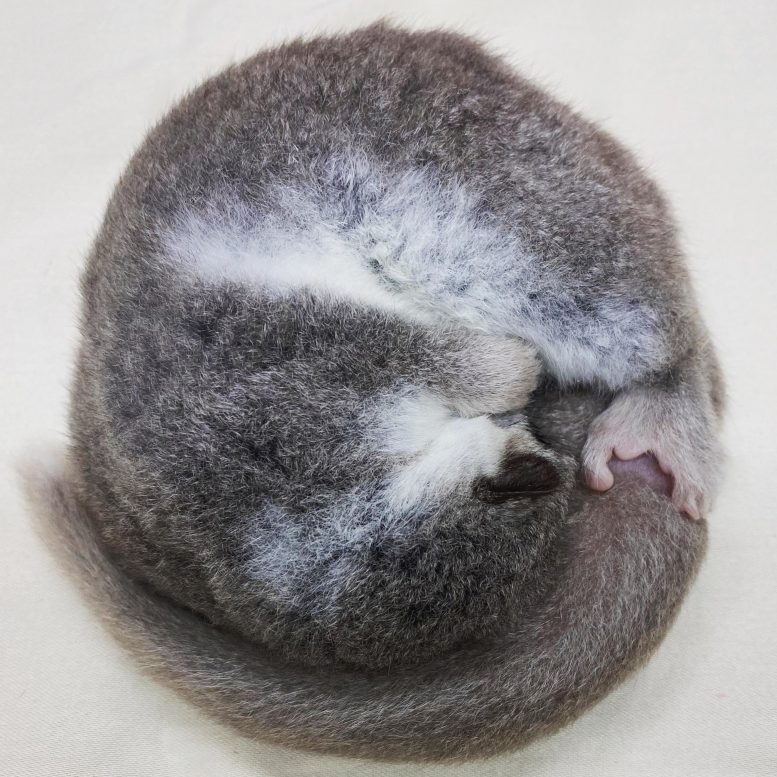
One group of animals was offered food if they were awake and active. The other group went without eating, drinking, or moving for the months-long hibernation season, living off the fat stored in their tails as they would in the wild.
Unexpected Genetic Findings
Usually, telomere length decreases over time as each round of cell division wears away at them.
But genetic sequencing revealed that during hibernation, the lemurs’ telomeres weren’t shortening — they actually got longer.
It’s almost as if, even as the months ticked by, they walked back their cells to a more youthful state.
“The results were in the opposite direction of what you’d expect,” Greene said.
“At first, we thought something was off with the data,” she added. But UCSF co-author Dana Smith in the lab of Elizabeth Blackburn — who shared the 2009 Nobel prize for discovering how telomeres rebuild themselves — confirmed the findings.
Overall, telomeres got longer in lemurs that experienced deeper torpor bouts.
By contrast, lemurs that “woke up” to eat had telomere lengths that remained relatively stable during the study.
Temporary Youthfulness
The lemurs’ changes were temporary. Two weeks after the animals made their way out of hibernation, the researchers noted that their telomeres returned to their pre-hibernation length.
Lengthening may be a mechanism to counteract any cell damage that might otherwise occur during their periodic rewarming phases, Blanco said.
Like starting a car after it’s been sitting unused in cold weather, these drastic metabolic rev-ups “really challenge the body to the extreme, from zero to 100,” Greene added.
A similar lengthening phenomenon has recently been observed in humans who endured other stressful situations, such as spending a year aboard the International Space Station or living for months underwater.
By extending their telomeres, lemurs may effectively increase the number of times their cells can divide, thus adding new life to their cells at a stressful time, Blanco said.
It seems to work – dwarf lemurs can live up to twice as long as other primates their size.
A galago, a similar-sized primate that doesn’t hibernate, lives around 12 or 13 years, while the fat-tailed dwarf lemur has been recorded surviving to nearly 30.
Longevity and telomere repair “may be linked, but we don’t know for sure yet,” Blanco cautioned.
Exactly how lemurs extend their telomeres is still a mystery as well.
But figuring out how they do it may help researchers develop new ways to prevent or treat age-related diseases in humans without increasing the risks of runaway cell division that can lead to cancer, the researchers said.
Reference: “Food deprivation is associated with telomere elongation during hibernation in a primate” by Marina B. Blanco, Dana L. Smith, Lydia K. Greene, Jue Lin and Peter H. Klopfer, 1 February 2025, Biology Letters.
DOI: 10.1098/rsbl.2024.0531
This research was partly funded by the Duke Lemur Center.
Never miss a breakthrough: Join the SciTechDaily newsletter.
Follow us on Google and Google News.
1 Comment
“But figuring out how they do it may help researchers develop new ways to prevent or treat age-related diseases in humans without increasing the risks of runaway cell division that can lead to cancer, the researchers said.” This means these poor lemurs will be tortured by animal researchers who want to study them. Of course, a hibernating animal has different physiology than humans, so this research will be useless, in addition to being cruel.