
The world’s first-ever planetary defense test is a big hit …
A major hurricane spotted from space …
And moving NASA’s mega Moon rocket back inside ahead of that storm … a few of the stories to tell you about – This Week at NASA!
Successful Impact for First-Ever Planetary Defense Test
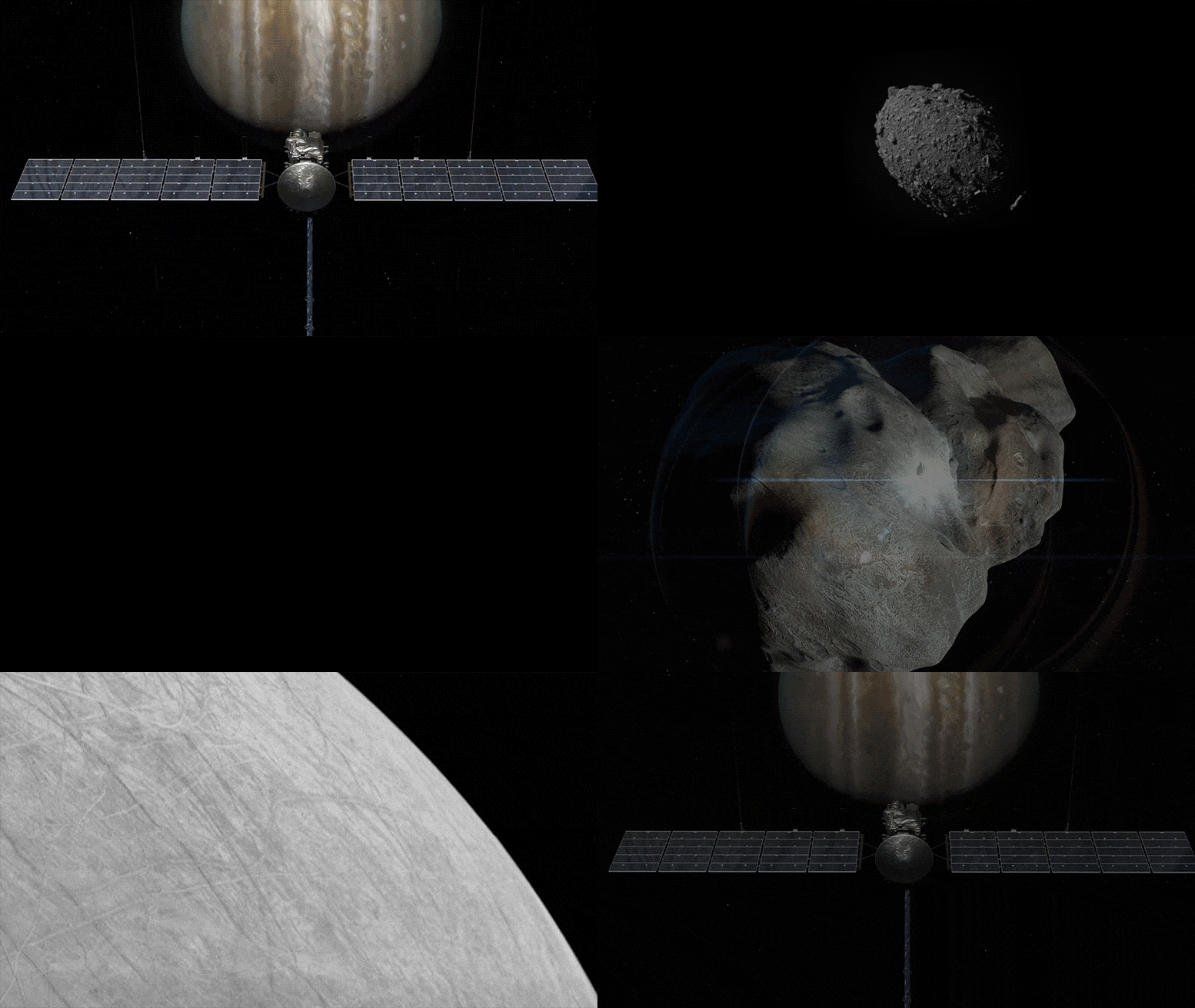
On September 26, NASA’s Double Asteroid Redirection Test, or DART spacecraft successfully impacted Dimorphos – the asteroid the spacecraft had been on a collision course with for about 10 months.
“Waiting … (applause) … and we have impact!”
DART’s intentional crash into Dimorphos, a moonlet of a larger asteroid called Didymos, was an attempt to alter the course of an asteroid in space as part of the world’s first planetary defense technology demonstration. The DART team will observe Dimorphos with ground-based telescopes to confirm that the technique, known as kinetic impact, did indeed alter the moonlet’s orbit around Didymos. The cosmic collision was actually captured by NASA’s Hubble and Webb space telescopes, marking the first time that Webb and Hubble observed the same celestial target at the same time. Neither of these asteroids is a threat to Earth, but this technique could prove to be a reliable way to alter the course of an asteroid that is on a collision course with Earth in the future.

Hurricane Ian Seen from the Space Station
On September 26, external cameras aboard the International Space Station captured views of Hurricane Ian just south of Cuba as the storm moved toward the north-northwest. As expected, Ian intensified as it approached Florida. Space station cameras caught the storm again on September 28 as it was making landfall in southwest Florida as a Category 4 storm with winds upward of 155 mph (250 kph) and a potentially catastrophic storm surge.
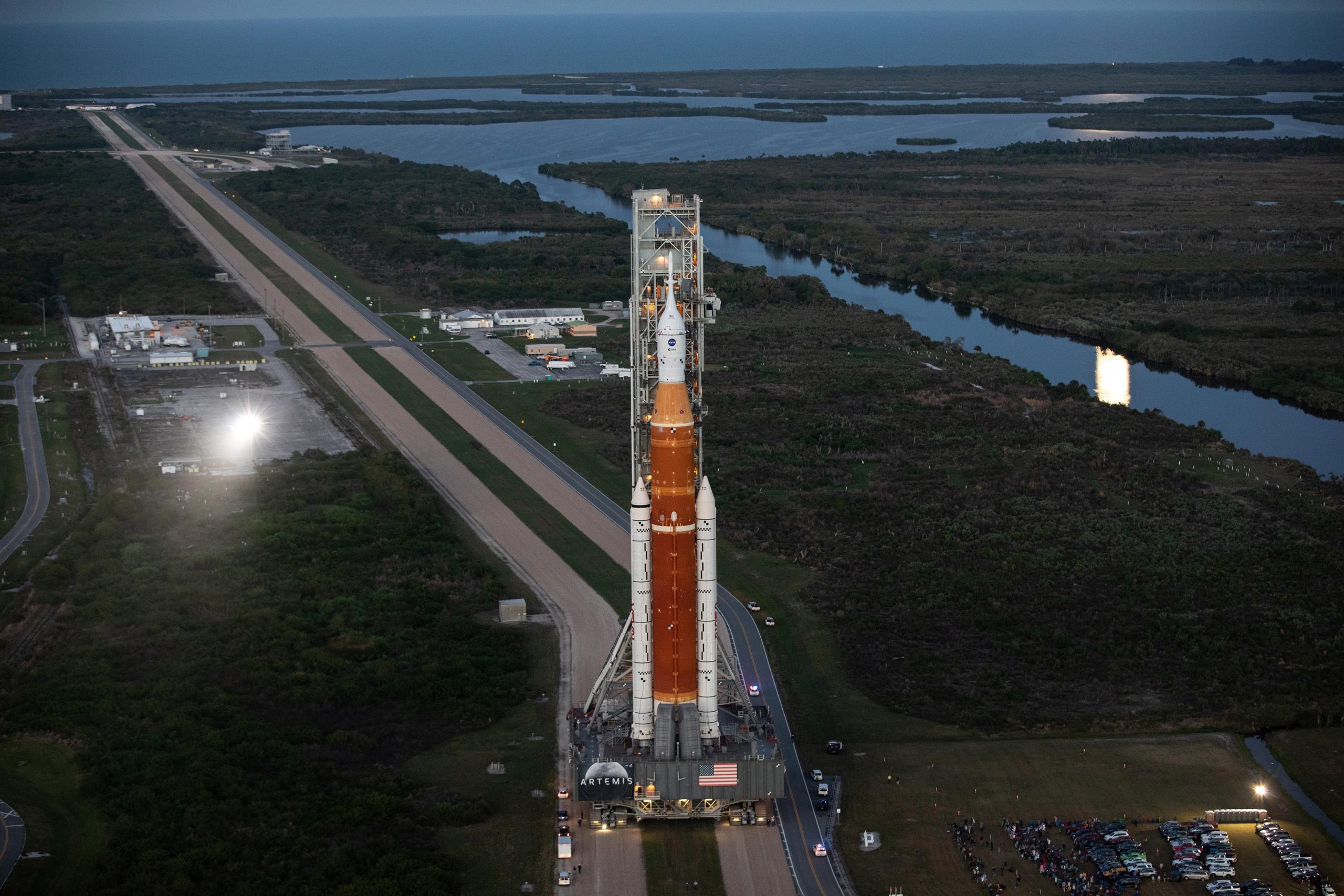
Artemis I Rocket Rolled Back Inside Ahead of Hurricane Ian
On the night of September 26, the team at NASA’s Kennedy Space Center began moving the Artemis I Moon rocket from launch pad 39B back to the Vehicle Assembly Building, or VAB. The Space Launch System rocket and Orion spacecraft were secured inside the VAB the next morning. Managers decided on the “roll back” due to weather predictions related to Hurricane Ian. In addition to protecting the integrated rocket and spacecraft, they also wanted to give employees time to address the needs of their families ahead of the storm.
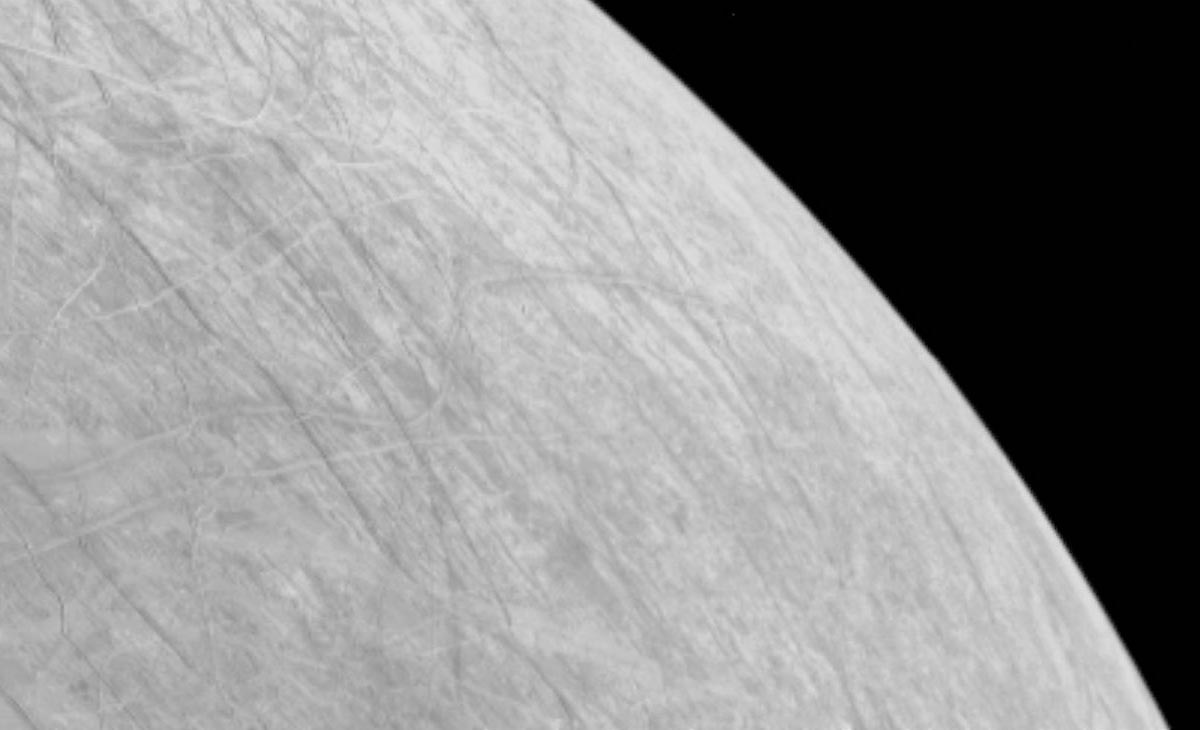
Juno’s Close Flyby of Jupiter’s Icy Moon Europa
The spacecraft for NASA’s Juno mission at Jupiter made a close flyby of the planet’s ice-covered moon, Europa on September 29. This image from the pass, some 220 miles (355 kilometers) above Europa’s surface, is the first to come of some of the highest-resolution images ever taken of portions of the moon. Valuable data are also expected from the flyby that, once processed, could benefit and inform future missions, like the agency’s Europa Clipper mission, which is targeted to launch in 2024 to study the icy moon. More information is available at: nasa.gov/juno.
As NASA prepares to send humans back to the Moon and beyond to Mars, inflatable habitats are concepts being considered for Lunar Surface Habitats and Mars Transit Habitats. Burst pressure tests are necessary to meet human safety certification, and engineers use them to determine the ability of the habitat to withstand internal pressure and the maximum internal pressure required to cause failure of the habitat’s woven, structural shell. The test, conducted in collaboration with Sierra Space and ILC Dover, took place at NASA’s Johnson Space Center as part of the NextSTEP-2 Habitat Systems contract managed by NASA’s Marshall Space Flight Center. Credit: NASA’s Marshall Space Flight Center
Inflatable Habitat Burst Pressure Test
Believe it or not, these inflatable habitats are being blown up to help make them safe for humans. Habitats like these could be used to house astronauts on future long-term surface exploration missions to the Moon and, eventually Mars. But before then, NASA and commercial partners are conducting burst pressure tests to determine the maximum internal pressure these habitats can safely withstand before they fail.
That’s what’s up this week @NASA …
Never miss a breakthrough: Join the SciTechDaily newsletter.
Follow us on Google and Google News.
1 Comment
Just for keeps sake; be careful concerning Jupiter and it’s moon planetary system. There could be a possible life form presence currently. Also note Jupiter could be responsible for jumping way out of orbit blocking the sun by means of weight shiftng the planet out of complete orbit causing an ice age. Hence the planet probably caught on fire and burned down to a size over many many years in lieu of it gaining a gravitational pull back into it’s present orbit. Seonglying enough it’s and every other planets location primordially is unknown in as much it’s interim locations possibly.