
Close Menu
    Facebook X (Twitter) Instagram
    SciTechDaily
    • Biology
    • Chemistry
    • Earth
    • Health
    • Physics
    • Science
    • Space
    • Technology
    Facebook X (Twitter) Pinterest YouTube RSS
    SciTechDaily
    Home»Earth»Hurricane Ian Enters the Gulf of Mexico – Headed Toward the West Coast of Florida
    Earth

    Hurricane Ian Enters the Gulf of Mexico – Headed Toward the West Coast of Florida

    By Kathryn Hansen, NASA Earth ObservatorySeptember 28, 2022No Comments2 Mins Read
    Facebook Twitter Pinterest Telegram LinkedIn WhatsApp Email Reddit
    Share
    Facebook Twitter LinkedIn Pinterest Telegram Email Reddit
    Hurricane Ian Enters the Gulf of Mexico
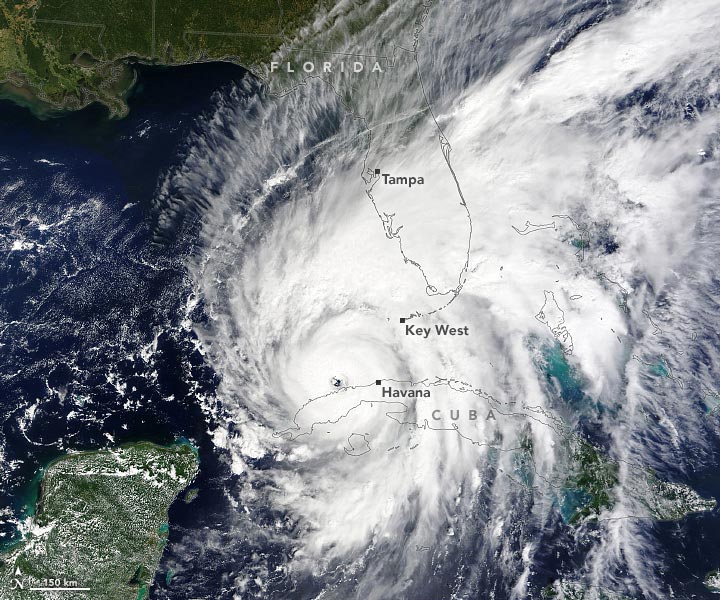
    Hurricane Ian Enters the Gulf of Mexico, September 27, 2022.

    After making landfall in Cuba, the category 3 storm entered the Gulf of Mexico and appeared headed toward the west coast of Florida.

    On September 27, 2022, after making landfall in western Cuba, Hurricane Ian entered the Gulf of Mexico as a category-3 storm with a trajectory aimed at Florida.

    NASA’s Terra satellite acquired this natural-color image (above)  of Hurricane Ian at about noon local time (16:00 Universal Time) on September 27, 2022, using its Moderate Resolution Imaging Spectroradiometer (MODIS). This was just hours after it moved off the northwest coast of Cuba. Winds around this time measured around 115 miles (185 kilometers) per hour—slightly weakened after passing over the island, but remaining a potent category-3 hurricane.
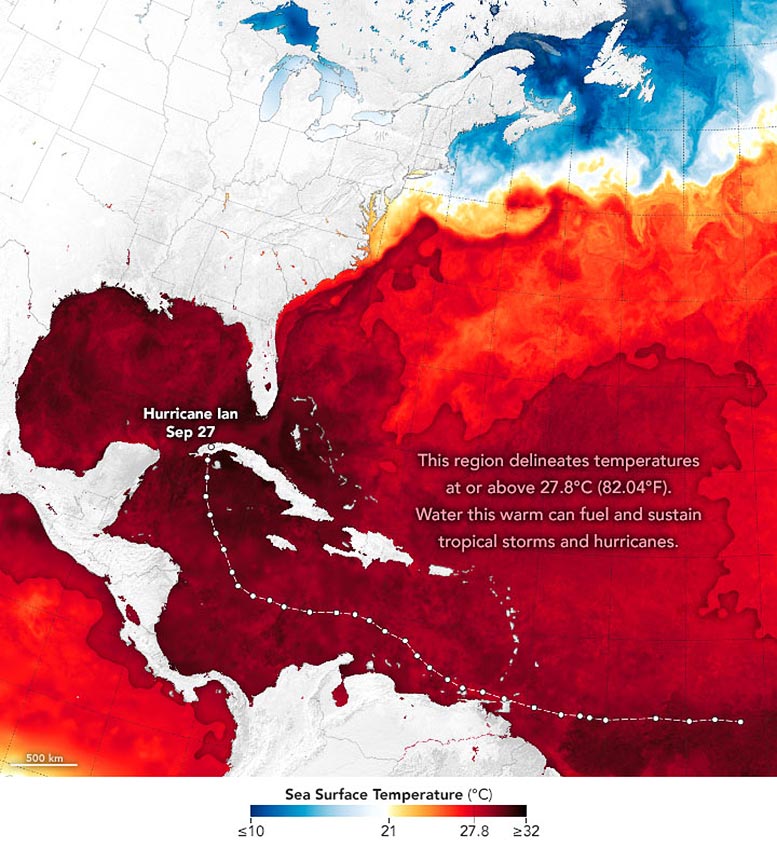
    Fuel for Hurricane Ian
    Though tropical cyclones are atmospheric phenomena, much of their fearsome power comes from the ocean. The seas are abundant sources of moisture to feed growing storm clouds. Just as critically, they are vast repositories of thermal energy that can move from the sea to the sky. As Hurricane Ian lashed western Cuba and headed for the west coast of Florida on September 27, 2022, it moved over an abundant fuel source in the Gulf of Mexico. While sea surface temperatures are just one of the factors influencing hurricanes, they are a fair predictor of the readiness of the ocean to sustain them.

    Weather forecasters noted that warm waters in the Gulf of Mexico and low wind shear could help the hurricane regain strength over the next day before making landfall along the west coast of Florida.

    NASA Earth Observatory image by Lauren Dauphin, using MODIS data from NASA EOSDIS LANCE and GIBS/Worldview.

    Never miss a breakthrough: Join the SciTechDaily newsletter.
    Follow us on Google and Google News.

    Hurricane NASA NASA Earth Observatory Storms Weather
    Share. Facebook Twitter Pinterest LinkedIn Email Reddit

    Related Articles

    Gorgeous Watercolor Seas in the Wake of Hurricane Ian

    Dramatic Satellite Images Show Power Outages After Hurricane Ian

    Fuel for Hurricane Ian: Fearsome Power Comes From the Ocean

    Hurricane Fiona & Typhoon Nanmadol: Powerful Storms Hit Puerto Rico and Japan

    Hurricane Ida Leaves a Trail of Oil in the Gulf of Mexico

    A Changed Landscape in Southern Louisiana After Hurricane Ida: Large New Patches of Open Water

    NASA Satellite Observes Massive Power Outages in New Orleans

    Hurricane Ida Batters Louisiana: 5th-Strongest Storm Ever To Make Landfall in the Continental U.S.

    Incredible View of Tropical Storm Elsa Captured From Space

    Leave A Reply Cancel Reply

    • Facebook
    • Twitter
    • Pinterest
    • YouTube

    Don't Miss a Discovery

    Subscribe for the Latest in Science & Tech!

    Trending News

    Popular Supplement Ingredient Linked to Shorter Lifespan in Men

    Scientists May Have Found a Way To Repair Nerve Damage in Multiple Sclerosis

    “Totally Unexpected” – Scientists Discover Pancreatic Cancer’s Fatal Addiction

    A Strange Quantum Effect May Explain One of Biology’s Greatest Mysteries

    James Webb Telescope Reveals the Universe’s Hidden Cosmic Web in Stunning Detail

    Scientists Identify Simple Supplement That Greatly Reduces Alzheimer’s Damage

    You May Have a Dangerous Type of Cholesterol Even if Your Tests Look Normal

    Your Blood Pressure Reading Could Be Wrong Because of One Simple Mistake

    Follow SciTechDaily
    • Facebook
    • Twitter
    • YouTube
    • Pinterest
    • Newsletter
    • RSS
    SciTech News
    • Biology News
    • Chemistry News
    • Earth News
    • Health News
    • Physics News
    • Science News
    • Space News
    • Technology News
    Recent Posts
    • Physicists Observe Strange Quantum Rotation Effect That Defies Intuition
    • Europe Was Never a Giant Dark Forest, New 20-Million-Year Study Reveals
    • Scientists Discover Bizarre 100-Million-Year-Old Insect With Giant Claws
    • New Study Challenges What We Know About Consciousness and the Brain
    • Scientists Discover Ancient “Language Switches” Hidden in Human DNA
    Copyright © 1998 - 2026 SciTechDaily. All Rights Reserved.
    • Science News
    • About
    • Contact
    • Editorial Board
    • Privacy Policy
    • Terms of Use

    Type above and press Enter to search. Press Esc to cancel.