

A newly uncovered 506-million-year-old creature called Mosura fentoni is rewriting the story of early ocean life.
With three eyes, tooth-lined jaws, and gill-lined abdominal segments, it’s a strange but telling fossil from the Burgess Shale.
A New Predator Emerges From Deep Time
Paleontologists from the Manitoba Museum and the Royal Ontario Museum (ROM) have uncovered an extraordinary new predator that lived over 500 million years ago. This fascinating creature, named Mosura fentoni, was found in Canada’s famous Burgess Shale fossil beds, and the discovery is detailed in the journal Royal Society Open Science.
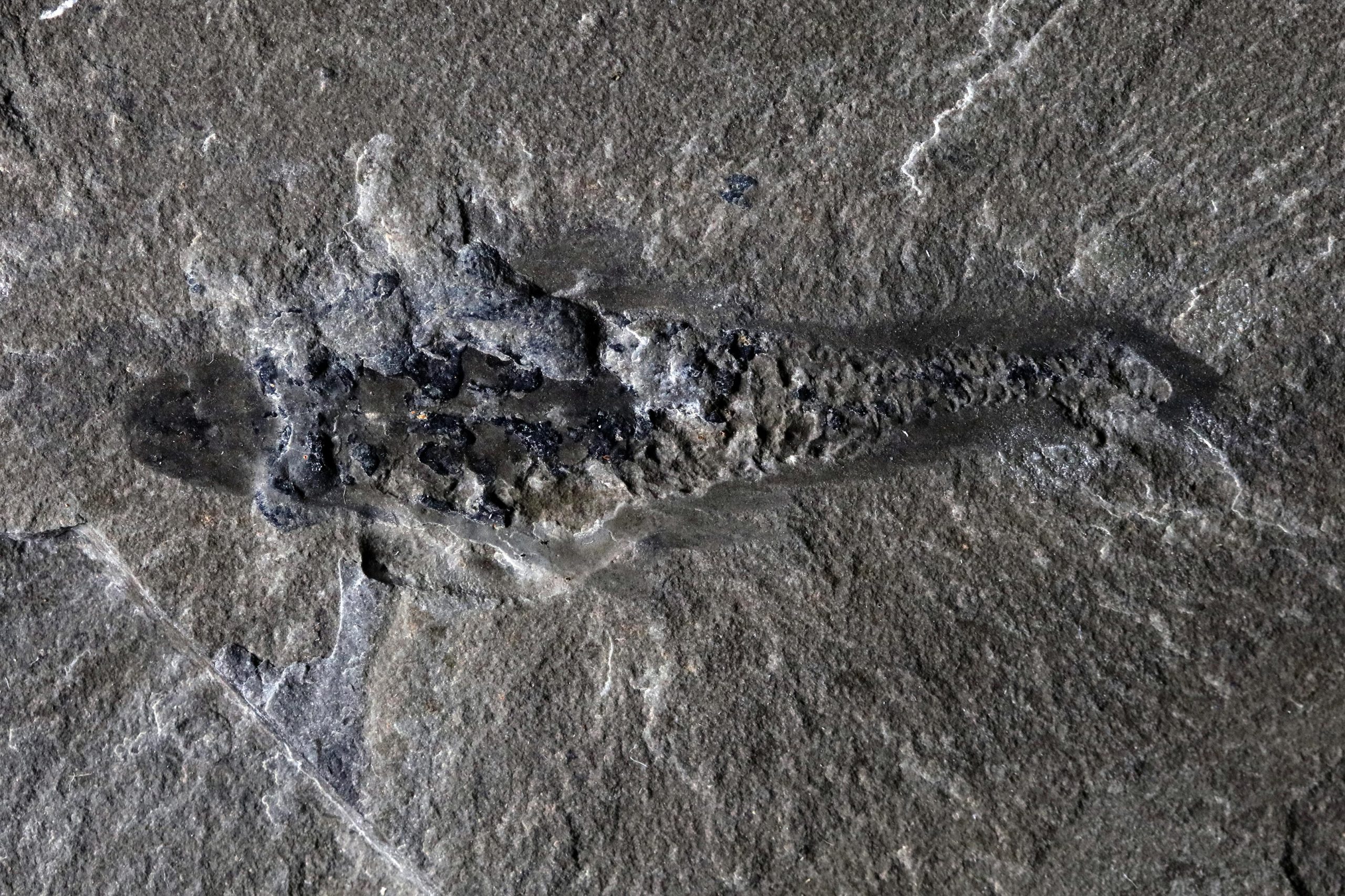
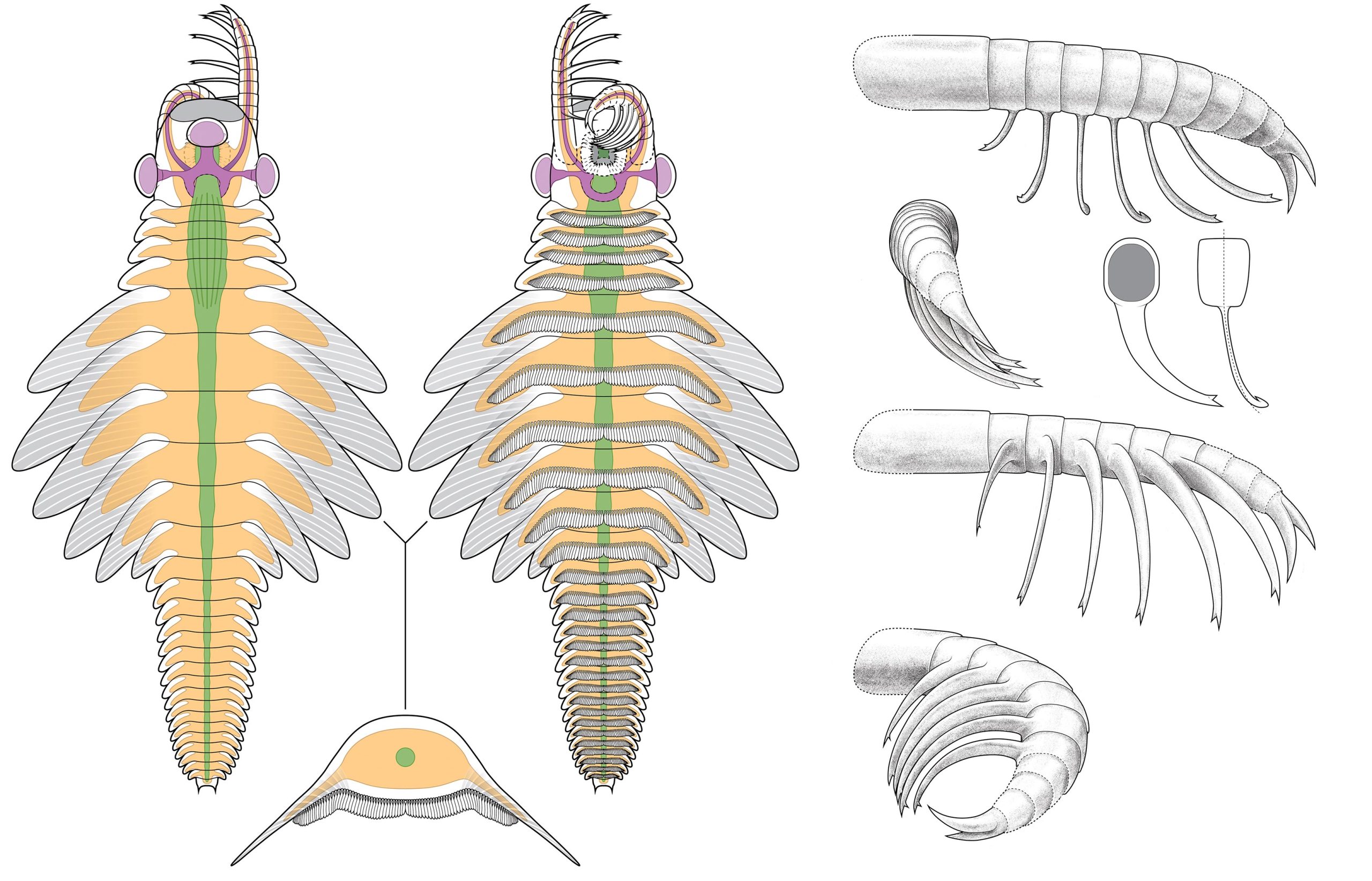
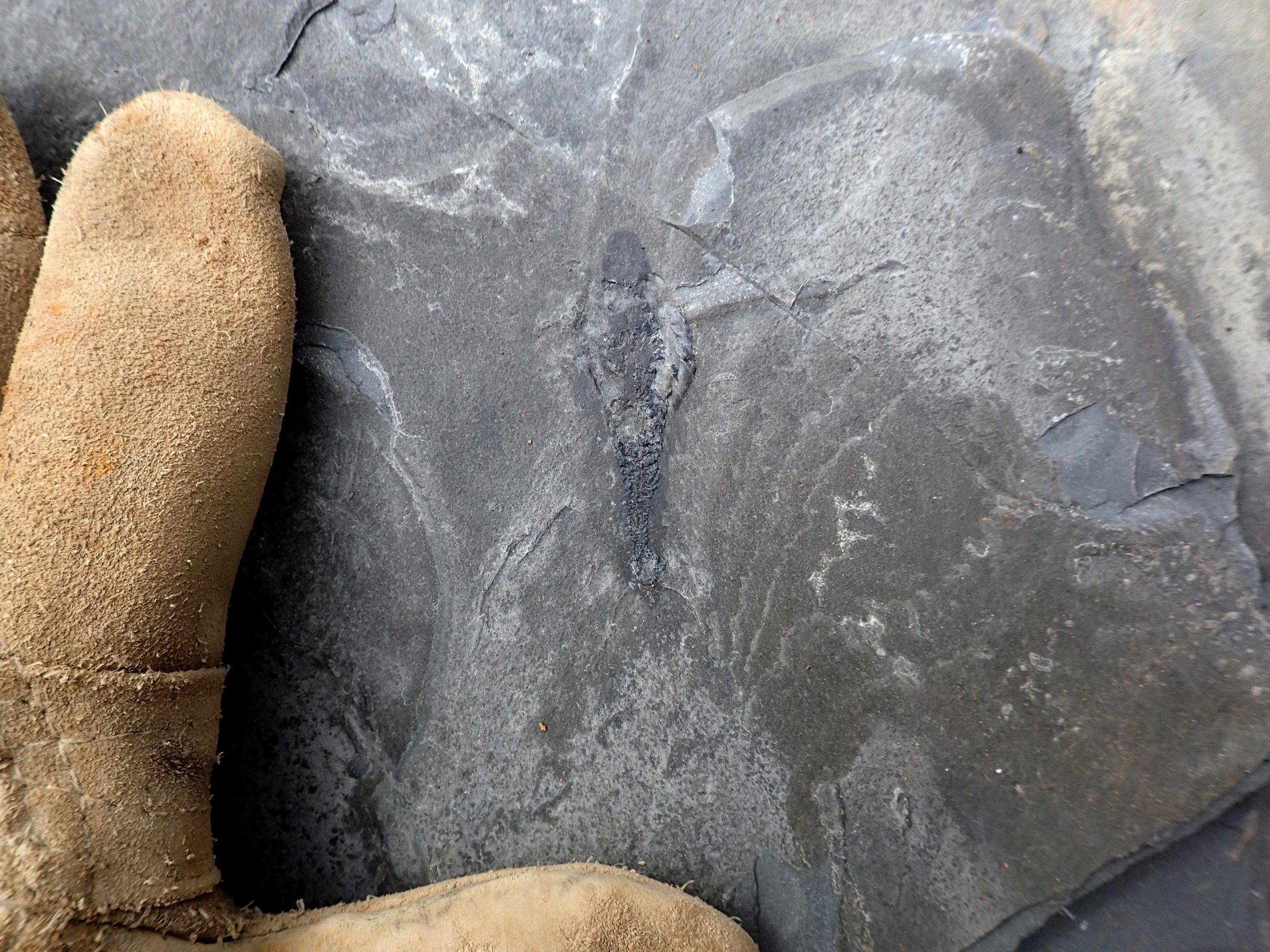
About the size of a human index finger, Mosura had three eyes, sharp spiny claws, a circular mouth ringed with teeth, and rows of flaps along its sides that likely helped it swim. These features place it in the radiodont group, an extinct line of ancient sea predators that includes the more famous Anomalocaris canadensis, a giant of the Cambrian seas.
A Surprising Abdominal Twist
What sets Mosura apart is something never seen before in a radiodont: a tail-like body region made of 16 tightly packed segments, each lined with gills. This rear section looks surprisingly similar to modern arthropods such as insects, woodlice, and horseshoe crabs, all of which have clustered respiratory structures toward the back of their bodies.
“This is a neat example of evolutionary convergence with modern groups, like horseshoe crabs, woodlice, and insects, which share a batch of segments bearing respiratory organs at the rear of the body,” says Joe Moysiuk, Curator of Paleontology and Geology at the Manitoba Museum, who led the study.
The reason for this intriguing adaptation remains uncertain, but the researchers postulate it may be related to particular habitat preferences or behavioral characteristics of Mosura that required more efficient respiration.
The “Sea-Moth” With a Sci-Fi Name
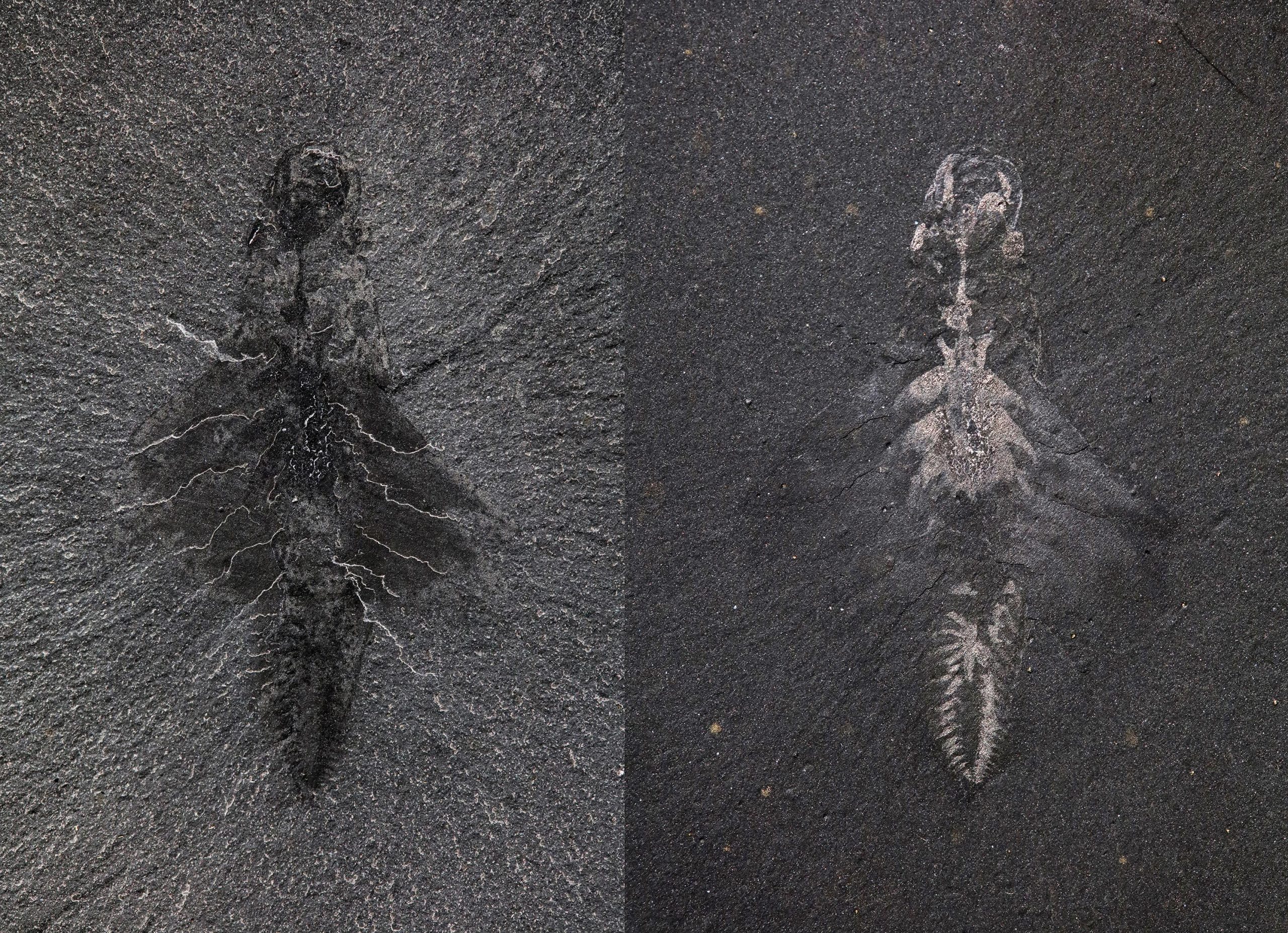
With its broad swimming flaps near its midsection and narrow abdomen, Mosura was nicknamed the “sea-moth” by field collectors based on its vague appearance to a moth. This inspired its scientific name, which references the fictional Japanese kaiju also known as Mothra. Only distantly related to real moths – as well as spiders, crabs, and millipedes – Mosura belongs on a much deeper branch in the evolutionary tree of these animals, collectively known as arthropods.
“Radiodonts were the first group of arthropods to branch out in the evolutionary tree, so they provide key insight into ancestral traits for the entire group. The new species emphasizes that these early arthropods were already surprisingly diverse and were adapting in a comparable way to their distant modern relatives,” says study co-author Jean-Bernard Caron, Richard M. Ivey Curator of Invertebrate Paleontology at ROM.
Astonishing Details of Internal Anatomy
Several fossils of Mosura additionally show details of internal anatomy, including elements of the nervous system, circulatory system, and digestive tract.
“Very few fossil sites in the world offer this level of insight into soft internal anatomy. We can see traces representing bundles of nerves in the eyes that would have been involved in image processing, just like in living arthropods. The details are astounding,” Caron adds.
A Circulatory System From a Bygone Era
Instead of having arteries and veins like we do, Mosura had an “open” circulatory system, with its heart pumping blood into large internal body cavities called lacunae. These lacunae are preserved as reflective patches that fill the body and extend into the swimming flaps in the fossils.
“The well-preserved lacunae of the circulatory system in Mosura help us to interpret similar, but less clear features that we’ve seen before in other fossils. Their identity has been controversial,” adds Moysiuk, who is also a Research Associate at ROM. “It turns out that preservation of these structures is widespread, confirming the ancient origin of this type of circulatory system.”
There’s a ‘new’ fossil discovery at ROM! Jean-Bernard Caron, Richard M. Ivey Curator of Invertebrate Palaeontology, shows us a new moth-like predator from the 506-million-year-old Burgess Shale of British Columbia, which is one of the most important palaeontological sites in the world. Credit: © ROM
Decades of Discovery in the Canadian Rockies
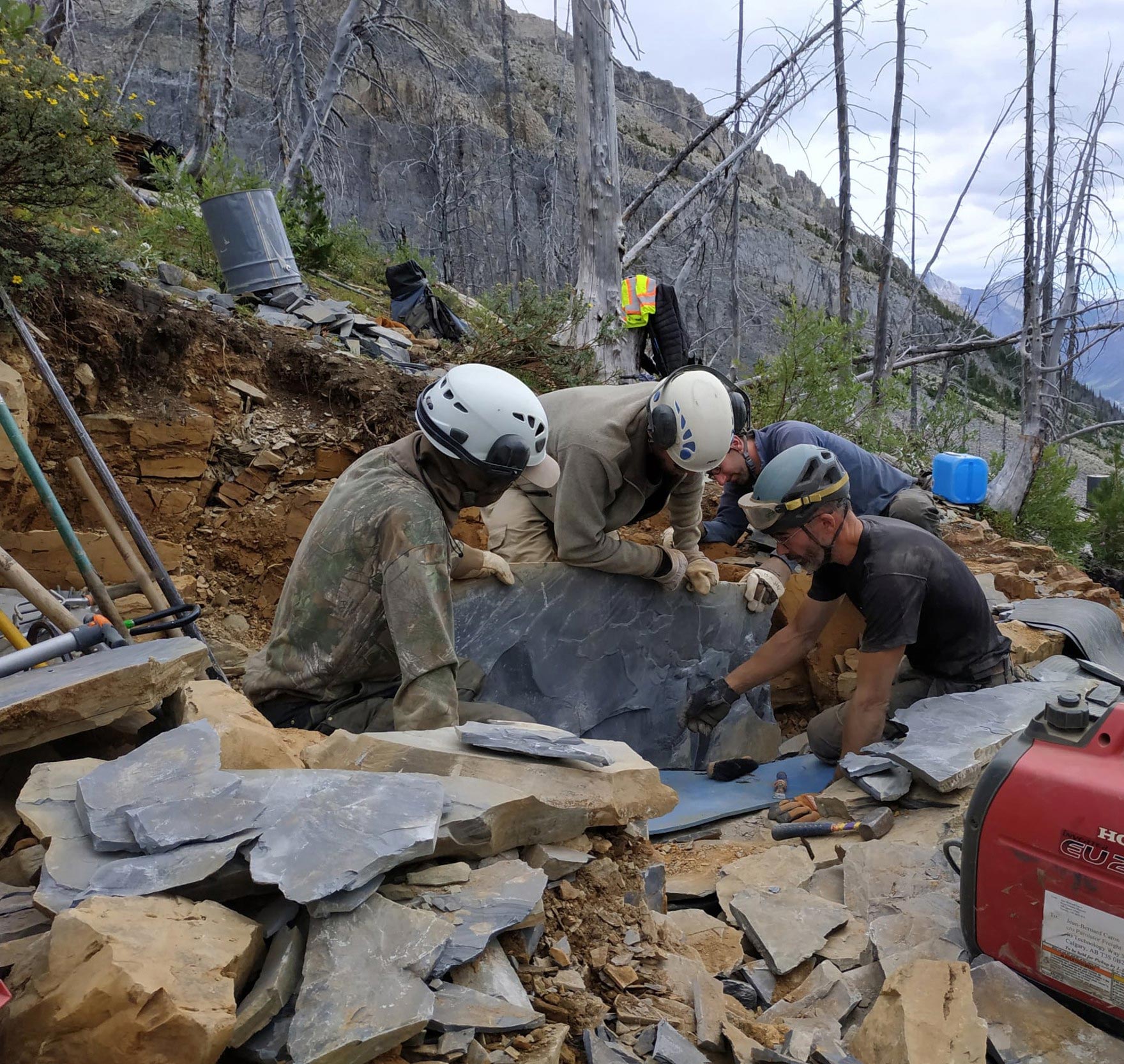
Of the 61 fossils of Mosura, all except one were collected by ROM between 1975 and 2022, mostly from the Raymond Quarry in Yoho National Park, British Columbia. Some also came from new areas around Marble Canyon in Kootenay National Park, 40 km to the southeast, which have revealed spectacular new Burgess Shale fossils, including other radiodonts: Stanleycaris, Cambroraster, and Titanokorys. One previously unpublished specimen of Mosura was also studied, which had been collected by Charles Walcott, the discoverer of the Burgess Shale.
“Museum collections, old and new, are a bottomless treasure trove of information about the past. If you think you’ve seen it all before, you just need to open up a museum drawer,” Moysiuk says.
Guardians of a Prehistoric World
The Burgess Shale fossil sites are located within Yoho and Kootenay National Parks and are managed by Parks Canada. Parks Canada is proud to work with leading scientific researchers to expand knowledge and understanding of this key period of Earth’s history and to share these sites with the world through award-winning guided hikes. The Burgess Shale was designated a UNESCO World Heritage Site in 1980 due to its outstanding universal value and is now part of the larger Canadian Rocky Mountain Parks World Heritage Site.
Many radiodont fossils can be seen on display in ROM’s Willner Madge Gallery, Dawn of Life, in Toronto, and a specimen of Mosura will be exhibited for the first time at the Manitoba Museum in Winnipeg later this year.
Reference: “Early evolvability in arthropod tagmosis exemplified by a new radiodont from the Burgess Shale” 14 May 2025, Royal Society Open Science.
DOI: 10.1098/rsos.24212
Never miss a breakthrough: Join the SciTechDaily newsletter.
Follow us on Google and Google News.
3 Comments
Exquisite!
How do they know it wasn’t a juvenile form of some larger creature?
Caterpillars don’t look anything like butterflies………………..
cool