
Close Menu
    Facebook X (Twitter) Instagram
    SciTechDaily
    • Biology
    • Chemistry
    • Earth
    • Health
    • Physics
    • Science
    • Space
    • Technology
    Facebook X (Twitter) Pinterest YouTube RSS
    SciTechDaily
    Home»Space»Twin X-Class Flares Ignite the Sky: NASA’s SDO Captures Fiery Solar Drama
    Space

    Twin X-Class Flares Ignite the Sky: NASA’s SDO Captures Fiery Solar Drama

    By SciTechDaily.comAugust 6, 2024No Comments3 Mins Read
    Facebook Twitter Pinterest Telegram LinkedIn WhatsApp Email Reddit
    Share
    Facebook Twitter LinkedIn Pinterest Telegram Email Reddit
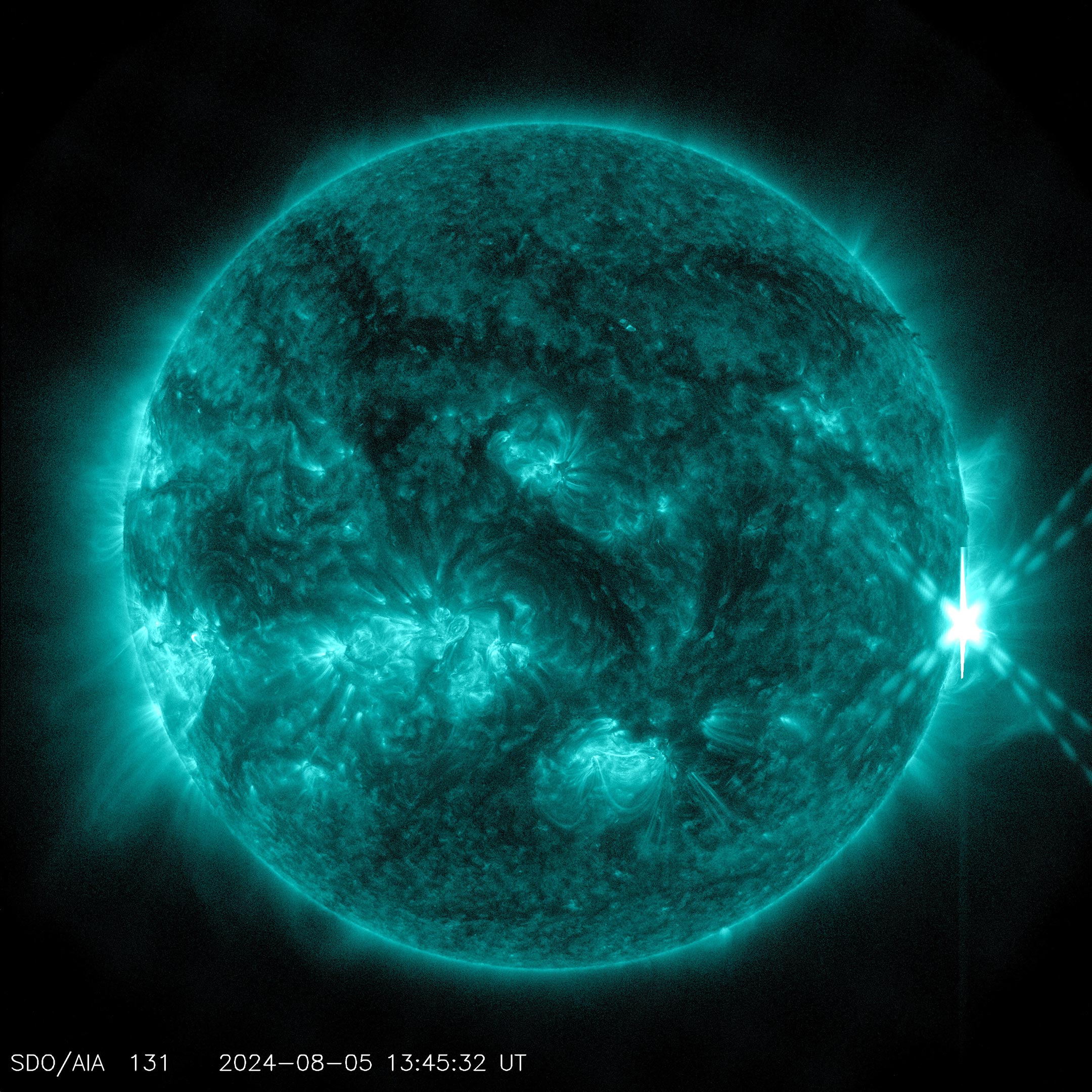
    X1.7 Solar Flare August 2024
    NASA’s Solar Dynamics Observatory captured this image of a solar flare — seen as the bright flash on the right — on Aug. 5, 2024. The image shows a subset of extreme ultraviolet light that highlights the extremely hot material in flares and which is colorized in teal. Credit: NASA/SDO

    On August 5, 2024, NASA’s Solar Dynamics Observatory observed two significant solar flares.

    Two powerful solar flares were unleashed from the Sun on August 5, 2024. Images of both events were captured by NASA’s Solar Dynamics Observatory, which is continually monitoring the Sun.

    The first was classified as an X1.7 flare and peaked at 9:40 a.m. ET. The second, which was classified as X1.1, peaked at 11:27 a.m.
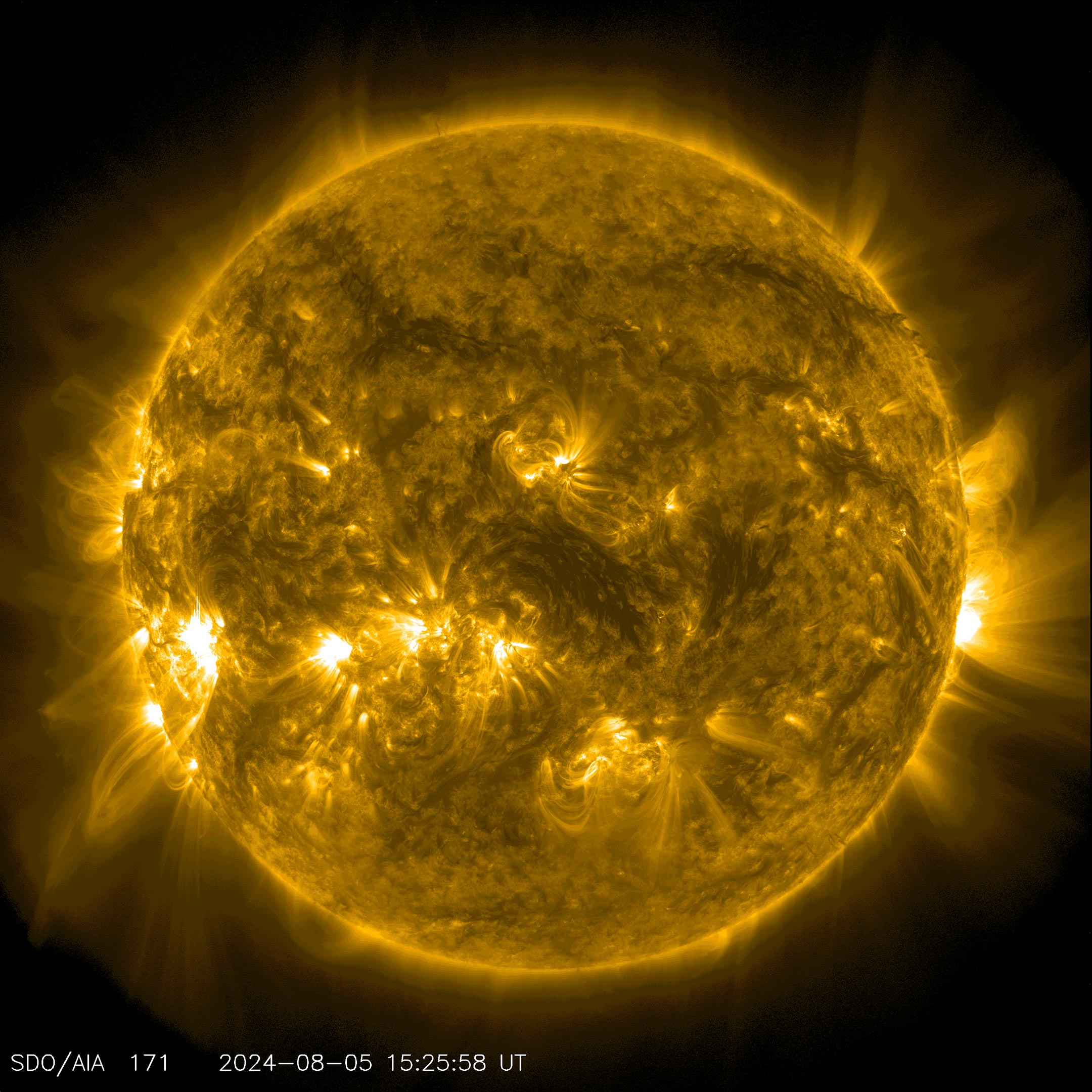
    X1.1 Solar Flare August 2024
    NASA’s Solar Dynamics Observatory captured this image of a solar flare — seen as the bright flash on the lower left – on Aug. 5, 2024. The image shows a subset of extreme ultraviolet light that highlights the extremely hot material in flares and which is colorized in gold. Credit: NASA/SDO

    Solar flares are intense bursts of radiation emanating from the release of magnetic energy associated with sunspots. They are the most powerful kind of solar phenomena and can last from minutes to hours. Flares are often categorized by their strength, from Class A (the weakest) to Class X (the strongest), with each class having a finer scale from 1 to 9.

    When solar flares occur, they emit energy across the entire electromagnetic spectrum—from radio waves to gamma rays. Although these bursts of energy are primarily emitted into space, when directed towards Earth, they can have profound effects on the upper atmosphere, causing disruptions in GPS signals, radio communications, and even causing damage to satellites and electrical transmission line facilities, leading to power outages.
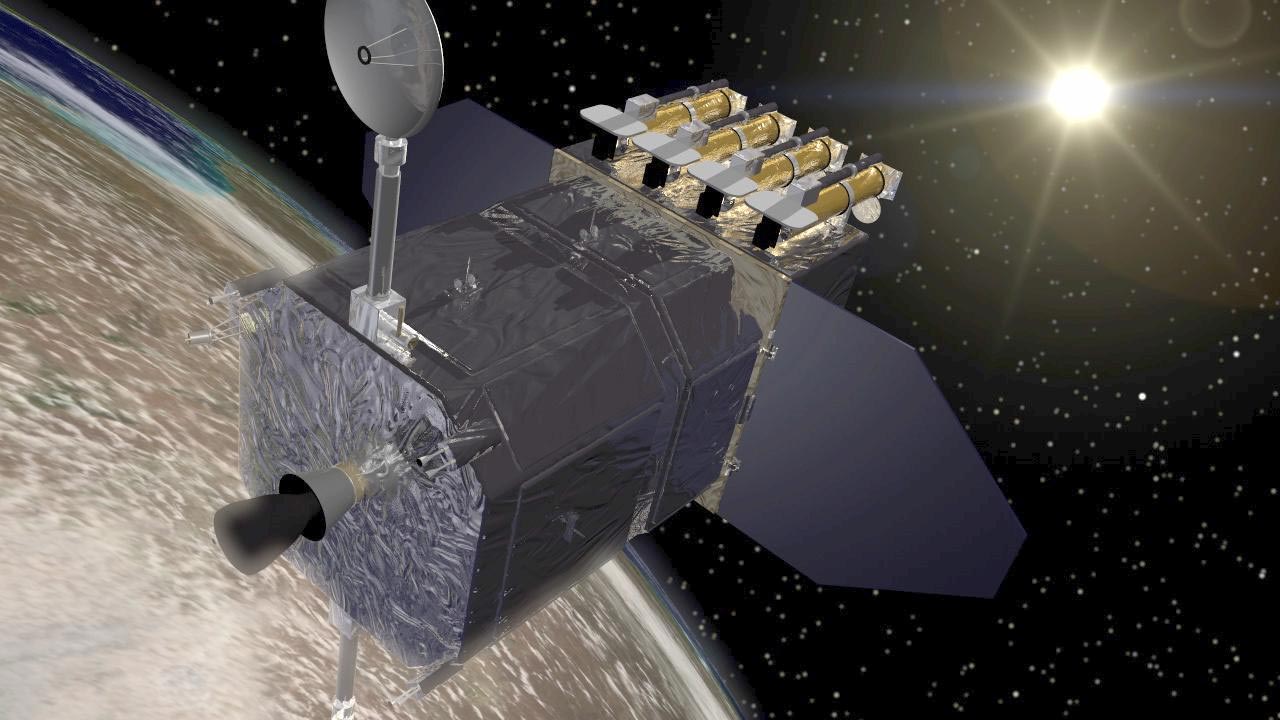
    SDO Artist's Concept
    Artist’s concept of the Solar Dynamics Observatory (SDO). Credit: NASA/Goddard Space Flight Center Conceptual Image Lab

    Launched in 2010, NASA’s Solar Dynamics Observatory (SDO) is a key player in space weather research, keeping a vigilant eye on the Sun’s activity from its geosynchronous orbit above Earth. The SDO’s mission is to unravel the mysteries of solar variability and its impacts on our planet.

    Armed with advanced instruments like the Helioseismic and Magnetic Imager (HMI) and the Atmospheric Imaging Assembly (AIA), SDO captures high-resolution images of the Sun in multiple wavelengths, revealing the hidden mechanics of solar flares and coronal mass ejections. These insights help forecast space weather events that can disrupt satellite operations, communications, and power grids on Earth, making SDO an essential tool for understanding and mitigating solar threats.

    Never miss a breakthrough: Join the SciTechDaily newsletter.
    Follow us on Google and Google News.

    NASA Solar Dynamics Observatory Solar Flares Sun
    Share. Facebook Twitter Pinterest LinkedIn Email Reddit

    Related Articles

    NASA Just Found the Sun’s Secret Warning Before Massive Solar Flares

    Solar Fury Erupts: Sun Rings In the New Year With X1.8 Flare

    Sun Releases a Powerful Burst of Radiation – An X1-Class Solar Flare

    Powerful X-class Solar Flare Erupts From Sun

    NASA’s Solar Dynamics Observatory Spots Burst of Light and Energy on the Sun: A B-Class Flare

    NASA’s Solar Dynamics Observatory Views M-Class Solar Flare

    NASA’s SDO Reveals Images of X4.9-Class Solar Flare

    NASA’s Solar Dynamics Observatory Views Two New Solar Flares

    New Light Shed on the Origins of Extreme Space Storms

    Leave A Reply Cancel Reply

    • Facebook
    • Twitter
    • Pinterest
    • YouTube

    Don't Miss a Discovery

    Subscribe for the Latest in Science & Tech!

    Trending News

    The Best Exercise Combination for Longevity, According to a 30-Year Study

    Popular Weight-Loss Drug Found To Slow Biological Aging in Landmark Human Trial

    NASA’s Fermi Telescope Caught a Supernova Doing Something Never Seen Before

    This Dinosaur Had the Claws of a Raptor but Hunted Like a Heron

    Doctors May Need To Rethink Calcium and Vitamin D Recommendations After Major Review

    Scientists Discover a Hidden Cause of Cellular Aging That Can Be Reversed

    Archaeologists Have Found Something Unexpected Inside a 1,600-Year-Old Egyptian Mummy

    Scientists May Have Found a Completely New Way To Treat Depression

    Follow SciTechDaily
    • Facebook
    • Twitter
    • YouTube
    • Pinterest
    • Newsletter
    • RSS
    SciTech News
    • Biology News
    • Chemistry News
    • Earth News
    • Health News
    • Physics News
    • Science News
    • Space News
    • Technology News
    Recent Posts
    • A Newly Found Cellular Shift May Explain Why Aging Leads to Disease
    • A Normal Kidney Test Could Still Signal Serious Risk
    • Scientists Discover Gut Signal That Turns Off Sugar Cravings
    • NASA Captures Typhoon Jangmi’s Massive Eye in Stunning Nighttime Image
    • Super Typhoon Sinlaku Was So Powerful It Made the Sky Ripple With Gravity Waves
    Copyright © 1998 - 2026 SciTechDaily. All Rights Reserved.
    • Science News
    • About
    • Contact
    • Editorial Board
    • Privacy Policy
    • Terms of Use

    Type above and press Enter to search. Press Esc to cancel.