
Close Menu
    Facebook X (Twitter) Instagram
    SciTechDaily
    • Biology
    • Chemistry
    • Earth
    • Health
    • Physics
    • Science
    • Space
    • Technology
    Facebook X (Twitter) Pinterest YouTube RSS
    SciTechDaily
    Home»Biology»Unexpected Genetic Discovery Opens New Opportunities for Human Health
    Biology

    Unexpected Genetic Discovery Opens New Opportunities for Human Health

    By John Innes CentreJanuary 9, 2024No Comments3 Mins Read
    Facebook Twitter Pinterest Telegram LinkedIn WhatsApp Email Reddit
    Share
    Facebook Twitter LinkedIn Pinterest Telegram Email Reddit
    Human Body Genetics
    Researchers at the John Innes Centre have discovered a gene cluster in wheat that produces triticein, an unexpected isoflavone, paving the way for advances in wheat’s nutritional enhancement and disease resistance. This finding opens new avenues for research into the health benefits and applications of triticein.

    An unexpected genetic discovery in wheat has led to opportunities for the metabolic engineering of versatile compounds with the potential to improve its nutritional qualities and resilience to disease. 

    Researchers in the Osbourn group at the John Innes Centre have been investigating biosynthetic gene clusters in wheat – groups of genes that are co-localized on the genome and work together to produce specific molecules.  

    Discovery of Triticein

    In a study that appears in Nature Communications, they identified a gene cluster activated by pathogen infection, which was found to produce a compound they named triticein.  

    Experiments to determine the structure of triticein surprisingly identified this compound as an isoflavone rather than a flavone, as the team had expected. 

    Isoflavones are a class of phytoestrogen compounds well studied for their benefits to human health, which include the prevention of cardiovascular disease and some cancers. They are mostly found in the legume family of which soybeans are the main source in the human diet. 
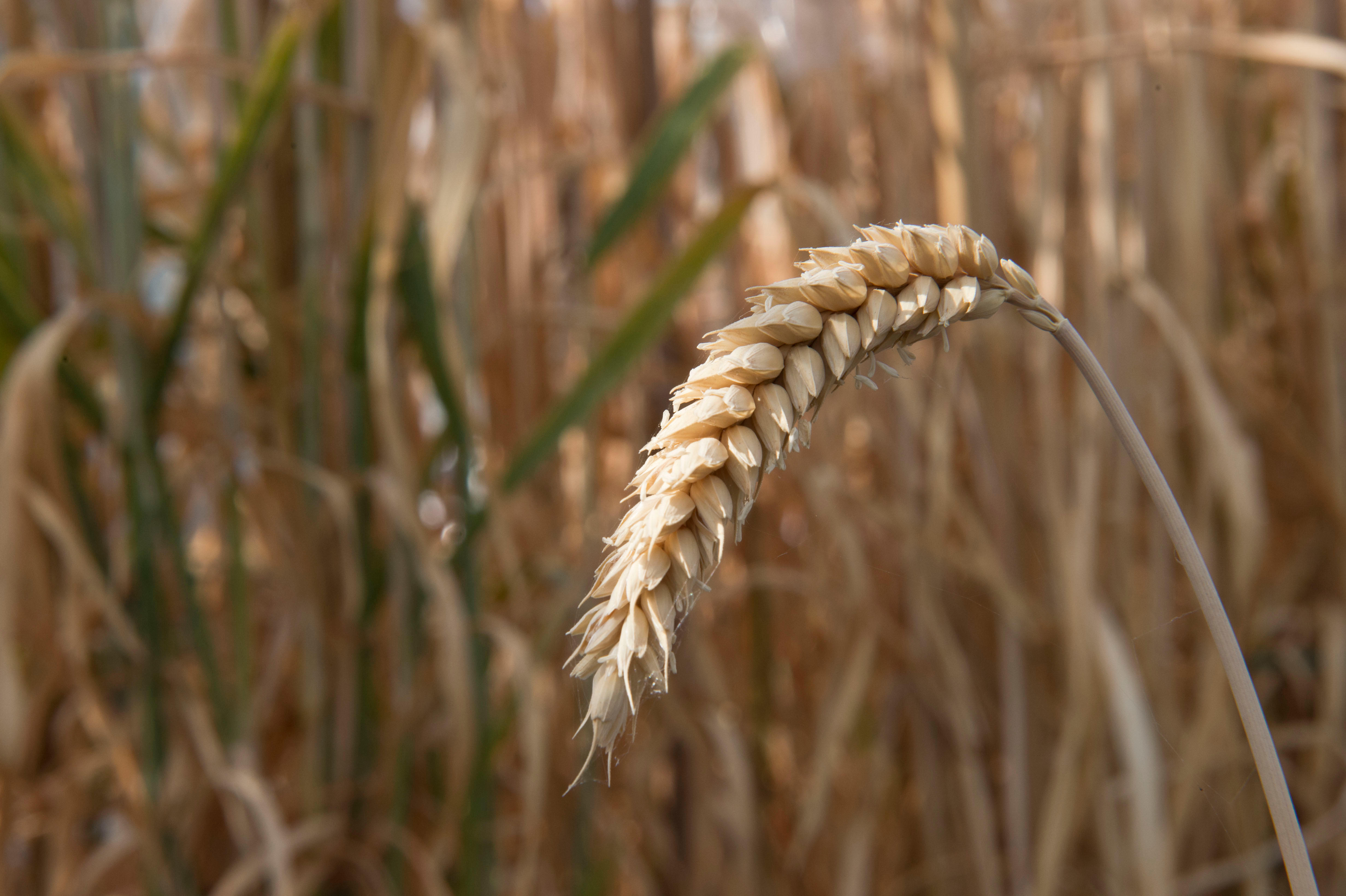
    Wheat Bunch
    Researchers have identified a wheat gene cluster activated by pathogen infection, which was found to produce a compound they named triticein. Credit: John Innes Centre

    Implications and Future Research

    The discovery of an alternative route to isoflavonoid biosynthesis, this time in wheat, and the elucidation of the triticein biosynthetic pathway in this study provideS exciting opportunities for future research and paves the way for metabolic engineering efforts. Increasing triticein production in wheat, for example, may aid in developing cultivars with higher disease tolerance.  

    Another possibility is that wheat triticein-forming genes can be expressed in other plants or microbes, from which the molecule can be produced, and its antimicrobial properties further investigated.  

    And because triticein is an isoflavone there is a possibility that it may have health benefits like others in this class, although there is much further research to be done on this prospect. 

    Dr. Rajesh Chandra Misra, a post-doctoral scientist at the John Innes Centre and one of the lead authors explained: “We do not know anything specifically about potential health benefits of triticein, only about other isoflavones. Also, the concentrations of triticein (and other isoflavones) that we found in wheat grains were very low, so wheat cannot be currently considered as a source of dietary isoflavones.”  

    Joint lead author Dr Guy Polturak previously at the John Innes Centre and now at The Hebrew University of Jerusalem reflected: “This study is a nice example of how scientific research sometimes takes scientists down unintended paths, eventually leading to unexpected discoveries. The main aim of this research was to learn about wheat chemical defense mechanisms, but it led to interesting new findings on plant biochemistry, in this case, the discovery of a unique isoflavone synthase.” 

    Reference: “Discovery of isoflavone phytoalexins in wheat reveals an alternative route to isoflavonoid biosynthesis” by Guy Polturak, Rajesh Chandra Misra, Amr El-Demerdash, Charlotte Owen, Andrew Steed, Hannah P. McDonald, JiaoJiao Wang, Gerhard Saalbach, Carlo Martins, Laetitia Chartrain, Barrie Wilkinson, Paul Nicholson and Anne Osbourn, 1 November 2023, Nature Communications.
    DOI: 10.1038/s41467-023-42464-3

    Never miss a breakthrough: Join the SciTechDaily newsletter.
    Follow us on Google and Google News.

    Genetics John Innes Centre Popular
    Share. Facebook Twitter Pinterest LinkedIn Email Reddit

    Related Articles

    How Bread Wheat Got Its Gluten: DNA Detective Work Uncovered an Obscure Ancestor of Modern Bread Wheat

    Century-Old Mysterious Puzzle Solved: How Sex Cells Get the Right Genetic Mix

    Solving a Long-Standing Biological Mystery: How Cells Measure Themselves

    Pioneering Pollinator Research Reveals Genetic Clues to Darwin’s “Abominable Mystery”

    Butterfly Research Reveals Genetic Sharing from Hybridization

    3-D Image Shows How DNA Packs Itself into a “Fractal Globule”

    “Area X” of Zebra Finch May Provide Insights to Human Speech Disorders

    Researchers Induce Magnetism to a Non-Magnetic Organism

    Researchers Complete Genome Sequence of a Denisovan Human Finger Bone

    Leave A Reply Cancel Reply

    • Facebook
    • Twitter
    • Pinterest
    • YouTube

    Don't Miss a Discovery

    Subscribe for the Latest in Science & Tech!

    Trending News

    Popular Sugar-Free Sweetener Linked to Liver Disease, Study Warns

    What Is Hantavirus? The Deadly Disease Raising Alarm Worldwide

    Scientists Just Discovered How the Universe Builds Monster Black Holes

    Scientists Unveil New Treatment Strategy That Could Outsmart Cancer

    A Simple Vitamin May Hold the Key to Treating Rare Genetic Diseases

    Scientists Think the Real Fountain of Youth May Be Hiding in Your Gut

    Ravens Don’t Follow Wolves, They Predict Them

    This Common Knee Surgery May Be Doing More Harm Than Good

    Follow SciTechDaily
    • Facebook
    • Twitter
    • YouTube
    • Pinterest
    • Newsletter
    • RSS
    SciTech News
    • Biology News
    • Chemistry News
    • Earth News
    • Health News
    • Physics News
    • Science News
    • Space News
    • Technology News
    Recent Posts
    • Scientists Revive Ancient Chemistry Trick To Engineer Next-Generation Glass
    • Scientists Use AI To Supercharge Ultrafast Laser Simulations by More Than 250x
    • Scientists Just Found a Surprising Way To Destroy “Forever Chemicals”
    • Popular Supplement Ingredient Linked to Shorter Lifespan in Men
    • Scientists May Have Found a Way To Repair Nerve Damage in Multiple Sclerosis
    Copyright © 1998 - 2026 SciTechDaily. All Rights Reserved.
    • Science News
    • About
    • Contact
    • Editorial Board
    • Privacy Policy
    • Terms of Use

    Type above and press Enter to search. Press Esc to cancel.