
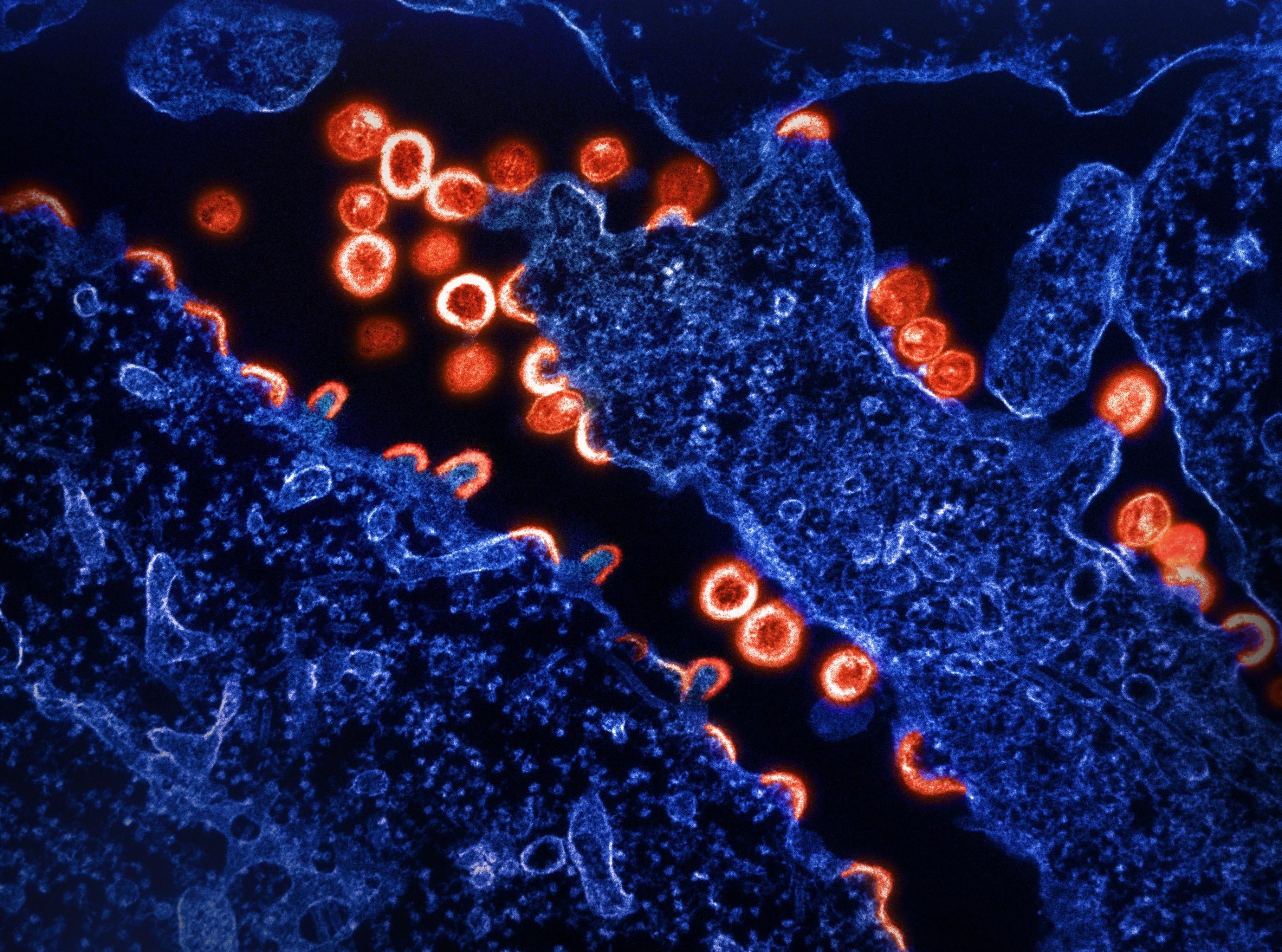
Scientists discovered that repetitive HIV vaccinations can lead the body to produce antibodies targeting the immune complexes already bound to the virus — knowledge that could lead to better vaccines.
In a groundbreaking study, Scripps Research scientists uncovered a new antibody response in HIV vaccinations, where the immune system produces antibodies that target immune complexes rather than the virus itself. This discovery, facilitated by advanced imaging techniques, may not only reshape our understanding of immune responses but could also pave the way for more effective HIV vaccines by fine-tuning their design to either leverage or inhibit this response.
Vaccine Mechanics and HIV Research Insights
Vaccines typically work by introducing a protein that mimics part of a virus, prompting the immune system to produce antibodies that recognize and fight the virus, providing long-lasting protection.
However, Scripps Research scientists have found that some HIV vaccines trigger a different response. After a few doses, the immune system starts producing antibodies that target immune complexes already bound to the viral protein instead of the virus itself. Published today (January 17, 2025) in Science Immunology, this chain reaction’s impact on the immune system’s ability to fight HIV remains unclear. Researchers believe a deeper understanding of this phenomenon could lead to significant improvements in HIV vaccine design.

New Antibody Phenomena in HIV Vaccination
“These anti-immune complex antibodies have not been studied in very much depth, especially in the context of HIV vaccination,” says Andrew Ward, PhD, professor of Integrative Structural and Computational Biology at Scripps Research and senior author of the new paper. “Understanding these responses could lead to smarter vaccine designs and Immunotherapeutics. It’s an exciting step forward in fine-tuning antibody and vaccine-based strategies against HIV and other diseases.”
The new observation came about when Ward’s team was using advanced imaging tools to study how antibodies evolve after multiple HIV vaccine doses. A technique invented by the lab, known as Electron Microscopy-Based Polyclonal Epitope Mapping (EMPEM), lets the researchers see exactly where on the HIV virus antibodies bind. When they carried out the experiments on blood from animals that had received multiple doses of an experimental HIV vaccine, they discovered something surprising: some of the antibodies were not binding directly to the HIV viral antigen, but to immune molecules on its surface.
Surprising Discoveries in Antibody Binding
“These antibodies actually make no direct contact with the viral protein,” says Sharidan Brown, a graduate student at Scripps Research and first author of the new paper. “We are the first to structurally characterize this kind of antibody in the context of HIV vaccination.”
Scientists have previously known that anti-immune complex antibodies could form in some situations. This happens when the immune system recognizes antibodies already bound to viral proteins. An additional immune response occurs, spurring the production of new antibodies, including some that bind to existing immune complexes on the virus’ surface.
Implications for Future Vaccine Development
In a series of follow-up experiments on HIV-vaccinated animals, Brown, Ward, and their colleagues showed that these kinds of anti-immune complex antibodies often emerge between the second and third administrations of a vaccine.
“We showed that these antibodies exist but what we don’t yet know is how they shape the immune response,” says Brown. “They could be detrimental because they are not directly neutralizing the virus, but they could lead to larger immune complexes which actually spur more activity against the viruses and infected cells in ways that we don’t fully understand.”
If future experiments show that the antibodies are, indeed, unwanted, it could guide vaccine design strategies to minimize the immune complex response and improve the ability for vaccines to directly neutralize HIV. It also could lead to changes in HIV vaccine schedules, potentially including a series of different boosting immunizations against the virus rather than multiple doses of the same vaccine.
“Minor changes between each dose could create just enough diversity that you don’t produce antibodies against antibodies,” says Brown.
The research team is planning to continue studying the antibodies, as well as whether similar antibody responses are produced after multiple doses of other vaccines or during natural infection.
Reference: “Anti–immune complex antibodies are elicited during repeated immunization with HIV Env immunogens” by Sharidan Brown, Aleksandar Antanasijevic, Leigh M. Sewall, Daniel Montiel Garcia, Philip J. M. Brouwer, Rogier W. Sanders and Andrew B. Ward, 17 January 2025, Science Immunology.
DOI: 10.1126/sciimmunol.adp5218
In addition to Ward and Brown, authors of the study include Leigh Sewall, Daniel Montiel Garcia, and Philip Brouwer of Scripps Research; Aleksandar Antanasijevic of École Polytechnique Fédérale de Lausanne; and Rogier Sanders of University of Amsterdam.
This work was supported by funding from Scripps Research, an amfAR Mathilde Krim Fellowship in Biomedical Research (110182-69-RKVA), the National Institute of Allergy and Infectious Diseases (R01 AI136621, P01 AI110657, UM1 AI100663), the Bill and Melinda Gates Foundation, and the Collaboration for AIDS Vaccine Discovery (CAVD) Network (INV-002916).
Never miss a breakthrough: Join the SciTechDaily newsletter.
Follow us on Google and Google News.