
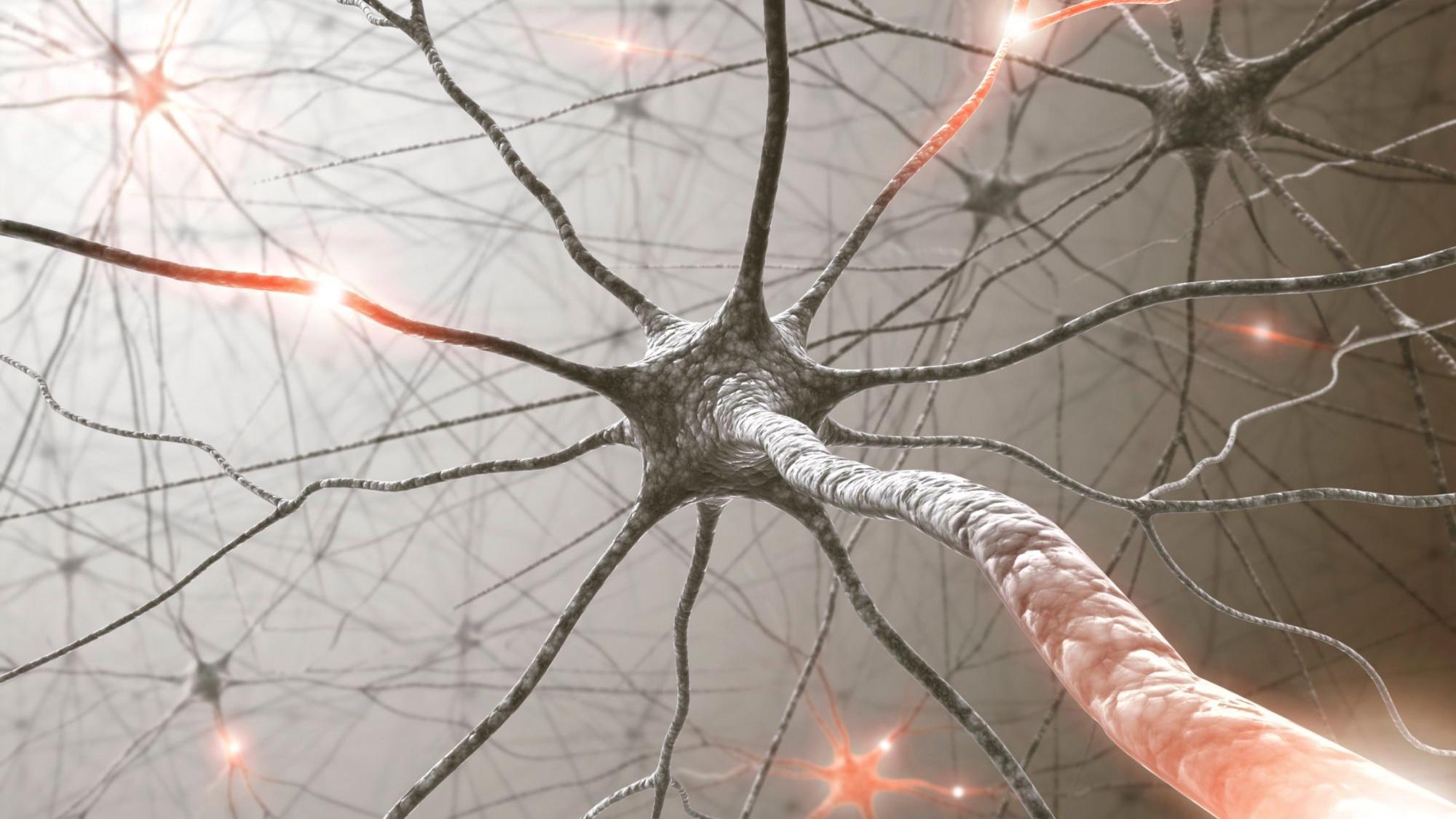
Pioneering research reveals the origins of the ventral nerve cord in early molting animals.
An international team of scientists has uncovered a fascinating piece of the evolutionary puzzle: the origin of the ventral nerve cord, a vital part of the central nervous system, in ecdysozoan animals—a group that includes insects, nematodes, and priapulid worms. Their study, published in Science Advances, offers important insights into how these structures first developed during the basal Cambrian period.
The research team, comprising Dr Deng Wang (Northwest University), Dr Jean Vannier (Université de Lyon), Dr Chema Martin-Durán (Queen Mary University of London), and Dr María Herranz (Rey Juan Carlos University), analysed exceptionally well-preserved fossils from key Cambrian deposits. These fossils include representatives of the early-evolving Scalidophora, a subgroup of Ecdysozoa, offering a rare glimpse into the nervous system architecture of ancient animals.
Ecdysozoans include arthropods (such as insects and crabs), nematodes (roundworms), and smaller groups like kinorhynchs (“mud dragons”) and priapulids (“penis worms”). Their central nervous systems, which include the brain and ventral nerve cord, have long intrigued scientists seeking to understand the evolutionary relationships between these groups.
For example, priapulids exhibit a single ventral nerve cord, while loriciferans and kinorhynchs have paired nerve cords, with kinorhynchs also developing paired ganglia. Did the ancestral ecdysozoan have a single or paired ventral nerve cord? Furthermore, while loriciferans and kinorhynchs share a similar nervous system design with arthropods, they are phylogenetically distant. Are these similarities the result of convergent evolution, or do they reflect a shared evolutionary origin?
Fossil Evidence from the Cambrian Period
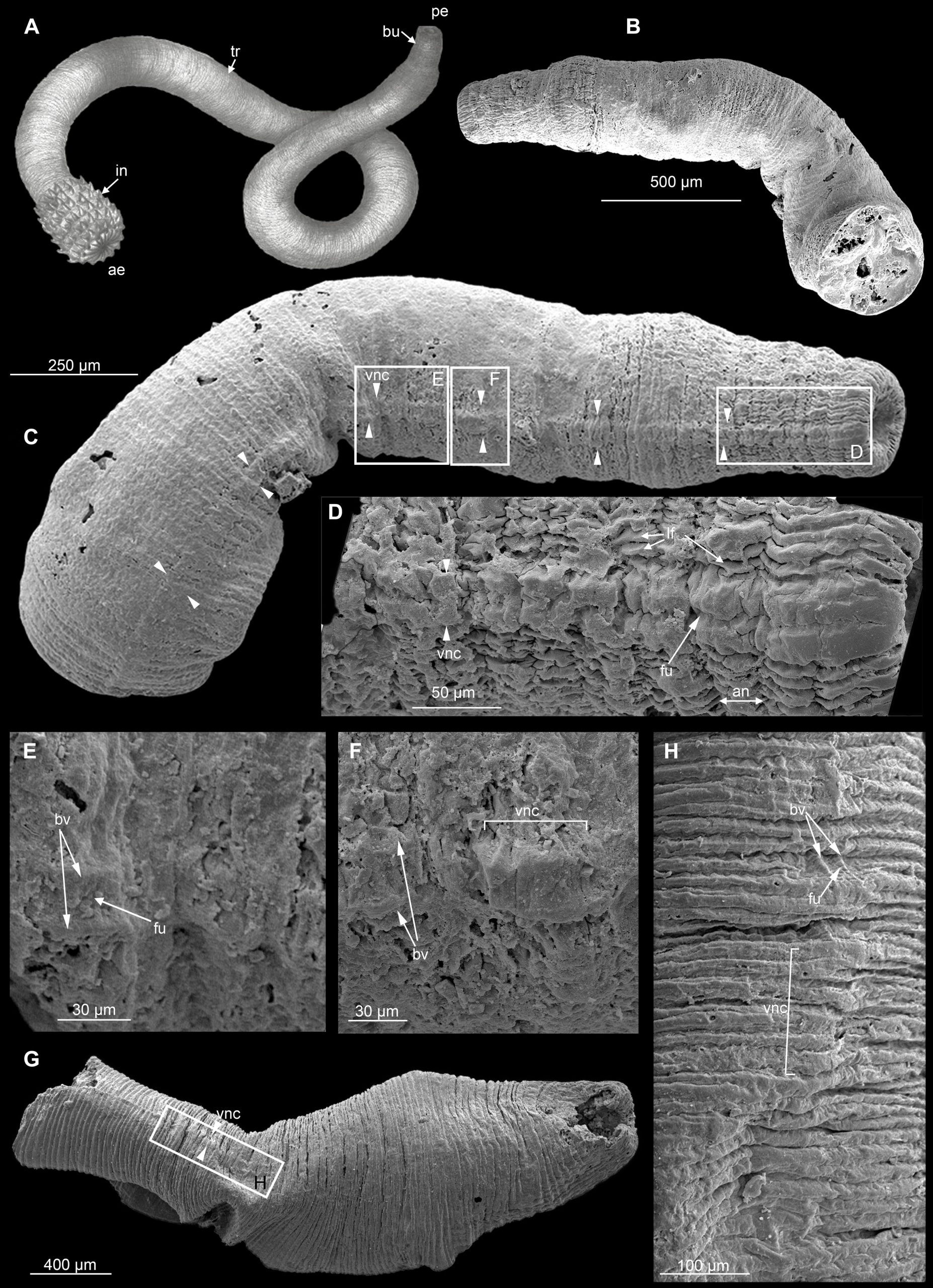
Scalidophorans, which include priapulids, loriciferans, and kinorhynchs, first appeared in the early Cambrian. They represent a crucial lineage for investigating the evolutionary trajectory of the ventral nerve cord in ecdysozoans. By studying fossils from the Fortunian Kuanchuanpu Formation (e.g., Eopriapulites and Eokinorhynchus), the Chengjiang Biota (e.g., Xiaoheiqingella and Mafangscolex), and the Wuliuan Ottoia prolifica, the researchers identified elongate structures running along the ventral side of these ancient organisms.
“These structures closely resemble the ventral nerve cords seen in modern priapulids,” explained Dr Deng Wang and Dr Jean Vannier. Their analysis indicates that these fossils preserve impressions of single ventral nerve cords, shedding light on the likely ancestral condition for scalidophorans.
Phylogenetic analysis supports the hypothesis that a single ventral nerve cord was the ancestral condition for scalidophorans. Moreover, the evolutionary grouping of nematoids and panarthropods (a clade that includes arthropods, tardigrades, and onychophorans) suggests their common ancestor also likely had a single nerve cord.
“This leads us to propose that the common ancestor of all ecdysozoans possessed a single ventral nerve cord,” said Dr Chema Martin-Durán. “The paired nerve cords observed in arthropods, loriciferans, and kinorhynchs likely evolved independently, representing derived traits.”
Link Between Nerve Cord Evolution and Body Segmentation
The study also highlights a connection between the evolution of paired ventral nerve cords, ganglia, and body segmentation. Loriciferans, kinorhynchs, and panarthropods exhibit varying degrees of body segmentation, suggesting that these structural changes may have co-evolved with nervous system modifications.
Dr María Herranz noted, “The emergence of paired nerve cords likely facilitated greater coordination of movement, particularly in segmented animals. During the Precambrian-Cambrian transition, changes in the nervous and muscular systems were likely tied to the development of appendages, enabling more complex locomotion.”
This groundbreaking discovery enriches our understanding of ecdysozoan evolution and underscores the role of the fossil record in addressing key questions about early animal development. By linking nervous system structures to broader evolutionary trends, the study provides a clearer picture of how the diverse ecdysozoan lineages arose and adapted to their environments.
Reference: “Preservation and early evolution of scalidophoran ventral nerve cord” by Deng Wang, Jean Vannier, José M. Martín-Durán, María Herranz and Chiyang Yu, 10 January 2025, Science Advances.
DOI: 10.1126/sciadv.adr0896
Never miss a breakthrough: Join the SciTechDaily newsletter.
Follow us on Google and Google News.