
Close Menu
    Facebook X (Twitter) Instagram
    SciTechDaily
    • Biology
    • Chemistry
    • Earth
    • Health
    • Physics
    • Science
    • Space
    • Technology
    Facebook X (Twitter) Pinterest YouTube RSS
    SciTechDaily
    Home»Space»We Asked a NASA Technologist: What Happens to Old Satellites?
    Space

    We Asked a NASA Technologist: What Happens to Old Satellites?

    By NASAApril 9, 20231 Comment3 Mins Read
    Facebook Twitter Pinterest Telegram LinkedIn WhatsApp Email Reddit
    Share
    Facebook Twitter LinkedIn Pinterest Telegram Email Reddit
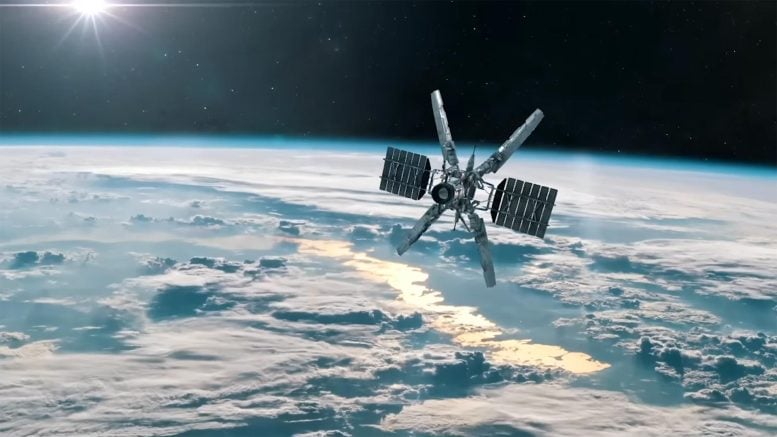
    Illustration Satellite Orbiting Earth
    Old satellites that have run out of fuel or are no longer functioning are pulled down by gravity and may end up on a continent or in the ocean if they don’t burn up upon reentry. To avoid this and make use of these satellites, NASA is working on OSAM-1 (On-orbit Servicing, Assembly, and Manufacturing Mission 1), which will have the capability to sustain and upgrade key assets in space. This will allow for more efficient and cost-effective space exploration. Credit: NASA

    What happens to old satellites?

    Typically, satellites, if they run out of fuel or something happens to it where it’s just not working, it is essentially orbiting around the Earth dead. So what happens eventually is gravity will continuously pull on it and bring it down. If that satellite, upon reentering into the atmosphere does not burn up, sometimes you’ll find pieces of that structure on one of our large continents or in the ocean. We don’t want that to happen.

    So if a spacecraft ran out of fuel or has a bad part, it’d be great if we could fix it. That’s why NASA is working on in-space servicing, assembly and manufacturing capabilities. OSAM-1 — On-orbit Servicing, Assembly and Manufacturing Mission 1 — is coming to you very soon. There are capabilities and technologies that will allow us to sustain some of our key assets, so that if they have a bad instrument or they want to upgrade, we can do that in space. Essentially, that is going to help NASA explore and create missions that are going to improve our capabilities from the Moon, Mars and beyond.

    So, what happens to old satellites? Well, currently they either burn up upon reentry or they remain in space dead. But all that’s going to change with OSAM-1. It’s going to be the game-changer that is going to help them become sustainable and upgradeable for the future.


    What happens to old satellites? Currently, they either burn up safely upon reentry into the atmosphere or they remain in space. But NASA is working on new technology that could make spaceflight more sustainable by refueling or upgrading satellites in space, greatly expanding their lifespans. Here’s more about the On-orbit Servicing, Assembly, and Manufacturing 1 (OSAM-1) Mission. Credit: NASA

    We Asked a NASA Expert Video Series

    • Is NASA Really Crashing a Spacecraft Into an Asteroid?
    • Is NASA Aware of Any Earth-Threatening Asteroids?
    • When Was the Last Time an Asteroid Hit Earth?
    • How Did Perseverance Mars Rover Pick Its Landing Spot?
    • What if an Asteroid Was Going To Hit Earth?
    • Did Mars Ever Look Like Earth?
    • What Are Lagrange Points?
    • What Are the Trojan Asteroids?
    • Is There Oxygen on Mars?
    • Does NASA Know About All the Asteroids?
    • Do Aliens Exist?
    • Is There Weather on Mars?
    • Will an Asteroid Ever Hit Earth?
    • Is Mars Habitable?
    • Could Microbes Survive a Trip to Mars?

    Never miss a breakthrough: Join the SciTechDaily newsletter.
    Follow us on Google and Google News.

    NASA Space Debris
    Share. Facebook Twitter Pinterest LinkedIn Email Reddit

    Related Articles

    Exploring Earth’s Edge: How NASA’s TES-22 Is Tackling Space Debris and the Thermosphere

    Innovative NASA Solutions for Cleaning Up Space Debris Efficiently

    NASA Solves Mystery: Identifies Object That Crashed Into Florida Home

    Space Sustainability: NASA Funds Projects to Study Orbital Debris

    Rocket About To Slam Into the Moon Was Launched by China, Not SpaceX

    Space Station Fires Thrusters To Avoid Dangerous Debris From Pegasus Rocket

    NASA Delays Spacewalk To Replace Faulty Space Station Antenna After Debris Notification

    Space Station Operations Return to Normal After Destructive Russian Anti-Satellite Test

    Space Junk and Human Spacecraft – Department of Defense Tracking More Than 27,000 Pieces of Orbital Debris

    1 Comment

    1. Scott on June 17, 2025 12:11 am

      The image credit should be ‘SpaceStockFootage’ not NASA… just so you know!

      Reply
    Leave A Reply Cancel Reply

    • Facebook
    • Twitter
    • Pinterest
    • YouTube

    Don't Miss a Discovery

    Subscribe for the Latest in Science & Tech!

    Trending News

    Scientists Discover 132-Million-Year-Old Dinosaur Tracks on South Africa’s Coast

    Scientists Uncover the Secret Ingredient Behind the Spark That May Have Started Life on Earth

    Physicists Observe Matter in Two Places at Once in Mind-Bending Quantum Experiment

    Stanford Scientists Discover Hidden Brain Circuit That Fuels Chronic Pain

    New Study Reveals Why Ozempic Works Better for Some People Than Others

    Climate Change Is Altering a Key Greenhouse Gas in a Way Scientists Didn’t Expect

    New Study Suggests Gravitational Waves May Have Created Dark Matter

    Scientists Discover Why the Brain Gets Stuck in Schizophrenia

    Follow SciTechDaily
    • Facebook
    • Twitter
    • YouTube
    • Pinterest
    • Newsletter
    • RSS
    SciTech News
    • Biology News
    • Chemistry News
    • Earth News
    • Health News
    • Physics News
    • Science News
    • Space News
    • Technology News
    Recent Posts
    • 320 Light-Years Away, a Planet Confirms a Fundamental Cosmic Assumption
    • Astronomers Solve Decades-Long Mystery About Saturn’s Spin – “Something Strange Was Happening”
    • Scientists Uncover Strange New State of Matter Inside Uranus and Neptune
    • The Crown Jewel of Dentistry? Breakthrough Tech Could Transform Tooth Repair
    • The Surprising Non-Medical Factor That Determines Cancer Survival
    Copyright © 1998 - 2026 SciTechDaily. All Rights Reserved.
    • Science News
    • About
    • Contact
    • Editorial Board
    • Privacy Policy
    • Terms of Use

    Type above and press Enter to search. Press Esc to cancel.