
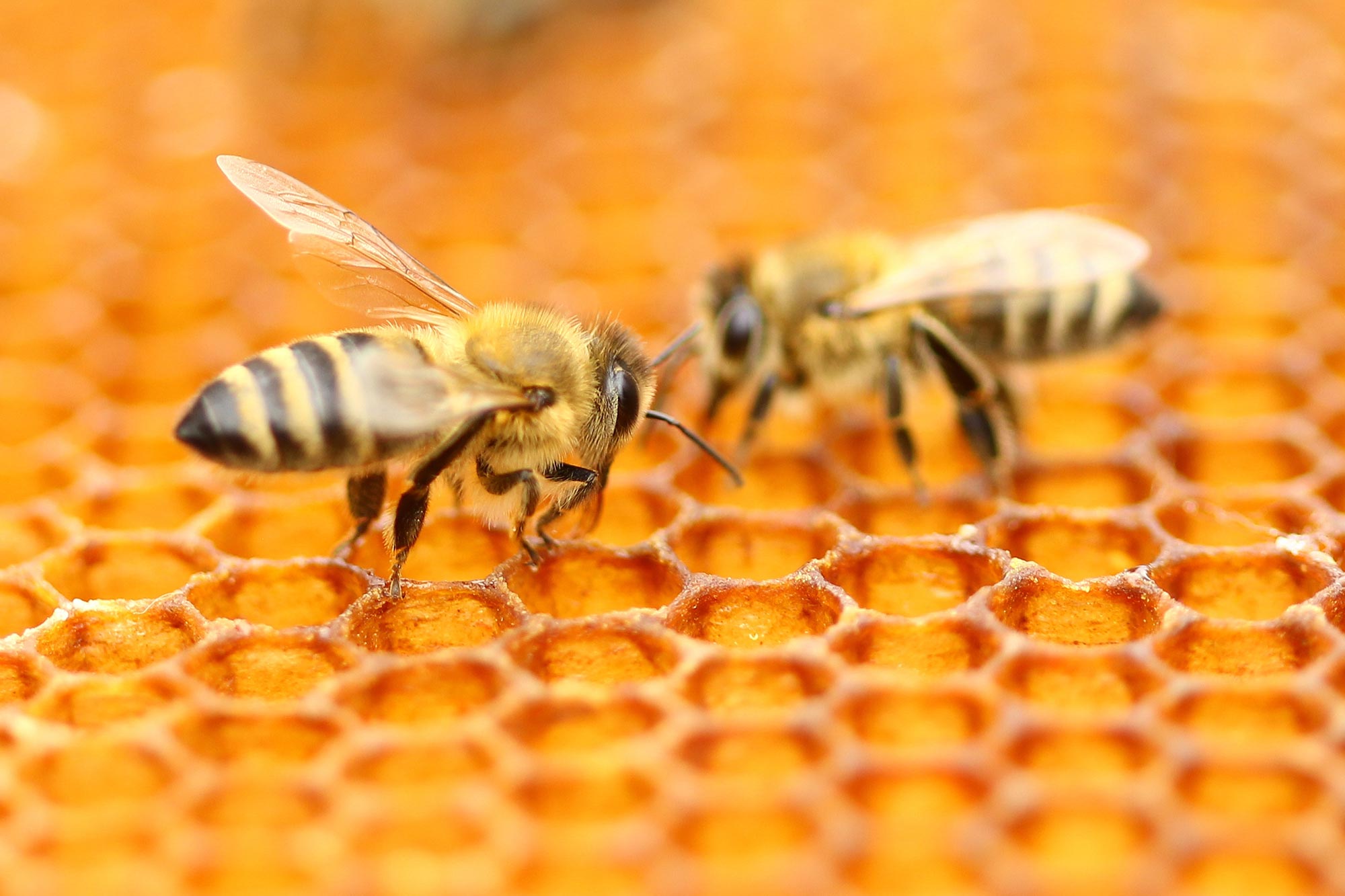
An analysis of honeys from 48 states reveals regional trends in the distribution of toxic metals.
Inside every jar of honey lies a taste of the local environment. Its sticky-sweet flavor is shaped by the flowers that nearby bees choose to sample. However, a new study from Tulane University has revealed that honey can also provide insights into local pollution.
The study, published in Environmental Pollution, analyzed 260 honey samples from 48 states for traces of six toxic metals: arsenic, lead, cadmium, nickel, chromium, and cobalt. None of the samples contained unsafe levels of these metals based on a typical serving size of one tablespoon per day, and the concentrations in the United States were generally lower than global averages. Still, researchers identified regional variations in toxic metal distribution: the highest arsenic levels were detected in honey from a cluster of Pacific Northwest states (Oregon, Idaho, Washington, and Nevada); the Southeast, including Louisiana and Mississippi, showed the highest cobalt levels; and two of the three highest lead levels were found in samples from the Carolinas.
Overall, the study highlights a potential dual role for honey as both a food source and a tool for monitoring environmental pollution.
Bees as Passive Samplers of Environmental Pollution
“Bees act as passive samplers, picking up contaminants from the air, water, and plants while foraging. These contaminants end up in honey, offering us a snapshot of an area’s environmental pollution,” said lead author Tewodros Godebo, assistant professor of environmental health sciences at the Celia Scott Weatherhead School of Public Health and Tropical Medicine at Tulane University.
The study is the first to test honey from across the country for the presence of toxic metals and used only single-source honeys that listed their origin.
Researchers could only speculate as to the causes of the pollution trends. The high arsenic levels found in Washington (170 μg/kg), Oregon (130 μg/kg), and Idaho (47.8 μg/kg) could point to pollution from historical agricultural pesticide use or industrial sources. The higher presence of lead in honeys from North Carolina and South Carolina – 451 μg/kg and 76.8 μg/kg respectively – could be from mining, soil contaminated from legacy traces of leaded gasoline and paint, or combustion of lead-based aircraft fuel.
Definitively connecting the pollution found in honeys to their sources would require further study. Godebo said he hopes these findings spur further research into the sources of toxic metal pollutants, adding, “The environment can have more of these metals than what shows up in bees’ honey.”
“What we found is that this appears to serve as a good proxy for uncovering regional contamination patterns,” Godebo said. “But there’s a lot we may still learn from bees about what pollutants are present in the environment and how those relate to nearby community health outcomes.”
Reference: “Metals in honey from bees as a proxy for environmental contamination in the United States” by Tewodros Rango Godebo, Hannah Stoner, Pornpimol Taylor and Marc Jeuland, 29 October 2024, Environmental Pollution.
DOI: 10.1016/j.envpol.2024.125221
Never miss a breakthrough: Join the SciTechDaily newsletter.
Follow us on Google and Google News.
7 Comments
Ultimately it’s bee vomit. It is. It may taste great, and be full of trace bad stuff, too. But my gosh we don’t eat vomit from other animals. It’s gross.
But, we do use whale ‘vomit’ — ambergris — to make expensive perfumes.
Wolves and other animals transport food to their pups in their stomachs, and regurgitate it when they get back to the den.
As I understand it, there are fermented beverages based on human spit.
You are being too literal.
You’re an idiot
You do realize that we’re not the only animals to consume “bee vomit” right?
“The dose makes the poison” — Paracelsus
It should be noted that some of the elements called “toxic metals” are actually required in trace quantities by the human body and are commonly, and erroneously, called “minerals,” which humans frequenty take as oral supplements. They did not report any ‘toxic’ elements in sufficient concentration to cause acute poisoning.
As to the sources, it appears to be speculation with a bias towards humans being responsible. However, geology, which isn’t mentioned, is at least as likely to be the source. Before Australians found the problem (cobalt deficient soils) they were mystified over why there were problems with their free-ranging domestic ruminants. https://www.agric.wa.gov.au/livestock-biosecurity/cobalt-deficiency-sheep-and-cattle
They characterize these elements as being pollutants in the environment. They may well be ‘blessings in disguise.’
Is there any information about where a local bee keeper can have their honey tested for contaminates ?