
Close Menu
    Facebook X (Twitter) Instagram
    SciTechDaily
    • Biology
    • Chemistry
    • Earth
    • Health
    • Physics
    • Science
    • Space
    • Technology
    Facebook X (Twitter) Pinterest YouTube RSS
    SciTechDaily
    Home»Biology»Unexpected Discovery: Marine Bacteria in Canadian Arctic Capable of Biodegrading Diesel and Oil
    Biology

    Unexpected Discovery: Marine Bacteria in Canadian Arctic Capable of Biodegrading Diesel and Oil

    By American Society for MicrobiologyAugust 11, 2021No Comments3 Mins Read
    Facebook Twitter Pinterest Telegram LinkedIn WhatsApp Email Reddit
    Share
    Facebook Twitter LinkedIn Pinterest Telegram Email Reddit
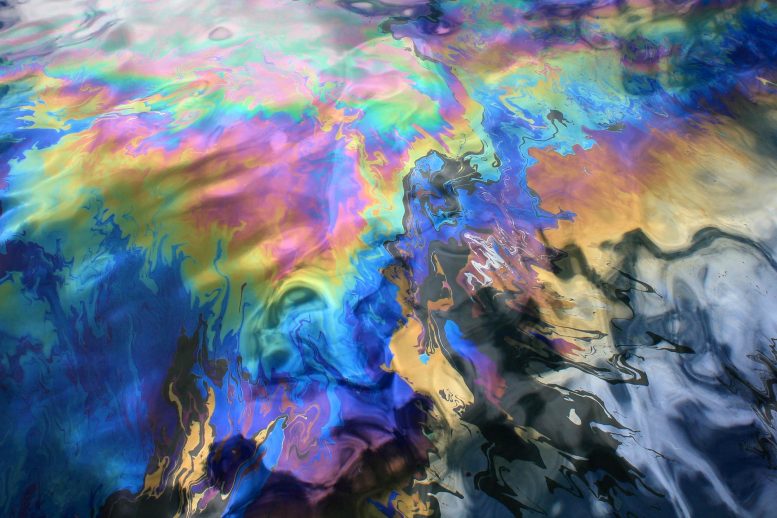
    Ocean Oil Spill
    Marine bacteria in the cold waters of the Canadian Arctic can biodegrade oil and diesel fuel.

    Arctic bacteria can naturally clean up oil spills, aided by nutrients and cold-adapted biodegradation.

    Marine bacteria in the frigid waters of the Canadian Arctic are capable of biodegrading oil and diesel fuel, according to a new study published in Applied and Environmental Microbiology, a journal of the American Society for Microbiology.

    Genomic sequencing revealed unexpected potential for hydrocarbon bioremediation in lineages of bacteria including Paraperlucidibaca, Cycloclasticus, and Zhongshania, said coauthor Casey Hubert, Ph.D., Associate Professor of Geomicrobiology, University of Calgary. These “may represent key players in the response to Arctic marine oil spills.”

    Nutrient Additions Boost Degradation Rates

    “The study also confirmed that providing nutrients can enhance hydrocarbon biodegradation under these low temperature conditions,” said Dr. Hubert.

    The impetus for this work: “These permanently cold waters are seeing increasing industrial activity related to maritime shipping and offshore oil and gas sector activities,” said Dr. Hubert.

    Sean Murphy, Dr. Hubert’s student, who grew up in the region, instigated the project. Mr. Murphy, Aquatic Scientist, ERM Canada, had noted both the benefit offshore oil had brought to the people of Newfoundland and Labrador, but had been deeply troubled by the Deepwater Horizon oil spill, and had focused his master’s research on the Labrador Sea to “help inform future oil spill mitigation strategies… at cold temperatures in the region.”

    The Labrador coast—where the study took place—is important for Indigenous peoples who rely on the ocean for food, and unlike at lower latitudes, there’s been a dearth of research on bioremediation this far north, Dr. Hubert noted.

    Climate Change Increases Spill Risks

    “As climate change extends ice-free periods and increasing industrial activity takes place in the Arctic, it is important to understand the ways in which the Arctic marine microbiome will respond if there is an oil or fuel spill,” said Dr. Hubert. That’s especially important, as “this region remains vast and remote such that oil spill emergency response would be complicated and slow.”

    In the study, the investigators simulated oil spill remediation inside of bottles, by combining mud from the top few centimeters of seabed with artificial seawater, and with either diesel or crude oil, along with different nutrient amendments at different concentrations.

    The experiments were performed at 4°C (39°F), to approximate the temperature in the Labrador Sea, and took place over several weeks. “Our simulations demonstrated that naturally occurring oil-degrading bacteria in the ocean represent nature’s first responders to an oil spill,” said Dr. Hubert.

    Reference: “Biodegradation of diesel and crude oil by Labrador Sea cold adapted microbial communities” by Sean M. C. Murphy, María A. Bautista, Margaret A. Cramm and Casey R. J. Hubert, 11 August 2021, Applied and Environmental Microbiology.
    DOI: 10.1128/AEM.00800-21

    The American Society for Microbiology is one of the largest professional societies dedicated to the life sciences and is composed of 30,000 scientists and health practitioners. ASM’s mission is to promote and advance the microbial sciences.

    Never miss a breakthrough: Join the SciTechDaily newsletter.
    Follow us on Google and Google News.

    American Society for Microbiology Arctic Environment Genetics Hydrocarbon Microbiology Pollution
    Share. Facebook Twitter Pinterest LinkedIn Email Reddit

    Related Articles

    Severity of COVID-19 May Depend on Your Individual Genetic Variation in Immune System

    E. coli’s Secret Weapon in Launching Infections Revealed

    Research Reveals New Strategy to Control Cellular Identity and Fate

    UCLA Researchers Show Link Between Diet, Genetics and Obesity

    Superoxide Reacts With Manganese to Aid in Environmental Cleanup

    Transgenic Mosquitoes Can’t Transmit Malaria

    First Direct Observation of an Under-Ice Algal Bloom in the Arctic

    New DNA Entity in Mammalian Cells

    Widespread Presence of Antibiotic Resistant Bacteria in Agricultural Soils

    Leave A Reply Cancel Reply

    • Facebook
    • Twitter
    • Pinterest
    • YouTube

    Don't Miss a Discovery

    Subscribe for the Latest in Science & Tech!

    Trending News

    Scientists Discover Game-Changing New Way To Treat High Cholesterol

    This Small Change to Your Exercise Routine Could Be the Secret to Living Longer

    Scientists Discover 430,000-Year-Old Wooden Tools, Rewriting Human History

    AI Could Detect Early Signs of Alzheimer’s in Under a Minute – Far Before Traditional Tests

    What if Dark Matter Has Two Forms? Bold New Hypothesis Could Explain a Cosmic Mystery

    This Metal Melts in Your Hand – and Scientists Just Discovered Something Strange

    Beef vs. Chicken: Surprising Results From New Prediabetes Study

    Alzheimer’s Breakthrough: Scientists Discover Key Protein May Prevent Toxic Protein Clumps in the Brain

    Follow SciTechDaily
    • Facebook
    • Twitter
    • YouTube
    • Pinterest
    • Newsletter
    • RSS
    SciTech News
    • Biology News
    • Chemistry News
    • Earth News
    • Health News
    • Physics News
    • Science News
    • Space News
    • Technology News
    Recent Posts
    • Revolutionary Imaging Technique Unlocks Secrets of Matter at Extreme Speeds
    • Where Does Mass Come From? Scientists Find Evidence of a New Exotic Nuclear State
    • Quantum Breakthrough: Unhackable Keys Sent Over 120 km Using Quantum Dots
    • Researchers Discover Unknown Beetle Species Just Steps From Their Lab
    • Jellyfish Caught Feasting on Exploding Sea Worms for the First Time
    Copyright © 1998 - 2026 SciTechDaily. All Rights Reserved.
    • Science News
    • About
    • Contact
    • Editorial Board
    • Privacy Policy
    • Terms of Use

    Type above and press Enter to search. Press Esc to cancel.