

Researchers have linked the largest mass extinction event, which occurred 252 million years ago during the Permian-Triassic period, to Mega El Niño events causing extreme ocean warming.
This new study reveals how volcanic eruptions increased CO2 levels, leading to climate instability and the inability of species to adapt to rapidly changing conditions. The findings highlight both the historical impact of natural climate variability and its present-day implications, suggesting that understanding past climate events could be crucial in managing current and future climate challenges.
Mega Ocean Warming Events
Mega ocean warming El Niño events were key in driving the largest extinction of life on planet Earth some 252 million years ago, according to new research.
The study, published on September 12 in the journal Science and co-led by the University of Bristol and China University of Geosciences (Wuhan), has shed new light on why the effects of rapid climate change in the Permian-Triassic warming were so devastating for all forms of life in the sea and on land.
Scientists have long linked this mass extinction to vast volcanic eruptions in what is now Siberia. The resulting carbon dioxide emissions rapidly accelerated climate warming, resulting in widespread stagnation and the collapse of marine and terrestrial ecosystems.
The Role of Climate Variability
But what caused life on land, including plants and usually resilient insects, to suffer just as badly has remained a source of mystery.
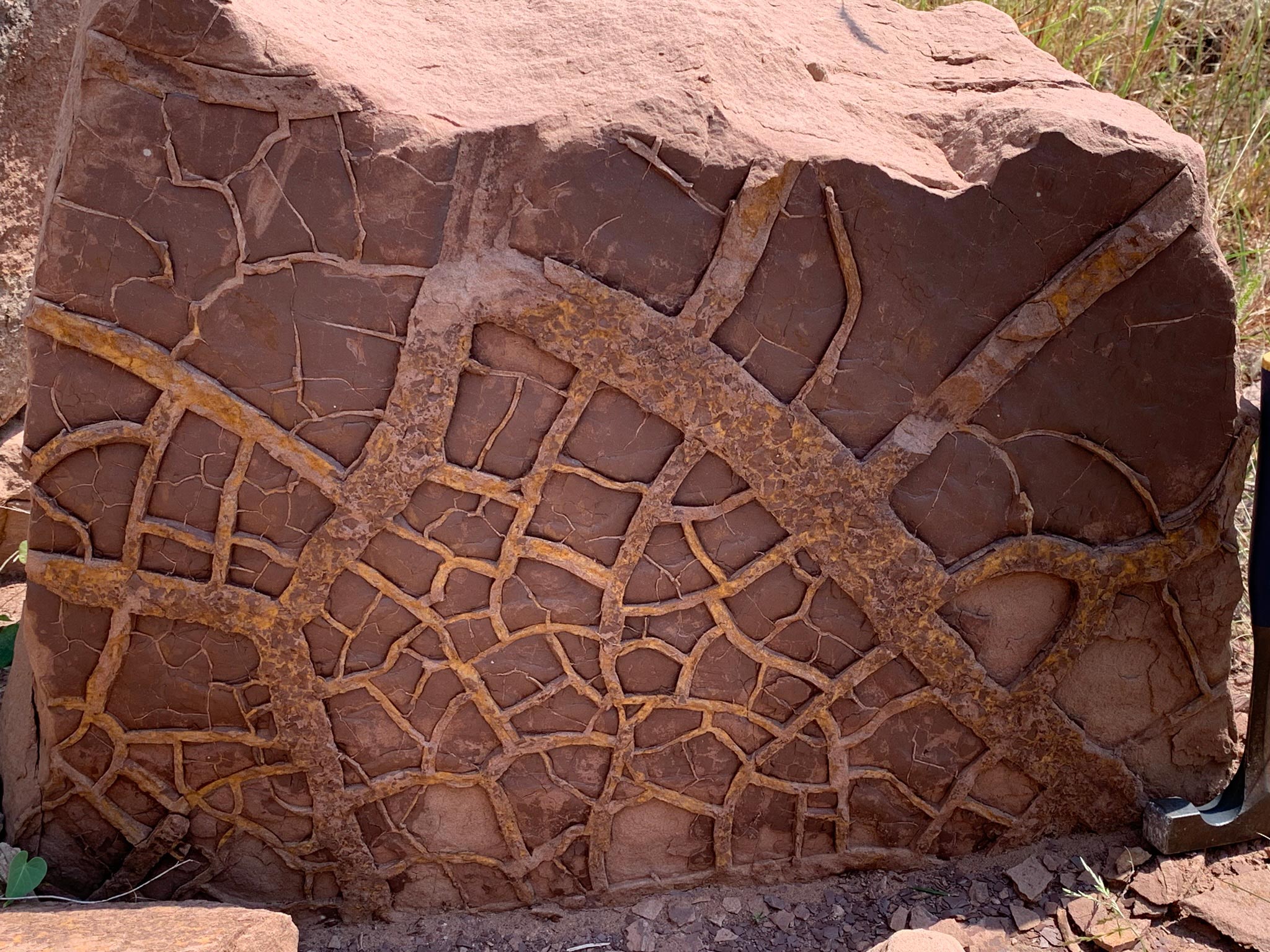
Co-lead author Dr. Alexander Farnsworth, Senior Research Associate at the University of Bristol, said: “Climate warming alone cannot drive such devastating extinctions because, as we are seeing today, when the tropics become too hot, species migrate to the cooler, higher latitudes. Our research has revealed that increased greenhouse gases don’t just make the majority of the planet warmer, they also increase weather and climate variability making it even more ‘wild’ and difficult for life to survive.”
The Permian-Triassic catastrophe shows the problem of global warming is not just a matter of it becoming unbearably hot, but also a case of conditions swinging wildly over decades.
“Most life failed to adapt to these conditions, but thankfully a few things survived, without which we wouldn’t be here today. It was nearly, but not quite, the end of the life on Earth,” said co-lead author Professor Yadong Sun at China University of Geosciences, Wuhan.
Insights From Fossil Records
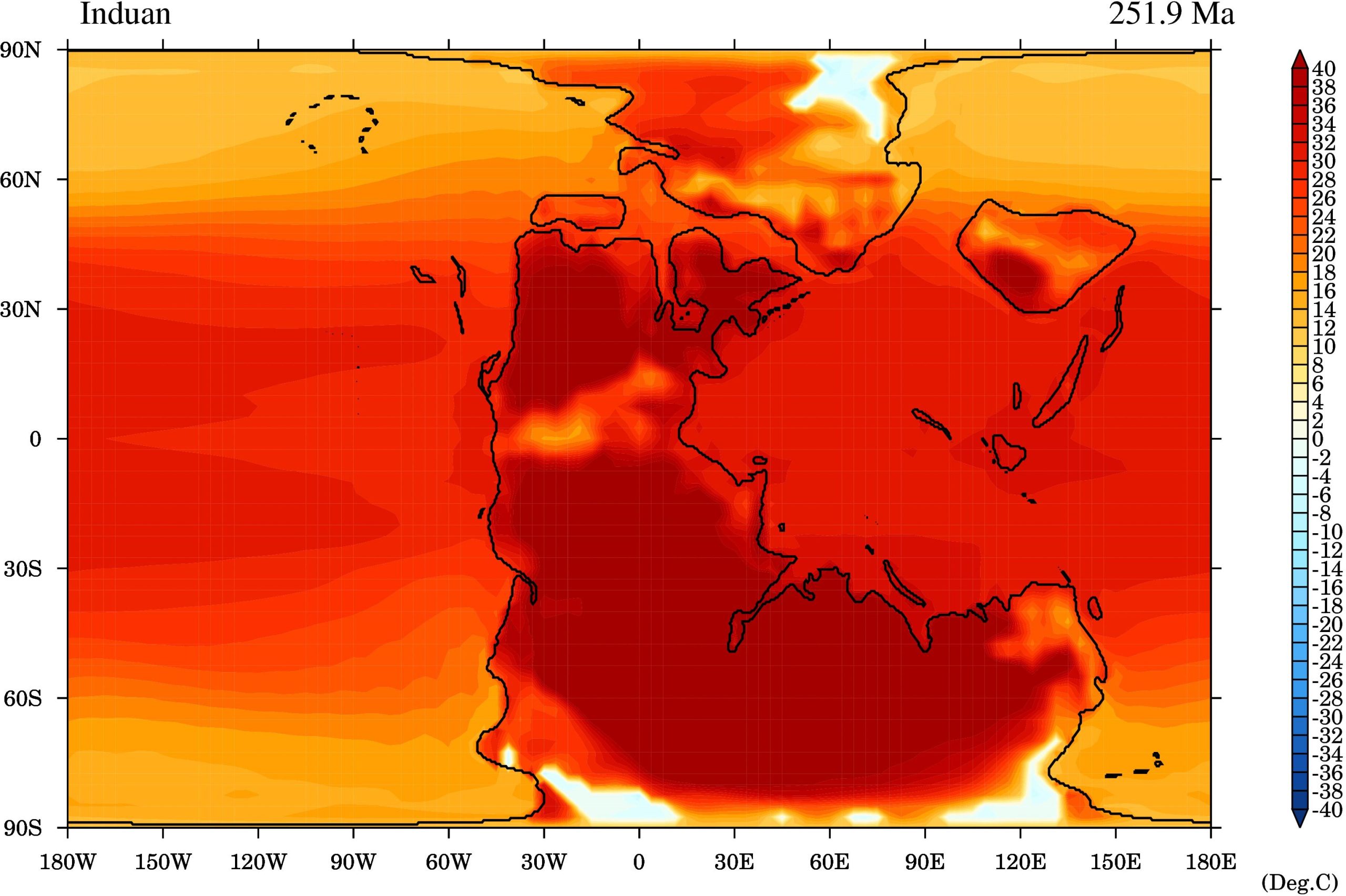
The scale of Permian-Triassic warming was revealed by studying oxygen isotopes in the fossilized tooth material of tiny extinct swimming organisms called conodonts. By studying the temperature record of conodonts from around the world, the researchers were able to show a remarkable collapse of temperature gradients in the low and mid-latitudes.
Dr. Farnsworth, who used pioneering climate modeling to evaluate the findings, said: “Essentially, it got too hot everywhere. The changes responsible for the climate patterns identified were profound because there were much more intense and prolonged El Niño events than witnessed today. Species were simply not equipped to adapt or evolve quickly enough.”
Modern-Day Comparisons and Climate Modeling
In recent years El Niño events have caused major changes in rainfall patterns and temperature. For example, the weather extremes that caused the June 2024 North American heatwave when temperatures were around 15°C hotter than normal. 2023-2024 was also one of the hottest years on record globally due to a strong El Niño in the Pacific, which was further exacerbated by increased human-induced CO2 driving catastrophic drought and fires around the world.
“Fortunately such events so far have only lasted one to two years at a time. During the Permian-Triassic crisis, El Niño persisted for much longer resulting in a decade of widespread drought, followed by years of flooding. Basically, the climate was all over the place and that makes it very hard for any species to adapt,” co-author Paul Wignall, Professor of Palaeoenvironments at the University of Leeds.
Wildfires and Ecological Crises
The results of the climate modeling also help explain the abundant charcoal found in rock layers of that age.
“Wildfires become very common if you have a drought-prone climate. Earth got stuck in a crisis state where the land was burning and the oceans stagnating. There was nowhere to hide,” added co-author Professor David Bond, a paleontologist at the University of Hull.
Historical Context and Future Implications
The researchers observed that throughout Earth’s history, there have been many volcanic events similar to those in Siberia, and many caused extinctions, but none led to a crisis of the scale of the Permian-Triassic event.
They found Permian-Triassic extinction was so different because these Mega-El Niños created positive feedback on the climate which led to incredibly warm conditions starting in the tropics and then beyond, resulting in the dieback of vegetation. Plants are essential for removing CO2 from the atmosphere, as well as the foundation of the food web, and if they die so does one of the Earth’s mechanisms to stop CO2 building up in the atmosphere as a result of continued volcanism.
This also helps explain the conundrum regarding the Permian-Triassic mass extinction whereby the extinction on land occurred tens of thousands of years before extinction in the oceans.
“Whilst the oceans were initially shielded from the temperature rises, the mega-El Nino’s caused temperatures on land to exceed most species thermal tolerances at rates so rapid that they could not adapt in time,” explained Dr. Sun.
“Only species that could migrate quickly could survive, and there weren’t many plants or animals that could do that.”
Mass extinctions, although rare, are the heartbeat of the Earth’s natural system resetting life and evolution along different paths.
“The Permo-Triassic mass extinction, although devastating, would ultimately see the rise of Dinosaurs becoming the dominant species thereafter as would the Cretaceous mass extinction lead to the rise of mammals, and humans,” Dr. Farnsworth concluded.
Reference: “Mega El Niño instigated the end-Permian mass extinction” by Yadong Sun, Alexander Farnsworth, Michael M. Joachimski, Paul B. Wignall, Leopold Krystyn, David P. G. Bond, Domenico C. G. Ravidà and Paul J. Valdes, 12 September 2024, Science.
DOI: 10.1126/science.ado2030
Never miss a breakthrough: Join the SciTechDaily newsletter.
Follow us on Google and Google News.
7 Comments
The authors fail to mention that this is a working hypothesis, not a conclusion based on all the evidence. They notably overlook the evidence for the Permian Siberian Traps intruding coal beds:
https://scitechdaily.com/coal-burning-in-siberia-250-million-years-ago-led-to-climate-change-caused-the-earths-most-severe-extinction-event/ When buried coal is ‘cooked,’ it releases a plethora of toxic gases, including such as carbon monoxide, sulfur oxides that create strong acids when they interact with water, mercury, and especially a “witch’s brew” collectively known as coal tars — think benzene.
The surface temperature of land is controlled by elevation because of the lapse rate. Their apparently original rendition of Pangaea gives no indication of what the relief was like at the time, suggesting that their unstated assumption is that it was flat and close to sea level. This two-dimensional view of Earth leaves many unanswered questions.
Lastly, their choice of the phrase, “Mega El Niño,” is inappropriate because the geography of Pangaea was quite different from today, with vastly more contiguous land creating different ocean currents, and notably more extreme temperatures in the continental interiors. Whether any events, similar to today’s El Niños, actually occurred is problematic. They base their temperature estimates on conodont proxy measurements. It is well known that diagenesis (heating with deep burial) impacts the appearance of the conodonts recovered with core drilling. I think that in that light, a case has to be made that the proxy temperatures are reliable.
It is relatively easy to make a case for any proposition if one only uses some of the available data. There is an old saying about how “The Devil is in the details.” In this case, the details are the questions of Permian terrestrial relief, ocean currents, unaccounted for atmospheric toxins, and Milankovitch astronomical parameters. They mention evidence for frequent fires, but say nothing about oxygen going from a high about 300 million years ago to a ‘local’ low coincident with the End Permian extinction event when bacteria were busy converting all the dead biomass to carbon dioxide. Inasmuch as it is evident that today the seasonal variations in CO2 are driven by biology, a mass extinction event could explain an increase in CO2 during the End Permian. There is still the classic ‘chicken and egg’ problem with CO2.
“Essentially, it got too hot everywhere. … Species were simply not equipped to adapt or evolve quickly enough.”
Today’s insects do evolve quickly, notably in their resistance to insecticides. Insects like locusts survive in some of the hottest and driest climates found on Earth. The unexamined assumption is that Permian insects had longer lives and/or lower reproductive rates than today’s insects. The facts are not in evidence.
“The resulting carbon dioxide emissions RAPIDLY accelerated climate warming, …”
Yet, later they say, “the extinction on land occurred tens of thousands of years before extinction in the oceans.” That doesn’t seem so rapid, even on a geological time scale. It was nothing like the Cretaceous extinction event, which WAS rapid.
Question: are you commenting on the generic concepts outlined in this review, or are you criticising the no doubt more detailed research published by the researchers?
Conodonts; “They base their temperature estimates on conodont proxy measurements. It is well known that diagenesis (heating with deep burial) impacts the appearance of the conodonts recovered with core drilling. I think that in that light, a case has to be made that the proxy temperatures are reliable.”
Yes; conodonts change colour the hotter they get, to put it simply, which depends on the thermal gradient at the time during their deep burial in rocks, or even when lying around in free air. To get the change in colour from normal pale yellow to light brown, one needs a surrounding temperature of 50-90degrees C, which would tend to cook most things in any Pangaean Ocean. However, the Conodont Alteration Index, which you indicate indirectly that you are concerned with through your mentioning cored-drilling, is inapplicable to the argument, as oxygen isotope studies of said conodonts was what was referred to. One may presume that what is being referred to by SciTech Daily are studies of oxygen isotope ratios within the conodonts of the day.
As for 2-D Pangaea, that is a quaint diversion; no doubt it was a bit cooler the higher the elevation and life could migrate towards higher elevations; but if there were no ice-caps or regular rainfall on those mythical Pangaean mountains then things might have got rather thirsty and extinct when so migrating.
“Question: are you commenting on the generic concepts outlined in this review, or are you criticising the no doubt more detailed research …”
I’m assuming that the article is based on a press release from the University of Bristol and is a fair summary of the work. In reading it, several questions came to mind, notably about what was missing, the unstated assumptions, and contradictory statements.
“…, one needs a surrounding temperature of 50-90degrees C, which would tend to cook most things in any Pangaean Ocean.”
I think you missed the point. I remarked about diagenisis. I was raising the the question of the stability of the oxygen isotope ratios in the conodonts when subjected to elevated temperatures for hundreds of millions of years. Why does the color change? That is, are there any studies to validate the oxygen isotope temperature proxy for deeply buried rocks, which is presumably what the researchers were working with? There is a potential for the lighter oxygen to diffuse out (isotopic fractionation) more rapidly than the heavier isotopes. It probably isn’t an issue for unconsolidated sediments in the ocean. However, it just seemed to me that when one is dealing with a proxy that shows obvious evidence of alteration from heating, that all the unstated assumptions should be checked.
“As for 2-D Pangaea, that is a quaint diversion; …”
More than a “bit cooler!” People regularly die of hypothermia on the top of 5,000′ Mount Washington in the Summer. The temperatures at the timber line, even in tropical latitudes, are very different than at sea level. [Look up “lapse rate.”] The authors show a temperature map of Pangaea. Is there anything on the map or in the text that suggests that they know anything about the topography and took that into account? As to the ‘mythology’ of Pangaean mountains, can you point to any continental landmass, now or in the past, that does/did not have mountains? If not, then I think that one can safely assume that there were potentially safe refugia for remnant populations of plants and animals. Then the question becomes, was there something other than temperature that was responsible for their extinction?
This fossil is very old and belongs to a monkey. I have already talked about dinosaur fossils, why human fossils tens of millions of years ago, because they did not float in the water of the seas, were buried under several miles of soil in the continents and drylands, but the carcasses of dinosaurs After the meteor shower stopped, the waves of the sea carried them, which were fragmented on the water, to the shores, etc. It is possible that dinosaur fossils are found in the heart of the continents, because their carcasses were placed in the seas, if they were on land, they were like corpses. 60 million years ago, humans were buried under several miles of soil
Cretaceous mass mass extinction cause raise mammal human .what about last survive dinosaur the modern crocodilian or other name spinosauridae .mammal fail to get rid of great predator dinosaur the gator there are no more plant eating mesoeucrocodylia I gust mammal win there or 3 toe claw mesoeucrocodylia not raise yet .many insect survive and other lower animal like lizard turtle amphibian .why are they so many living dinosaur the predator number is high like a prey animal .raise of dinosaur continue the full palate dinosaur that mimic mammal modern crocodilian do a good job mimic mammal .turbinate =gator mammal