

Roman’s deep, time-lapse survey may reveal a hundred thousand stellar cataclysms, from distant Type Ia supernovae to the self-annihilation of the universe’s first stars, shedding new light on dark energy and the cosmos’s most elusive explosions.
Researchers believe that a key observational program planned for NASA’s upcoming Nancy Grace Roman Space Telescope could uncover approximately 100,000 cosmic explosions. These events may include everything from dying stars to black holes actively consuming surrounding matter. The mission might even provide the first evidence of the universe’s earliest stars, which scientists think may have ended their lives in total annihilation, leaving behind no trace.
These powerful outbursts across space are more than just dramatic spectacles. They hold valuable information that could help scientists better understand some of the universe’s deepest mysteries, including the elusive force known as dark energy. This strange phenomenon is believed to be driving the accelerated expansion of the cosmos.
“Whether you want to explore dark energy, dying stars, galactic powerhouses, or probably even entirely new things we’ve never seen before, this survey will be a gold mine,” said Benjamin Rose, an assistant professor at Baylor University in Waco, Texas, who led a study about the results. The paper is published in The Astrophysical Journal.
Called the High-Latitude Time-Domain Survey, this observation program will scan the same large region of the cosmos every five days for two years. Scientists will stitch these observations together to create movies that uncover all sorts of cosmic fireworks.
Chief among them are exploding stars. The survey is largely geared toward finding a special class of supernova called type Ia. These stellar cataclysms allow scientists to measure cosmic distances and trace the universe’s expansion because they peak at about the same intrinsic brightness. Figuring out how fast the universe has ballooned during different cosmic epochs offers clues to dark energy.
In the new study, scientists simulated Roman’s entire High-Latitude Time-Domain Survey. The results suggest Roman could see around 27,000 type Ia supernovae—about 10 times more than all previous surveys combined.
Beyond dramatically increasing our total sample of these supernovae, Roman will push the boundaries of how far back in time we can see them. While most of those detected so far occurred within approximately the last 8 billion years, Roman is expected to see vast numbers of them earlier in the universe’s history, including more than a thousand that exploded more than 10 billion years ago and potentially dozens from as far back as 11.5 billion years. That means Roman will almost certainly set a new record for the farthest type Ia supernova while profoundly expanding our view of the early universe and filling in a critical gap in our understanding of how the cosmos has evolved over time.

“Filling these data gaps could also fill in gaps in our understanding of dark energy,” Rose said. “Evidence is mounting that dark energy has changed over time, and Roman will help us understand that change by exploring cosmic history in ways other telescopes can’t.”
But type Ia supernovae will be hidden among a much bigger sample of exploding stars Roman will see once it begins science operations in 2027. The team estimates Roman will also spot about 60,000 core-collapse supernovae, which occur when a massive star runs out of fuel and collapses under its own weight.
That’s different from type Ia supernovae, which originate from binary star systems that contain at least one white dwarf — the small, hot core remnant of a Sun-like star — siphoning material from a companion star. Core-collapse supernovae aren’t as useful for dark energy studies as type Ias are, but their signals look similar from halfway across the cosmos.
“By seeing the way an object’s light changes over time and splitting it into spectra — individual colors with patterns that reveal information about the object that emitted the light—we can distinguish between all the different types of flashes Roman will see,” said Rebekah Hounsell, an assistant research scientist at the University of Maryland-Baltimore County working at NASA’s Goddard Space Flight Center in Greenbelt, Maryland and a co-author of the study.
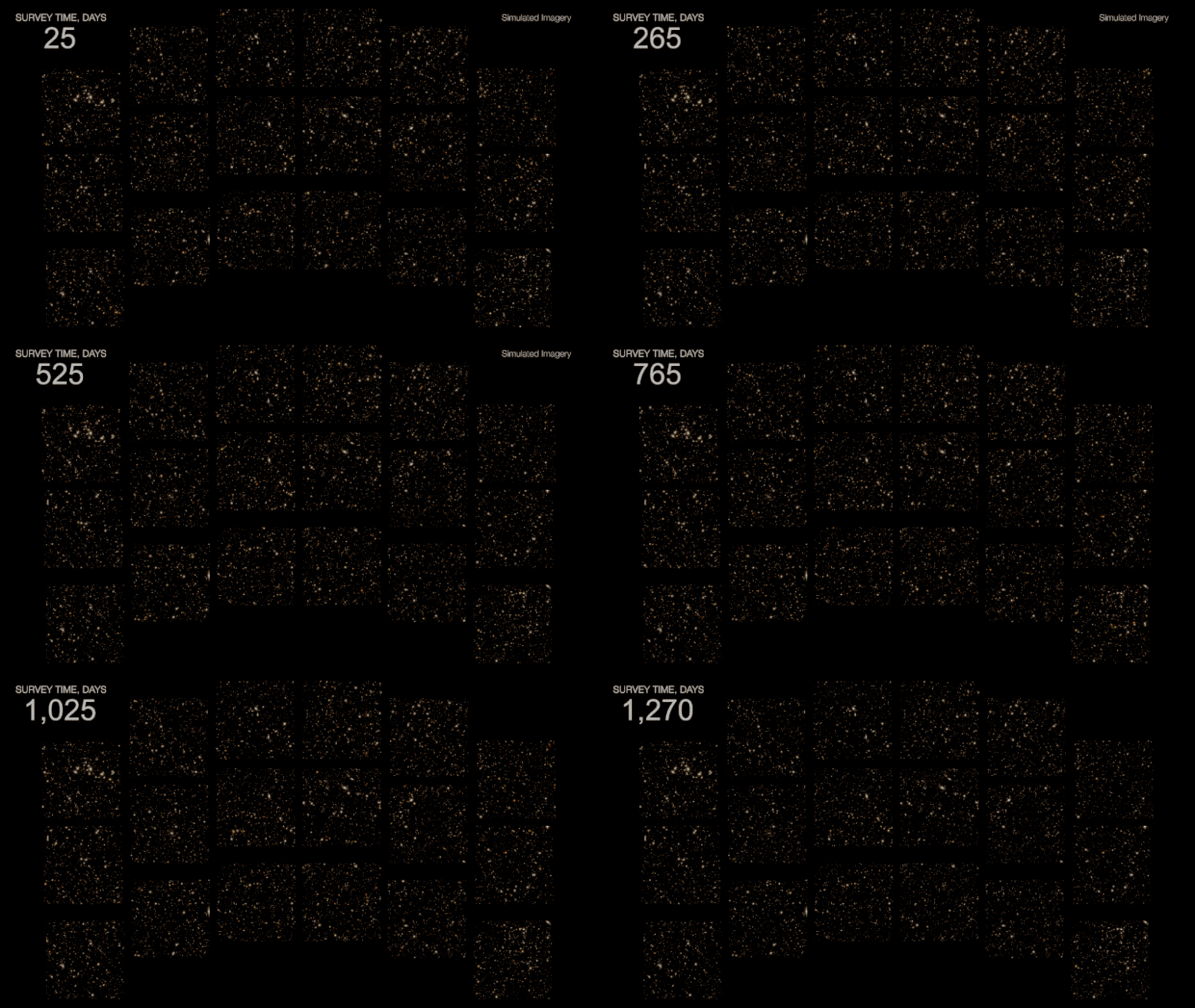
“With the dataset we’ve created, scientists can train machine-learning algorithms to distinguish between different types of objects and sift through Roman’s downpour of data to find them,” Hounsell added. “While searching for type Ia supernovae, Roman is going to collect a lot of cosmic ‘bycatch’—other phenomena that aren’t useful to some scientists, but will be invaluable to others.”
Hidden Gems
Thanks to Roman’s large, deep view of space, scientists say the survey should also unearth extremely rare and elusive phenomena, including even scarcer stellar explosions and disintegrating stars.
Upon close approach to a black hole, intense gravity can shred a star in a so-called tidal disruption event. The stellar crumbs heat up as they swirl around the black hole, creating a glow astronomers can see from across vast stretches of space-time. Scientists think Roman’s survey will unveil 40 tidal disruption events, offering a chance to learn more about black hole physics.
The team also estimates Roman will find about 90 superluminous supernovae, which can be 100 times brighter than a typical supernova. They pack a punch, but scientists aren’t completely sure why. Finding more of them will help astronomers weigh different theories.
Even rarer and more powerful, Roman could also detect several kilonovae. These blasts occur when two neutron stars — extremely dense cores leftover from stars that exploded as supernovae — collide. To date, there has been only one definitive kilonova detection. The team estimates Roman could spot five more.
That would help astronomers learn much more about these mysterious events, potentially including their fate. As of now, scientists are unsure whether kilonovae result in a single neutron star, a black hole, or something else entirely.
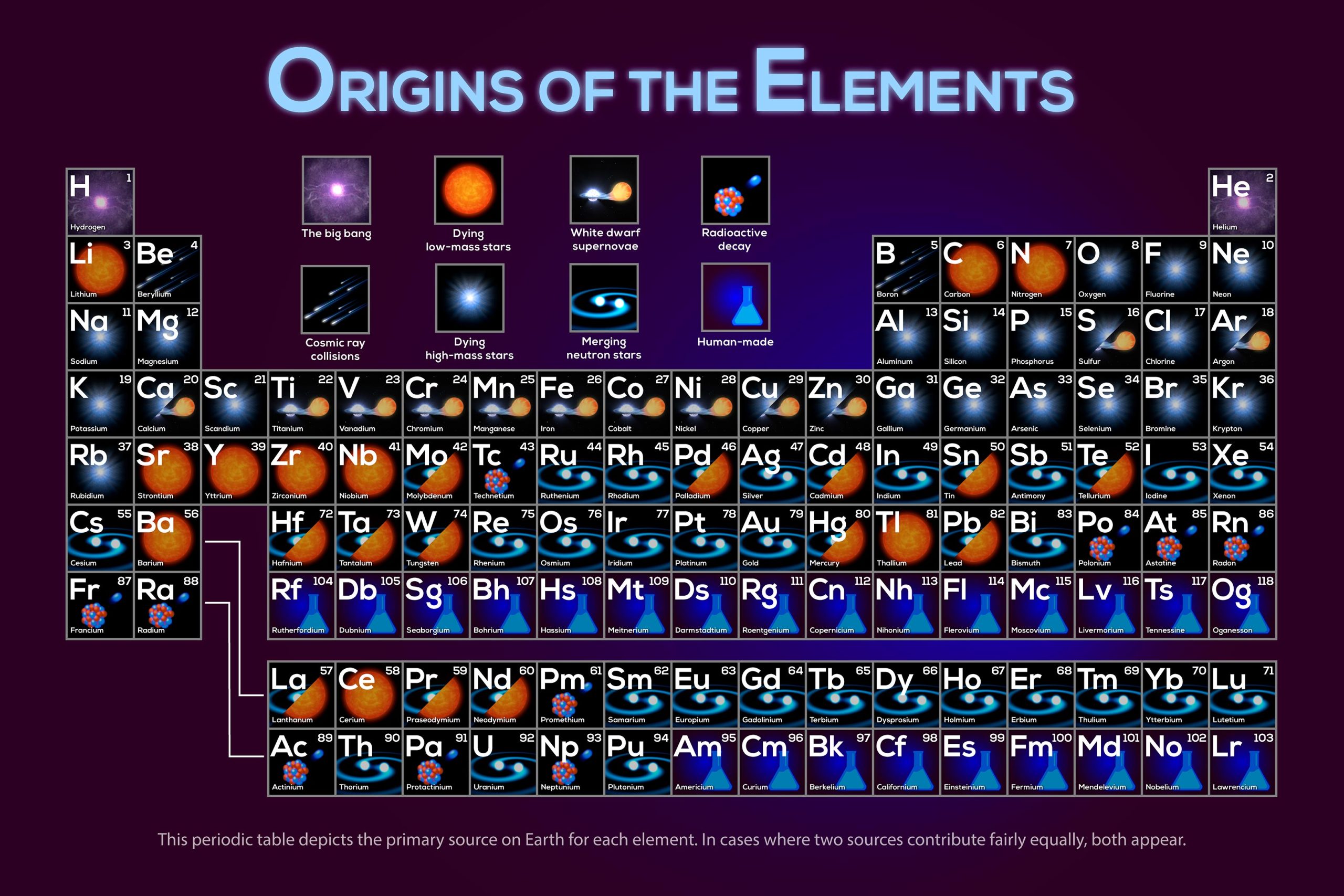
Roman may even spot the detonations of some of the first stars that formed in the universe. These nuclear furnaces were giants, up to hundreds of times more massive than our Sun, and unsullied by heavy elements that hadn’t yet formed.
Credit: NASA’s Goddard Space Flight Center
They were so massive that scientists think they exploded differently than modern massive stars do. Instead of reaching the point where a heavy star today would collapse, intense gamma rays inside the first stars may have turned into matter-antimatter pairs (electrons and positrons). That would drain the pressure holding the stars up until they collapsed, self-destructing in explosions so powerful they’re thought to leave nothing behind.
So far, astronomers have found about half a dozen candidates of these “pair-instability” supernovae, but none have been confirmed.
“I think Roman will make the first confirmed detection of a pair-instability supernova,” Rose said — in fact the study suggests Roman will find more than 10. “They’re incredibly far away and very rare, so you need a telescope that can survey a lot of the sky at a deep exposure level in near-infrared light, and that’s Roman.”
A future rendition of the simulation could include even more types of cosmic flashes, such as variable stars and active galaxies. Other telescopes may follow up on the rare phenomena and objects Roman discovers to view them in different wavelengths of light to study them in more detail.
“Roman’s going to find a whole bunch of weird and wonderful things out in space, including some we haven’t even thought of yet,” Hounsell said. “We’re definitely expecting the unexpected.”
Reference: “The Hourglass Simulation: A Catalog for the Roman High-latitude Time-domain Core Community Survey” by B. M. Rose, M. Vincenzi, R. Hounsell, H. Qu, L. Aldoroty, D. Scolnic, R. Kessler, P. Macias, D. Brout, M. Acevedo, R. C. Chen, S. Gomez, E. Peterson, D. Rubin and M. Sako, 15 July 2025, The Astrophysical Journal.
DOI: 10.3847/1538-4357/ade1d6
Never miss a breakthrough: Join the SciTechDaily newsletter.
Follow us on Google and Google News.