
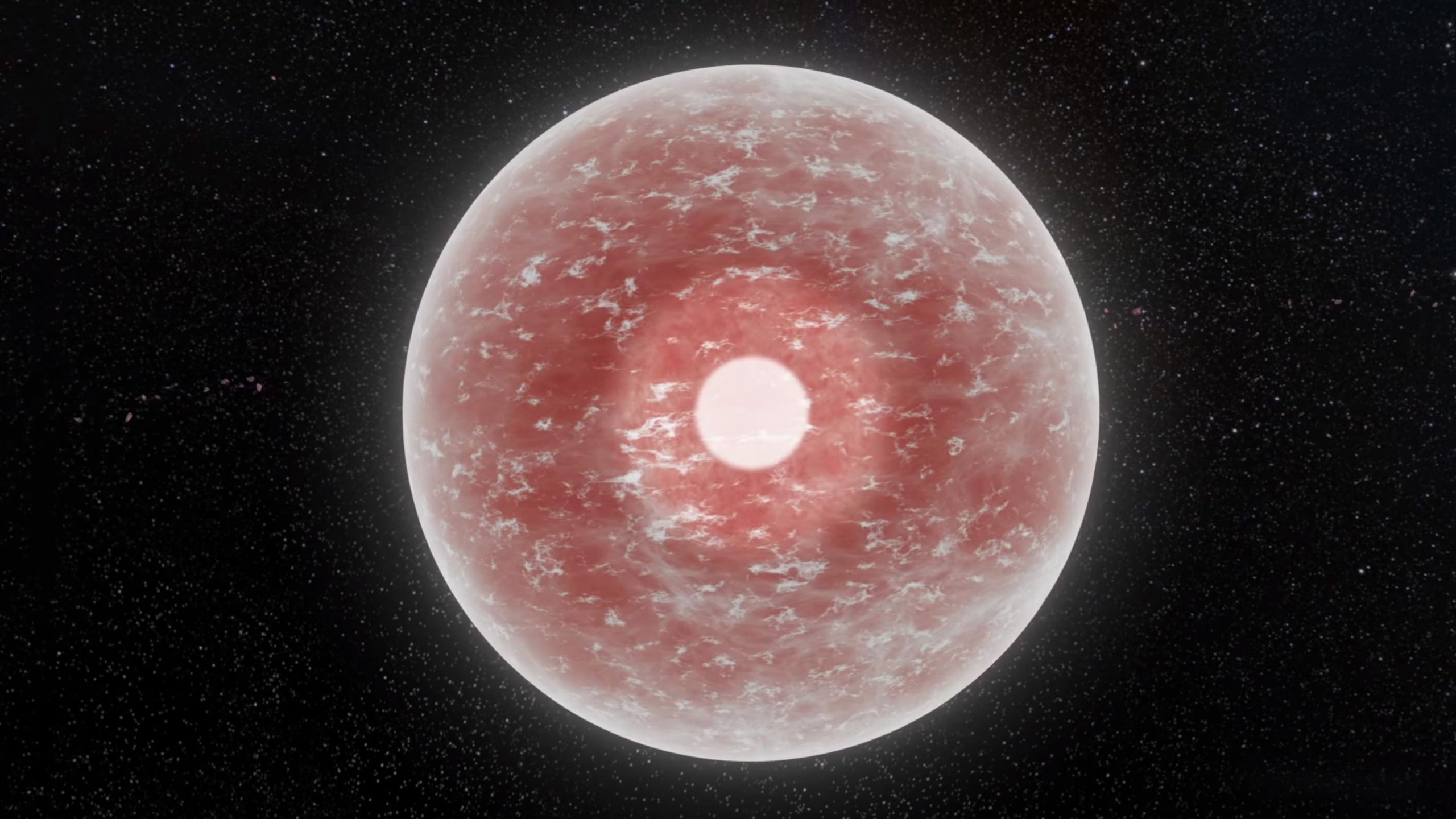
Are we alone in the universe?
It is one of the most profound questions posed in modern astronomy. But although our understanding of the cosmos has grown significantly, the question remains unanswered. We know that Earth-like planets are common, as are the building blocks necessary for terrestrial life, and yet we still haven’t found definitive evidence for life beyond Earth. Perhaps part of our problem is that we are mostly looking for life similar to our own. It is possible that alien life is so radically different from that of Earth it goes unnoticed.
There has been plenty of speculation about alien life. Much of it has centered on life that isn’t carbon-based. Could Titan have nitrogen-based life, where methane replaces the role of water? Could silicon serve as the fundamental element? Would organisms depend on sand the way plants on Earth depend on carbon-rich soil? Could organic life survive in the cold depths of space, perhaps on icy comets in the Oort cloud?
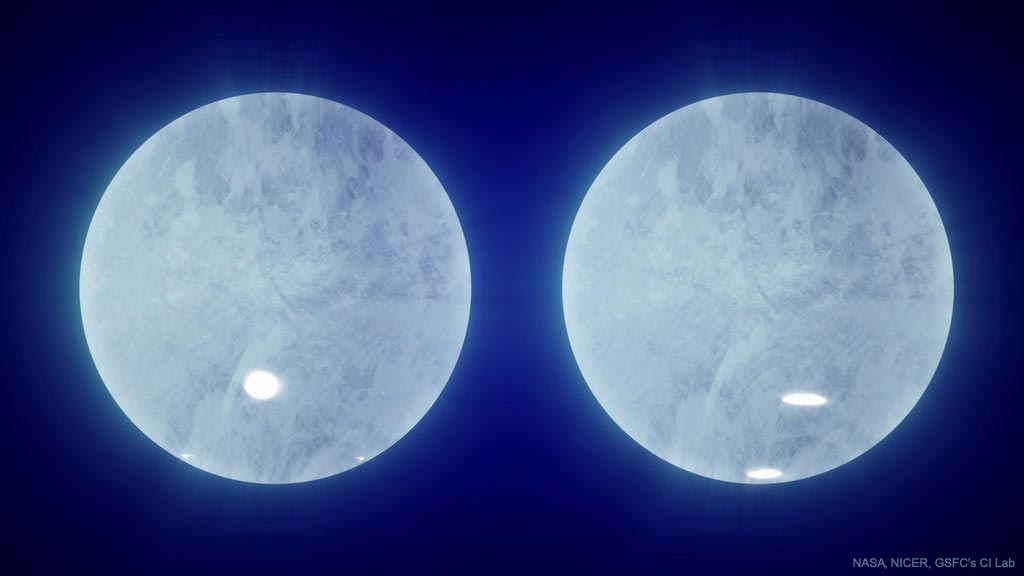
But there are some, often writers of science fiction, who have explored even wilder ideas for life. In the 1980s, author Robert L. Forward proposed a form of life based not on atoms, but on atomic nuclei. In Dragon’s Egg, he described a species known as the Cheela, who lived on the surface of a neutron star. Because nuclear interactions occur at a much faster rate than atomic chemistry, the Cheela civilization moves from simple tools to advanced technology in the span of a month.
While it makes for a great tale, the idea doesn’t help much in searching for life. In the novel, the Cheela are only discovered when humans visit their neutron star. Cheela civilization couldn’t be detected from light-years away. There is also a great deal of handwaving done by Forward to advance the story. While nuclear chemistry can be complicated, we don’t know that it could give rise to some DNA-like structure that could allow for evolution.
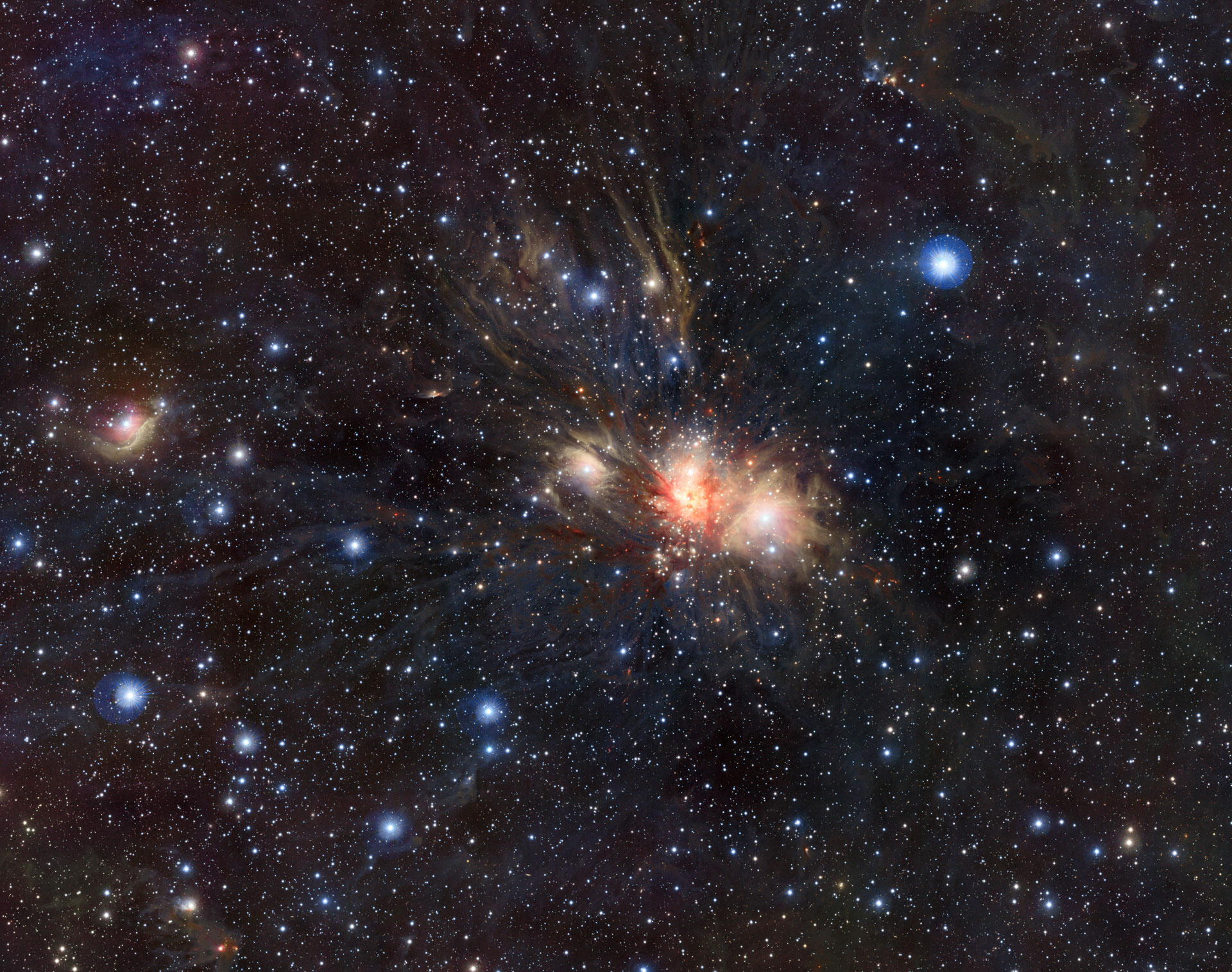
Recently, however, a team looked at this idea in more detail. Their paper is wild and speculative, but it is an interesting read. Rather than relying on pure nuclear interactions to play the role of DNA, the team proposes cosmic strings and magnetic monopoles. Cosmic strings are hypothetical fissures that might have formed when the early universe underwent a phase transition during the creation of matter. Magnetic monopoles are particles that have only one magnetic pole (north or south) rather than all known magnetic particles that have both. While there is no evidence that either of these exists, theoretical work suggests they might.
In the paper, the team proposes that monopoles would cluster along cosmic strings, and the gravity of stars could capture these strings. Given the turbulent motion of nuclei within the cores of stars, these beaded strings could entangle so that they encode and replicate information. And if all that is true, then maybe it could be the seed for nuclear life.
It’s all very speculative and mostly unprovable. However, the team proposes that if such life does arise in the core of a star, it would need to consume some of the core’s energy to survive. As a result, their star might cool faster than predicted by stellar models. Some stars do have excess cooling, but you don’t need cosmic strings, monopoles, and nuclear life to explain it.
Right now, there’s no evidence to support nuclear life, but studies like this can help us think outside the box of terrestrial life. The universe is often stranger than we can imagine, and life out there might be far more alien than we expect.
Adapted from an article originally published on Universe Today.
Reference: “Can Self-Replicating Species Flourish in the Interior of a Star?” by Luis A. Anchordoqui and Eugene M. Chudnovsky, 29 August 2020, Letters in High Energy Physics.
DOI: 10.31526/lhep.2020.166
Never miss a breakthrough: Join the SciTechDaily newsletter.
Follow us on Google and Google News.
3 Comments
Good concept, and I appreciate that you did a piece on the Stars. I like Frank Herbert’s interpenetration of sentient stars with his Calebans. Rulers of the universe. Very fanciful.
Interesting.
Why should life be linited to DNA like Helix structures. Any structure in any shape (not necessarily helix) but which can polymerise and create complexity ( Anti – Irreversible Themodynamic capability, which both aborbs and can create energy from nuclei, in a never-ending cycle) is an indicator of the possible evolution of life ( both intelligent and basic life).
I think the univere came from a black hole that exploded full of material that i had eaten threw out its life time and that is why it can all be traced back to one single point that we call the big bang.