
Close Menu
    Facebook X (Twitter) Instagram
    SciTechDaily
    • Biology
    • Chemistry
    • Earth
    • Health
    • Physics
    • Science
    • Space
    • Technology
    Facebook X (Twitter) Pinterest YouTube RSS
    SciTechDaily
    Home»Space»Hubble Explores Aftermath of Catastrophic Stellar Explosion in NGC 298
    Space

    Hubble Explores Aftermath of Catastrophic Stellar Explosion in NGC 298

    By ESA/HubbleMay 28, 2023No Comments2 Mins Read
    Facebook Twitter Pinterest Telegram LinkedIn WhatsApp Email Reddit
    Share
    Facebook Twitter LinkedIn Pinterest Telegram Email Reddit
    Spiral Galaxy NGC 298
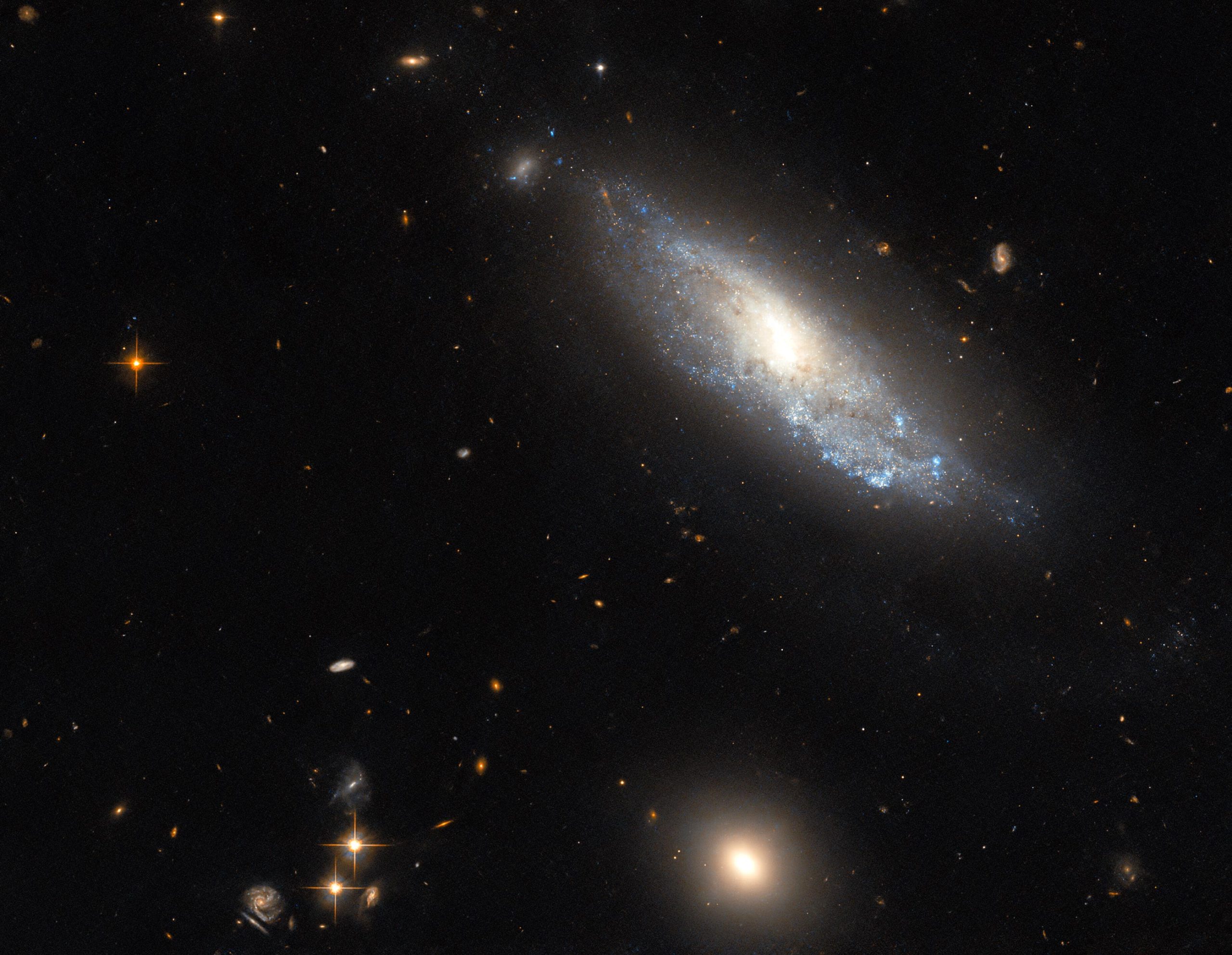
    The Hubble Space Telescope, in a study to better understand the origins of Type II supernovae, captured this image of the spiral galaxy NGC 298, located roughly 89 million light-years away in the constellation Cetus. Credit: ESA/Hubble & NASA, C. Kilpatrick

    The Hubble Space Telescope captured an image of the spiral galaxy NGC 298, previously the site of a Type II supernova, as part of a study on these star explosions. The investigation seeks to explain the diversity in Type II supernovae by observing the regions around these events, potentially revealing information about the stars’ history and surviving companion stars.

    The spiral galaxy NGC 298 basks in this image from the NASA/ESA Hubble Space Telescope. NGC 298 lies around 89 million light-years away in the constellation Cetus, and appears isolated in this image — only a handful of distant galaxies and foreground stars accompany the lonely galaxy. While NGC 298 seems peaceful, in 1986 it was host to one of astronomy’s most extreme events: a catastrophic stellar explosion known as a Type II supernova.

    Hubble’s Advanced Camera for Surveys captured NGC 298 as part of an investigation into the origins of Type II supernovae. All Type II supernovae are produced by the collapse and subsequent explosion of young, massive stars, but they can produce a spectacular diversity of brightnesses and spectral features.

    Astronomers suspect that the diversity of this cosmic firework show might be due to gas and dust being stripped from the stars that will eventually produce Type II supernovae. Observing the region surrounding supernova explosions can reveal traces of the progenitor star’s history preserved in this lost mass, as well as revealing any companion stars that survived the supernova. Hubble used the brief periods between scheduled observations to explore the aftermath of a number of Type II supernovae, hoping to piece together the relationship between Type II supernovae and the stellar systems which give rise to them.

    Never miss a breakthrough: Join the SciTechDaily newsletter.
    Follow us on Google and Google News.

    Astronomy European Space Agency Hubble Space Telescope
    Share. Facebook Twitter Pinterest LinkedIn Email Reddit

    Related Articles

    A Diamond Necklace of Cosmic Proportions

    Hubble Snaps a Stunning Close-Up of a Magnificent Spiral Galaxy

    Extraordinary Hubble Image: Light Bends From the Beyond

    Hubble Space Telescope Sees Volcanic Activity Reforming the Atmosphere on a Rocky Exoplanet

    Hubble Spies a Luminous Heart With Dark Tendrils

    Spectacular Return to the Veil Nebula

    Hubble Spots a Peculiar Sight: Unusual Spiral Galaxy With a Heavy Arm

    A Flash of Life: Hubble Spies an Unusual Planetary Nebula

    Through the Cosmic Clouds: Hubble Spots a Beautiful Stellar Nursery

    Leave A Reply Cancel Reply

    • Facebook
    • Twitter
    • Pinterest
    • YouTube

    Don't Miss a Discovery

    Subscribe for the Latest in Science & Tech!

    Trending News

    First-of-Its-Kind Discovery: Homer’s Iliad Found Embedded in a 1,600-Year-Old Egyptian Mummy

    Beyond Inflammation: Scientists Uncover New Cause of Persistent Rheumatoid Arthritis

    A Simple Molecule Could Unlock Safer, Easier Weight Loss

    Scientists Just Built a Quantum Battery That Charges Almost Instantly

    Researchers Unveil Groundbreaking Sustainable Solution to Vitamin B12 Deficiency

    Millions of People Have Osteopenia Without Realizing It – Here’s What You Need To Know

    Researchers Discover Boosting a Single Protein Helps the Brain Fight Alzheimer’s

    World-First Study Reveals Human Hearts Can Regenerate After a Heart Attack

    Follow SciTechDaily
    • Facebook
    • Twitter
    • YouTube
    • Pinterest
    • Newsletter
    • RSS
    SciTech News
    • Biology News
    • Chemistry News
    • Earth News
    • Health News
    • Physics News
    • Science News
    • Space News
    • Technology News
    Recent Posts
    • Physicists Propose Strange Experiment Where Time Goes Quantum
    • Scientists Flip Immune System “Switch,” Uncover Surprising Path To Stop Gut Inflammation
    • Magnesium Magic: New Drug Melts Fat Even on a High-Fat, High-Sugar Diet
    • Weight-Loss Drugs Like Ozempic May Come With an Unexpected Cost
    • After Decades, MIT Researchers Capture the First 3D Atomic View of a Mysterious Material
    Copyright © 1998 - 2026 SciTechDaily. All Rights Reserved.
    • Science News
    • About
    • Contact
    • Editorial Board
    • Privacy Policy
    • Terms of Use

    Type above and press Enter to search. Press Esc to cancel.