
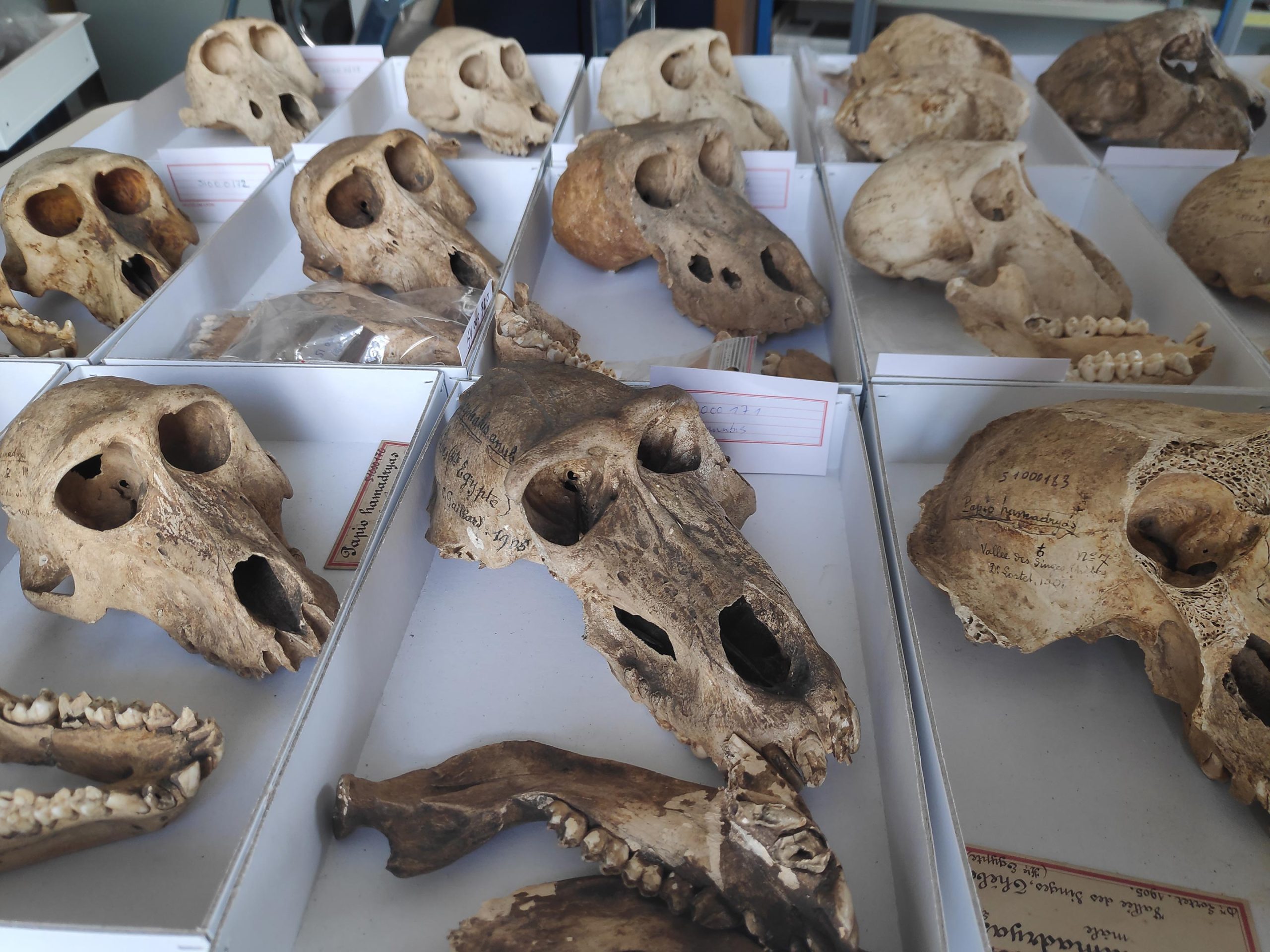
Ancient Egyptians mummified baboons for religious purposes, but new research reveals they were likely raised in captivity under poor conditions.
By studying baboon remains from sites like Gabbanat el-Qurud, scientists found evidence of malnutrition and lack of sunlight, suggesting the animals endured harsh conditions before their mummification.
Ancient Egyptians and Animal Mummification
Baboons in ancient Egypt were raised in captivity before being mummified, according to a study published on in the open-access journal PLOS ONE by Wim Van Neer of the Royal Belgian Institute of Natural Sciences in Belgium and his colleagues.
For more than a thousand years, from the 9th century BC to the 4th century AD, ancient Egyptians worshiped and mummified various animals for religious purposes. Among these were baboons—animals not native to Egypt—raising questions about how they were obtained and cared for. In this study, researchers analyzed a collection of baboon mummies from Gabbanat el-Qurud, also known as the Valley of the Monkeys, located on the west bank of Luxor.
Investigating Baboons in the Valley of the Monkeys
The team examined skeletal remains from at least 36 baboons of different ages, dating back to between 800 and 500 BC. Signs of bone lesions, deformities, and other abnormalities suggest that most of the baboons suffered from poor nutrition and limited exposure to sunlight, likely due to being born and raised in captivity. Similar health issues have been observed in baboon remains from two other sites—Saqqara and Tuna el-Gebel—indicating that the practice of keeping baboons in captivity followed a consistent pattern across these locations.
Evidence of Captivity and Its Challenges
These results provide insights into how baboons were kept and treated in Ancient Egypt before their eventual mummification, although more details remain to be explored. The authors suggest, for example, that further examination of the animals’ teeth could provide more data on the diets they were fed, and if it is possible to extract DNA from these remains, genetic data might reveal information on where the animals were caught in the wild and what breeding practices their keepers were employing.
The authors add: “Life was not easy for Egypt’s sacred baboons. Scientific study shows they suffered from malnutrition and lack of sunlight.”
Reference: “Palaeopathological and demographic data reveal conditions of keeping of the ancient baboons at Gabbanat el-Qurud (Thebes, Egypt)” by Wim Van Neer, Mircea Udrescu, Joris Peters, Bea De Cupere, Stéphane Pasquali and Stéphanie Porcier, 6 December 2023, PLOS ONE.
DOI: 10.1371/journal.pone.0294934
This research was carried out within the framework of the SIMoS Project supported by the Agence Nationale de la Recherche from the « Investissement d’Avenir » program ANR-11-LABX-0032-01 LabEx ARCHIMEDE and the Baboons Project supported by the Ministère de la Culture et de la Communication. The funders had no role in study design, data collection and analysis, decision to publish, or preparation of the manuscript.
Never miss a breakthrough: Join the SciTechDaily newsletter.
Follow us on Google and Google News.