
Close Menu
    Facebook X (Twitter) Instagram
    SciTechDaily
    • Biology
    • Chemistry
    • Earth
    • Health
    • Physics
    • Science
    • Space
    • Technology
    Facebook X (Twitter) Pinterest YouTube RSS
    SciTechDaily
    Home»Biology»Ancient Egypt’s Sacred Baboons Endured Harsh Captivity Before Mummification
    Biology

    Ancient Egypt’s Sacred Baboons Endured Harsh Captivity Before Mummification

    By PLOSJanuary 27, 2025No Comments3 Mins Read
    Facebook Twitter Pinterest Telegram LinkedIn WhatsApp Email Reddit
    Share
    Facebook Twitter LinkedIn Pinterest Telegram Email Reddit
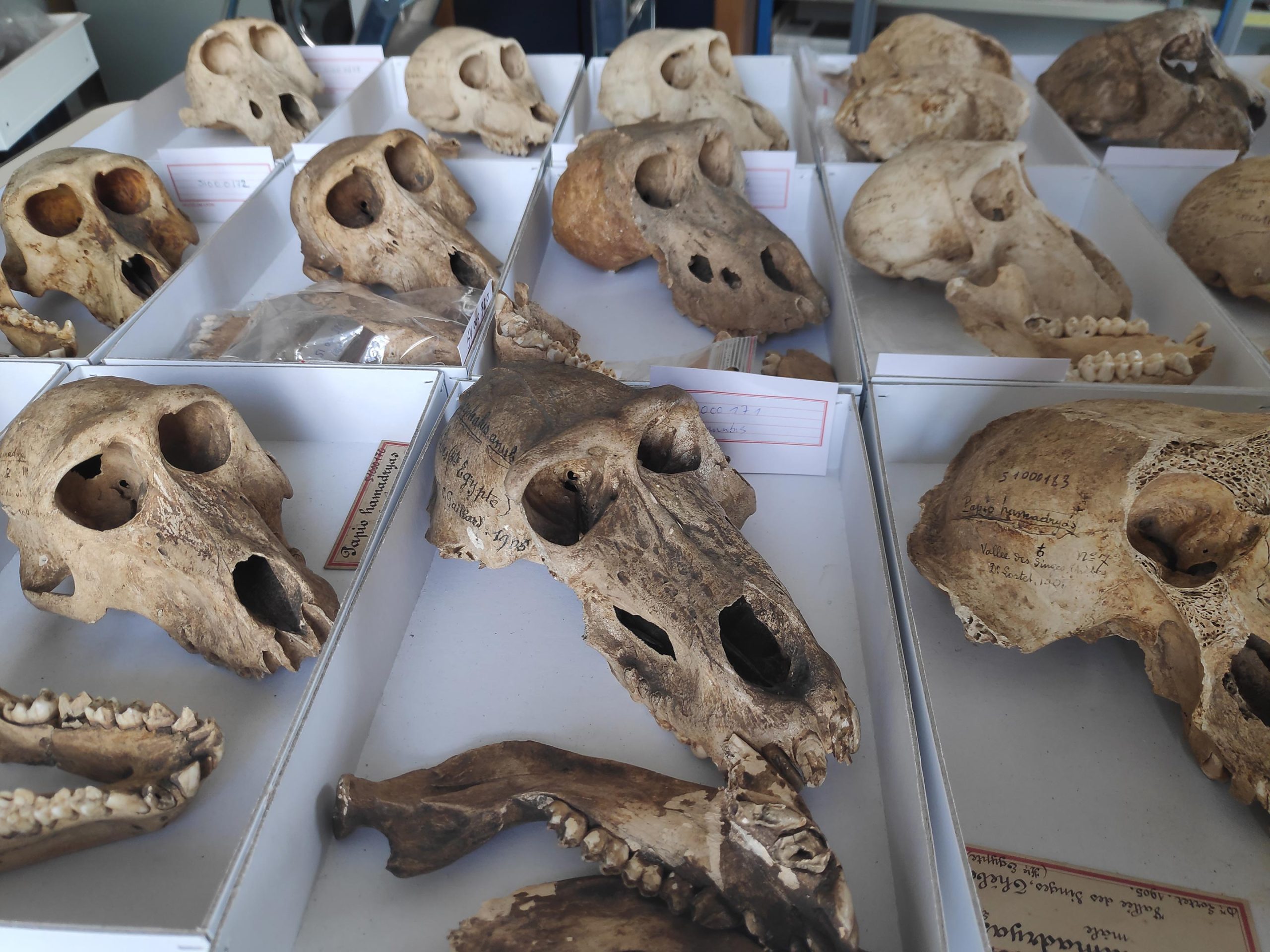
    Ancient Baboons at Gabbanat El-Qurud, Egypt
    Ancient Egyptian baboon mummies show signs of captivity, with evidence of poor nutrition and inadequate sunlight. (Overview of some skulls available for study.) Credit: Bea De Cupere, CC-BY 4.0

    Ancient Egyptians mummified baboons for religious purposes, but new research reveals they were likely raised in captivity under poor conditions.

    By studying baboon remains from sites like Gabbanat el-Qurud, scientists found evidence of malnutrition and lack of sunlight, suggesting the animals endured harsh conditions before their mummification.

    Ancient Egyptians and Animal Mummification

    Baboons in ancient Egypt were raised in captivity before being mummified, according to a study published on in the open-access journal PLOS ONE by Wim Van Neer of the Royal Belgian Institute of Natural Sciences in Belgium and his colleagues.

    For more than a thousand years, from the 9th century BC to the 4th century AD, ancient Egyptians worshiped and mummified various animals for religious purposes. Among these were baboons—animals not native to Egypt—raising questions about how they were obtained and cared for. In this study, researchers analyzed a collection of baboon mummies from Gabbanat el-Qurud, also known as the Valley of the Monkeys, located on the west bank of Luxor.

    Investigating Baboons in the Valley of the Monkeys

    The team examined skeletal remains from at least 36 baboons of different ages, dating back to between 800 and 500 BC. Signs of bone lesions, deformities, and other abnormalities suggest that most of the baboons suffered from poor nutrition and limited exposure to sunlight, likely due to being born and raised in captivity. Similar health issues have been observed in baboon remains from two other sites—Saqqara and Tuna el-Gebel—indicating that the practice of keeping baboons in captivity followed a consistent pattern across these locations.

    Evidence of Captivity and Its Challenges

    These results provide insights into how baboons were kept and treated in Ancient Egypt before their eventual mummification, although more details remain to be explored. The authors suggest, for example, that further examination of the animals’ teeth could provide more data on the diets they were fed, and if it is possible to extract DNA from these remains, genetic data might reveal information on where the animals were caught in the wild and what breeding practices their keepers were employing.

    The authors add: “Life was not easy for Egypt’s sacred baboons. Scientific study shows they suffered from malnutrition  and lack of sunlight.”

    Reference: “Palaeopathological and demographic data reveal conditions of keeping of the ancient baboons at Gabbanat el-Qurud (Thebes, Egypt)” by Wim Van Neer, Mircea Udrescu, Joris Peters, Bea De Cupere, Stéphane Pasquali and Stéphanie Porcier, 6 December 2023, PLOS ONE.
    DOI: 10.1371/journal.pone.0294934

    This research was carried out within the framework of the SIMoS Project supported by the Agence Nationale de la Recherche from the « Investissement d’Avenir » program ANR-11-LABX-0032-01 LabEx ARCHIMEDE and the Baboons Project supported by the Ministère de la Culture et de la Communication. The funders had no role in study design, data collection and analysis, decision to publish, or preparation of the manuscript.

    Never miss a breakthrough: Join the SciTechDaily newsletter.
    Follow us on Google and Google News.

    Egyptology Mummy PLOS
    Share. Facebook Twitter Pinterest LinkedIn Email Reddit

    Related Articles

    New Type of Multi-Tasking Taste Cells Discovered in Taste Buds

    Shocking Research Finds DNA From an Ancient, Unidentified Ancestor Was Passed Down to Humans Living Today

    Making a List of All Creatures, Great and Small: For the First Time, an Agreed List of All the World’s Species

    Fighting Fish Synchronize Their Combat Moves and Gene Expression Leading to Tightly Meshed Battles

    Rats Can Smell Hunger on Other Rats – Give More Generously to Those in Need

    Study Finds New Engineered Botox to Be Safer and More Potent

    Researchers Analyze Nasty Species of Bacteria That Has Colonized Space Station’s Water Dispenser

    Scientists Use X-Rays and Infrared Light to Explore Egyptian Mummy Bones [Video]

    DNA Sequencing Solves 4,000-Year-Old Egyptian Mummy Mystery

    Leave A Reply Cancel Reply

    • Facebook
    • Twitter
    • Pinterest
    • YouTube

    Don't Miss a Discovery

    Subscribe for the Latest in Science & Tech!

    Trending News

    Largest-Ever Study Finds Medicinal Cannabis Ineffective for Anxiety, Depression, PTSD

    250-Million-Year-Old Egg Solves One of Evolution’s Biggest Mysteries

    Living With Roommates Might Be Changing Your Gut Microbiome Without You Knowing

    Century-Old Cleaning Chemical Linked to 500% Increased Risk of Parkinson’s Disease

    What if Your Memories Never Happened? Physicists Take a New Look at the Boltzmann Brain Paradox

    One of the Universe’s Largest Stars May Be Getting Ready To Explode

    Scientists Discover Enzyme That Could Supercharge Ozempic-Like Weight Loss Drugs

    Popular Sweetener Linked to DNA Damage – “It’s Something You Should Not Be Eating”

    Follow SciTechDaily
    • Facebook
    • Twitter
    • YouTube
    • Pinterest
    • Newsletter
    • RSS
    SciTech News
    • Biology News
    • Chemistry News
    • Earth News
    • Health News
    • Physics News
    • Science News
    • Space News
    • Technology News
    Recent Posts
    • The Surprising Diet Rule That Makes “Good” Parasites Work
    • This Simple Blood Test Could Outperform “Bad Cholesterol” in Preventing Heart Disease
    • Scientists Uncover Potential Brain Risks of Popular Fish Oil Supplements
    • Scientists Prove There Are Just Six Degrees of Separation in a Social Network
    • Bee Bacteria Could Fix a Major Flaw in Plant-Based Milk
    Copyright © 1998 - 2026 SciTechDaily. All Rights Reserved.
    • Science News
    • About
    • Contact
    • Editorial Board
    • Privacy Policy
    • Terms of Use

    Type above and press Enter to search. Press Esc to cancel.