
Close Menu
    Facebook X (Twitter) Instagram
    SciTechDaily
    • Biology
    • Chemistry
    • Earth
    • Health
    • Physics
    • Science
    • Space
    • Technology
    Facebook X (Twitter) Pinterest YouTube RSS
    SciTechDaily
    Home»Space»Hubble Image of the Week – Dwarf Galaxy NGC 5949
    Space

    Hubble Image of the Week – Dwarf Galaxy NGC 5949

    By European Space Agency (ESA)August 7, 2017No Comments2 Mins Read
    Facebook Twitter Pinterest Telegram LinkedIn WhatsApp Email Reddit
    Share
    Facebook Twitter LinkedIn Pinterest Telegram Email Reddit
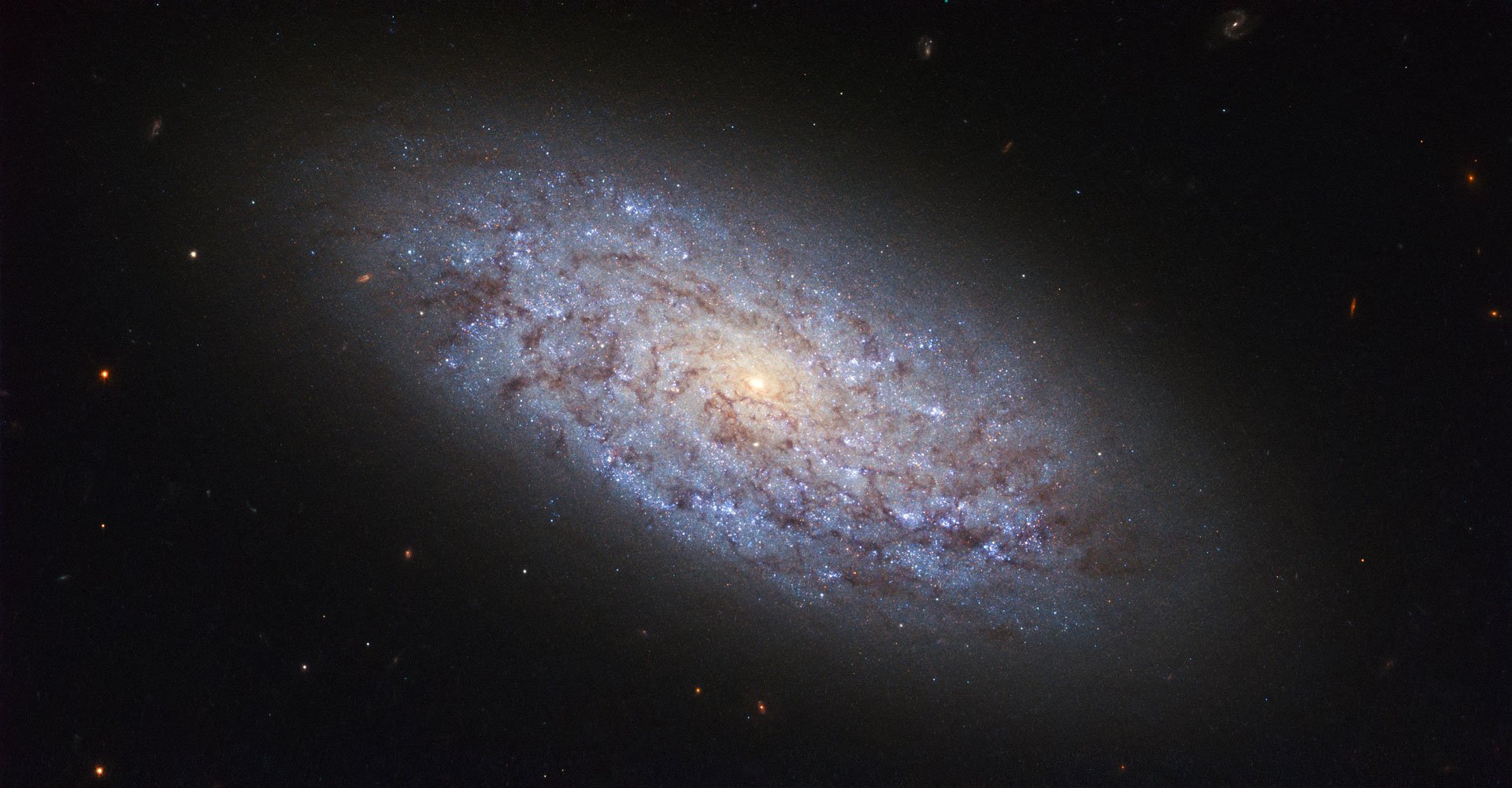
    Hubble Views Dwarf Galaxy NGC 5949
    Hubble Space telescope image of the dwarf galaxy NGC 5949. Credit: ESA/Hubble & NASA

    This Hubble image of the week shows dwarf galaxy NGC 5949, which is located roughly 44 million light-years away.

    The subject of this NASA/ESA Hubble Space Telescope image is a dwarf galaxy named NGC 5949. Thanks to its proximity to Earth — it sits at a distance of around 44 million light-years from us, placing it within the Milky Way’s cosmic neighborhood — NGC 5949 is a perfect target for astronomers to study dwarf galaxies.

    With a mass of about a hundredth that of the Milky Way, NGC 5949 is a relatively bulky example of a dwarf galaxy. Its classification as a dwarf is due to its relatively small number of constituent stars, but the galaxy’s loosely-bound spiral arms also place it in the category of barred spirals. This structure is just visible in this image, which shows the galaxy as a bright yet ill-defined pinwheel. Despite its small proportions, NGC 5949’s proximity has meant that its light can be picked up by fairly small telescopes, something that facilitated its discovery by the astronomer William Herschel in 1801.

    Astronomers have run into several cosmological quandaries when it comes to dwarf galaxies like NGC 5949. For example, the distribution of dark matter within dwarfs is quite puzzling (the “cuspy halo” problem), and our simulations of the Universe predict that there should be many more dwarf galaxies than we see around us (the “missing satellites” problem).

    Never miss a breakthrough: Join the SciTechDaily newsletter.
    Follow us on Google and Google News.

    Astronomy European Space Agency Hubble Space Telescope
    Share. Facebook Twitter Pinterest LinkedIn Email Reddit

    Related Articles

    A Diamond Necklace of Cosmic Proportions

    Hubble Snaps a Stunning Close-Up of a Magnificent Spiral Galaxy

    Extraordinary Hubble Image: Light Bends From the Beyond

    Hubble Space Telescope Sees Volcanic Activity Reforming the Atmosphere on a Rocky Exoplanet

    Hubble Spies a Luminous Heart With Dark Tendrils

    Spectacular Return to the Veil Nebula

    Hubble Spots a Peculiar Sight: Unusual Spiral Galaxy With a Heavy Arm

    A Flash of Life: Hubble Spies an Unusual Planetary Nebula

    Through the Cosmic Clouds: Hubble Spots a Beautiful Stellar Nursery

    Leave A Reply Cancel Reply

    • Facebook
    • Twitter
    • Pinterest
    • YouTube

    Don't Miss a Discovery

    Subscribe for the Latest in Science & Tech!

    Trending News

    One of Earth’s Driest Deserts Just Turned White

    A Century-Old Mystery in Cat Kidneys May Finally Have an Answer

    Black Hole Winds Are 100 Times More Powerful Than Astronomers Thought

    “Cancer Melted Away”: Immunotherapy Delivers Striking Results in Bowel Cancer Trial

    Captive Crocodiles Released Into the Wild Did Something Researchers Didn’t Expect

    A Massive 29-Square-Mile Iceberg Hit an Island and Kept Going

    New Mexico’s Largest Reservoir Was Nearly Full. Now It’s at 1.4%

    This Southern-Style Mediterranean Diet Helped People Lose 10 Pounds

    Follow SciTechDaily
    • Facebook
    • Twitter
    • YouTube
    • Pinterest
    • Newsletter
    • RSS
    SciTech News
    • Biology News
    • Chemistry News
    • Earth News
    • Health News
    • Physics News
    • Science News
    • Space News
    • Technology News
    Recent Posts
    • The Moon May Be Hiding a 100-Million-Year Record of Exploding Stars
    • 90-Million-Year-Old Fossil Reveals a Small Dinosaur Living Along Japan’s Coast
    • Thawing Permafrost Is Releasing Carbon, but Something Unexpected Happens
    • Scientists Resurrect 160-Million-Year-Old Molecules With Surprising Power Against Superbugs
    • Stardust Buried in Antarctic Ice Exposes an 80,000-Year-Old Cosmic Mystery
    Copyright © 1998 - 2026 SciTechDaily. All Rights Reserved.
    • Science News
    • About
    • Contact
    • Editorial Board
    • Privacy Policy
    • Terms of Use

    Type above and press Enter to search. Press Esc to cancel.