

Ancient predators once thought to be squids are now linked to arrow worms. The discovery highlights unexpectedly advanced features in these early animals.
Fossils recently unearthed in North Greenland have provided key evidence to help scientists resolve a 500-million-year-old mystery involving ancient squid-like creatures.
These organisms, known as nectocaridids, were once believed to be early cephalopods—marine animals characterized by their tentacles and prominent heads. However, a new study led in part by researchers at the University of Bristol has revealed that nectocaridids are actually early relatives of arrow worms, a group of slender, predatory marine invertebrates also called chaetognaths.
The findings suggest that modern arrow worms, which are relatively simple in structure, evolved from ancestors with far more complex bodies and a dominant role as predators in ancient marine ecosystems.
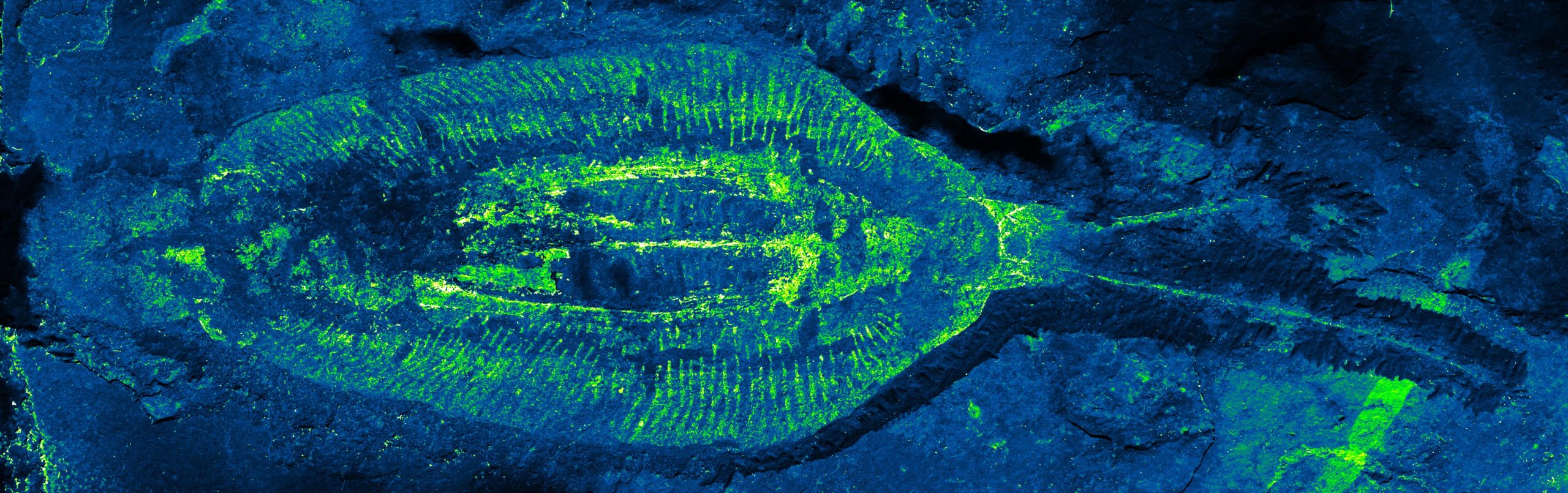
Fossil preservation in Sirius Passet
Conducted in collaboration with paleontologists from the Korean Polar Research Institute and the University of Copenhagen, the study marks the result of nine years of excavation work at Sirius Passet in North Greenland. This site is renowned for its extraordinary preservation of marine life dating back to the Early Cambrian period, approximately 518 million years ago.
Co-lead author Dr. Jakob Vinther, Associate Professor in Macroevolution at the University of Bristol, said: “Sirius Passet is a treasure trove of fossils from the Cambrian Explosion. We not only find delicate soft-bodied fossils but also their digestive systems, musculature, and sometimes even their nervous system.
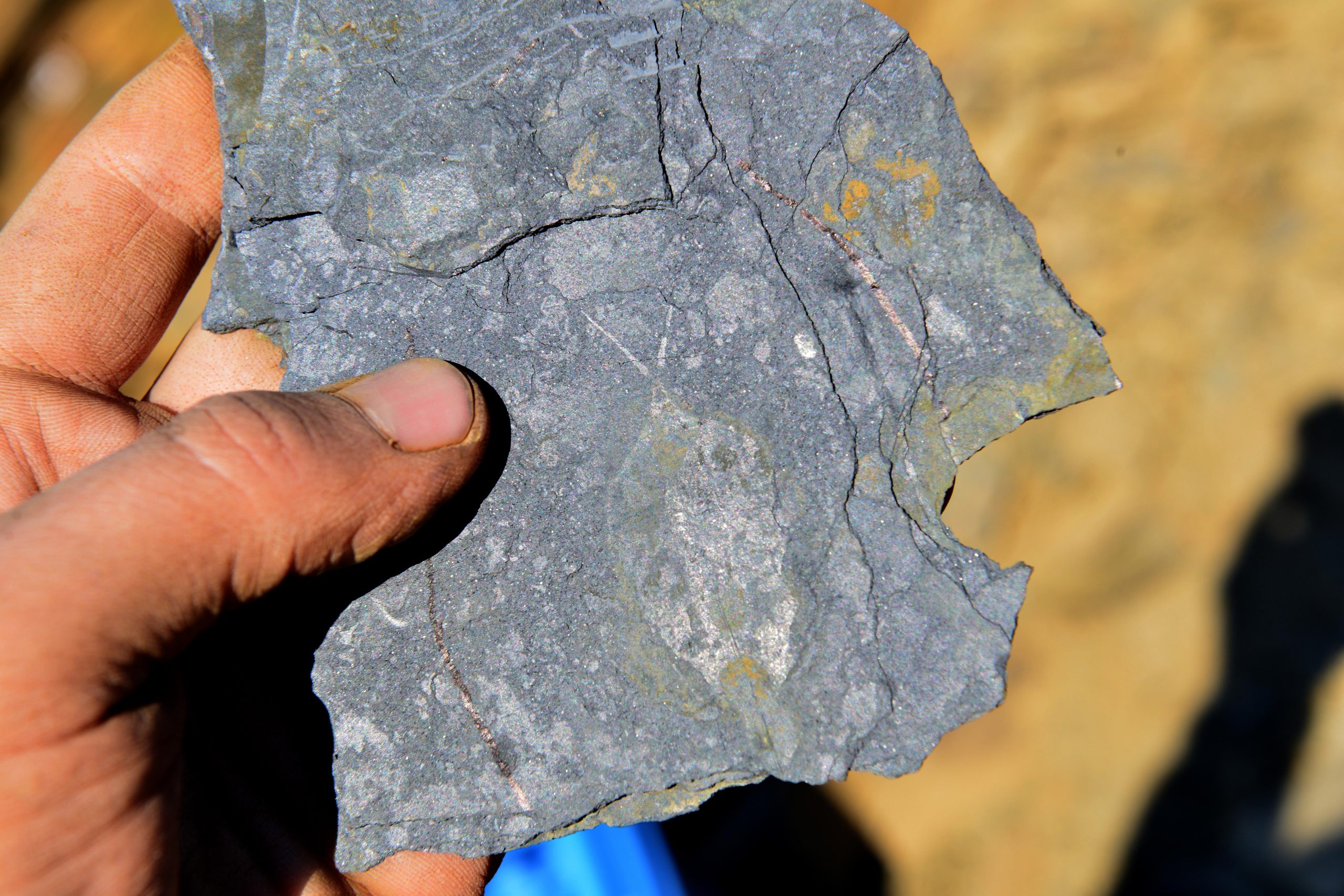
“Around 15 years ago, a research paper, based on fossils from the famous Burgess Shale, claimed nectocaridids were cephalopods. It never really made sense to me, as the hypothesis would upend everything we otherwise know about cephalopods and their anatomy didn’t closely match cephalopods when you looked carefully.”
Placement on the tree of life
The discovery of nectocaridid fossils at Sirius Passet, uncovered there for the first time, brought growing excitement to the research team.
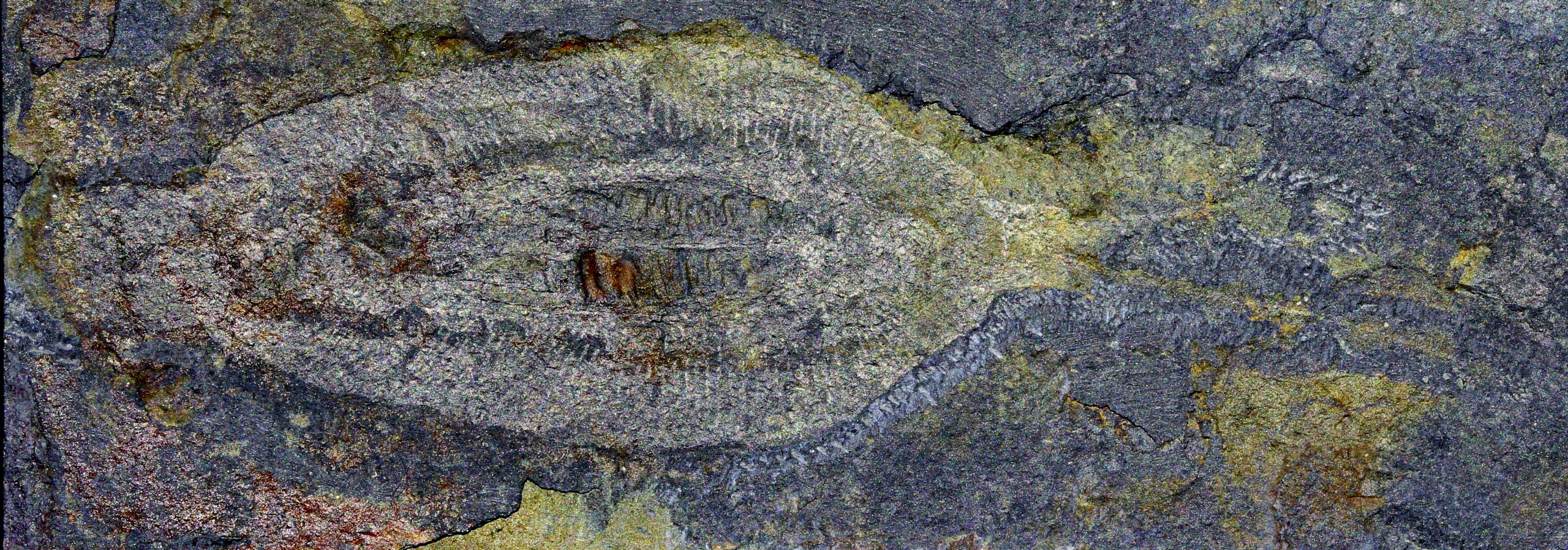
Through detailed analysis of 25 fossil specimens, the scientists identified the evolutionary placement of nectocaridids. This breakthrough was made possible by Sirius Passet’s exceptional preservation, which often left parts of the nervous system intact.
“We discovered our nectocaridids preserve parts of their nervous system as paired mineralized structures, and that was a giveaway as to where these animals sit in the tree of life,” Dr. Vinther explained.
Similarities with arrow worms
Recently, the team uncovered fossils in Sirius Passet belonging to another branch of the animal tree – a small group of swimming worms called arrow worms or chaetognaths.
“These fossils all preserve a unique feature, distinct for arrow worms, called the ventral ganglion,” said co-lead author Dr. Tae-Yoon Park of the Korean Polar Institute.
The ventral ganglion is a large mass of nerves situated on the belly of living arrow worms, which is unique to this type of creature. The unique anatomy of the organ, combined with the special preservation condition,s means it sometimes is replaced by phosphate minerals during decay.
A predator at the top of the food chain
Dr. Park added: “We now had a smoking gun to resolve the nectocaridid controversy. Nectocaridids share a number of features with some of the other fossils that also belong to the arrow worm stem lineage. Many of these features are superficially squid-like and reflect simple adaptations to an active swimming mode of life in invertebrates, just like whales and ancient marine reptiles end up looking like fish when they evolve such a mode of life.”
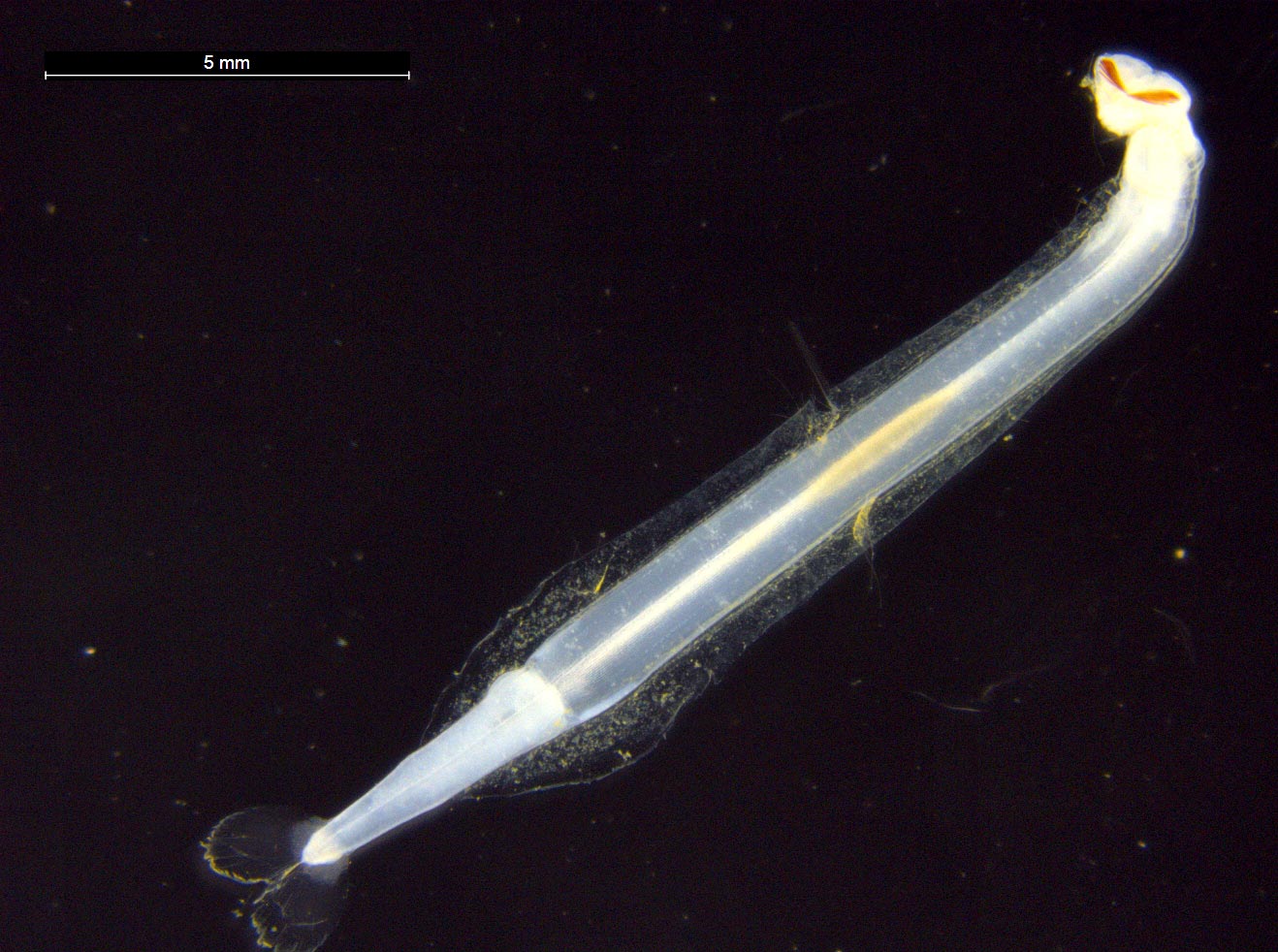
The discovery helps reveal clues about arrow worms and their past.
“Nectocaridids have complex camera eyes just like ours. Living arrow worms can hardly form an image beyond working out roughly where the sun shines. So, the ancestors of arrow worms were really complex predators, just like the squids that only evolved about 400 million years later,” Dr. Vinther added.
“We can therefore show how arrow worms used to occupy a role much higher in the food chain. Our fossils can be much bigger than a typical living arrow worm and combined with their swimming apparatus, eyes, and long antennae, they must have been formidable and stealthy predators.”
As further evidence for nectocaridids being swimming carnivores, the researchers found several specimens with the carapaces of a swimming arthropod, called Isoxys, inside their digestive tract.
The fossil is named Nektognathus evasmithae. The species name honors Professor Eva Smith, the first female professor of law in Denmark and a renowned human rights advocate.
Dr. Vinther said: “My decision to name our fossil after Eva, is that this animal was a smart and stealthy fighter just like she is.”
Reference: “A fossilized ventral ganglion reveals a chaetognath affinity for Cambrian nectocaridids” by Jakob Vinther, Luke A. Parry, Mirinae Lee, Morten Lunde Nielsen, Yeongju Oh, Changkun Park, Ji-Hoon Kihm, Giacinto DeVivo, David A. T. Harper, Arne T. Nielsen and Tae-Yoon S. Park, 23 July 2025, Science Advances.
DOI: 10.1126/sciadv.adu6990
Never miss a breakthrough: Join the SciTechDaily newsletter.
Follow us on Google and Google News.