
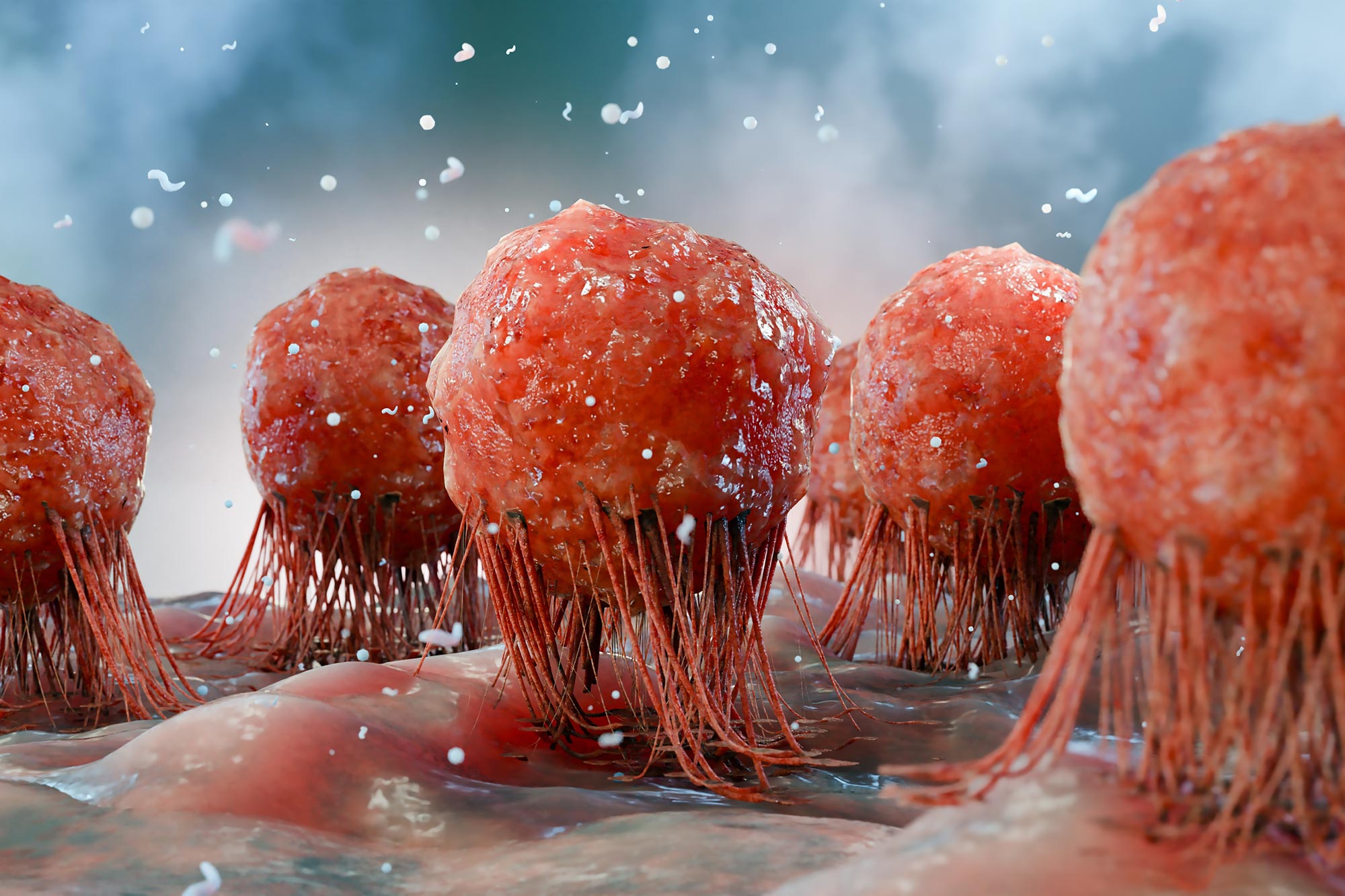
Researchers found that lowering MHC I can expose cancerous or foreign cells to CD4+ T cell attack, reshaping assumptions about immune targeting.
Cancer cells are notorious for finding ways to hide from the immune system, often shutting down key molecular signals that normally allow immune cells to recognize and destroy them. But new research suggests that this escape tactic may come with an unexpected cost: it can leave tumors vulnerable to a different kind of immune attack scientists did not realize existed.
In a study published in Nature Immunology, Dr. Pavan Reddy, director of the Dan L Duncan Comprehensive Cancer Center at Baylor College of Medicine (BCM), and collaborators from the University of Michigan Rogel Cancer Center uncovered a previously unknown mechanism by which T cells target diseased cells. The findings challenge a central principle of immunology that has guided research for decades and could influence future strategies for cancer immunotherapy and bone marrow transplantation.
A core immune rule shifts
The immune system relies on molecules called major histocompatibility complexes (MHC) to detect threats such as cancerous or foreign (allogeneic) cells. Traditionally, scientists believed that MHC class I molecules communicated exclusively with CD8+ “killer” T cells, while MHC class II molecules activated CD4+ “helper” T cells. This division of labor became one of the foundational concepts of modern immunology.
The new study challenges that long-standing framework. Working over several years, researchers including BCM graduate students Emma Lauder and Meng-Chih Wu, alongside University of Michigan graduate student Mahnoor Gondal and colleagues, discovered that the class I pathway also plays an unexpected role in immune responses driven by CD4+ T cells. Their findings reveal a previously unrecognized layer of immune defense that may help explain how the body responds to cancers and transplant-related complications.
Tumors reveal a new vulnerability
Using advanced transcriptomic and functional studies in experimental mouse models and human samples, Reddy and colleagues showed that cancer cells become more susceptible to CD4+ T cell attack when they lose MHC I expression, which is a common way tumors avoid CD8+ T cell detection. The authors found that cancer cells without MHC I expression were more vulnerable to ferroptosis triggered by CD4+ T cells. Ferroptosis is a form of cell death caused by iron and oxidative stress.
This ferroptosis response appeared not only in cancer, but also in models of graft versus host disease, a serious complication of bone marrow transplantation. Chinnaiyan’s team connected these observations with clinical outcomes by analyzing large transcriptomic and clinical datasets from patients treated with checkpoint blocker therapy for solid tumors.
Helper cells become therapeutic targets
The work shows that lowering MHC I expression can strengthen CD4+ T cell-driven killing of target cells, whether those cells are cancerous or allogeneic. Strategies that use these so-called ‘helper’ cells could make immunotherapies more effective, particularly against tumors that escape CD8+ T cell responses. The findings also suggest that MHC class I helps control how sensitive tissues are to attack by CD4+ T cells.
“Our work, if further validated, will have implications for T cell-mediated immune responses beyond cancer and transplant immunology,” Reddy said. “This may allow for the development of novel strategies that target MHC class I and CD4+ T cells to leverage the beneficial side of immunity or mitigate unwanted immune responses.”
Reference: “MHC class I on target cells regulates CD4+ T cell-mediated immunity” by Emma Lauder, Mahnoor Gondal, Meng-Chih Wu, Akira Yamamoto, Laure Maneix, Dongchang Zhao, Yaping Sun, Marcin Cieslik, Arul M. Chinnaiyan and Pavan Reddy, 24 March 2026, Nature Immunology.
DOI: 10.1038/s41590-026-02480-z
This work was supported by NIH grants (P01CA039542, P01HL149633, R01HL152605, R01CA217156, R01AI165563, CA125123, OD036336, and OD038251) and by Cancer Prevention and Research Institute of Texas grants (RR220033 and RP240432).
Never miss a breakthrough: Join the SciTechDaily newsletter.
Follow us on Google and Google News.