
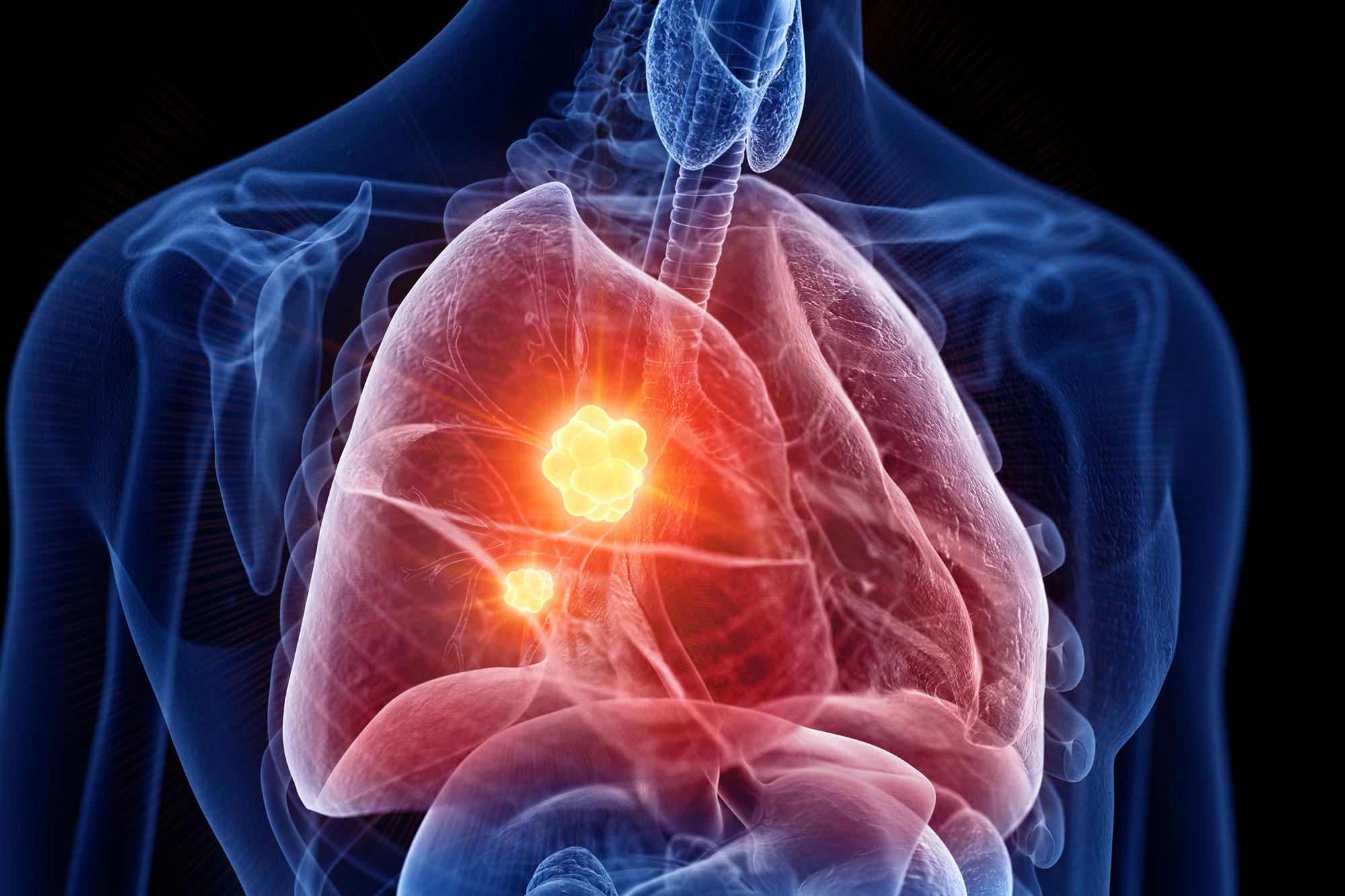
A Vermont research team achieved disease control in 67% of patients by targeting cancer’s energy system.
Mesothelioma often begins with an exposure that happened decades earlier. Asbestos fibers inhaled into the lungs can remain trapped there, causing chronic inflammation that eventually contributes to tumor growth. The disease is rare but highly aggressive, affecting about 30,000 people worldwide each year.
Immunotherapy and chemotherapy provide only limited benefits, and patients, many of them men who worked in shipbuilding, oil refining, or asbestos manufacturing, typically survive about 12 months after diagnosis. Only around 10 percent are alive five years later.
“It’s a disease of a significant unmet medical need,” says Brian Cunniff, a professor at the University of Vermont.
A study published in Nature Communications by Cunniff, UVM research scientist Victoria Gibson, and international collaborators describes a strategy that reverses a long-standing assumption about antioxidants and cancer. The approach could have implications for mesothelioma and potentially other tumors.
Disease control reaches 67 percent
In a phase one clinical trial sponsored by RS Oncology, LLC, patients with relapsed mesothelioma received an experimental drug that stopped the disease from progressing in 67% of participants. Some patients also experienced tumor shrinkage. The treatment was generally well tolerated, and these critically ill patients survived longer than patients receiving standard therapies.
Mesothelioma cells, like many cancer cells, produce unusually high amounts of reactive oxygen species. These unstable molecules arise as tumor cells rapidly process energy and can damage cellular structures. To remain alive under this stress, cancer cells increase their production of antioxidant enzymes.
One of those enzymes is peroxiredoxin 3, or PRX3. Located inside mitochondria, the structures that generate energy for cells, PRX3 shields tumor cells from the damaging molecules created by their accelerated metabolism.
For years, many cancer studies tested whether adding antioxidants could slow tumors by reducing reactive oxygen species. Most of those trials failed, and some suggested that additional antioxidants could instead support tumor growth.
The UVM researchers pursued the opposite idea. Rather than protecting cancer cells from oxidative damage, they proposed blocking PRX3 so that harmful molecules would accumulate until the cells could no longer survive.
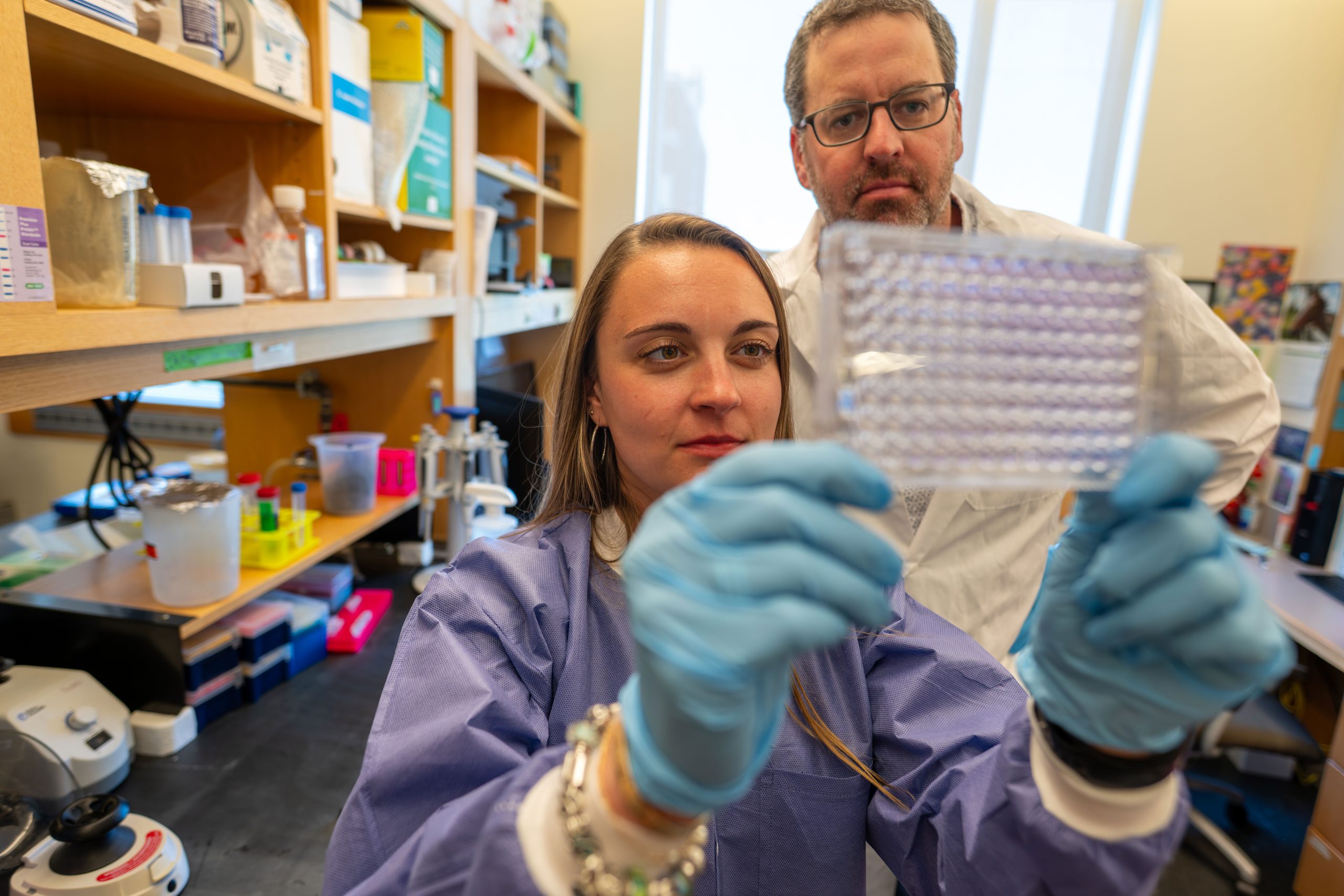
RS Oncology developed a trial drug from the UVM findings using thiostrepton, a naturally occurring antibiotic that disables PRX3. Blocking the enzyme causes hydrogen peroxide to accumulate within tumor cell mitochondria, eventually triggering cell death.
Because cancer cells generate more reactive oxygen species than healthy cells, they must replace and use PRX3 more rapidly. This difference may allow the drug to affect tumor cells more selectively while reducing damage to normal tissue.
When the researchers completely removed PRX3 from mesothelioma cell lines, mitochondrial activity declined and cell division slowed sharply. The altered cancer cells also failed to produce tumors in animal experiments.
Research from other groups has shown that healthy mice lacking PRX3 did not develop harmful effects, addressing concerns that disrupting a mitochondrial enzyme might be too dangerous. “People will come up to us at conferences and state that you can’t target the mitochondria because they’re too important,” said Gibson. “The evidence—that you can knock out PRX3 in mice and there’s no adverse phenotype— supports our approach.” The findings showed that mice could develop and function normally after the gene responsible for PRX3 was removed.
A lab discovery reaches patients
The work began taking shape at UVM’s Cancer Center around 2015, when laboratory experiments produced encouraging results with thiostrepton. Researchers later created RS Oncology, a private pharmaceutical company, to move the university’s findings toward clinical testing.
Cunniff, an associate professor in the Department of Pathology and Laboratory Medicine at UVM’s Larner College of Medicine, serves as the company’s chief science officer. The group eventually reformulated thiostrepton into an experimental treatment called RSO-021.
Between 2022 and 2023, researchers tested RSO-021 in a phase one trial conducted in the United Kingdom under the supervision of the MHRA, Britain’s equivalent of the FDA.
The medication is delivered directly into the chest through a catheter already used by patients with pleural effusions, which are collections of fluid between the lungs and chest wall. Approximately 90 percent of people with mesothelioma develop this complication. Administering the drug locally places a higher concentration near the tumor while reducing exposure throughout the rest of the body.
At a dose of 90 milligrams, the trial met its goals for safety and tolerability. No deaths were attributed to the treatment.
Tissue samples also confirmed that RSO-021 reached and affected its intended molecular target. This on-target engagement showed that the mechanism previously observed in laboratory cells and mice was also active inside human tumors.
Patients went an average of 4.2 months without their disease progressing, a result similar to existing treatments. Overall survival among the 15 participants, however, exceeded what is generally observed with current therapies. Cunniff described that finding as a potential “game changer.”
“Our overall survival data is very promising and will hopefully persist with additional patients,” Cunniff said.
The strategy may extend beyond mesothelioma
The evidence also indicates that RSO-021 may influence the immune system, potentially helping it recognize, attack, or restrain tumors. “Our drug has both cytotoxic activity, it can kill the tumor cells, but it also has immunomodulatory capacity where it can modulate the immune system to now manage the tumor,” said Cunniff.
A phase two trial has now been completed, with findings expected to be presented at a global oncology meeting this year.
Meanwhile, the research is moving in several directions. UVM and RS Oncology are working with the University of Leicester and other British institutions to create second-generation PRX3 inhibitors. These compounds are intended to be more soluble and could potentially be taken as oral tablets, which might simplify their use and make the approach easier to apply to cancers beyond mesothelioma.
Gibson, the lead author of the new study, is continuing at UVM as a postdoctoral researcher. She is helping launch studies of thiostrepton for cancers of the peritoneum, the tissue lining the abdominal cavity, including mesothelioma, gastric cancer, and other gastrointestinal tumors.
That work is being conducted with Conor O’Neill, a surgical oncologist at the UVM Cancer Center and UVM Health. “We believe this mechanism could be applicable to other cancers,” Cunniff said.
For Gibson, the possibility of translating laboratory results into patient care carries personal meaning. “I’ve always just had a desire to help people because I feel like everyone has experienced cancer in their life, whether it’s them, friends, or family members,” she said.
The human significance became especially clear when a relative of a dying patient contacted the laboratory and asked about joining the clinical trial. “We just work in a lab all day working with cells,” she recalled, “and the fact that we’re making an impact on people, that they’re wanting to be on this clinical trial, just was amazing to me.”
Reference: “Preclinical characterization and phase 1 clinical testing of targeting mitochondrial peroxiredoxin 3 in cancer” by Victoria Gibson, Joanna Dzialo, Terri Messier, Aleksandra Bzura, Charlotte Poile, Jan Rogel, Jens C. Hahne, Aida Habibovic, Stephanie Stead, Alexis Saaman, Kevin G. Blyth, Peter W. Szlosarek, Simon Lord, Fiona Thistlethwaite, Min Zhang, Apostolos Nakas, Peter Wells-Jordan, Kudzayi Kutywayo, Kelly J. Butnor, Nicholas. H. Heintz, George N. Naumov, Maurice Dungey, Julio Herrero Colomina, Burak Aktas, Sean Dulloo, James Spicer, Dean A. Fennell and Brian Cunniff, 14 July 2026, Nature Communications.
DOI: 10.1038/s41467-026-75153-y
This work was funded by RS Oncology, LLC through a Sponsored Research Contract to the University of Vermont and the University of Leicester.
Never miss a breakthrough: Join the SciTechDaily newsletter.
Follow us on Google and Google News.