
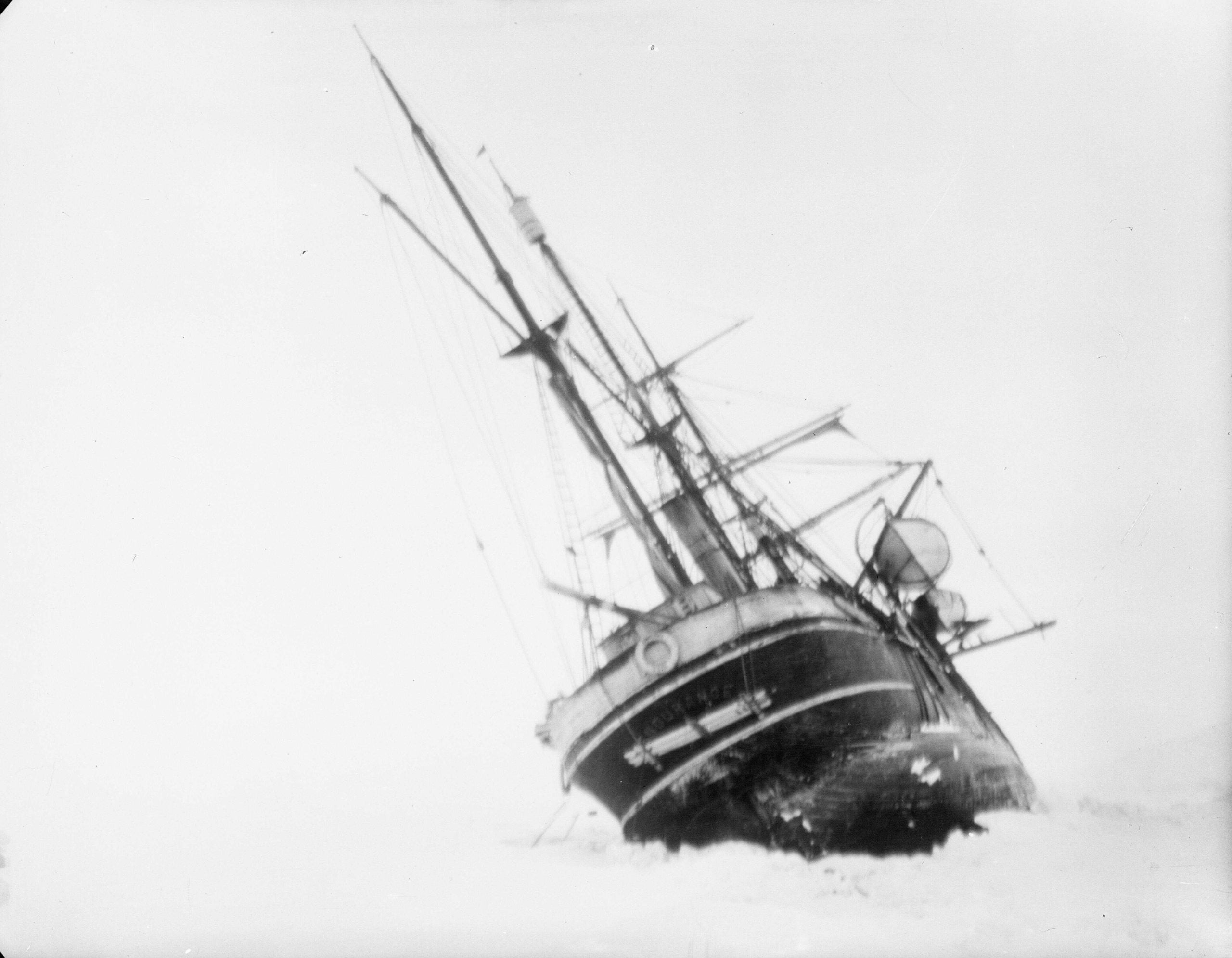
A new scientific investigation challenges long-held assumptions about Shackleton’s Endurance, revealing that the ship may never have been suited for the extreme Antarctic conditions it faced.
Sir Ernest Shackleton’s ship, Endurance, was trapped and crushed by Antarctic sea ice before sinking in November 1915. A defining symbol of the heroic age of Antarctic exploration, the vessel has long been regarded as the strongest polar ship of its era, though it was believed to have one critical flaw, a weak rudder that contributed to its loss.
A new study, the first to combine engineering analysis with detailed reviews of diaries and letters, offers a different perspective on both the expedition and Shackleton himself. The research suggests the ship had multiple structural shortcomings that made it less durable than other early polar vessels. It also indicates that Shackleton was aware of these issues before departing.
Rethinking the Strength of Endurance
“Even simple structural analysis shows that the ship was not designed for the compressive pack ice conditions that eventually sank it,” says Jukka Tuhkuri, a professor of solid mechanics at Aalto University and one of the world’s leading ice researchers. “The danger of moving ice and compressive loads — and how to design a ship for such conditions — was well understood before the ship sailed south. So we really have to wonder why Shackleton chose a vessel that was not strengthened for compressive ice.”
Tuhkuri, who has also taken part in polar expeditions, joined the Endurance22 mission as one of 15 scientists. This team located the wreck in 2022. He was surprised that no thorough structural assessment of the ship had been done before, and the discovery prompted him to investigate the scientific realities behind its reputation.

Structural Weaknesses Revealed
“Endurance clearly had several structural deficiencies compared with other early Antarctic ships,” he explains. “The deck beams and frames were weaker, the machine compartment was longer, leading to serious weakening in a significant part of the hull, plus there were no diagonal beams to strengthen the hull. Not only does this challenge the romantic narrative that it was the strongest polar ship of its time, but it also belies the simplistic idea that the rudder was the ship’s Achilles’ heel.”
After reviewing Shackleton’s diaries, personal letters, and crew communications, Tuhkuri found that the reasoning behind Shackleton’s decision to use Endurance remains uncertain.
“Shackleton knew about this. Before he set off he lamented the ship’s weaknesses in a letter to his wife, saying he’d exchange Endurance for his previous ship any day. In fact, he had recommended diagonal beams for another polar ship when visiting a Norwegian shipyard. That same ship got stuck in compression ice for months and survived it,” says Tuhkuri.
Questions Without Clear Answers
Was Endurance simply “ill-fated”, or did human choices play a larger role in its loss?
Tuhkuri avoids drawing firm conclusions. He emphasizes that the study is not meant to diminish the achievements of Shackleton and his crew, who journeyed into the Weddell Sea more than a century ago. Instead, it offers a more detailed understanding of the circumstances.
“We can speculate about financial pressures or time constraints, but the truth is we may never know why Shackleton made the choices that he made. At least now we have more concrete findings to flesh out the stories,” he concludes.
Reference: “Why did Endurance sink?” by Jukka Tuhkuri, 6 October 2025, Polar Record.
DOI: 10.1017/S0032247425100090
Never miss a breakthrough: Join the SciTechDaily newsletter.
Follow us on Google and Google News.